Artist
Agnolo degli Erri
Agnolo degli Erri is an Early Renaissance artist. 13 works are cataloged here, principally at Kunsthistorisches Museum.
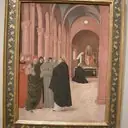
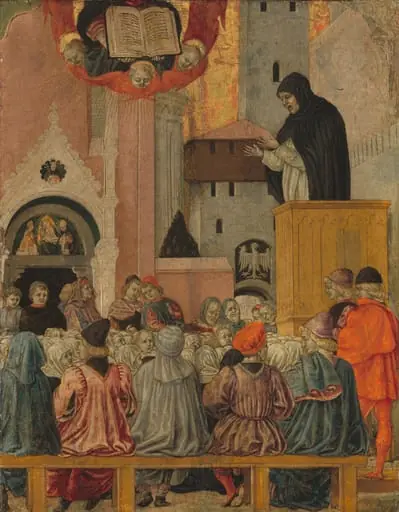
- A Dominican Preaching
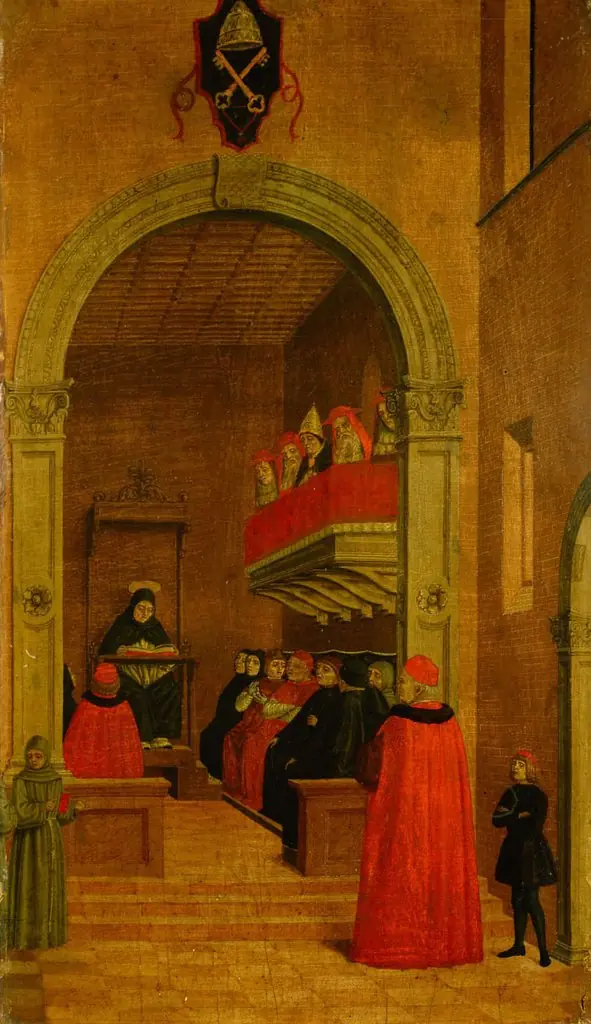
- Szene aus dem Leben des Hl. Vinzenz Ferrer: Der Heilige legt in Avignon in Gegenwart des Papstes und der Kardinäle das Wort aus
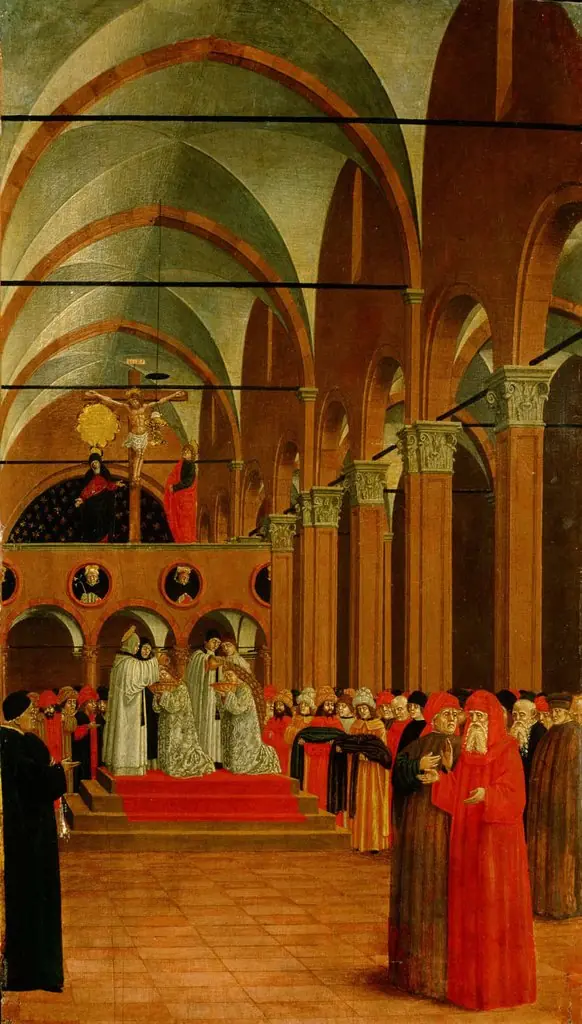
- Szene aus dem Leben des Hl. Vinzenz Ferrer: Der Heilige bekehrt und tauft Sarazenen und Juden
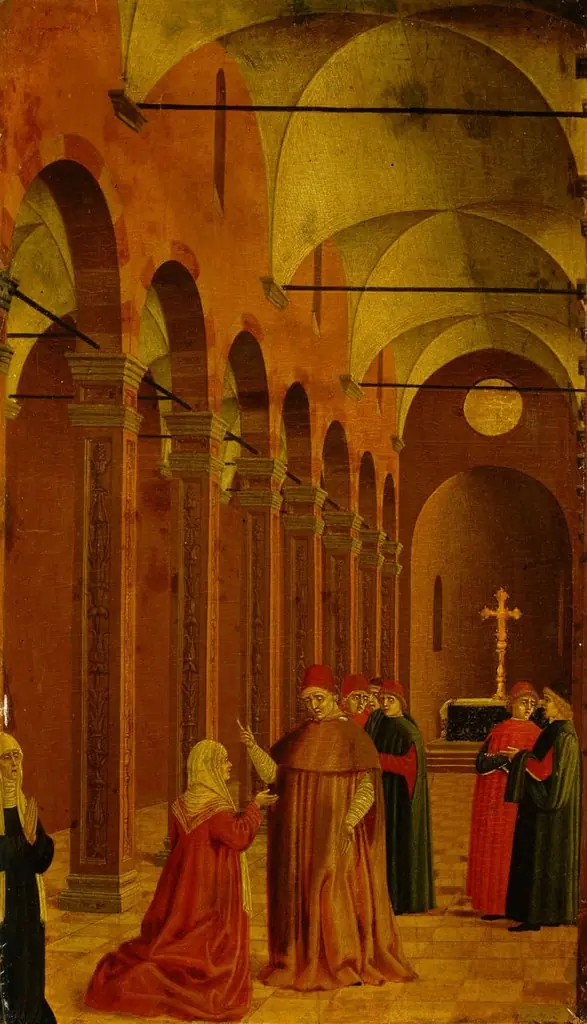
- Szene aus dem Leben des Hl. Vinzenz Ferrer: Die Mutter des Heiligen fragt den Bischof von Valencia nach dem Sinn der wunderbaren Zeichen, die die Geburt ihres Kindes ankündigen
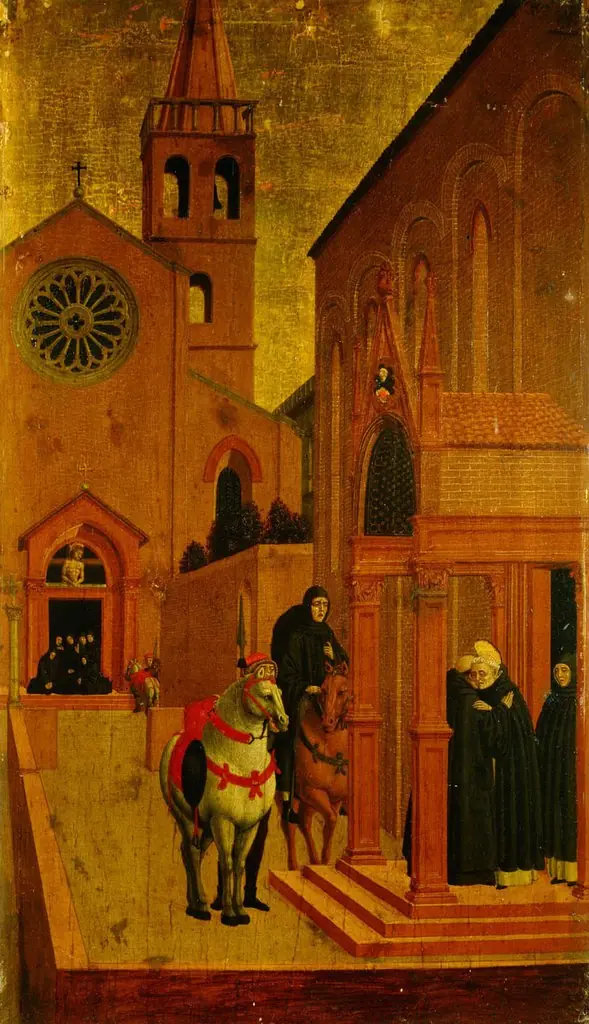 Szene aus dem Leben des Hl. Vinzenz Ferrer: Besuch des Priors von Oreola beim Heiligen; Tod des Bruders Gilabertus vor der Kirchentür
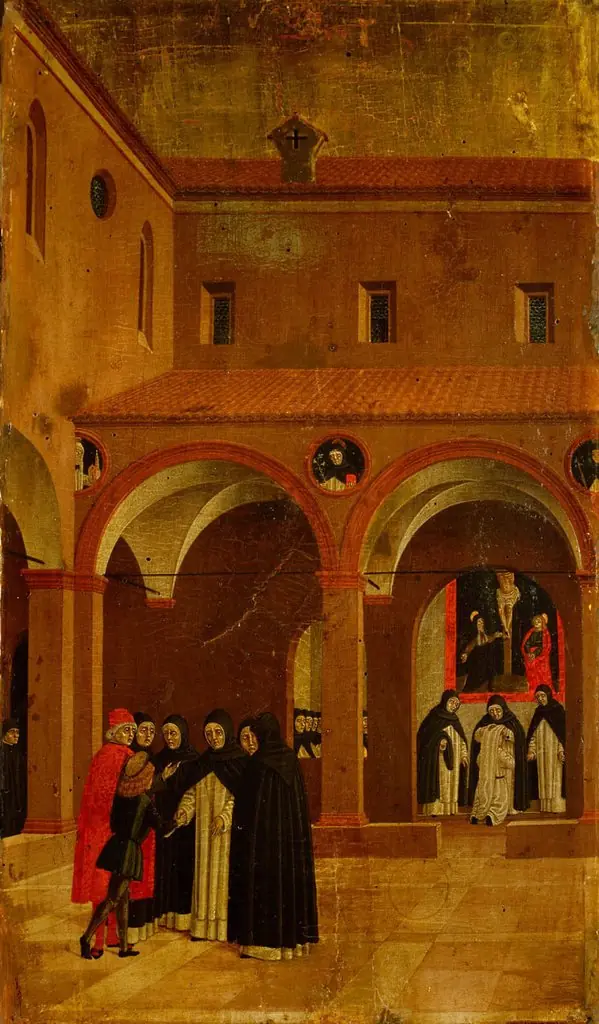 Szene aus dem Leben des Hl. Vinzenz Ferrer: Der Vater führt den Knaben Vinzenz zu den Dominikaners, von denen er drei Tage später eingekleidet wird
Agnolo degli Erri (1440–1482) was an Italian Gothic painter of the Italian Renaissance. Agnolo degli Erri, along with his brothers Bartolomeo and Bartolomeo Bonascia, are considered key figures of the Quattrocento movement in Modena. He likely painted the triptych of the Coronation of the Virgin at the Galleria Estense (1462 and 1466). It is likely that his brother was also involved in this work. The art historian Roberto Longhi also assigns a secondary interest to a series of paintings of scenes from the lives of the saints. An altarpiece dedicated to Saint Peter from the church of San Domenico in Modena, today in the Galleria nazionale di Parma, has also been attributed to Agnolo degli Erri.
Overview
Agnolo degli Erri was an Italian Gothic painter active in Modena during the second half of the fifteenth century. Born around 1440 in Modena and dying there around 1482, he was a central figure in the Quattrocento movement in his native city, working alongside his brothers Bartolomeo and Serafino to establish the most prestigious painting workshop in Modena. Together with Bartolomeo Bonascia, the Erri brothers are considered the most important protagonists of late Gothic painting in Modena, facilitating the diffusion of Renaissance forms in a regional context comparable to the work of Francesco del Cossa in Ferrara and Marco Zoppo in Bologna. His significance lies in bridging late Gothic traditions with emerging Renaissance influences in north-central Italy.
Biography & dates
Agnolo degli Erri was born circa 1440 in Modena into an established family of artisans and artists documented in the city since the fourteenth century. His grandfather Bartolomeo was the first painter in the family, followed by his sons Giorgio, Agnolo's father, and Pellegrino. Agnolo's maternal grandfather, Serafino de' Serafini, was also a painter in the circle of Tommaso da Modena. After an initial period working with his cousin Benedetto, Agnolo in 1442 formed a partnership with his brother Serafino under the name "de arte pictorie et bardarum," which would become the most esteemed painting workshop in Modena. In 1458 he received the commission for frescoes at the Rocca estense in Sassuolo, though by 1460 documents reveal he delegated this work to his younger brother Bartolomeo, who was paid for "le depinture facte per maestro Bertolamio suo fratello in le stantie del palazo." Between 1462 and 1466 he executed the great triptych of the Coronation of the Virgin for the Galleria Estense, one of the most important works from the Erri workshop. He remained active until at least 1482, with some sources suggesting activity as late as 1487.
Style & movement
Agnolo degli Erri worked in the Gothic painting tradition while contributing to the Italian Renaissance in Modena. The multi-part altarpiece of the Coronation of the Virgin, created between 1462 and 1465, reveals the influence of Francesco del Cossa and Piero della Francesca on the Erri brothers, demonstrating how Emilian and broader north Italian Renaissance innovations were adapted in a Modenese context. The workshop's style facilitated the diffusion of Renaissance forms within the late Gothic modenese tradition, analogous to developments in neighboring Ferrara and Bologna. Roberto Longhi assigned Agnolo a secondary role in a series of paintings depicting scenes from the lives of saints, suggesting collaborative workshop practices where individual contributions could be difficult to isolate.
Major works
The Coronation of the Virgin triptych, dated 1462 and 1466, is Agnolo degli Erri's most significant surviving work, now housed in the Galleria Estense in Modena. This large altarpiece represents the pinnacle of the Erri workshop's production. An altarpiece dedicated to Saint Peter, originally from the church of San Domenico in Modena, is now in the Galleria nazionale di Parma. A Madonna and Child in Padua and a Portrait of a Beardless Man of circa 1465 in the Kress collection are also attributed to him. The French Wikipedia adds a Dominican Preaching of circa 1470, a tempera on wood measuring 43 by 34 cm from San Domenico in Modena, now in the National Gallery of Art in Washington, D.C., and a Madonna and Child in tempera on gold ground in the Galleria d'Arte Antica Mazzoli in Macerata Feltria. The Italian Wikipedia also notes works in the Metropolitan Museum of Art in New York, the Kunsthistorisches Museum in Vienna, and the California Palace of the Legion of Honor in San Francisco.
Influences & students
Agnolo degli Erri's artistic formation was shaped by his family workshop tradition, with his grandfather Bartolomeo and father Giorgio establishing the family's painterly lineage. His maternal grandfather Serafino de' Serafini, associated with Tommaso da Modena's circle, provided another channel of artistic influence. The stylistic impact of Francesco del Cossa and Piero della Francesca is evident in the Coronation of the Virgin altarpiece. Within his own workshop, Agnolo collaborated closely with his brothers Bartolomeo and Serafino; the 1460 document regarding the Sassuolo frescoes indicates a fluid division of labor. Roberto Longhi's attribution of the saintly life scenes primarily to Bartolomeo, with Agnolo playing a secondary role, suggests Bartolomeo may have been the more prominent artistic figure in certain collaborative projects. No independent pupils outside the family circle are documented in the sources.
Legacy
Agnolo degli Erri's posthumous reputation is inseparable from that of the Erri family workshop as a whole. The scholarly literature, beginning with Victor Alexander Carus's 1915 entry in the Thieme-Becker lexicon, has treated the brothers as a collective phenomenon in Modenese painting. Daniele Benati's 1988 monograph La bottega degli Erri e la pittura del Rinascimento a Modena remains the foundational study, examining the workshop and Renaissance painting in Modena in depth. Esther Moench-Scherer's 1993 catalogue of Italian primitives in Strasbourg also addresses his work. The dispersal of his paintings across major international collections, including the National Gallery of Art in Washington, the Metropolitan Museum of Art, and the Kunsthistorisches Museum in Vienna, attests to his recognition in the broader history of Italian Renaissance art, even as the precise boundaries of his individual oeuvre remain debated among scholars.
Works by Agnolo degli Erri
- A Dominican Preaching
- Szene aus dem Leben des Hl. Vinzenz Ferrer: Der Heilige legt in Avignon in Gegenwart des Papstes und der Kardinäle das Wort aus
- Szene aus dem Leben des Hl. Vinzenz Ferrer: Der Heilige bekehrt und tauft Sarazenen und Juden
- Szene aus dem Leben des Hl. Vinzenz Ferrer: Die Mutter des Heiligen fragt den Bischof von Valencia nach dem Sinn der wunderbaren Zeichen, die die Geburt ihres Kindes ankündigen
- Szene aus dem Leben des Hl. Vinzenz Ferrer: Besuch des Priors von Oreola beim Heiligen; Tod des Bruders Gilabertus vor der Kirchentür
- Szene aus dem Leben des Hl. Vinzenz Ferrer: Der Vater führt den Knaben Vinzenz zu den Dominikaners, von denen er drei Tage später eingekleidet wird
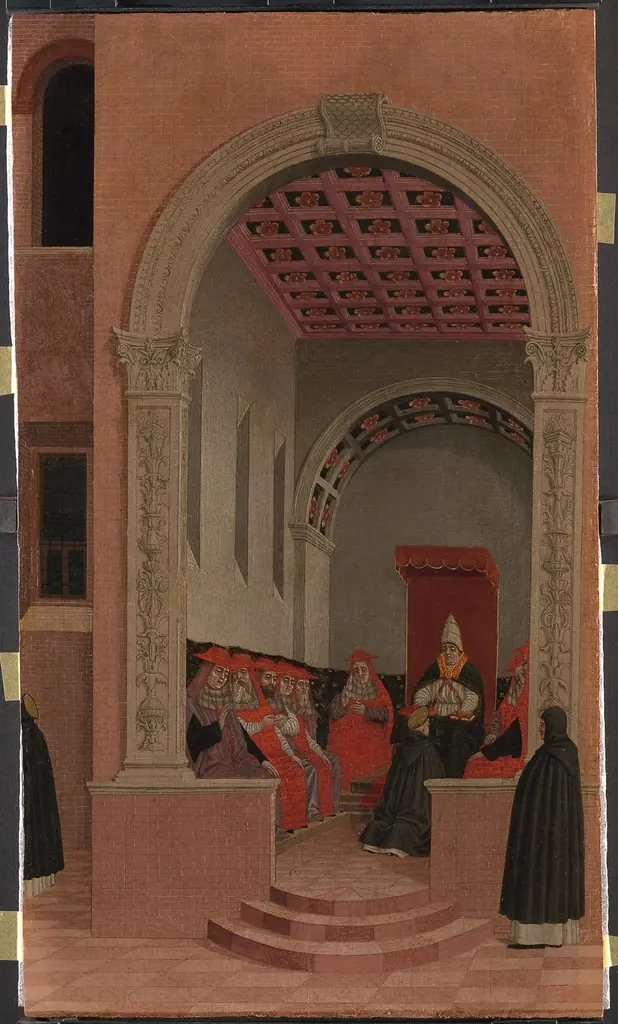 Szene aus dem Leben des Hl. Vinzenz Ferrer: Der Heilige erhält vom Papst die Erlaubnis, das Evangelium überall durch Predigt zu verkünden
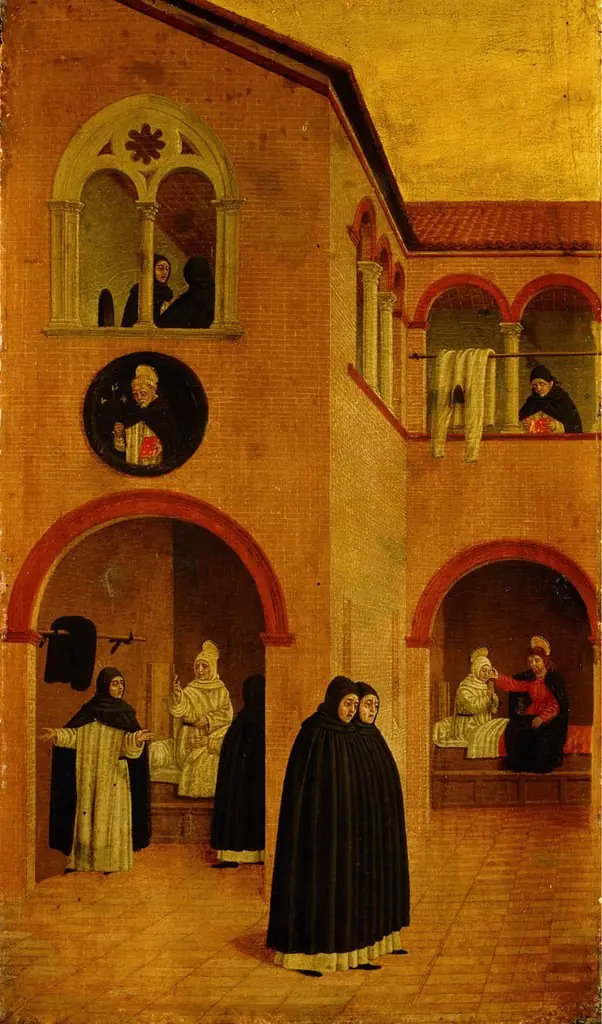 Szene aus dem Leben des Hl. Vinzenz Ferrer: Durch Aufregungen infolge des Schismas erkrankt der Heilige; er wird am Krankenbett vom Heiligen Dominikus besucht und von Christus geheilt
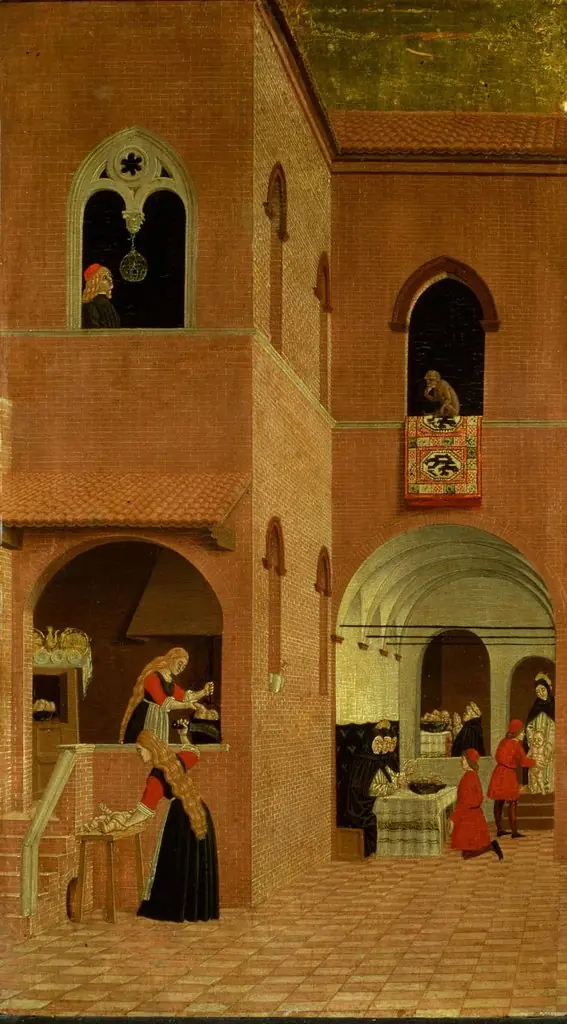 Szene aus dem Leben des Hl. Vinzenz Ferrer: Die Wiedererweckung des von seiner wahnsinnigen Mutter zerstückelten und gebratenen Kindes
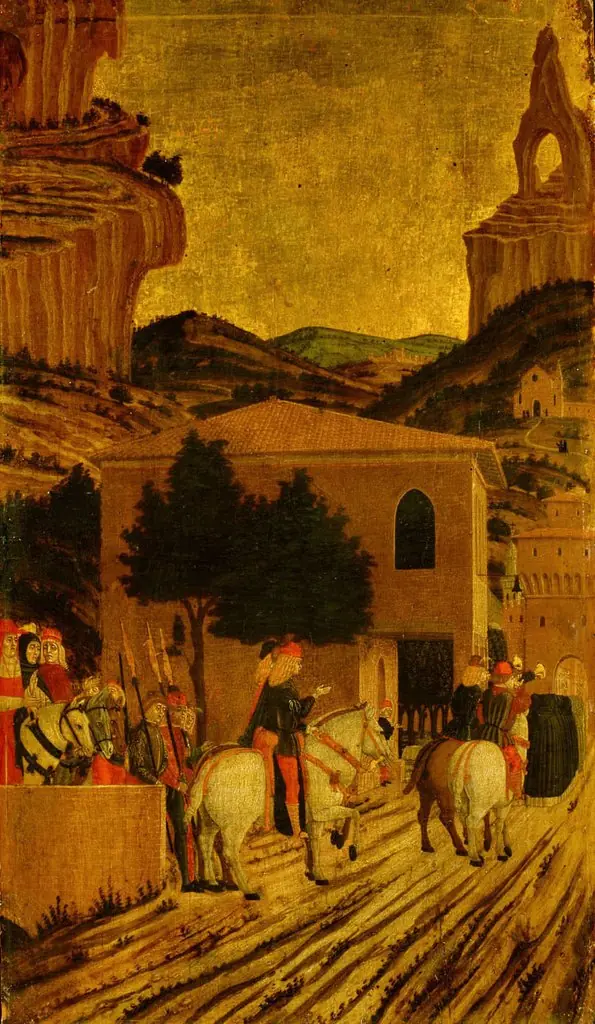 Szene aus dem Leben des Hl. Vinzenz Ferrer: Der Predigerzug des Heiligen, der auf einem Esel reitet
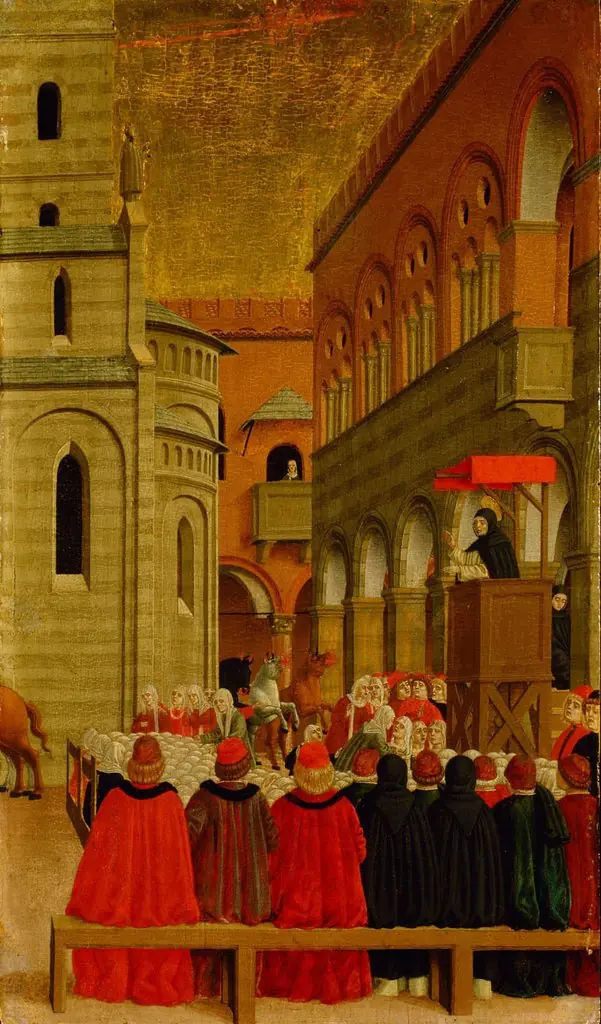 Szene aus dem Leben des Hl. Vinzenz Ferrer: Der Teufel vesucht in Form dreier wilder Pferde die Predigt des Heiligen zu stören
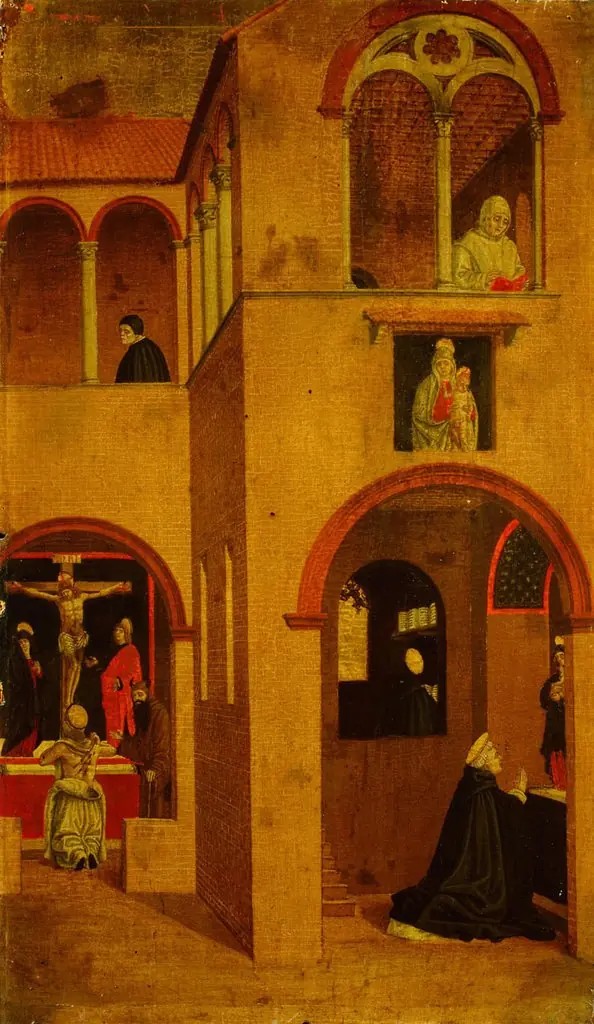 Szene aus dem Leben des Hl. Vinzenz Ferrer: Der Heilige wird vor dem Altar und in seiner Zelle beim Lesen des Heiligen Hieronymus vom Teufel versucht; er wird von der Muttergottes getröstet
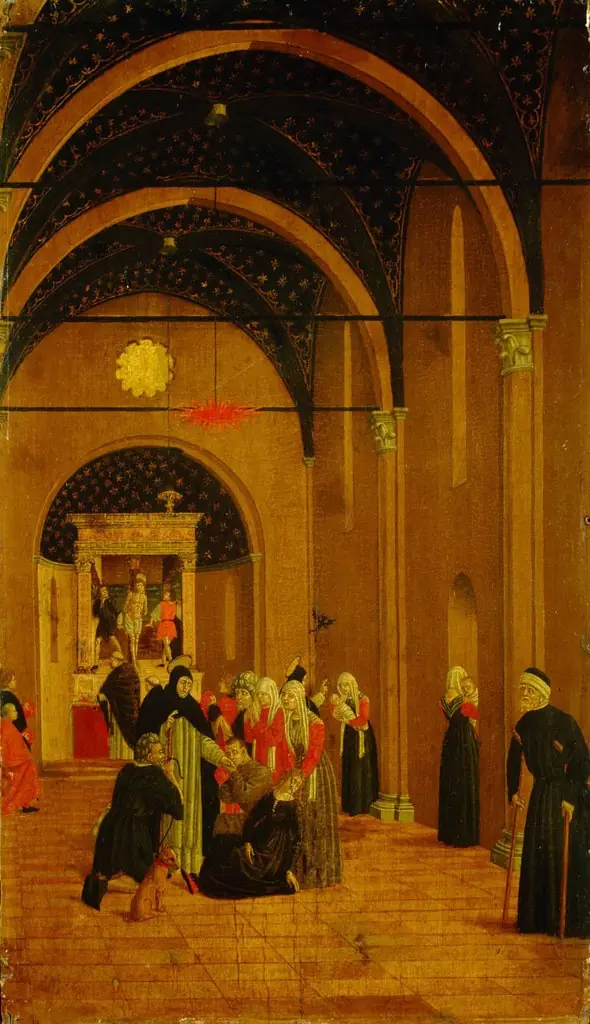 Szene aus dem Leben des Hl. Vinzenz Ferrer: Kranke werden durch den Segen des Heiligen geheilt
Collections represented


- Szene aus dem Leben des Hl. Vinzenz Ferrer: Der Heilige erhält vom Papst die Erlaubnis, das Evangelium überall durch Predigt zu verkünden
- Szene aus dem Leben des Hl. Vinzenz Ferrer: Durch Aufregungen infolge des Schismas erkrankt der Heilige; er wird am Krankenbett vom Heiligen Dominikus besucht und von Christus geheilt
- Szene aus dem Leben des Hl. Vinzenz Ferrer: Die Wiedererweckung des von seiner wahnsinnigen Mutter zerstückelten und gebratenen Kindes
- Szene aus dem Leben des Hl. Vinzenz Ferrer: Der Predigerzug des Heiligen, der auf einem Esel reitet
- Szene aus dem Leben des Hl. Vinzenz Ferrer: Der Teufel vesucht in Form dreier wilder Pferde die Predigt des Heiligen zu stören
- Szene aus dem Leben des Hl. Vinzenz Ferrer: Der Heilige wird vor dem Altar und in seiner Zelle beim Lesen des Heiligen Hieronymus vom Teufel versucht; er wird von der Muttergottes getröstet
- Szene aus dem Leben des Hl. Vinzenz Ferrer: Kranke werden durch den Segen des Heiligen geheilt
Artists in a similar vein