Artwork
Studie af diverse bær
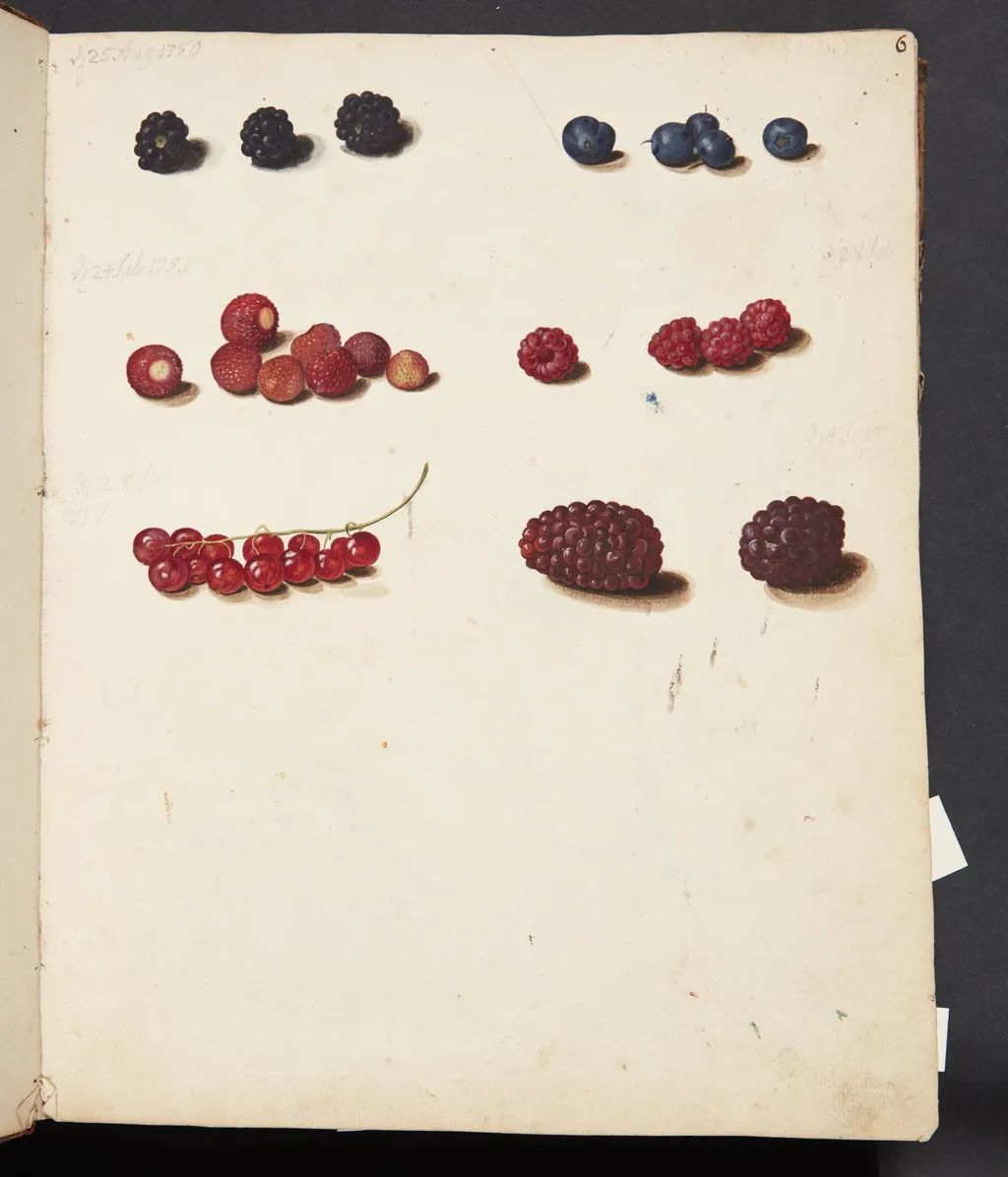
Studie af diverse bær is an unspecified work on paper by Unknown. It dates from 1750 and is held in the collection of the Statens Museum for Kunst. Created around 1750, this watercolor study by 1342_person documents various berry types with botanical precision.
About this work
Overview
The paper, aged to a soft yellow, bears faint pencil notations along its margins, possibly indicating collection dates or species identifiers.
Created around 1750, this watercolor study by 1342_person documents various berry types with botanical precision. The work resides in the Museum of Ethnography and consists of a single sheet bearing multiple clusters of fruit. Each group is carefully arranged in horizontal rows, suggesting a systematic approach to recording natural forms.
The paper, aged to a soft yellow, bears faint pencil notations along its margins, possibly indicating collection dates or species identifiers.
Subject & Meaning
The image depicts blackberries, raspberries, blueberries, and currants, common wild and cultivated fruits in northern Europe. The selection implies an interest in local flora, possibly for educational, culinary, or ethnographic purposes. By isolating each berry type and rendering them without context, the artist emphasizes their physical characteristics rather than their ecological setting, suggesting a scientific or archival intent rather than decorative aims.
Technique & Style
Rendered in translucent watercolor, the berries are built up in thin, layered washes to achieve subtle gradations of color and depth. Delicate shadows beneath each cluster enhance their three-dimensionality. The artist meticulously rendered surface textures: the dimpled skin of blackberries, the fine seeds on raspberries, and the waxy sheen of blueberries. The precision suggests close observation and a restrained, methodical hand, typical of naturalist studies of the period.
History & Provenance
The work was likely part of a larger collection of botanical illustrations compiled in the mid-18th century. Its presence in the Museum of Ethnography indicates it was acquired as part of a cultural or scientific archive, possibly linked to regional studies of food, foraging, or indigenous practices. The pencil annotations along the edges hint at its use as a reference tool, though its original creator and patron remain undocumented.
Context
In the 1700s, detailed botanical studies were increasingly valued in both scientific and domestic contexts, especially in Scandinavia and northern Europe, where seasonal foraging remained vital. This study aligns with a broader trend of amateur and professional naturalists documenting local flora. Unlike formal botanical plates, its informal composition and modest scale suggest it may have been a personal or pedagogical exercise rather than a published illustration.
Legacy
Though unsigned and unattributed beyond a catalog number, the study endures as a quiet testament to the observational practices of its time. It reflects a pre-photographic era in which direct, hand-rendered records were essential for preserving knowledge of natural forms. Its preservation in an ethnographic institution underscores its value as a cultural artifact, capturing not just botany but the everyday engagement with the natural world.
Artist & collection









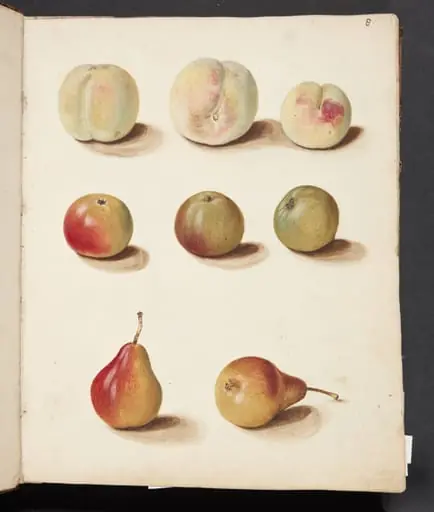 Studie af fersken, æble og pære
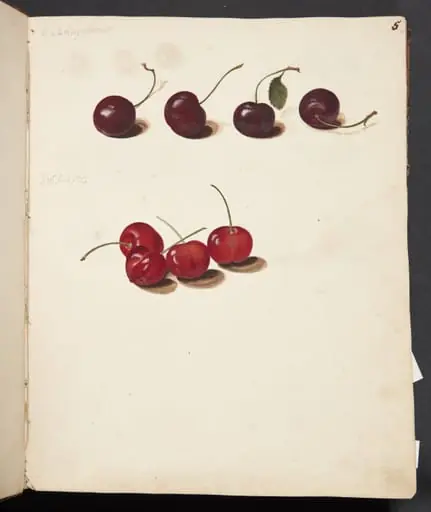 Studie af kirsebær
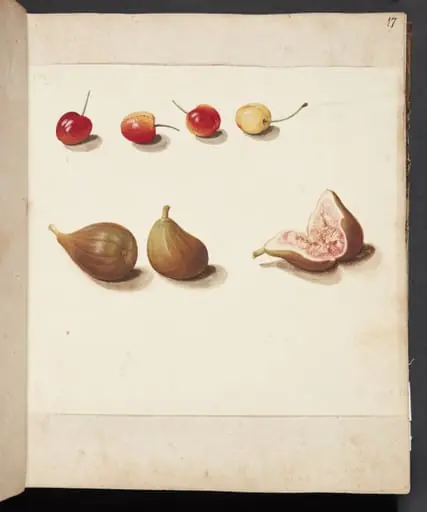 Studie af moreller og figner
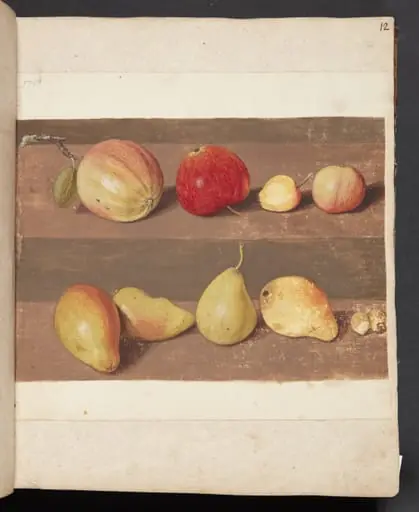 Studie af æbler og pærer
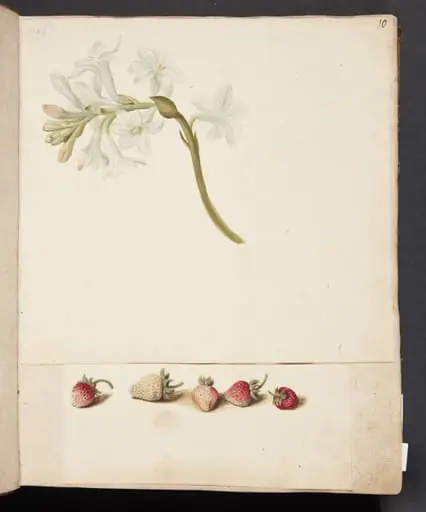 Studie af blomst og jordbær
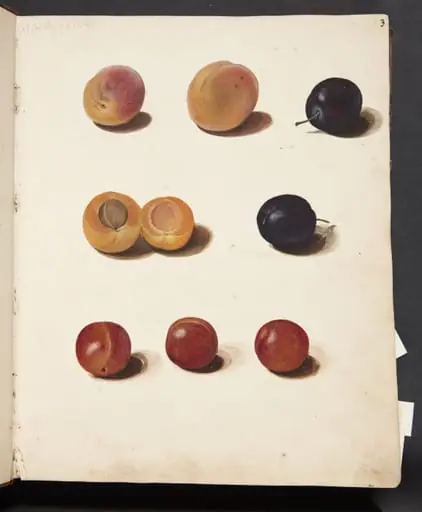
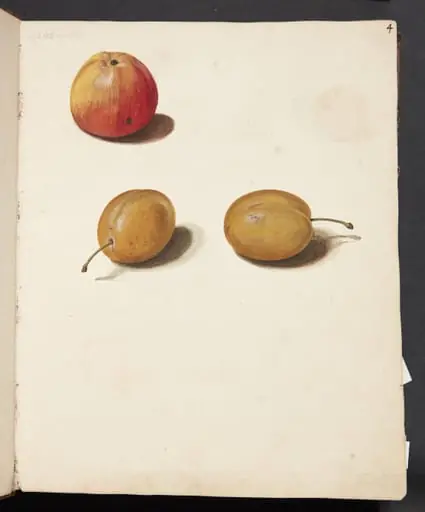 Studie af æble og blommer
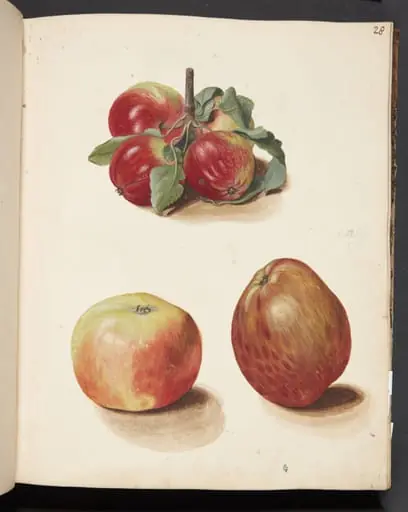 Studie af æbler
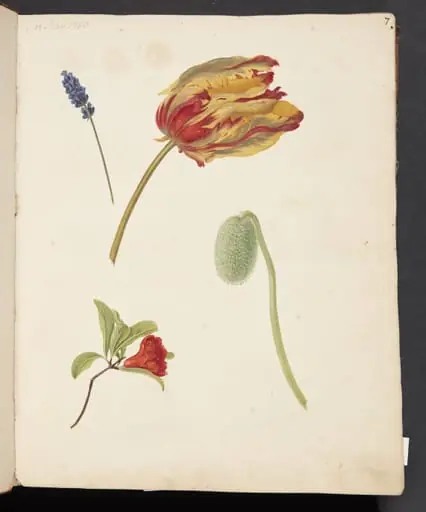 Studie af tulipan og andre blomster
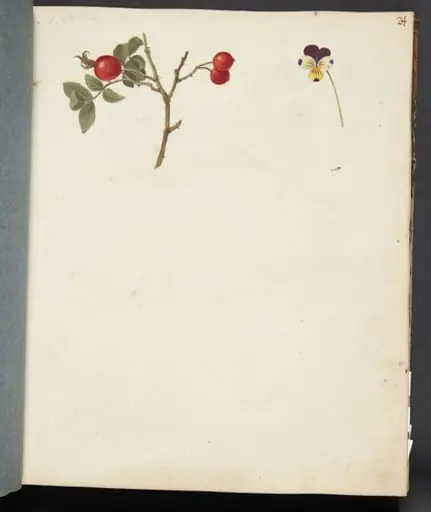 Studie af hyben og stedmoderblomst
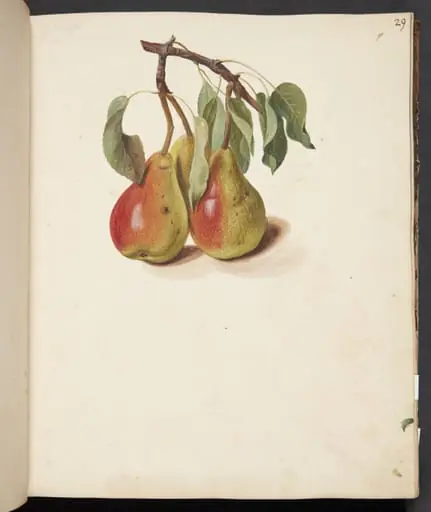 Studie af pærer
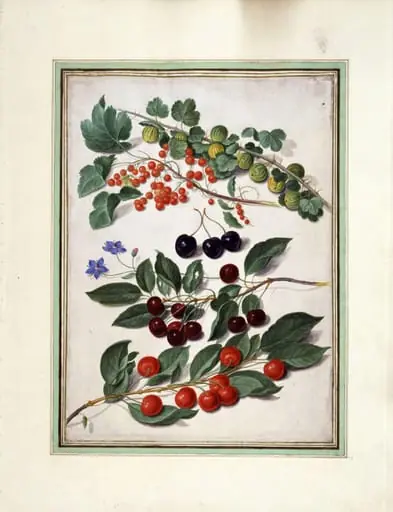 Cherries, redcurrants and gooseberries
- Studier af blommer