Artwork
Interior of Sint Gertrudiskerk in Bergen op Zoom
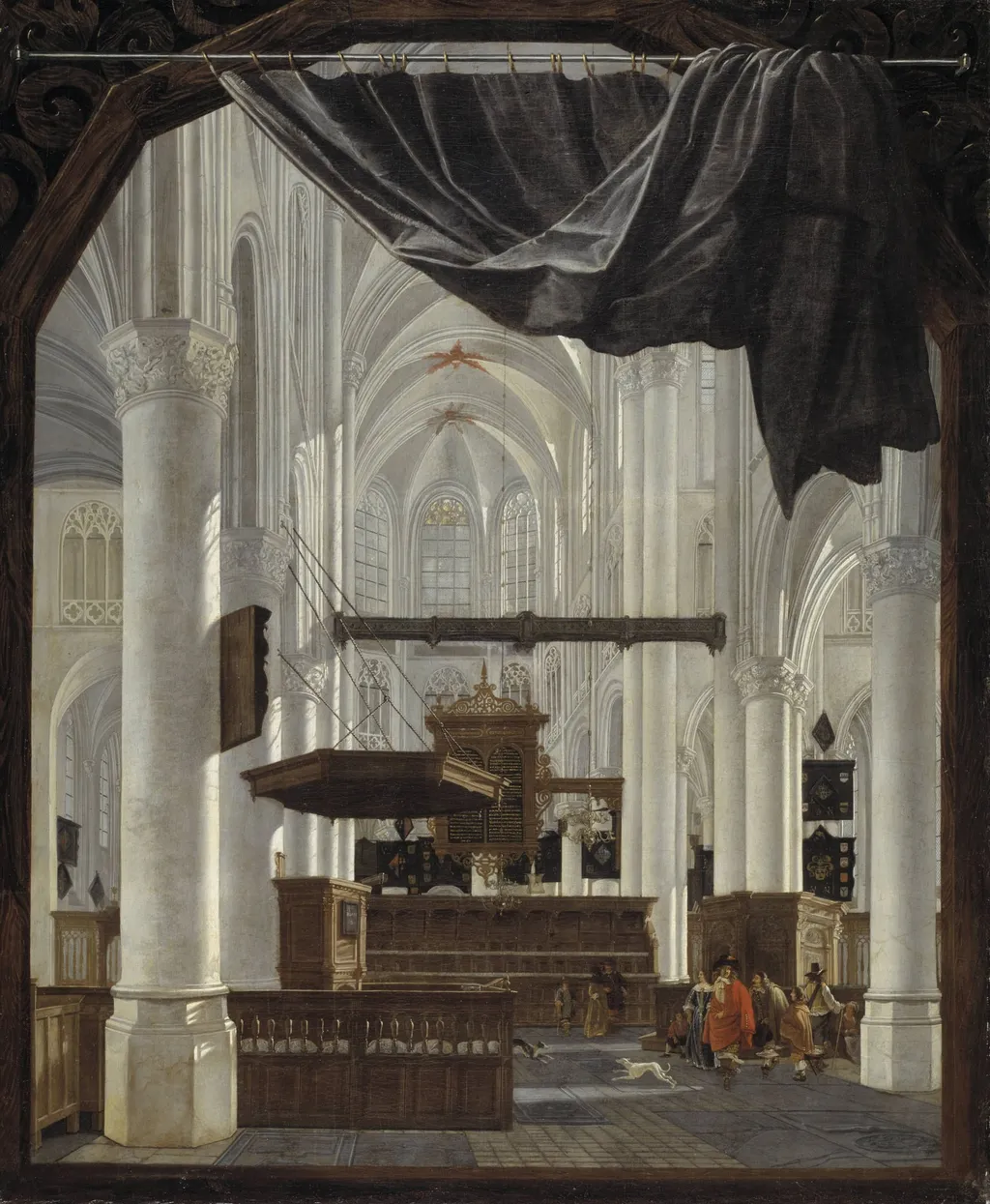
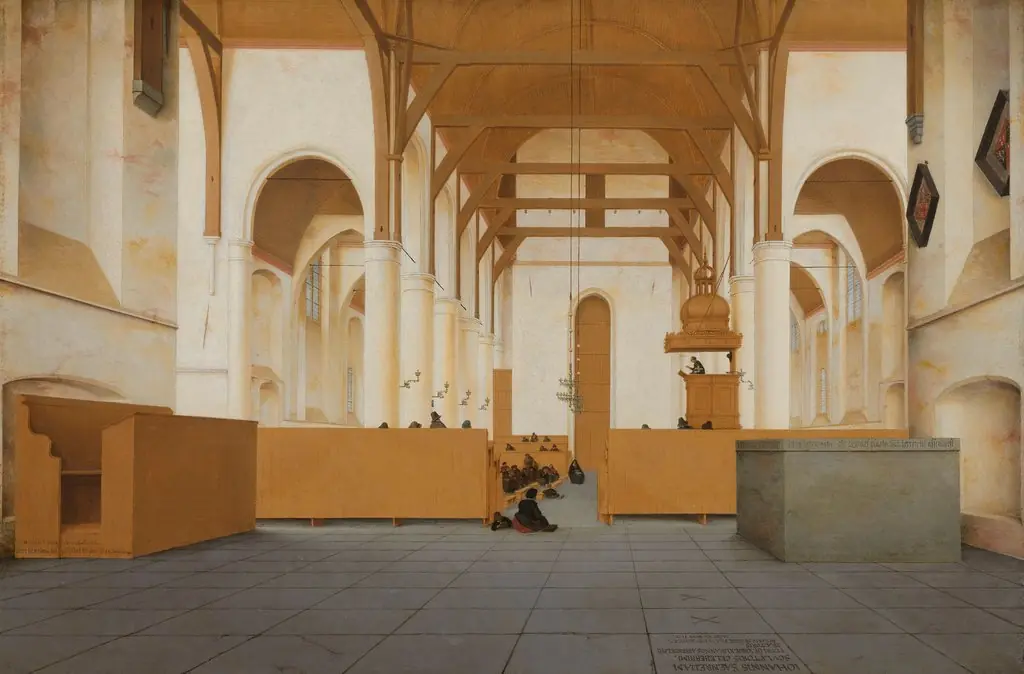
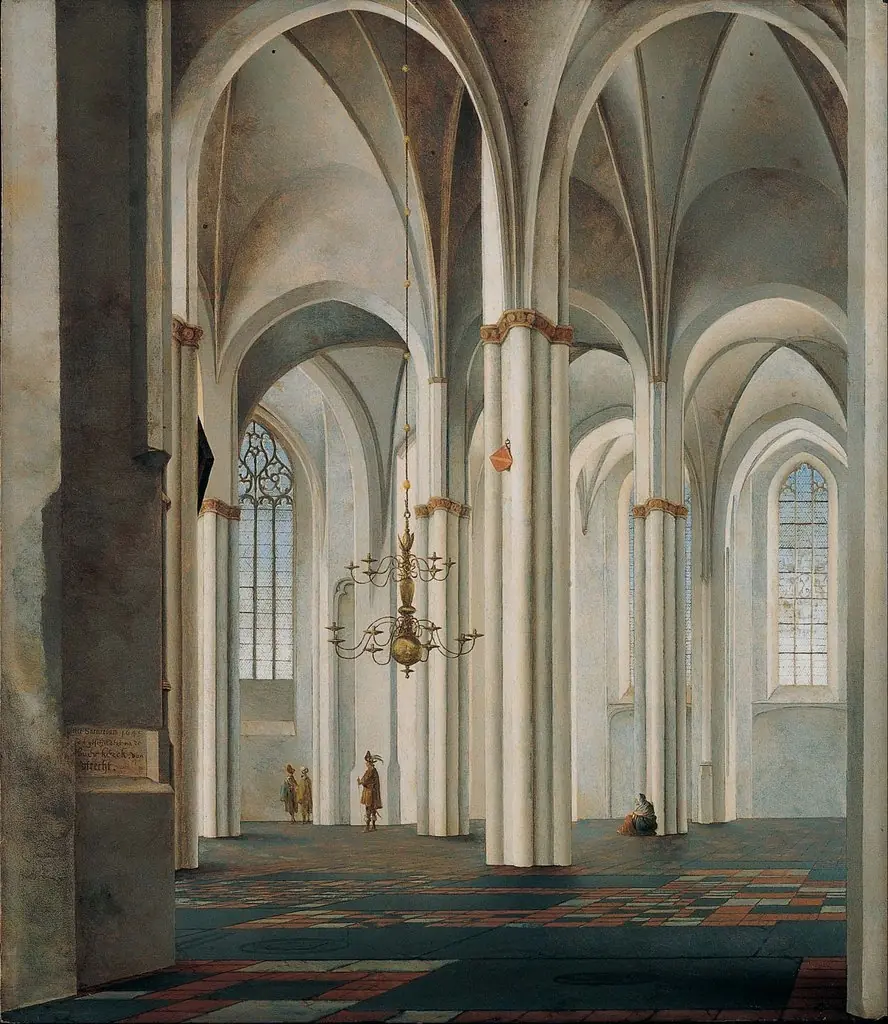
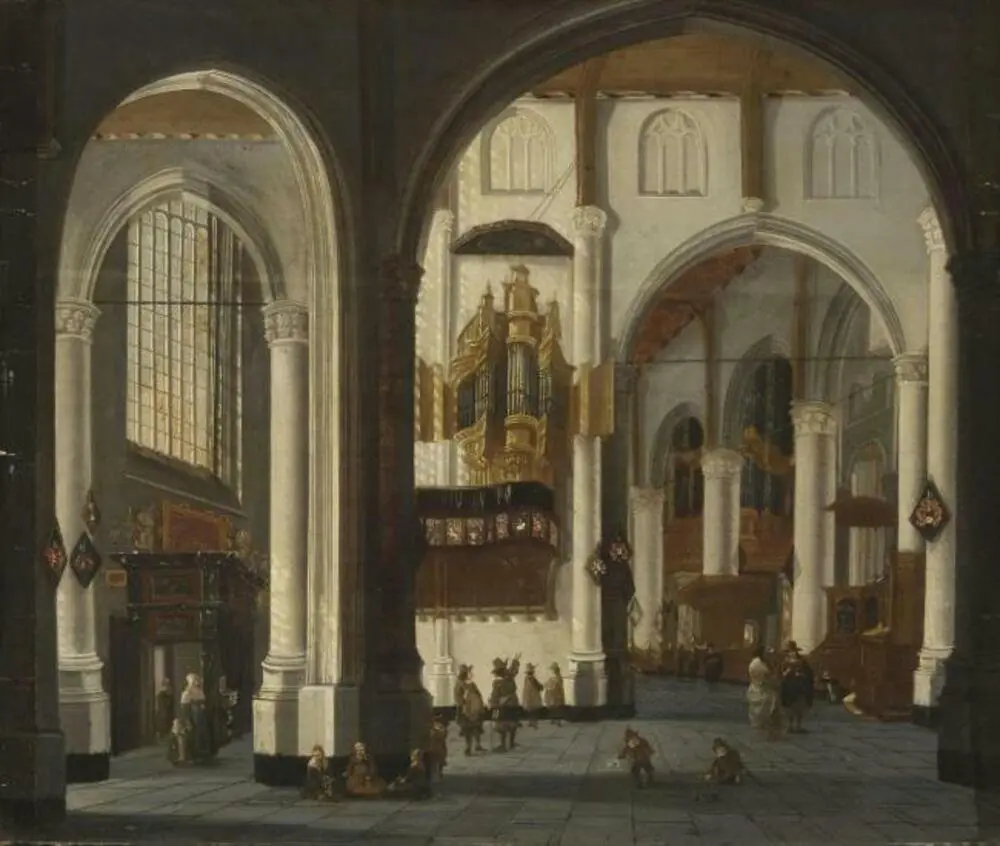
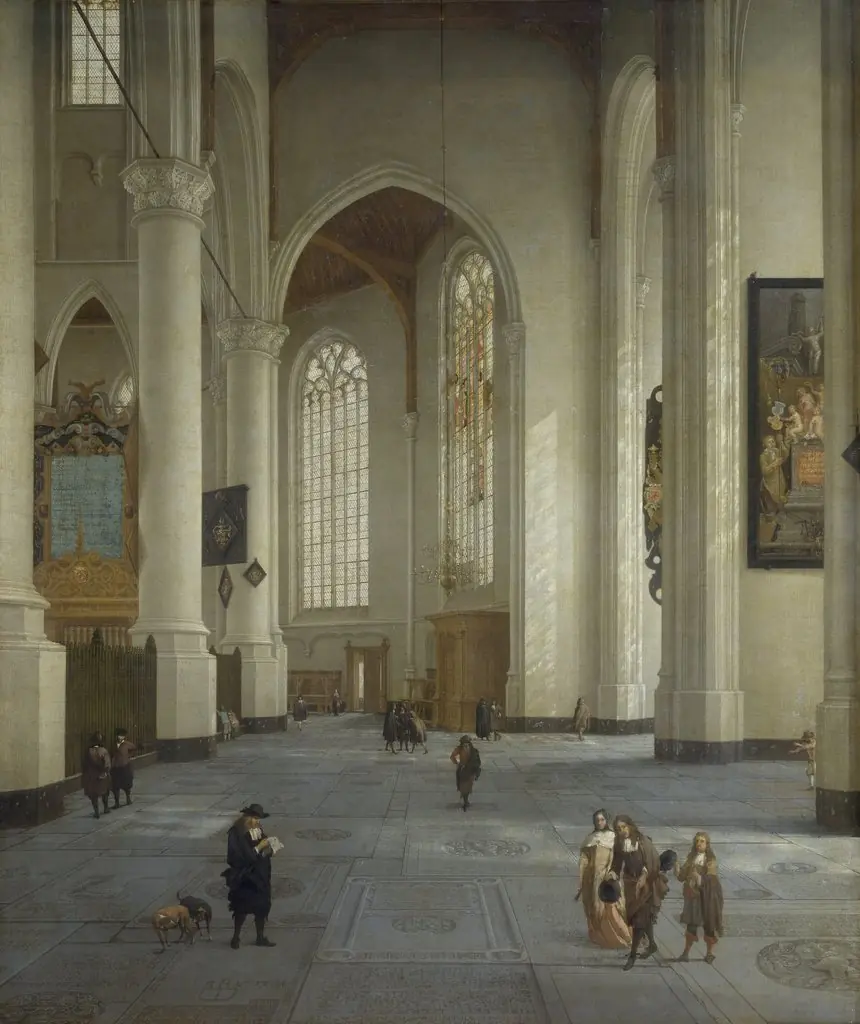
Interior of Sint Gertrudiskerk in Bergen op Zoom is a photography by the Baroque artist Unknown. It dates from 1655 and is held in the collection of the Statens Museum for Kunst. Painted in 1655, this interior view captures the Sint Gertrudiskerk in Bergen op Zoom.
About this work
Overview
Painted in 1655, this interior view captures the Sint Gertrudiskerk in Bergen op Zoom. The work is part of the Museum of Ethnography’s collection, though its authorship remains unverified. The composition emphasizes architectural grandeur through precise rendering of space, light, and shadow, reflecting a quiet solemnity typical of Dutch ecclesiastical scenes of the mid-seventeenth century.
Subject & Meaning
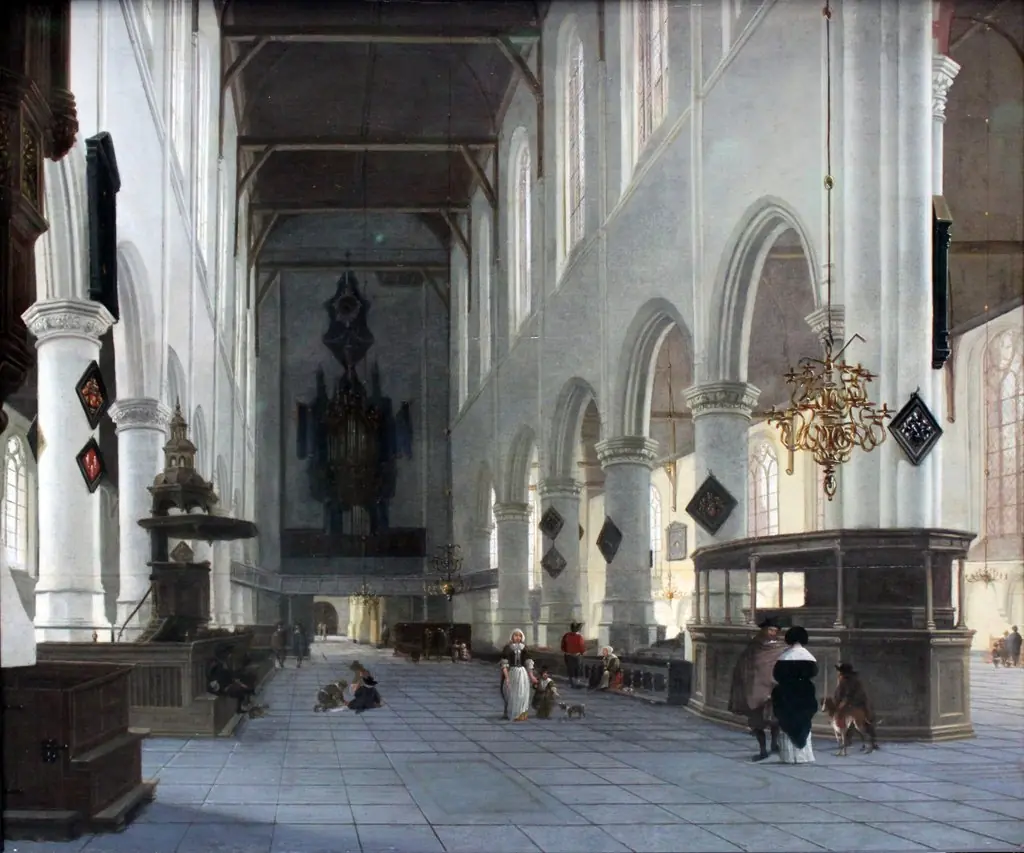
The scene depicts a modest congregation gathered in a nave defined by tall, pale columns and arched windows.
The scene depicts a modest congregation gathered in a nave defined by tall, pale columns and arched windows. A wooden pulpit with an ornate canopy anchors the foreground, suggesting the centrality of preaching. A dog rests near the worshippers, a subtle detail that grounds the sacred space in everyday life. The absence of overt religious iconography shifts focus to the quiet ritual of communal worship.
Technique & Style
The artist employs chiaroscuro to model the architecture, enhancing the sense of volume and depth. Light streams through high windows, illuminating the pulpit and garments while leaving corners in soft shadow. The ceiling’s dark, cloud-like brushwork contrasts with the pale walls, creating a celestial effect. Textures of fabric and stone are rendered with restrained precision, avoiding ornamentation in favor of atmospheric realism.
History & Provenance
The painting entered the Museum of Ethnography’s holdings in the late nineteenth century, though its origins prior to that are undocumented. It was likely produced for private devotion or as a record of a local place of worship. No records confirm the artist’s identity, and the work has been attributed only by stylistic comparison to contemporaneous Dutch interior painters.
Context
In mid-seventeenth-century the Netherlands, church interiors were frequently depicted as symbols of civic order and spiritual quietude. After the Reformation, Catholic churches in the region were repurposed or maintained with minimal decoration. This painting reflects that austerity, emphasizing architecture over imagery, aligning with Protestant values of simplicity and introspection.
Legacy
Though not widely exhibited, the painting contributes to a broader corpus of Dutch interior views that document sacred space in the post-Reformation era. Its restrained use of light and attention to architectural detail influenced later topographical and genre painters. It remains a quiet testament to the role of architecture in shaping religious experience during a period of profound cultural change.
Artist & collection