Artwork
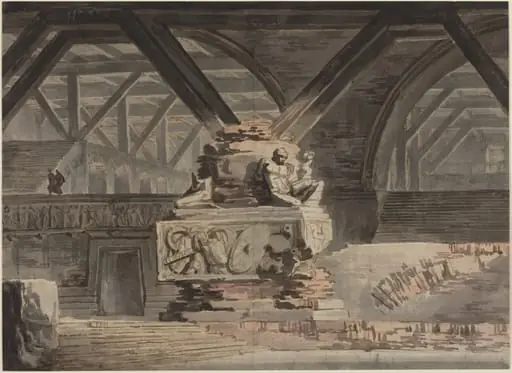
Subterranean Jail for the Stage
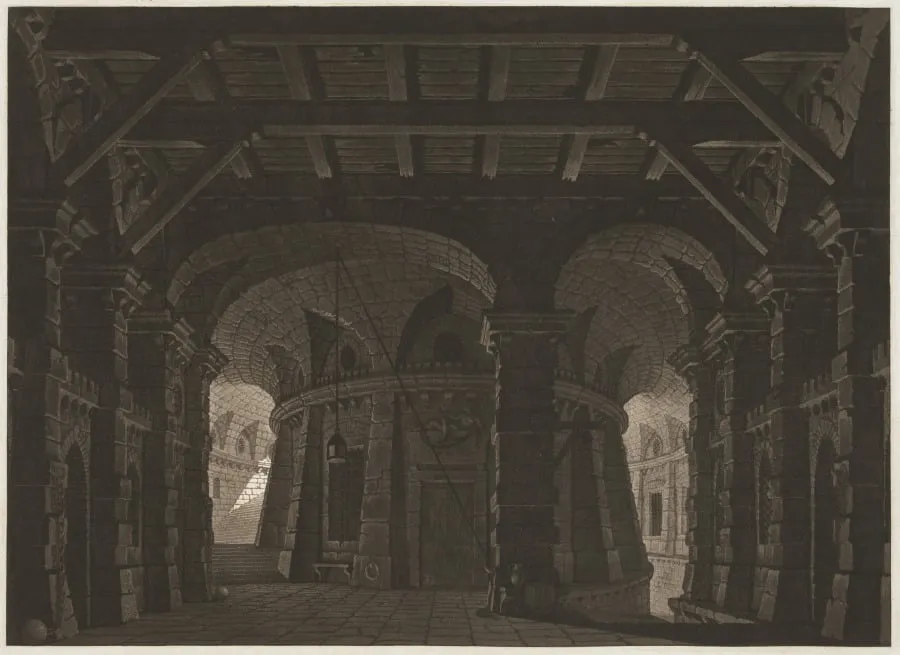
Subterranean Jail for the Stage is a print by the Romanticist artist Abel Schlicht. It dates from 1788 and is held in the collection of the Cleveland Museum of Art.
- Accession no.
- 2003.23
- Credit line
- John L. Severance Fund
About this work
Overview
Subterranean Jail for the Stage is a print by Abel Schlicht, an architect who also designed stage sets for the Mannheim National Theater, a significant cultural institution in 18th-century Germany.
Subject & Meaning
The print depicts a dark, cramped prison cell with rough stone walls and flickering torchlight, featuring hunched figures in tattered clothes, likely representing a dramatic scene of injustice or suffering, a common theme in 18th-century theater.
Technique & Style
Schlicht used aquatint to create a range of tones, illuminating the background while plunging the foreground into darkness, employing chiaroscuro to build a somber mood and emphasize the oppressive atmosphere of the prison cell.
Context
Prison scenes were a popular subject in 18th-century drama, and Schlicht's design would have been used in multiple productions at the Mannheim National Theater, which was known for staging plays by German playwrights, including Friedrich Schiller.
Artist & collection

 H Beard Print Collection
 The Sawhorse
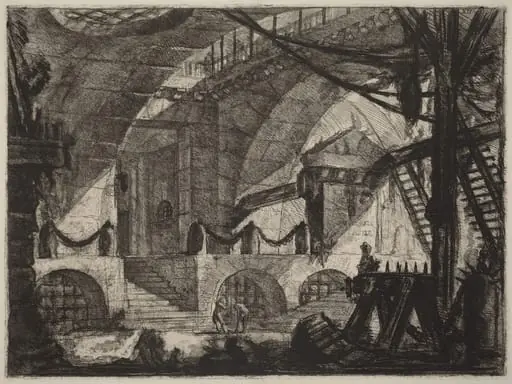 The Sawhorse
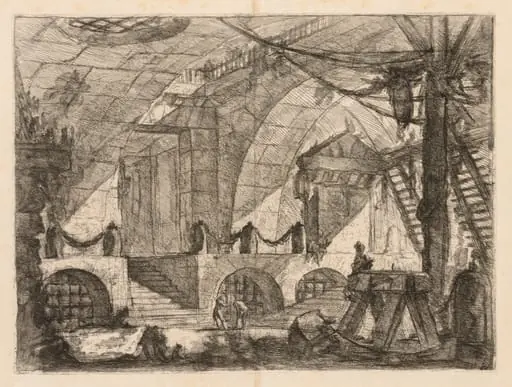 The Prisons: An Arched Chamber with Posts and Chains
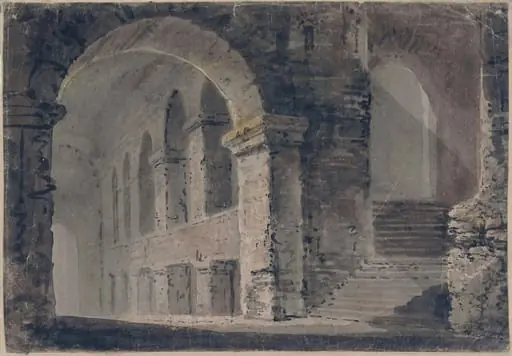 Interior with staircase
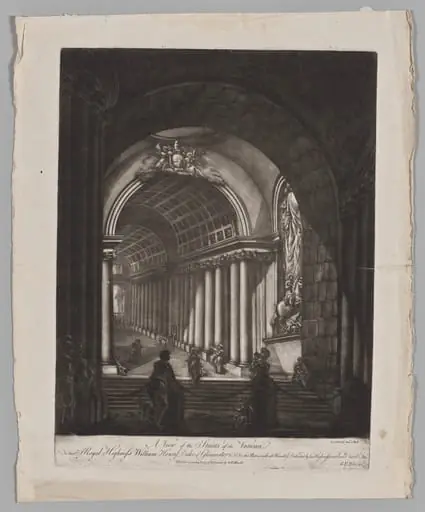 A View of the Stairs of the Vatican
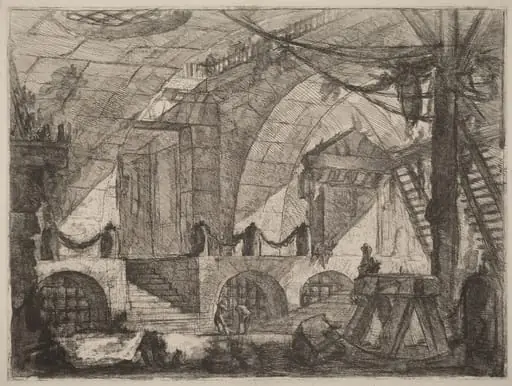 The Sawhorse
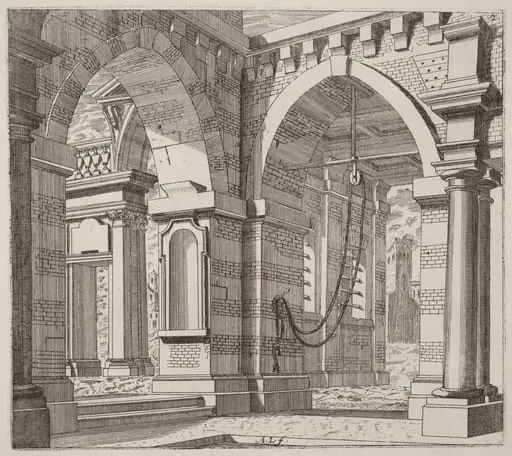 Architectural Fantasy with Arched Gateways
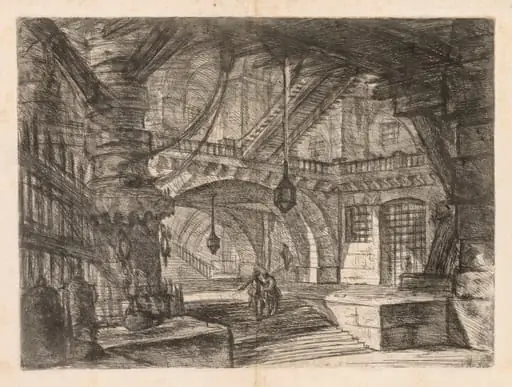 The Prisons: A Wide Hall with Lanterns
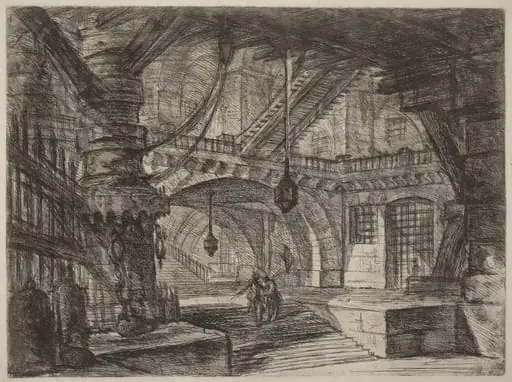 The Pier with Chains
 Stage Design: A Sepulchral Vault
- Gefængnis für die Schaubühne (Scenographic Design for a Prison)