Artwork
Bunches of Grapes, Pomegranates and Figs in a Landscape
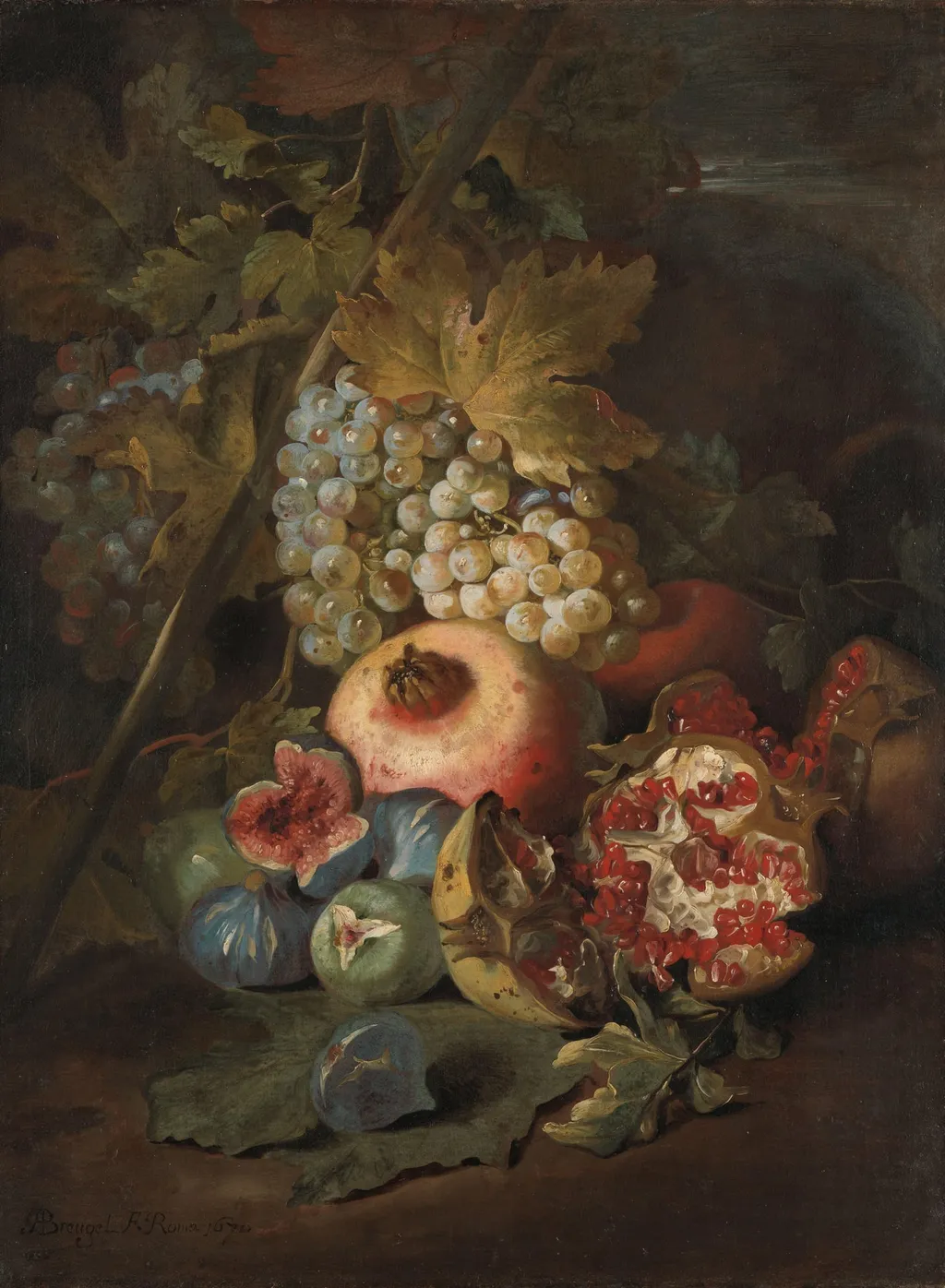
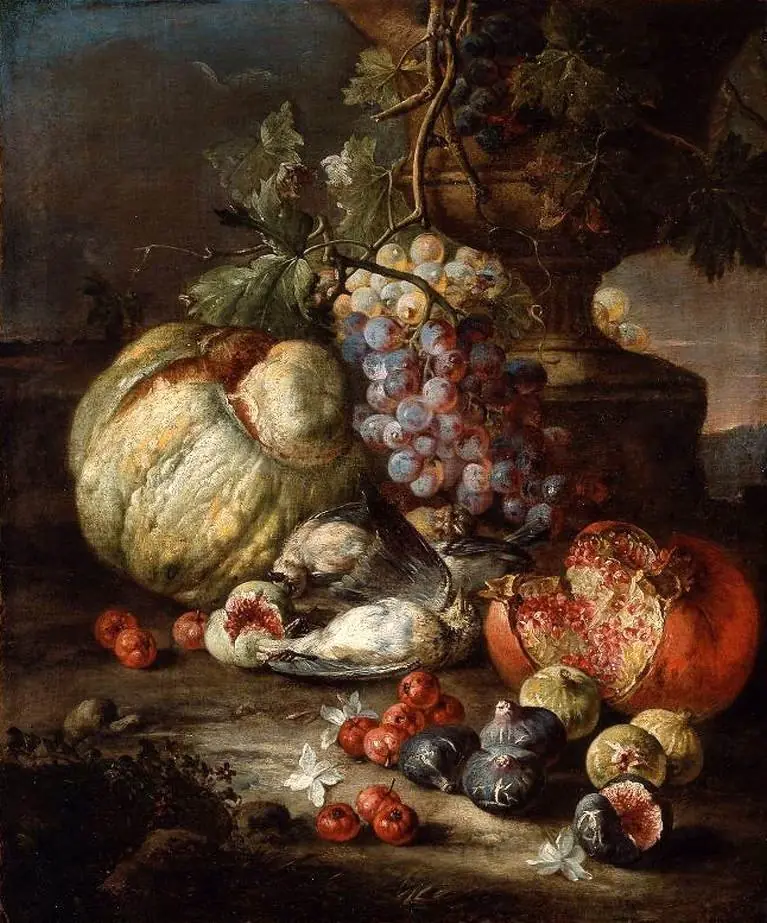
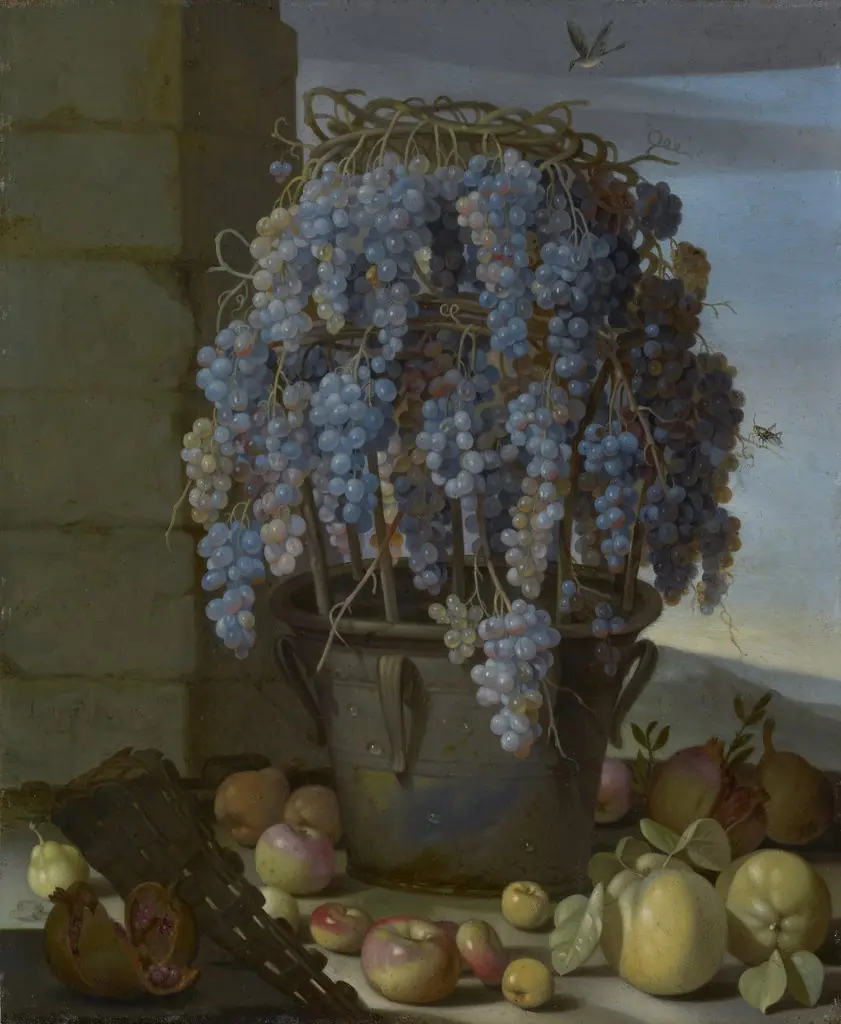
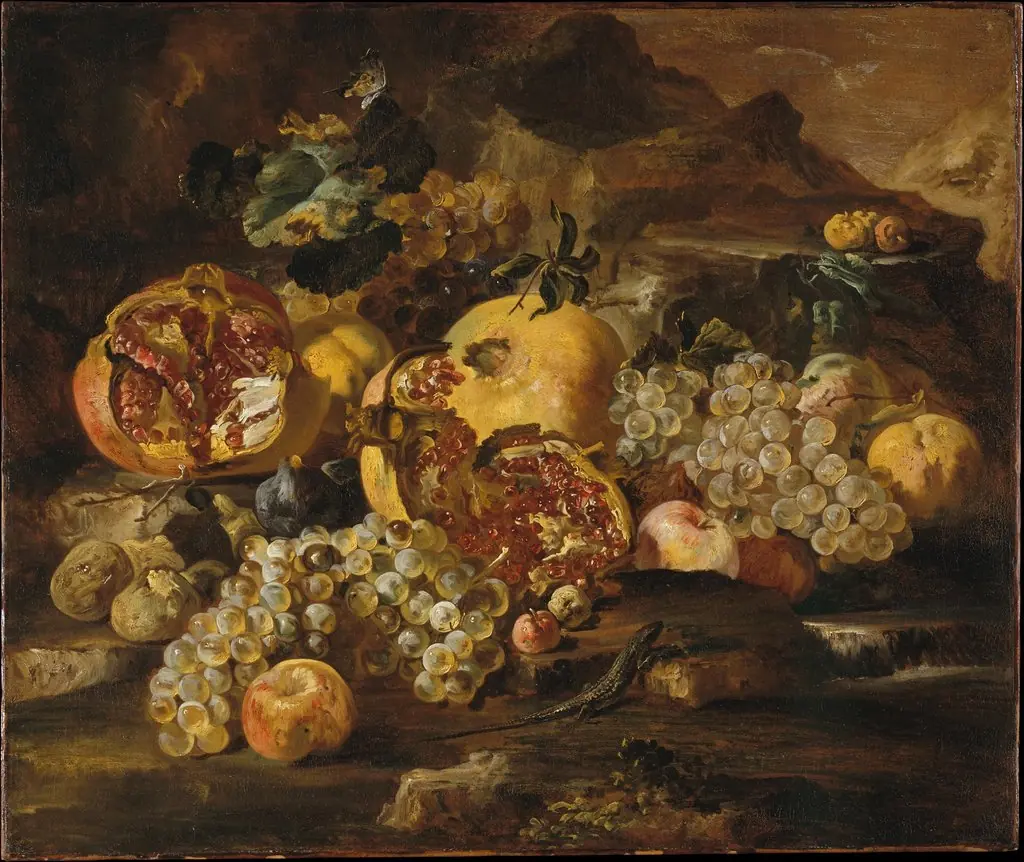
Bunches of Grapes, Pomegranates and Figs in a Landscape is an unspecified painting by the Baroque artist Abraham Brueghel. It dates from 1670 and is held in the collection of the Rijksmuseum.
About this work
Subject & Meaning
The painting depicts clusters of grapes, pomegranates, and figs arranged in a landscape setting, a subject typical of Abraham Brueghel's mature output.
The painting depicts clusters of grapes, pomegranates, and figs arranged in a landscape setting, a subject typical of Abraham Brueghel's mature output. He was especially known for still lifes of southern fruits, including pomegranates, figs, peaches, and melons, typically assembled before a landscape background and often enhanced by a precious vase, antique monument, or fragments of Roman sculpture. Such compositions emerged from his synthesis of the Flemish preference for decorative profusion with the sweeping movement of the Italian High Baroque, producing arrangements that appear casual yet maintain strong composition and clarity of detail.
The choice of grapes, pomegranates, and figs carried layered significance within Baroque still-life tradition. These fruits were associated with abundance, fertility, and the bounty of southern climates, while also evoking religious and allegorical resonances common in Flemish-Italian decorative painting. Brueghel's pairing of fruit with landscape reflected the genre's aim at ornamental and decorative effect, prioritizing lush visual richness over strict naturalism.
Technique & Style
Executed in 1670, this painting exemplifies Abraham Brueghel's mature Baroque style, characterized by a lush arrangement of southern fruits set against a landscape background. The work displays the artist's shift toward a brighter, stronger palette and a slightly more painterly handling of brushstrokes typical of his Roman period. Brueghel combines the Flemish tradition of decorative profusion with the sweeping movement of Italian High Baroque, creating compositions that appear casual yet maintain structural clarity and detailed precision.
The inclusion of specific produce like pomegranates and figs reflects his specialization in southern fruit still lifes, often enhanced by antique fragments or precious vessels to achieve a grandiose, ornamental effect.
History & Provenance
The painting Bunches of Grapes, Pomegranates and Figs in a Landscape is dated to 1670, a period when Abraham Brueghel was active in Rome prior to his permanent relocation to Naples. During this specific year, the artist was admitted to the Accademia di San Luca and was known within the Bentvueghels circle under the nickname Rijngraaf. The work exemplifies Brueghel's mature style, characterized by lush arrangements of southern fruits set against landscape backgrounds, a genre he developed while living in Italy.
While the artist frequently collaborated with figure painters such as Carlo Maratta or Giacinto Brandi for complex compositions, this piece focuses on the still life elements for which he was renowned. No specific records regarding the original commission, early ownership chain, or subsequent provenance of this particular titled work are provided in the available sources.
Context
Abraham Brueghel’s still lifes, including Bunches of Grapes, Pomegranates and Figs in a Landscape (1670), occupy a pivotal place in the late Baroque decorative tradition that fused Flemish abundance with Italian grandeur. His compositions are noted for their lush, painterly handling and warm, saturated palette, aligning with the Roman High Baroque aesthetic promoted by contemporaries such as Michele Pace del Campidoglio and Michelangelo Cerquozzi. Critics and later scholars have emphasized the decorative rather than strictly naturalistic impulse in Brueghel’s work, situating it within the ornamental strain of Neapolitan still life painting that flourished after his move to Naples in the early 1670s.
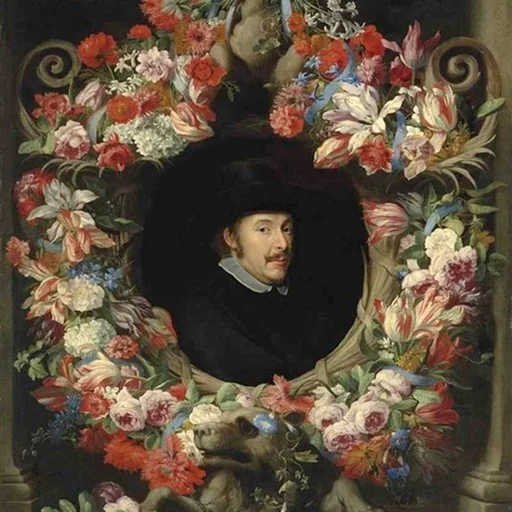
His decorative cartouches and garland structures also reflect the Antwerp-derived genre of flower garlands, adapted to Italian taste for theatrical display and allegorical breadth.
Brueghel’s practice of integrating landscape backgrounds with still-life elements secured his reputation among elite Roman and Neapolitan patrons, including Prince Antonio Ruffo and Cardinal Flavio Chigi. Collaborations with figure painters such as Carlo Maratta and Giovanni Battista Gaulli further anchored his work within the collaborative culture of Roman and Neapolitan workshops, where his role was typically to execute the fruit and flower passages while others supplied the human or architectural staffage. This division of labor underscores how Brueghel’s art functioned as a component within larger decorative schemes, rather than as autonomous naturalistic representation.
Legacy
Brueghel’s mature fruit and flower compositions, such as Bunches of Grapes, Pomegranates and Figs in a Landscape, helped cement the decorative garland format that originated with his grandfather. By integrating lush southern produce against idealised landscapes, he set a precedent for the lavish still lifes of 18th‑century Neapolitan artists. Collaborations recorded in contemporary inventories show that his approach to combining fruit, flowers and ornamental architecture influenced later painters who adopted his heavy cartouches and vibrant palettes.
His role in the Accademia di San Luca and the Bentvueghels further amplified his reputation as a leading figure in Baroque decorative painting.
Overview
Painted in 1670 by Abraham Brueghel, 'Bunches of Grapes, Pomegranates and Figs in a Landscape' exemplifies the decorative Baroque still life style the artist helped develop during his career in Italy. The composition features a profusion of ripe fruit, including grapes, pomegranates, and figs, arranged upon a ledge against a dark, leafy background that suggests a natural setting. Brueghel renders the textures of the skins and the play of light with meticulous detail, emphasizing the sensory appeal and abundance of the harvest.
This work reflects the Flemish tradition of the stilleven, focusing on technical virtuosity and the celebration of natural beauty rather than narrative allegory. The artist's signature appears in small letters on the table edge, a common practice for asserting authorship in such detailed studies. As a member of the renowned Brueghel family, Abraham brought Northern European precision to Italianate settings, bridging artistic traditions.
This painting stands as a representative example of his mature output, showcasing his ability to combine realistic observation with a lush, decorative aesthetic that was highly prized in the late 17th century.
Own this work as a print
Artist & collection
Artist
Abraham Brueghel (baptised 28 November 1631 – c. 1690) was a Flemish painter from the famous Brueghel family of artists. He emigrated at a young age to Italy where he played an important role in the development of the…