Artwork
Portrait of Charlotte du Val d'Ognes
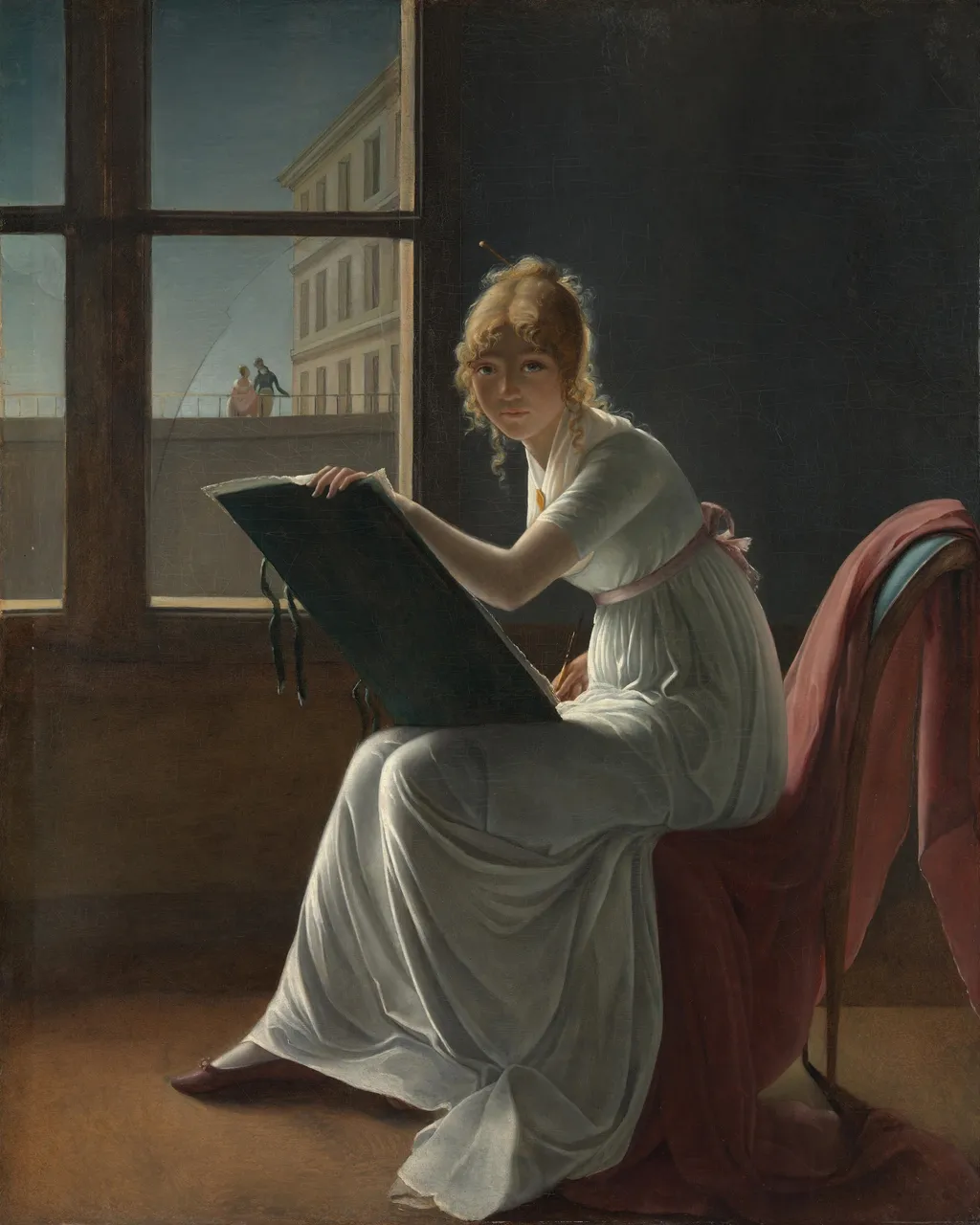
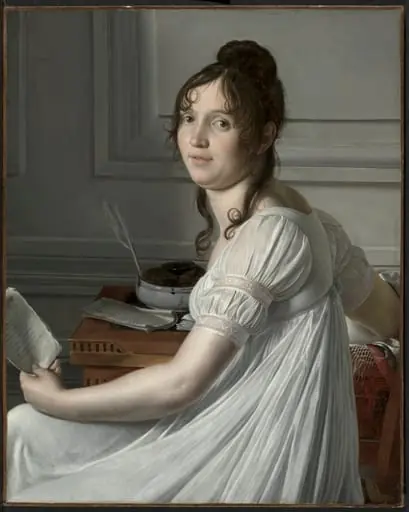
Portrait of Charlotte du Val d'Ognes is an oil painting by the Academic Art artist Marie-Denise Villers. It dates from 1801 and is held in the collection of the Metropolitan Museum of Art.
About this work
For nearly two centuries the Metropolitan Museum of Art showed this 1801 canvas as a Jacques-Louis David, even nicknaming it 'the New York David.
For nearly two centuries the Metropolitan Museum of Art showed this 1801 canvas as a Jacques-Louis David, even nicknaming it 'the New York David.' In 1995 the scholar Margaret Oppenheimer confirmed the painter was in fact Marie-Denise Villers, who had exhibited it at the Paris Salon under her own name before later hands erased her authorship. The sitter, Charlotte du Val d'Ognes, was herself a painter who gave up art on marrying.
Subject & Meaning
The portrait depicts 15- or 16-year-old Marie Joséphine Charlotte du Val d'Ognes seated before a broken window, drawing in a sketchbook with a pen. Behind her, a couple stands on a parapet; the room has been identified as a gallery of the Louvre. The shattered windowpane is described as a tour de force of trompe-l'oeil.
Feminist critics, notably Germaine Greer, interpret the work as rejecting conventional charm or sexual vitality. Art historians view the painting as capturing a fleeting moment of opportunity for women artists in early-19th-century Paris, as Charlotte herself aspired to be a professional artist but abandoned that ambition upon marriage. The work thus symbolizes both female artistic aspiration and the societal pressures that curtailed it.
Technique & Style
Executed in oil on canvas, the painting measures 161.3 × 128.6 cm. The support is a standard canvas, and the medium is oil paint, typical of early 19th-century portraiture. A notable formal feature is the trompe-l'oeil treatment of the broken window, described as a tour de force that distinguishes the exterior view as seen only partly through glass. The composition places the sitter drawing in the foreground, with a couple visible on a parapet beyond the window, while the setting has been identified as a gallery of the Louvre.
Critics have noted certain anatomical weaknesses in the figure, which contributed to later reattributions away from Jacques-Louis David. The painting is unsigned, and its handling reflects the academic style of the period, though with some perceived inconsistencies in draftsmanship.
History & Provenance
Painted in 1801, the work was first exhibited at the Paris Salon that same year. It is unsigned, leading to a long chain of misattribution. A member of the sitter's family believed it was by Jacques-Louis David.
The Metropolitan Museum of Art acquired the painting in 1922 for $200,000 under that attribution. In 1951, curator Charles Sterling questioned the David attribution, partly because David had boycotted the 1801 Salon; the museum published the error that January. Sterling then reattributed the painting to Constance Marie Charpentier, though David's name was not removed from the frame until 1977.
In 1996, Margaret Oppenheimer argued for Marie-Denise Villers based on a modello by Villers, an attribution now accepted by the Met. The painting remains in the museum's collection.
The painting is held at the Metropolitan Museum of Art in New York. The museum acquired it in 1922 for $200,000, at a time when it was attributed to Jacques-Louis David. Its earliest recorded exhibition was at the Salon of 1801 in Paris.
In 1971, the work appeared on the cover of ARTnews magazine. No accession or inventory number for the piece is mentioned in the available sources.
Context
The painting's critical reception shifted dramatically with its changing attributions. Initially praised as a David, it was called 'a perfect picture, unforgettable' by André Maurois. After Charles Sterling reattributed it to Constance Charpentier in 1951, critics suddenly found faults, with Sterling deeming it a 'merciless portrait of an intelligent, homely woman' and James Laver noting weaknesses unworthy of David.
Scholarship by Margaret Oppenheimer (1996) reattributed the work to Marie-Denise Villers, and Anne Higonnet later argued it is a self-portrait set in a Louvre gallery used by women artists. Feminist critics, including Germaine Greer, have interpreted the painting as feminist and a portrayal of female artistic ambition during a brief period of opportunity for women. The work's place in art history was cemented when Linda Nochlin's pioneering essay 'Why Have There Been No Great Women Artists?' featured it on the cover of ARTnews in 1971.
Legacy
The painting's legacy is shaped by its dramatic reattribution history and its later embrace by feminist art historians. Originally acquired as a Jacques-Louis David, its demotion to a work by Constance Marie Charpentier in 1951 prompted critics to find faults they had previously overlooked, as noted by James Laver. Reattributed to Marie-Denise Villers in 1996, the portrait gained new significance.
Germaine Greer characterized it as a feminist painting that does not seek to charm or portray sexual vitality. The work appeared on the cover of the January 1971 issue of ARTnews, which featured Linda Nochlin's pioneering essay 'Why Have There Been No Great Women Artists?', cementing its place in feminist art history. Today, it is recognized as an important female artist's portrait of a woman in a space used for women's artistic instruction.
Overview
This oil painting, Portrait of Charlotte du Val d'Ognes, created in 1801, is attributed to the French Neoclassical artist Marie-Denise Villers. Housed in the collection of the Metropolitan Museum of Art, the work depicts a young woman seated by a broken window. Its history is notable for a prolonged period of misattribution, initially to Jacques-Louis David, before scholarly research definitively restored Villers's authorship.
Own this work as a print
Artist & collection
Artist
Marie-Denise Villers was born Marie-Denise Lemoine in Paris in 1774 into a family of portraitists: two of her three sisters, Marie-Victoire Lemoine and Marie-Élisabeth Gabiou, and her cousin Jeanne-Élisabeth Chaudet, all trained as…

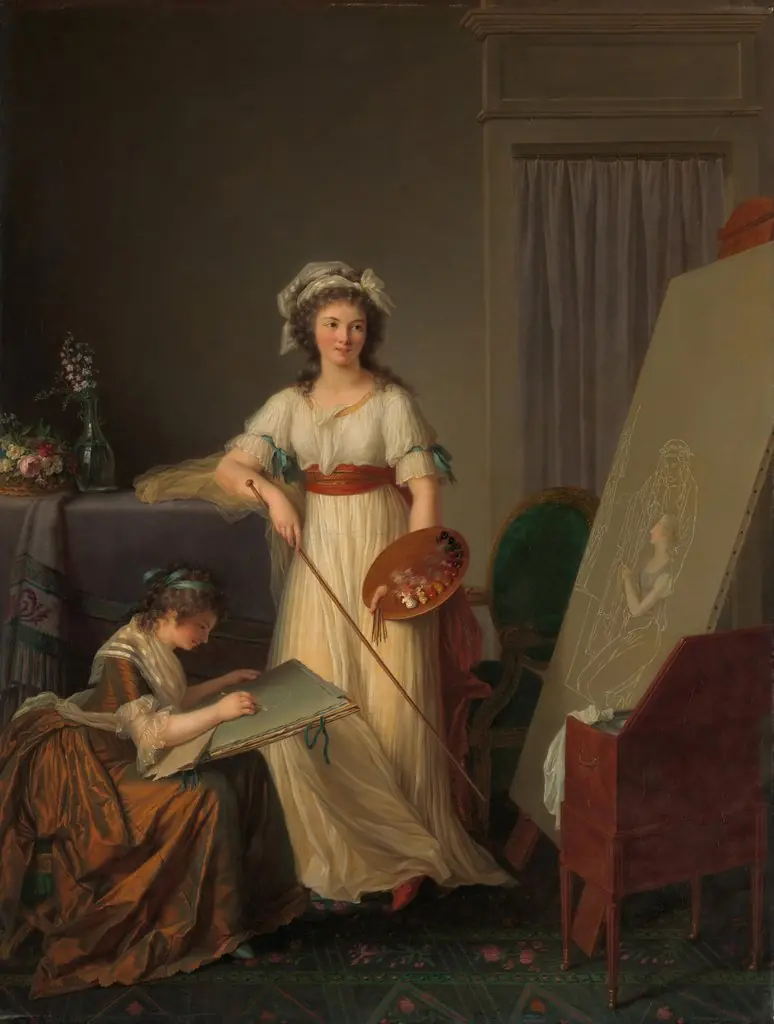
- The Interior of an Atelier of a Woman Painter
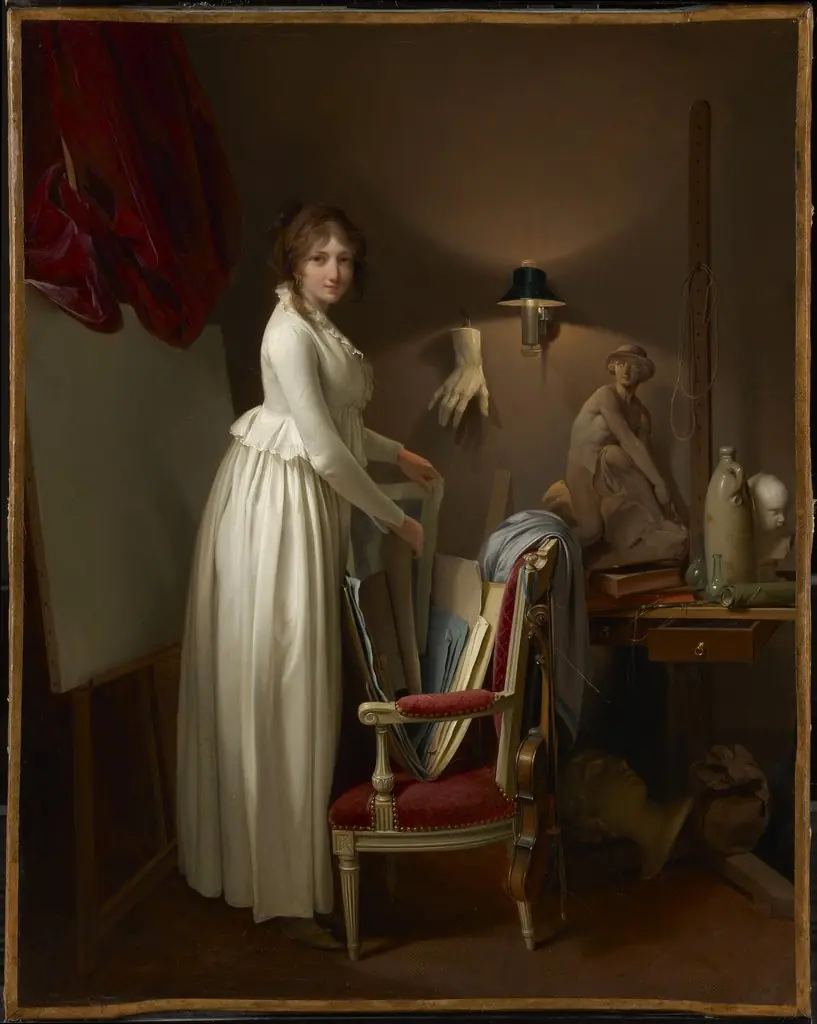 The Artist's Wife in His Studio
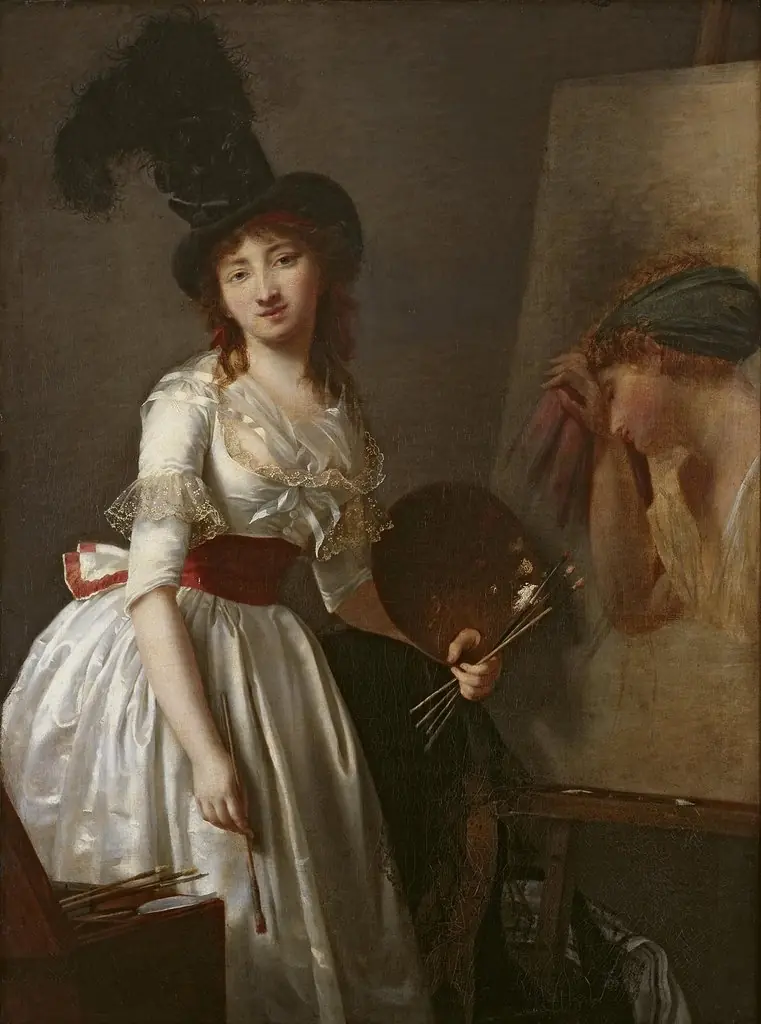 Portrait of a Female Painter, Pupil of David
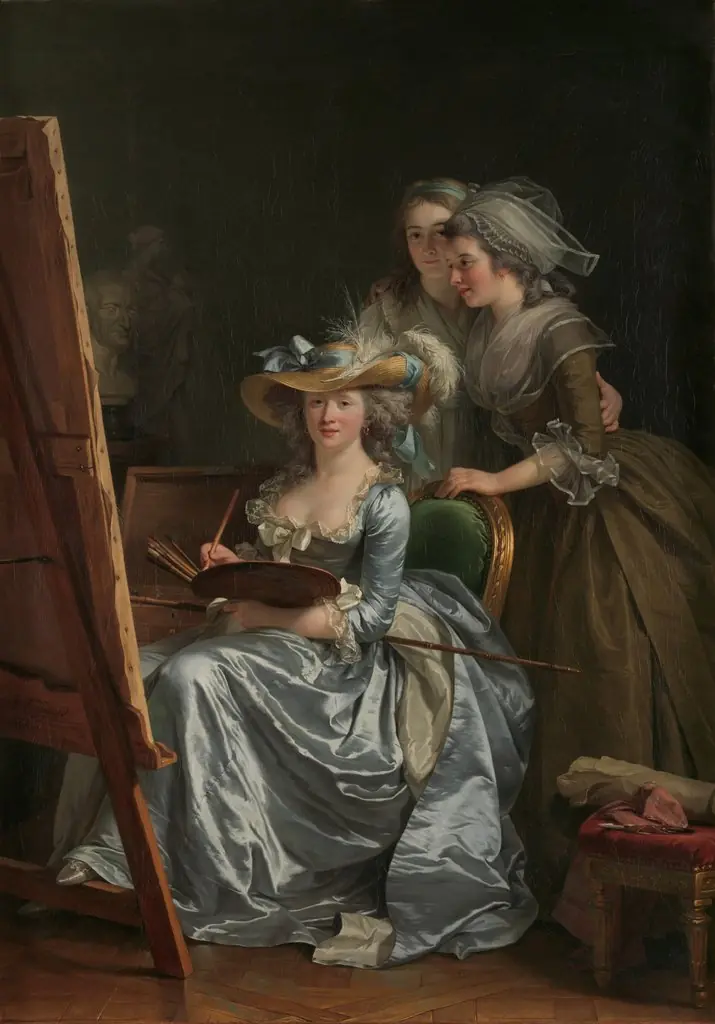 Self-Portrait with Two Pupils
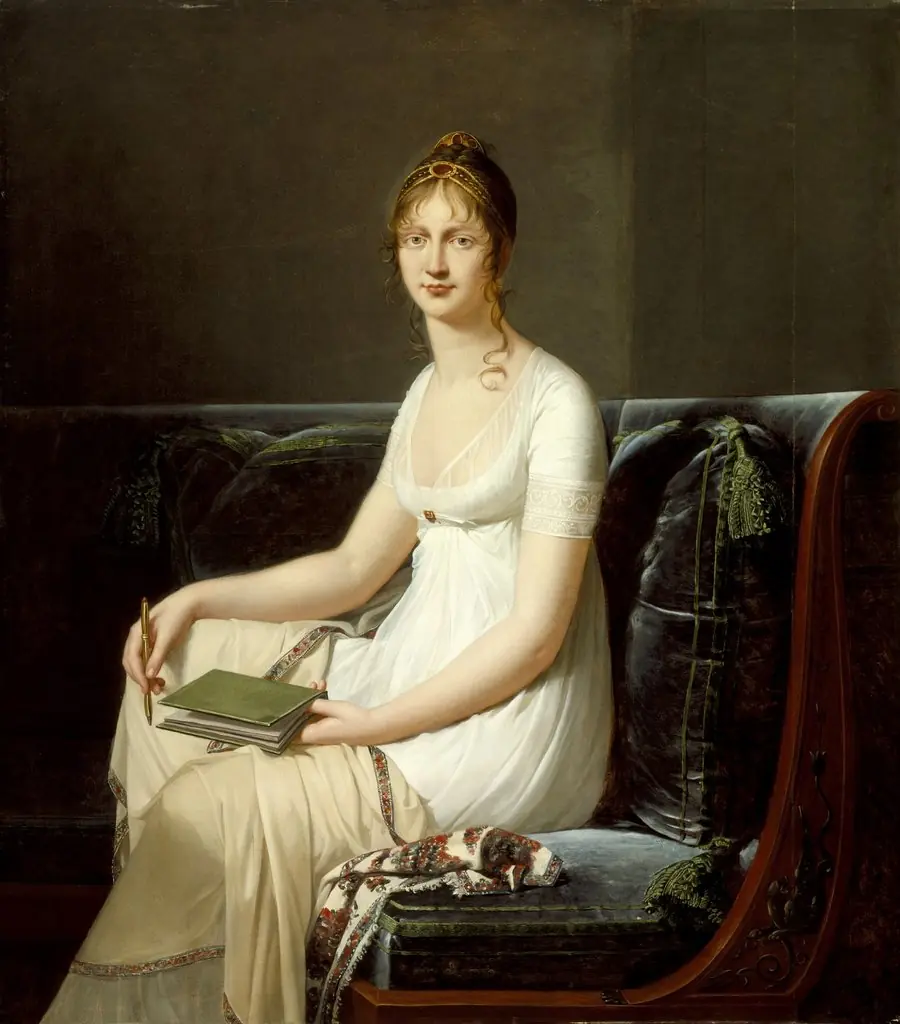 Portrait of a Woman Holding a Pencil and a Drawing Book
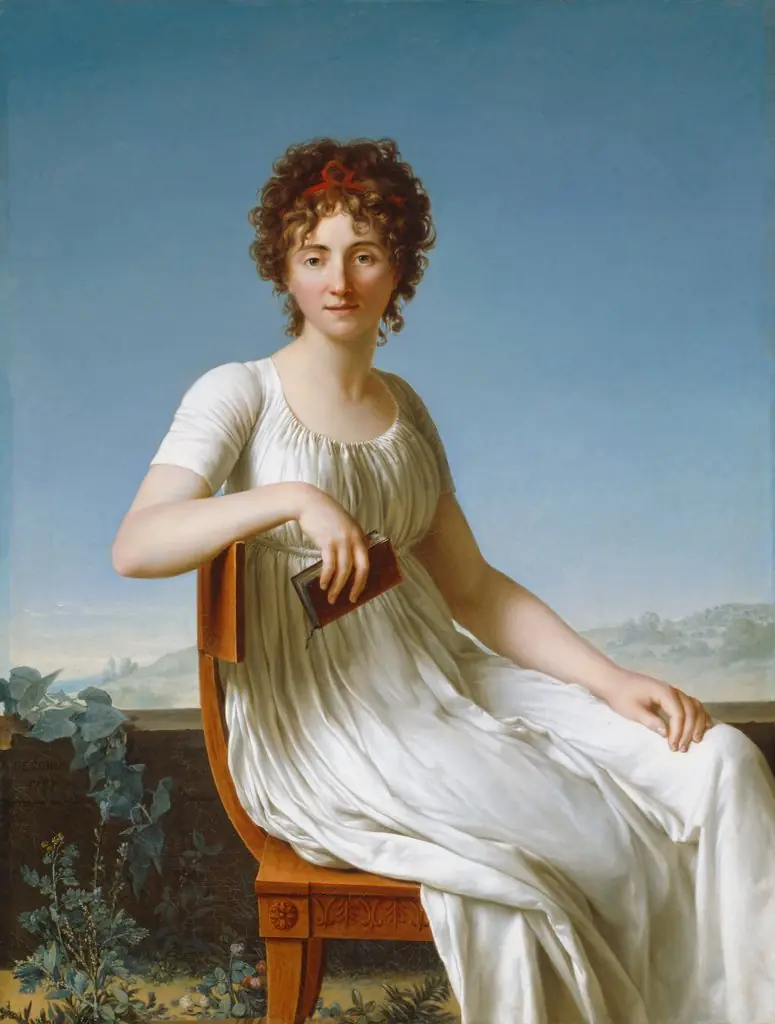 Portrait of Constance Pipelet
 Portrait of Constance Pipelet
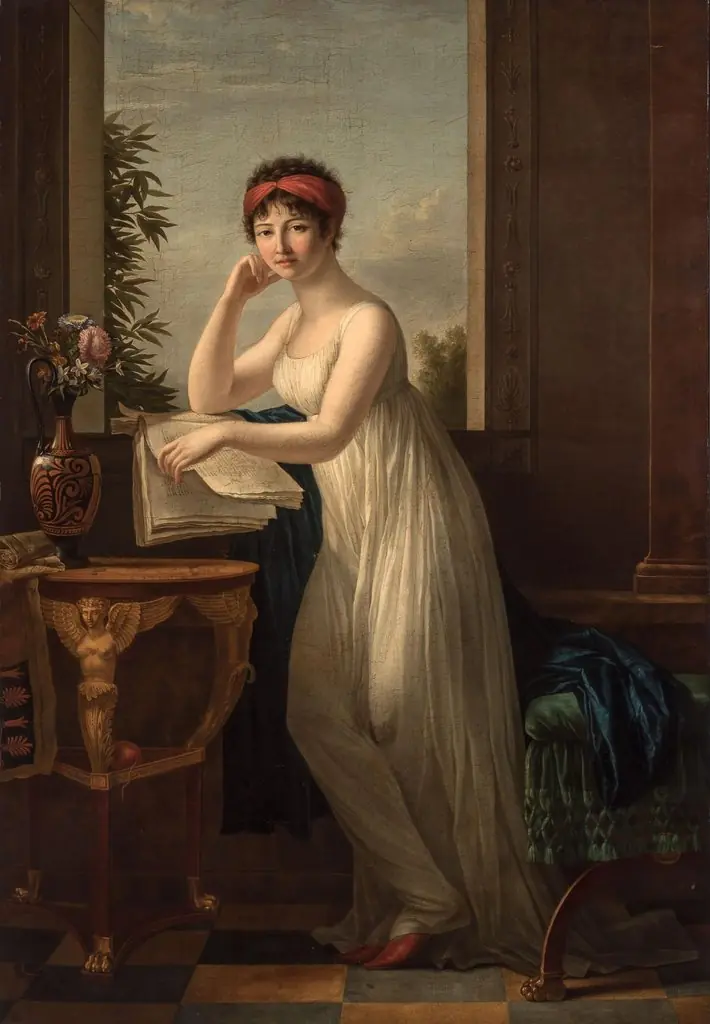 A Young Woman Leaning on the Edge of a Window
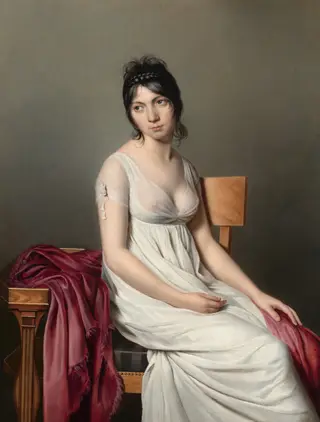 Portrait of a Young Woman in White
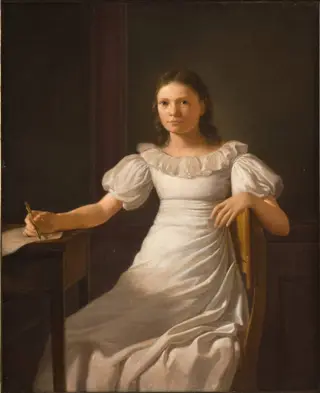 Kunstnerens søster Alvilde
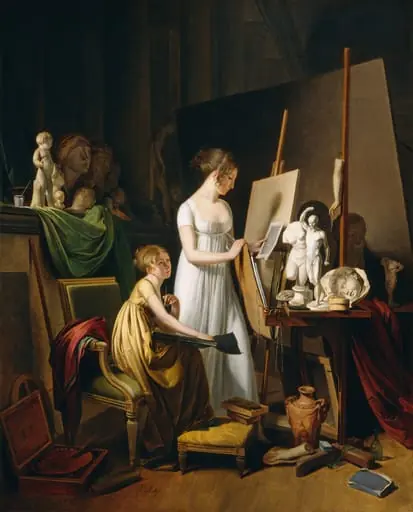 A Painter's Studio
 Sophie Crouzet