Artwork
Return of the Prodigal Son
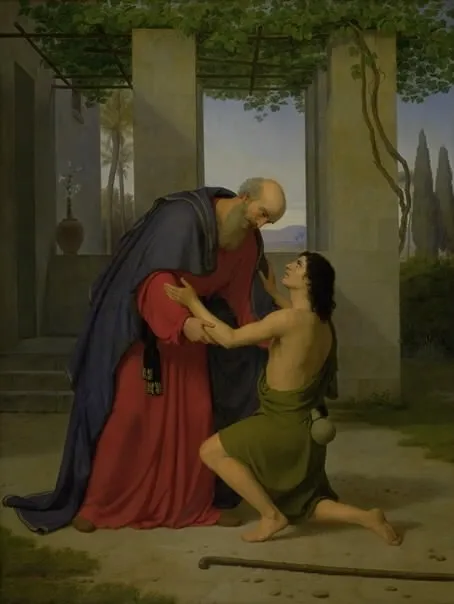
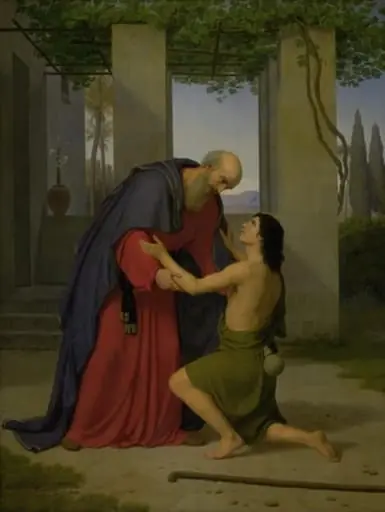
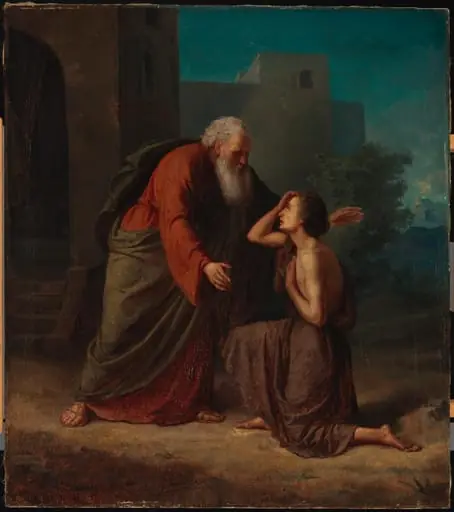
Return of the Prodigal Son is an oil painting by the German Romanticist artist Adam August Müller. It dates from 1843 and is held in the collection of the Statens Museum for Kunst.
About this work
Overview
Return of the Prodigal Son is an 1843 oil painting by Danish artist Adam August Müller, a student of C.F.E. Eckersberg. The work exemplifies Müller's focus on historical and religious subjects, characteristic of his brief yet notable career in Danish art.
Subject & Meaning
The painting illustrates a poignant biblical scene of reconciliation, depicting the moment the prodigal son, symbolized by the ball and walking stick, is welcomed back by his forgiving father. The emotional intensity of their reunion is conveyed through gentle, intimate gestures.
Technique & Style
Executed in oil paint, the work aligns with the German Romanticism movement, evident in its expressive use of color (notably the father’s red robe and blue cloak) and the serene, detailed landscape background, which contrasts with the foreground’s emotional depth.
History & Provenance
Completed in 1843, the painting is now part of the collection at Statens Museum for Kunst, ensuring its preservation as a significant piece of Danish art history despite Müller’s early death at 32.
Context
Created during a period when historical and religious themes dominated Danish art, Müller’s Return of the Prodigal Son reflects the artistic preferences of his time, influenced by his training under Eckersberg and the broader European Romantic movement.
Legacy
Though Müller’s career was cut short, Return of the Prodigal Son contributes to the legacy of Danish Romanticism, offering a contemplative interpretation of a timeless biblical narrative that continues to resonate with audiences.
Artist & collection
Artist
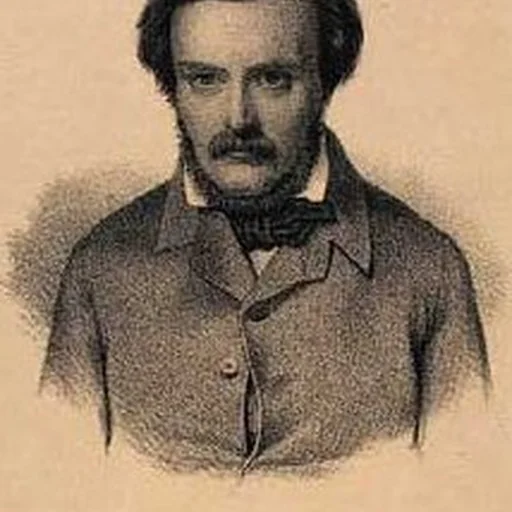
Adam August Müller (16 August 1811 – 15 March 1844), a Danish history painter, was one of Eckersberg's favourite students.

 Den fortabte søns hjemkomst
 Tuhlaajapojan paluu
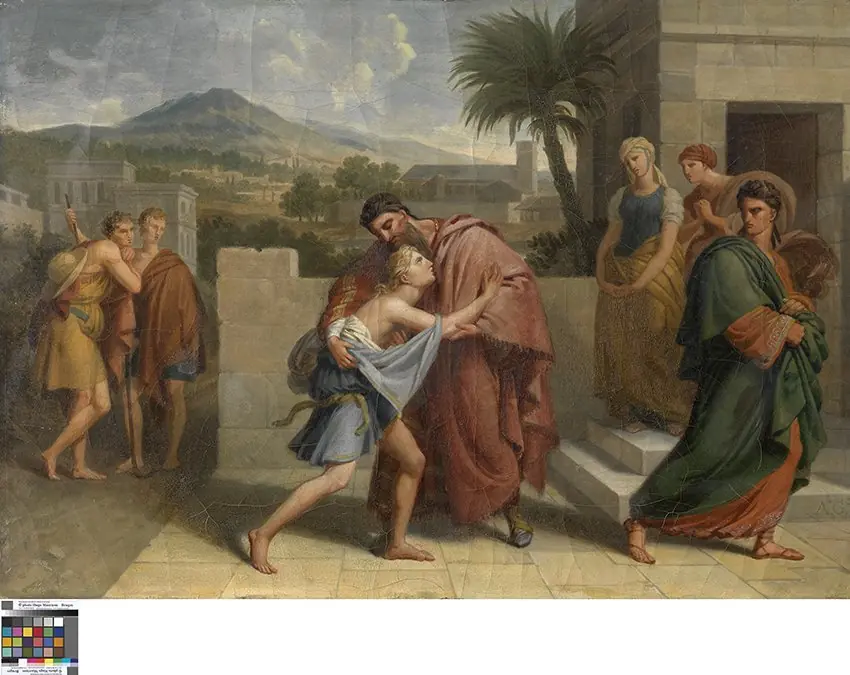 De thuiskomst van de verloren zoon
 Joseph Sold by his Brothers
 Democritus among the Abderitans
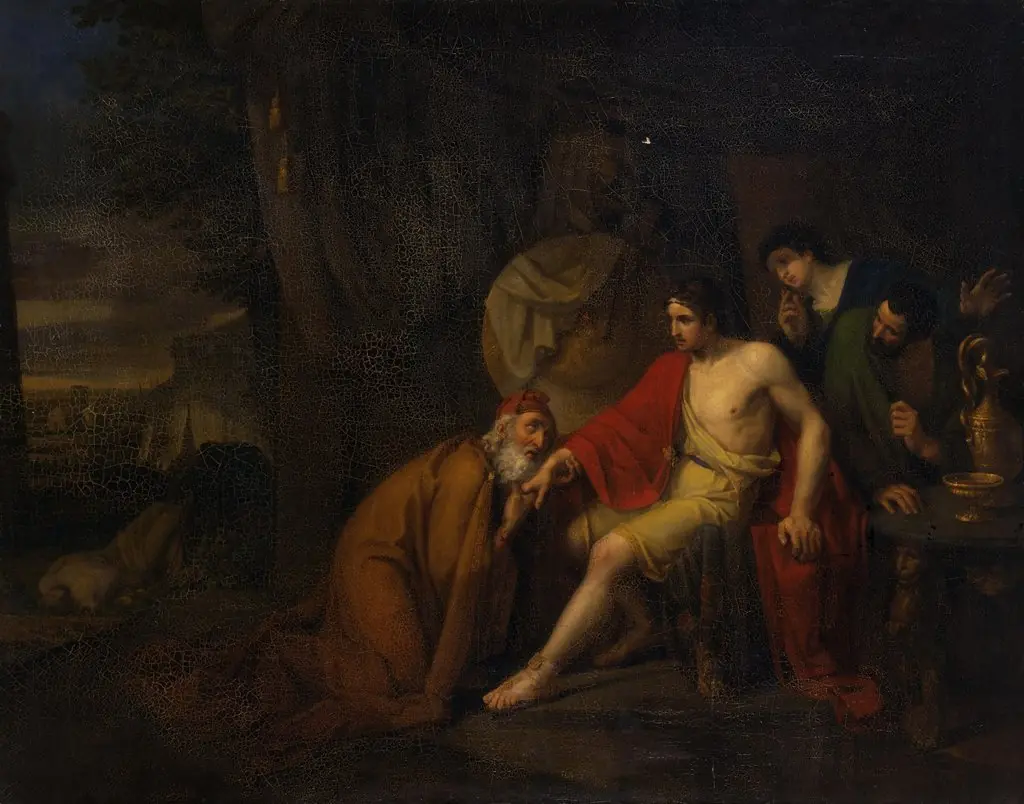 Priam Begging the Body of Hector from Achilles
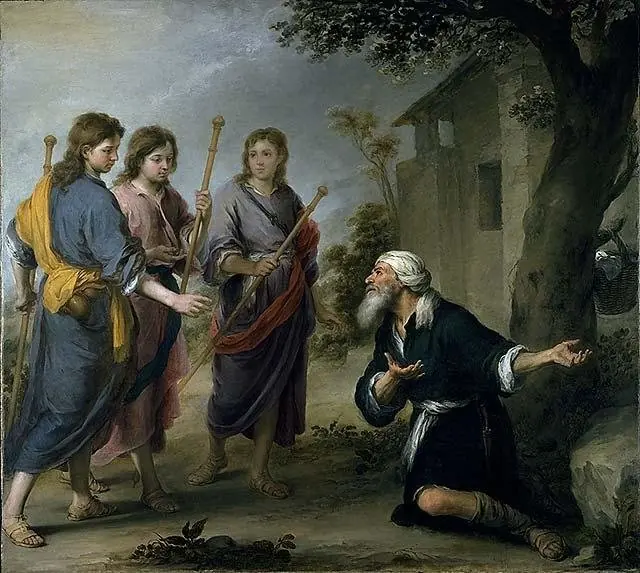 Abraham Receiving the Three Angels
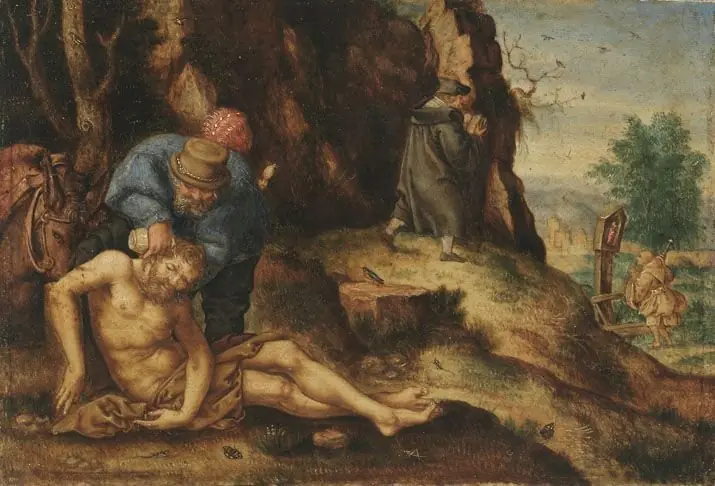 Der barmherzige Samariter pflegt den Verletzten (nach)
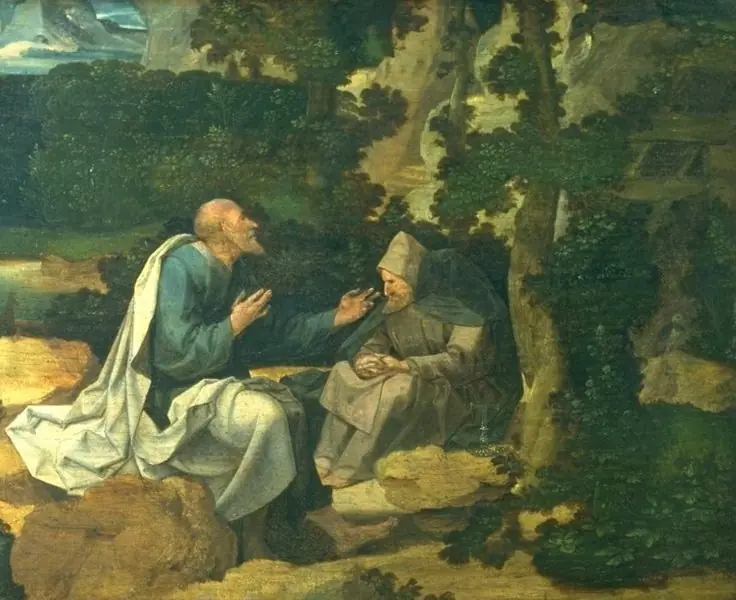 Landscape with the hermits Paul and Anthony