Artwork
Odiham High Street
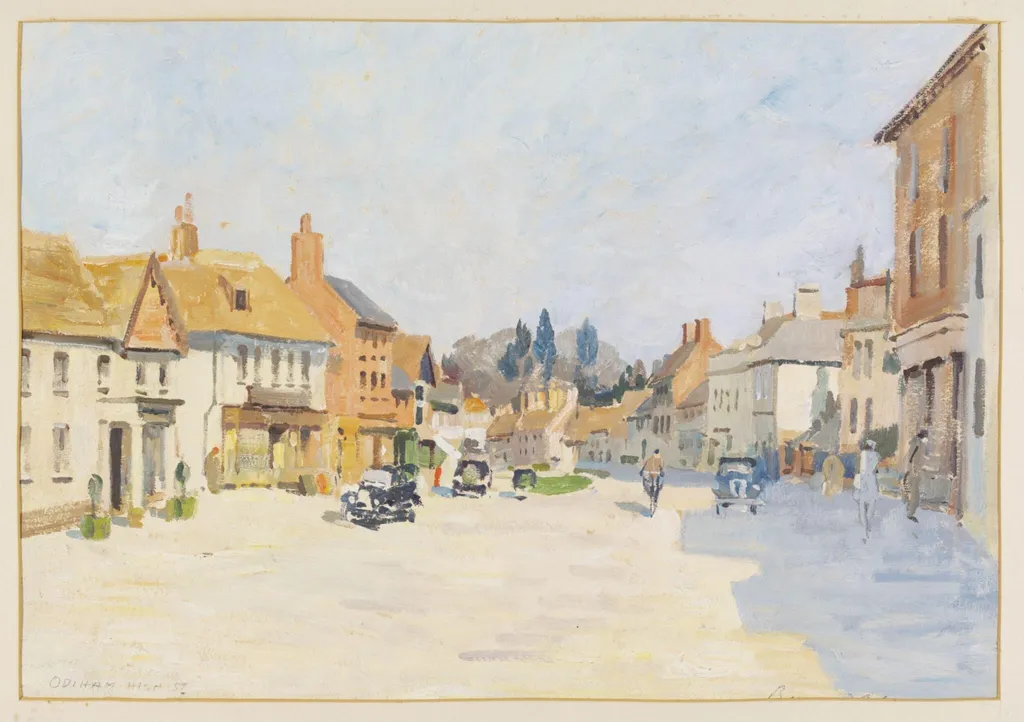
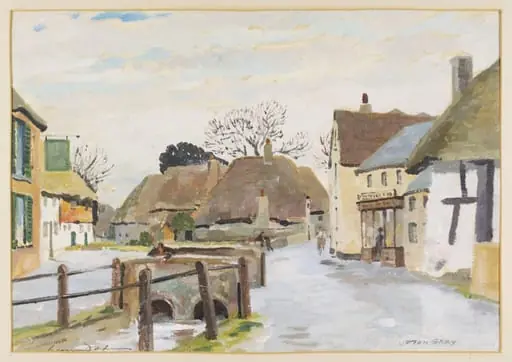
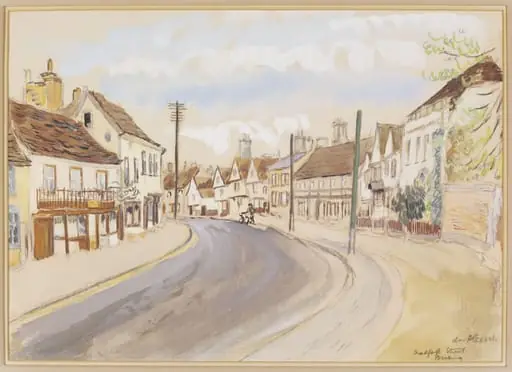
Odiham High Street is a paint painting by the Social Realist artist Adams. It dates from 1940 and is held in the collection of the Victoria and Albert Museum.
About this work
Overview
This initiative sought to document everyday English landscapes during the early years of World War II, fearing their loss to conflict or urban change.
Painted in 1940, Odiham High Street is a watercolour by artist Adams, created as part of the Recording Britain project. This initiative sought to document everyday English landscapes during the early years of World War II, fearing their loss to conflict or urban change. The work captures a quiet village street in Hampshire, rendered with a light, observational touch that emphasizes atmosphere over precision.
Subject & Meaning
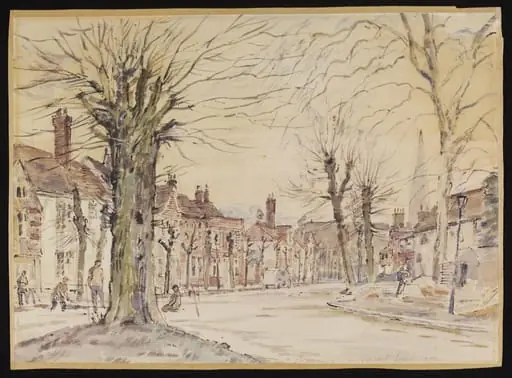
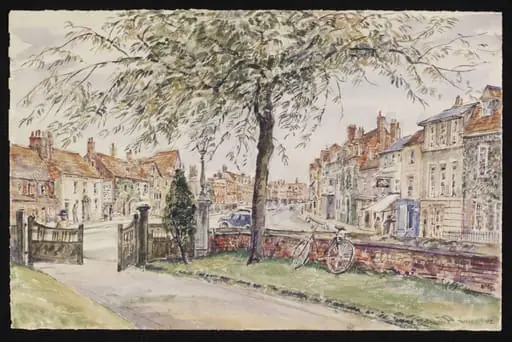
The painting portrays a modest stretch of Odiham’s main road, lined with modest shops and homes featuring sloped roofs and chimneys. Scattered pedestrians and vehicles suggest ordinary life continuing amid wartime uncertainty. The scene holds no grandeur, yet its quiet normalcy becomes a quiet act of preservation, recording a vanishing rural English vernacular before it could be altered by modernization or destruction.
Technique & Style
Adams employed loose, fluid brushwork and a restrained palette of soft yellows, greys, and pale blues to convey the scene’s immediacy. The watercolour technique allows for transparency and spontaneity, with forms suggested rather than meticulously defined. This approach reflects a sketch-like urgency, aligning with the project’s goal of capturing fleeting moments rather than idealized compositions.
History & Provenance
Commissioned under the Recording Britain project, the painting was produced with support from the Pilgrim Trust and administered by the Ministry of Labour and National Service. Sir Kenneth Clark oversaw the initiative, which collected hundreds of works by artists across the country. Odiham High Street entered the national collection, now held by the Victoria and Albert Museum, as part of this systematic effort to archive Britain’s visual heritage.
Context
Created during the early years of World War II, the painting reflects a national anxiety over cultural erosion. With bombing threats and rapid urban change looming, Recording Britain sought to preserve images of places deemed at risk, not for their fame, but for their quiet, everyday character. Adams’ work is one of many that turned attention to the ordinary, elevating the mundane as historically significant.
Legacy
The painting endures as part of a larger archive that reshaped how Britain’s local landscapes were valued. Rather than celebrating monuments, Recording Britain highlighted the subtle textures of village life. Adams’ watercolour remains a quiet testament to the project’s ethos: that cultural memory resides not only in grand structures, but in the unassuming streetscapes of ordinary communities.
Artist & collection
Artist
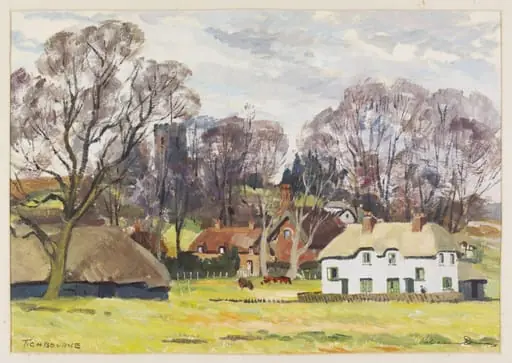
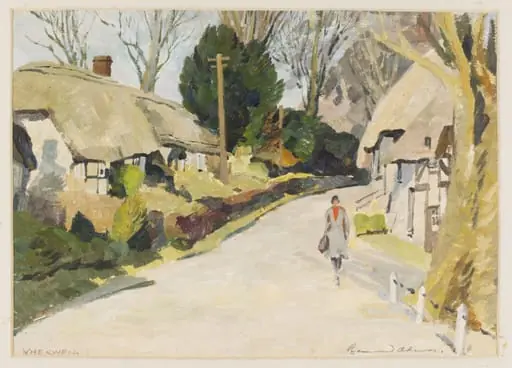
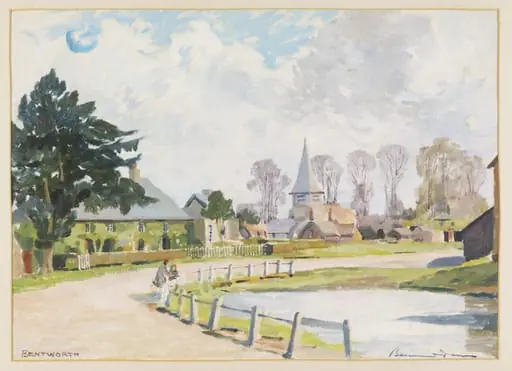
This bundle gathers quiet English countryside scenes from an artist whose name isn’t widely recorded.