Artwork
Bradford Street, Bocking
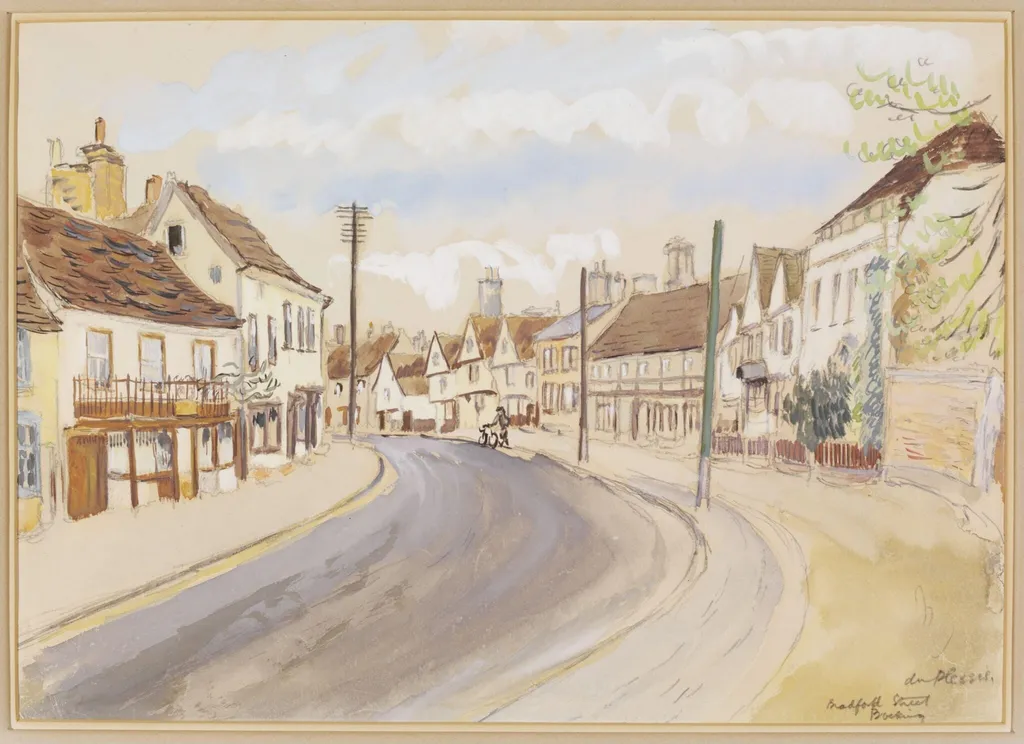
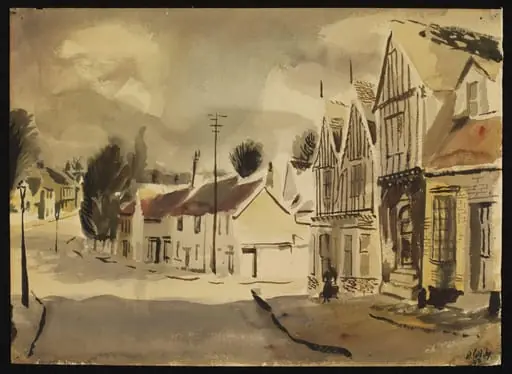
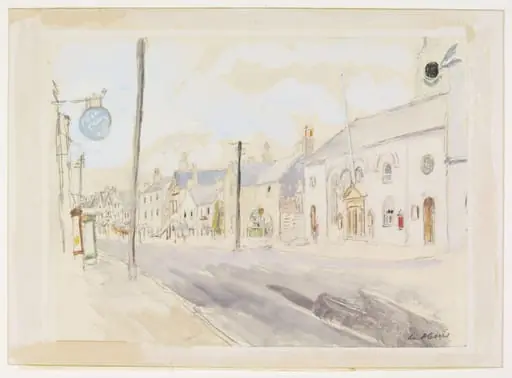
Bradford Street, Bocking is a watercolor work on paper by the Social Realist artist Bayes. It dates from 1940 and is held in the collection of the Victoria and Albert Museum.
About this work
Overview
Bradford Street, Bocking is a watercolour painting capturing a serene street scene in Essex, England. Created in 1940, it combines pencil, watercolour, and body colour to convey a sense of tranquility.
Subject & Meaning
The painting depicts a typical market town street, emphasizing national identity and preserving a pre-war visual record. A cyclist in the centre introduces movement, contrasting with the otherwise peaceful, muted-coloured buildings and natural elements.
Technique & Style
The artist employs watercolour to achieve subtle, nuanced colour blending. Soft rendering of buildings, trees, and a telephone pole creates depth and texture, while the gentle curve of the road guides the viewer's eye.
History & Provenance
Commissioned under the Recording Britain project, funded by the Pilgrim Trust, this 1940 work was part of a wartime effort to document emblematic British locations at risk from destruction or change.
Context
Part of a broader initiative to capture Britain's identity during WWII, the painting reflects concerns about preserving cultural and architectural heritage amidst wartime uncertainty.
Legacy
As part of the Recording Britain collection, Bradford Street, Bocking contributes to a historical visual archive of Britain's pre-war landscape, maintaining its relevance as a documentary piece of the era.
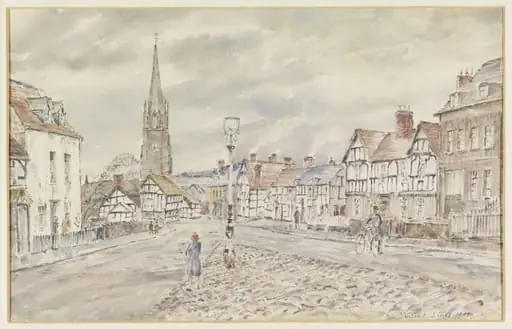
Artist & collection
Artist
Walter John Bayes was an English painter and illustrator who was a founder member of both the Camden Town Group and the London Group and also a renowned art teacher and critic.

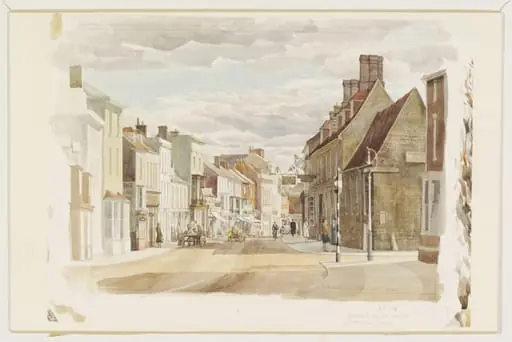 Towcester High Street from the Pomfret Arms Corner, Northamptonshire
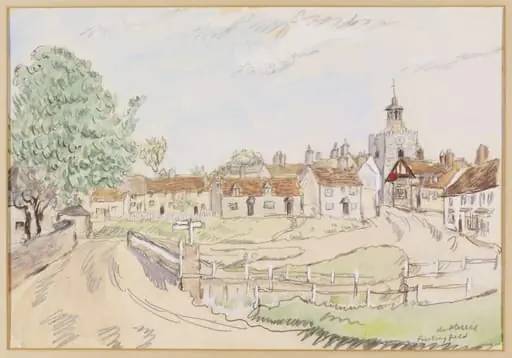 Finchingfield
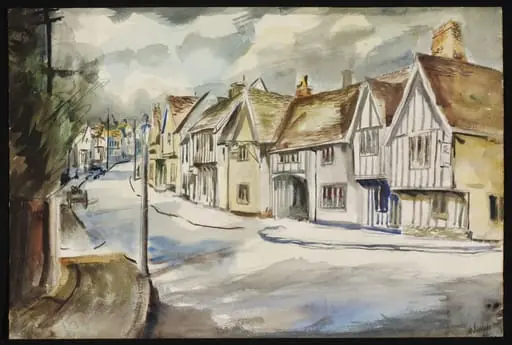 High Street, with the 'Swan', Lavenham
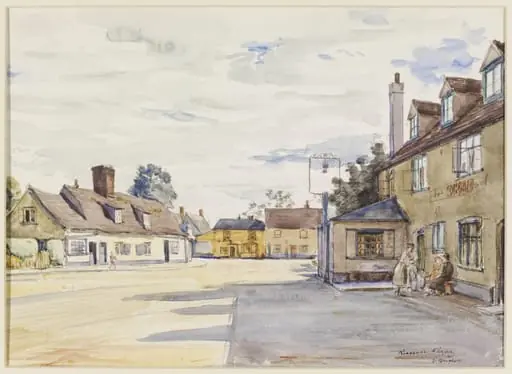 East Bergholt
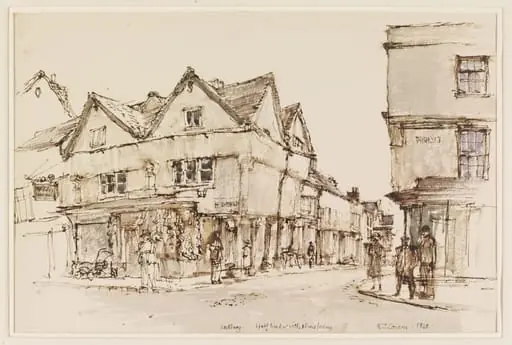 Entrance to New Street, Ledbury
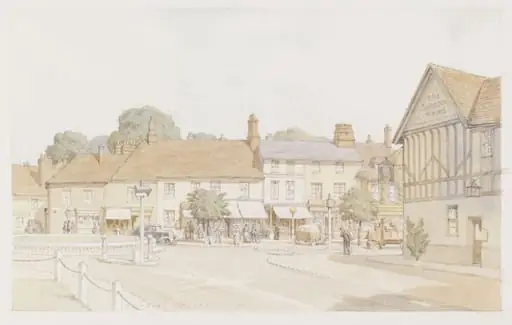 Beaconsfield
 High Street, Lavenham
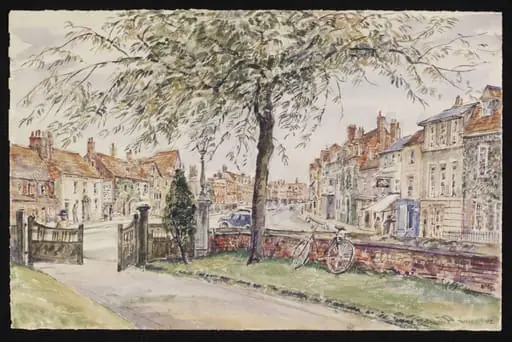 The High Street, Marlborough, from St.Peter's Churchyard
 The Post Office, Hurley
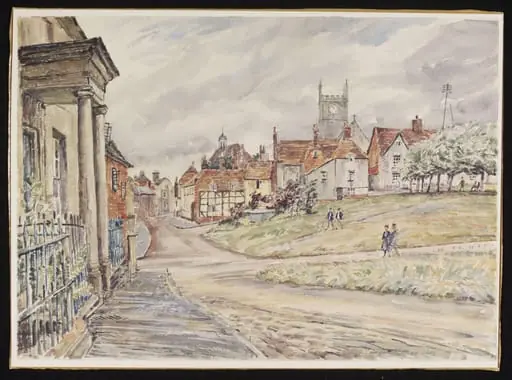 The Green and St.Mary's Church, Marlborough
 Cowbridge, Glamorganshire
- Broad Street, Weobley