Artwork
Tichbourne
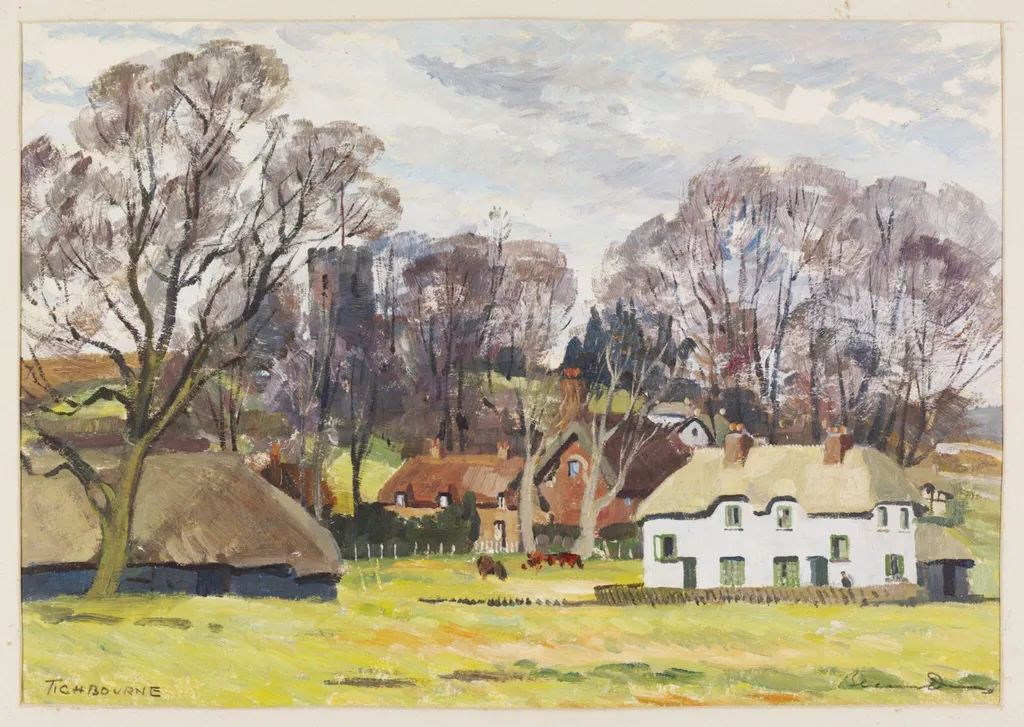
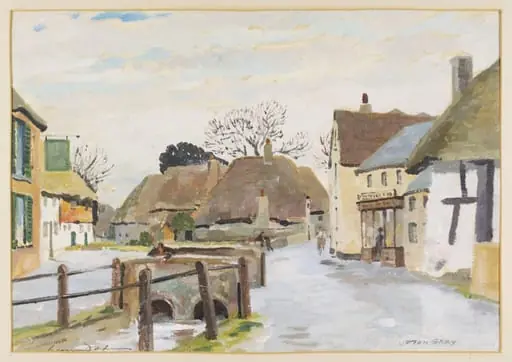
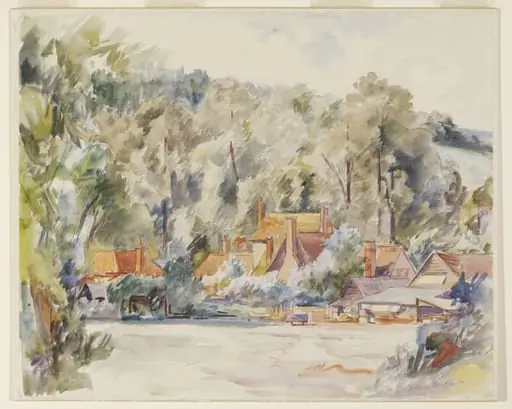
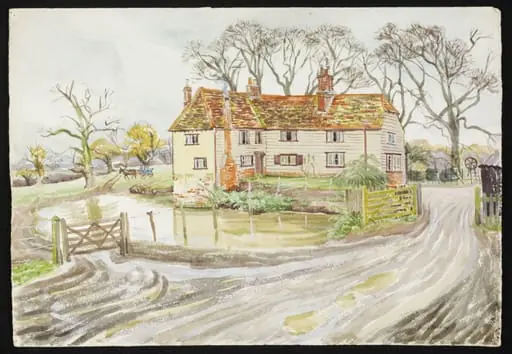
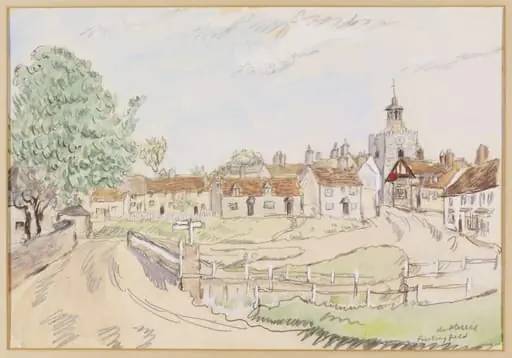
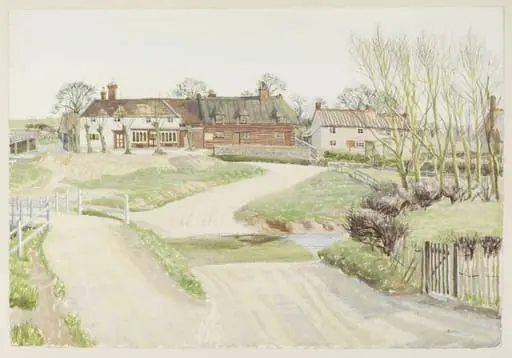
Tichbourne is a paint painting by the Social Realist artist Adams. It dates from 1940 and is held in the collection of the Victoria and Albert Museum. The work is an oil painting on paper, signed by the artist and titled with the name of the village it portrays.
About this work
Overview
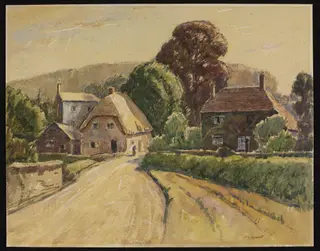
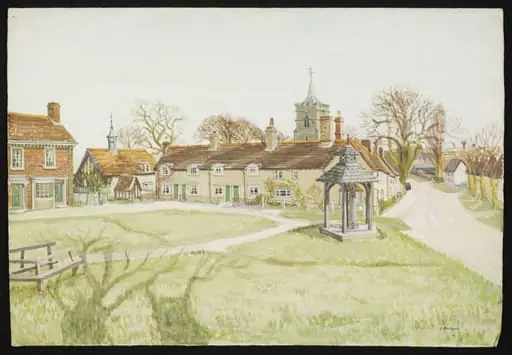
The work is an oil painting on paper, signed by the artist and titled with the name of the village it portrays. It captures a modest rural landscape featuring thatched cottages, a church tower in the distance, and a lone cow grazing amid a grassy field under a light sky.
Subject & Meaning
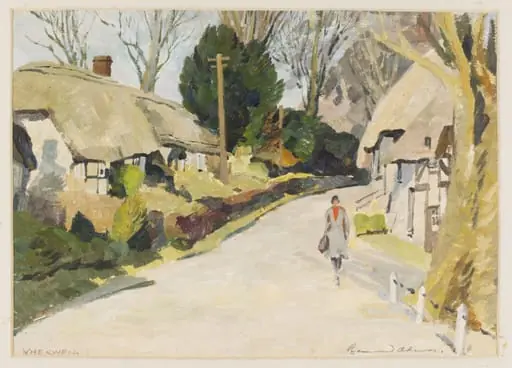
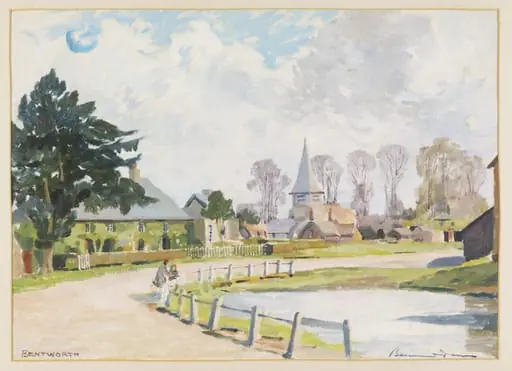
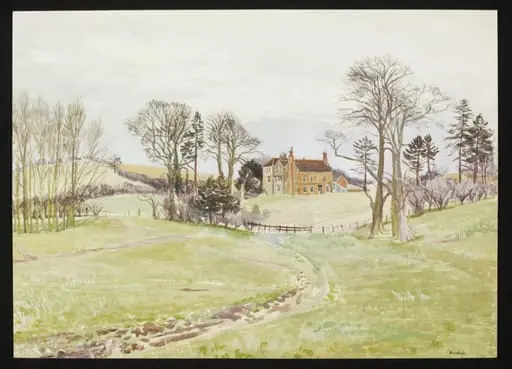
The composition presents a tranquil English valley, where modest homes with thatch roofs and whitewashed walls sit beneath bare winter trees. The distant spire of St. Andrew’s Church anchors the scene, suggesting a sense of place and continuity amid the quiet, seasonal landscape.
Technique & Style
Executed with loose, bright brushwork, the oil on paper conveys a fresh, uncomplicated atmosphere. The artist’s handling of light and colour emphasizes the muted winter tones while allowing the thatched roofs and the cow to stand out with subtle contrast.
History & Provenance
Created in 1940, the painting was part of the Recording Britain initiative, a wartime effort to document threatened historic sites. The project received funding from the Pilgrim Trust and was overseen by Sir Kenneth Clark under the Ministry of Labour and National Service.
Context
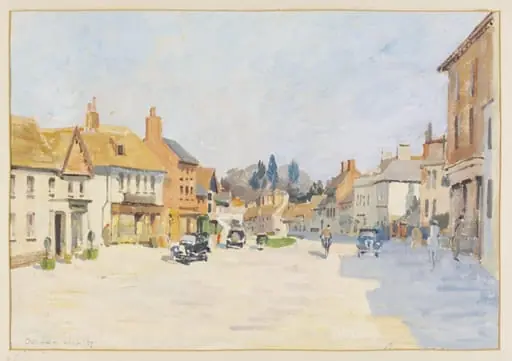
Recording Britain focused on English locales, villages, churches, and rural vistas, while deliberately excluding Northern Ireland and limiting coverage in Wales to four counties. The series aimed to preserve visual records of places at risk from wartime damage and post‑war development.
Artist & collection
Artist
This bundle gathers quiet English countryside scenes from an artist whose name isn’t widely recorded.