Artwork
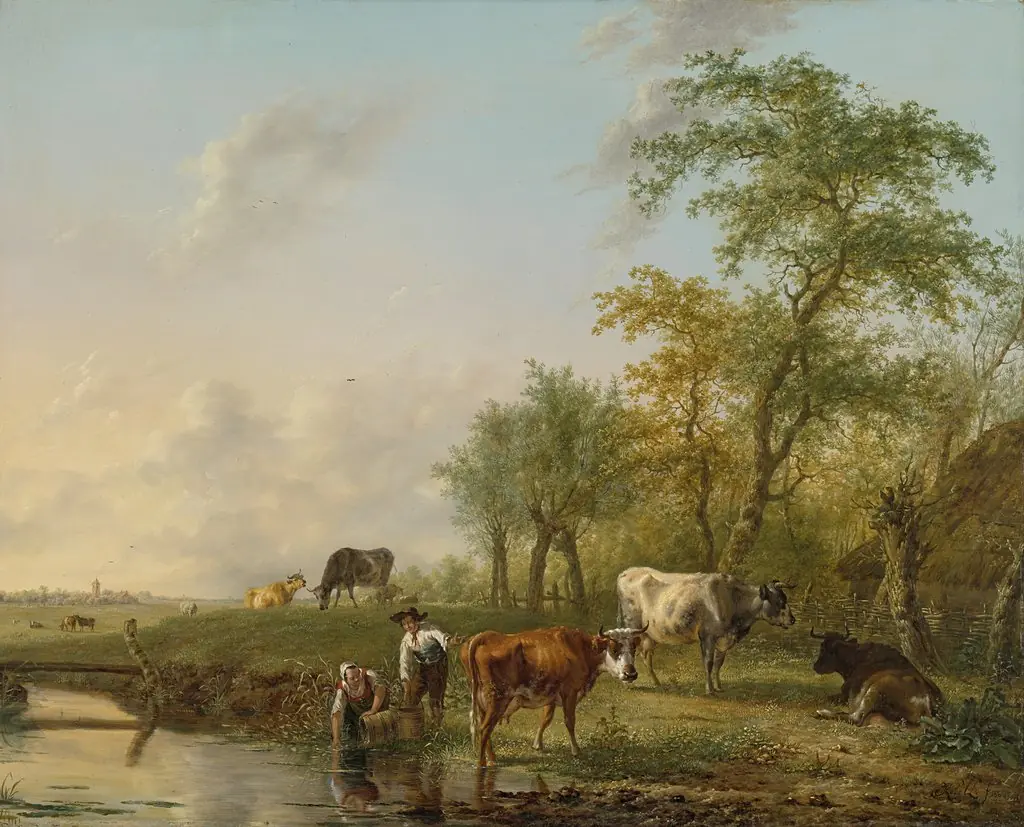
Landscape with Cows
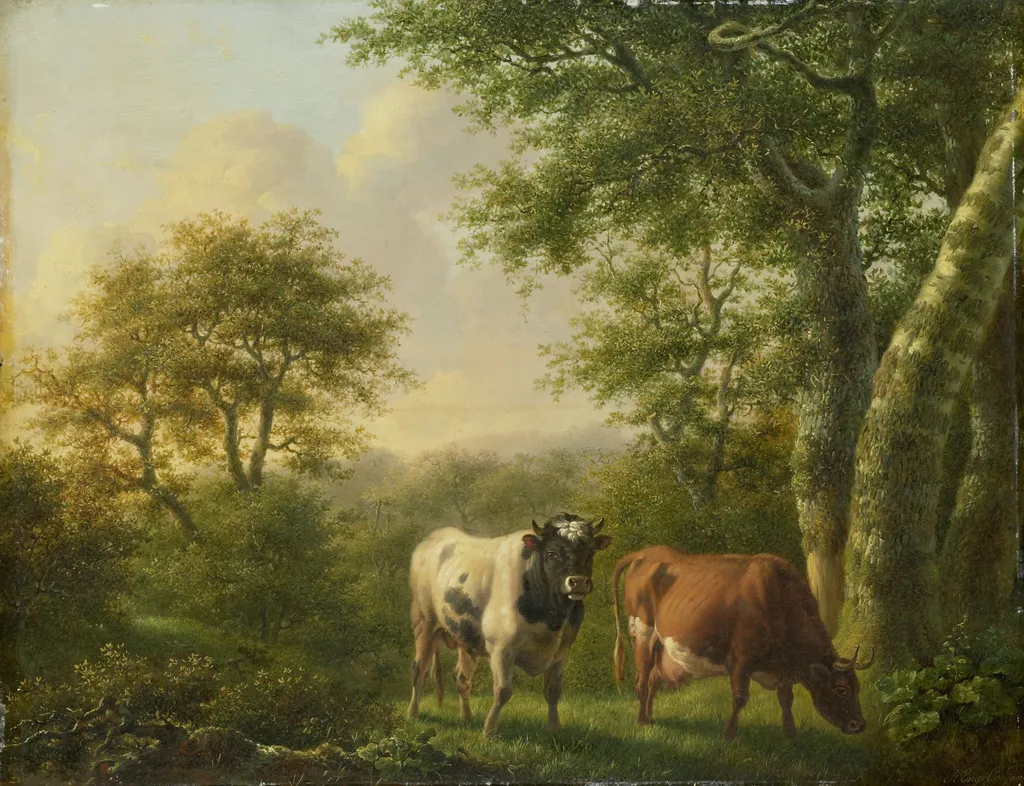
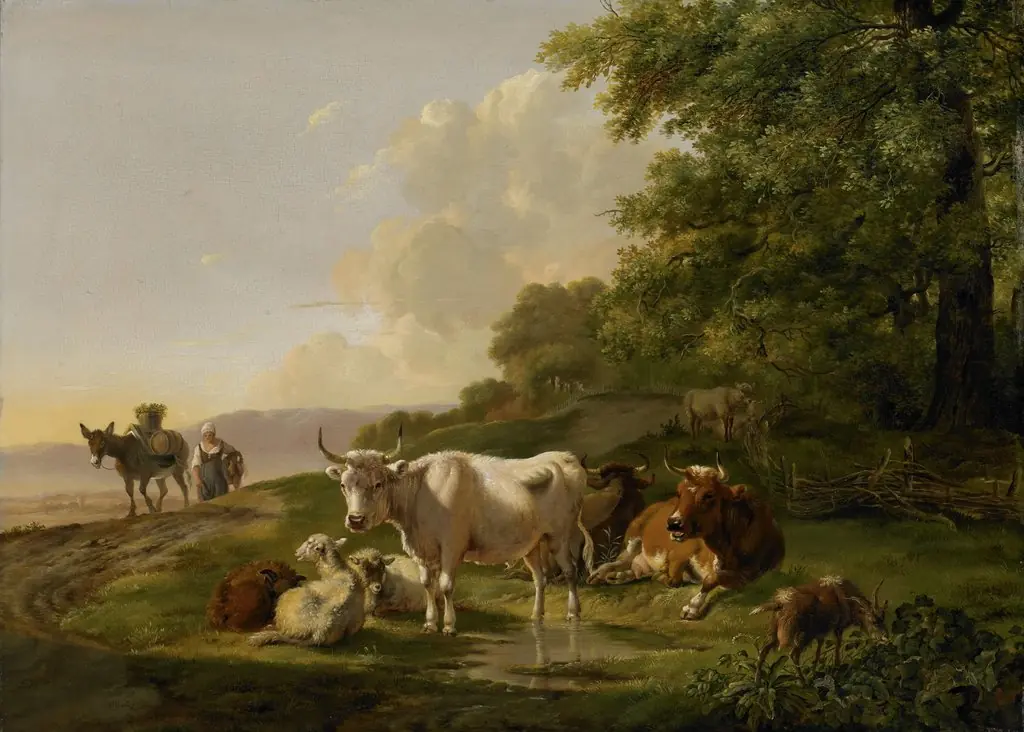
Landscape with Cows is an oil painting by the Biedermeier artist Adolf Karel Maximiliaan Engel. It dates from 1827 and is held in the collection of the Rijksmuseum.
About this work
Technique & Style
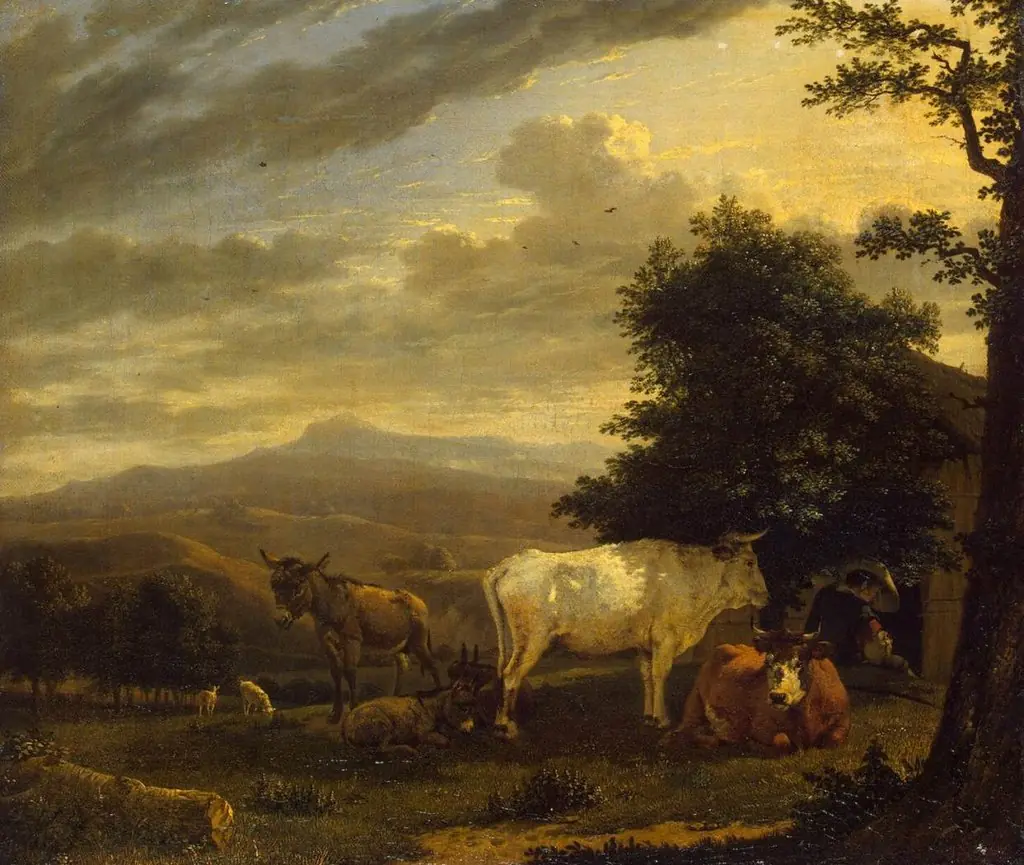
Adolf Karel Maximiliaan Engel created Landscape with Cows in 1827 using oil paint on a wooden panel, a technique typical of early 19th‑century Dutch landscape painting. The work measures 45 cm by 58 cm and depicts a pastoral scene dominated by a solitary tree, reflecting the formal balance and restrained palette characteristic of the genre at that time. Its handling of light and atmospheric detail demonstrates Engel’s skill in rendering naturalistic space on a modestly scaled support, qualities that align with the stylistic conventions of the period.
The painting’s material execution and composition have been noted for their precise brushwork and subtle tonal transitions, contributing to its enduring visual appeal within the corpus of Dutch landscape art.
History & Provenance
Adolf Karel Maximiliaan Engel created Landscape with Cows in 1827 using oil paint on a wooden panel measuring 45 by 58 cm.
Adolf Karel Maximiliaan Engel created Landscape with Cows in 1827 using oil paint on a wooden panel measuring 45 by 58 cm. The work was subsequently owned by Adriaan van der Hoop. It later entered the collection of the Rijksmuseum in Amsterdam.
Landscape with Cows is held in the Rijksmuseum in Amsterdam, where it is part of the collection of Adriaan van der Hoop, a former owner whose holdings were transferred to the museum. According to the Wikidata record, the painting is also associated with the Amsterdam Museum and the Adriaan van der Hoop collection, with its current location listed as the Rijksmuseum.
No specific inventory or accession number is provided in the available sources, and no exhibition history is documented.
Context
Landscape with Cows (1827) by Adolf Karel Maximiliaan Engel exemplifies Dutch Romantic landscape painting of the early 19th century. The work features a tree motif within a pastoral scene rendered in oil on panel, reflecting contemporary genre conventions. Its inclusion in the collections of Adriaan van der Hoop and later held by the Rijksmuseum and Amsterdam Museum underscores its significance within Dutch art history.
Scholars continue to analyze its composition as representative of the period's evolving approaches to naturalistic landscape depiction. The painting remains part of the canonical study of Dutch Romanticism through its presence in major institutional collections.
Legacy
The painting's reputation has been shaped by its inclusion in prominent Dutch collections, particularly the Rijksmuseum and Amsterdam Museum, where it remains part of the legacy of 19th-century landscape painting. Its provenance through Adriaan van der Hoop's collection contributed to its scholarly recognition, though specific influence on later artists is not documented in the available sources.
Overview
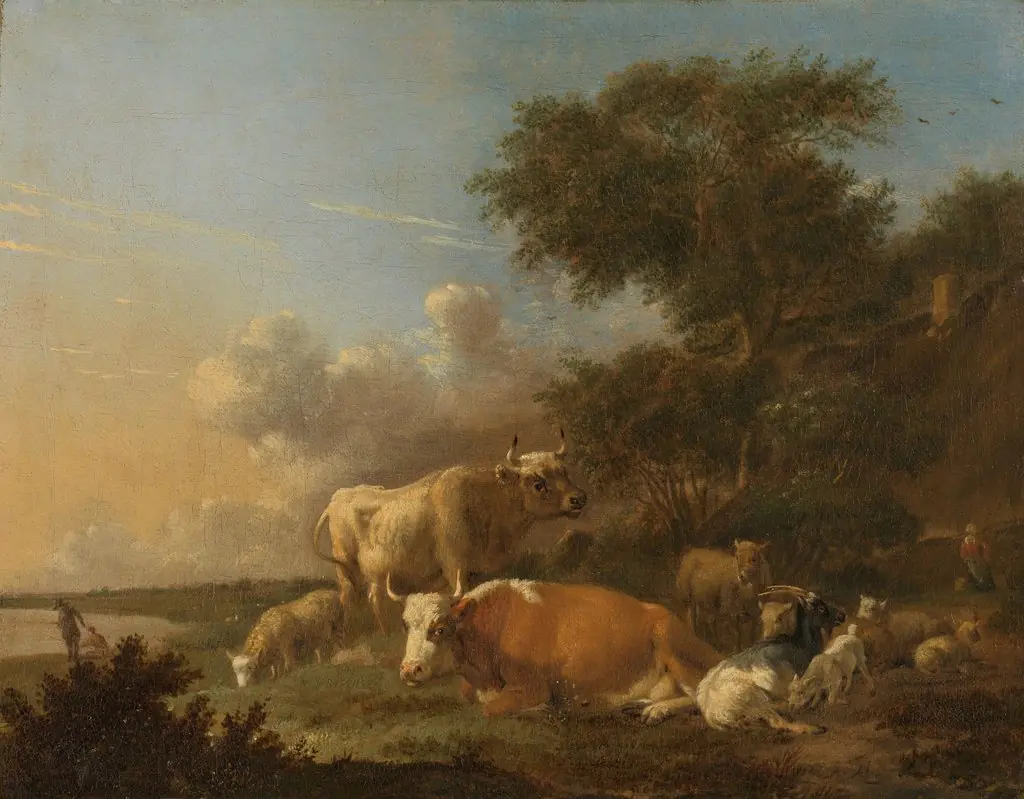
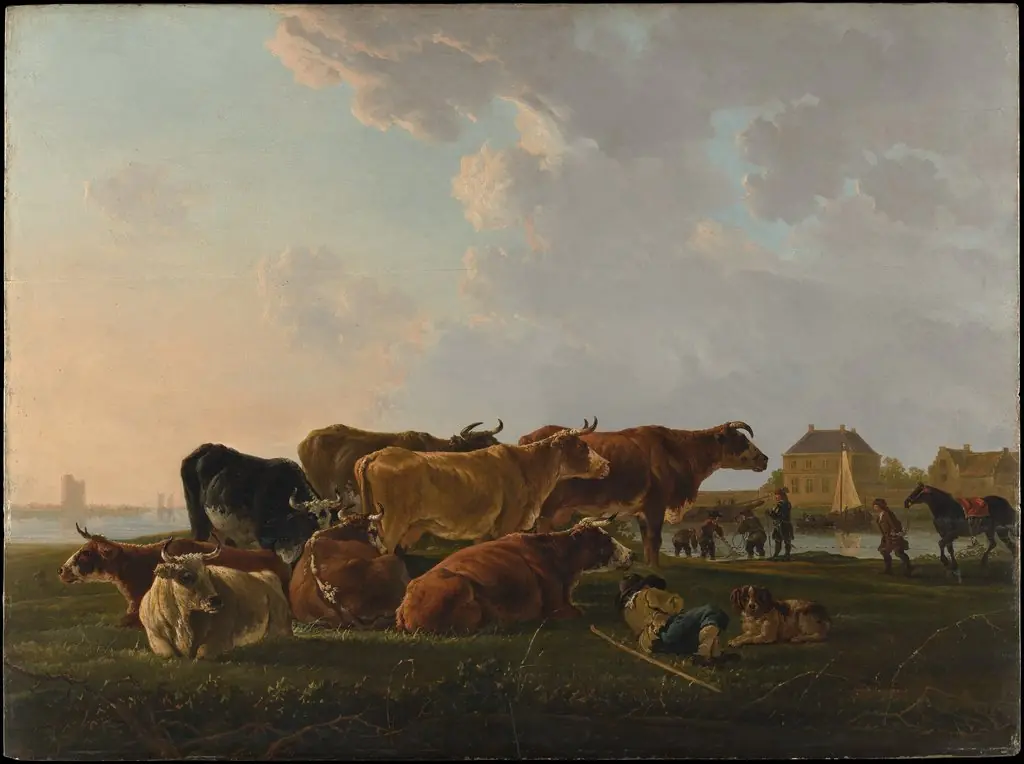
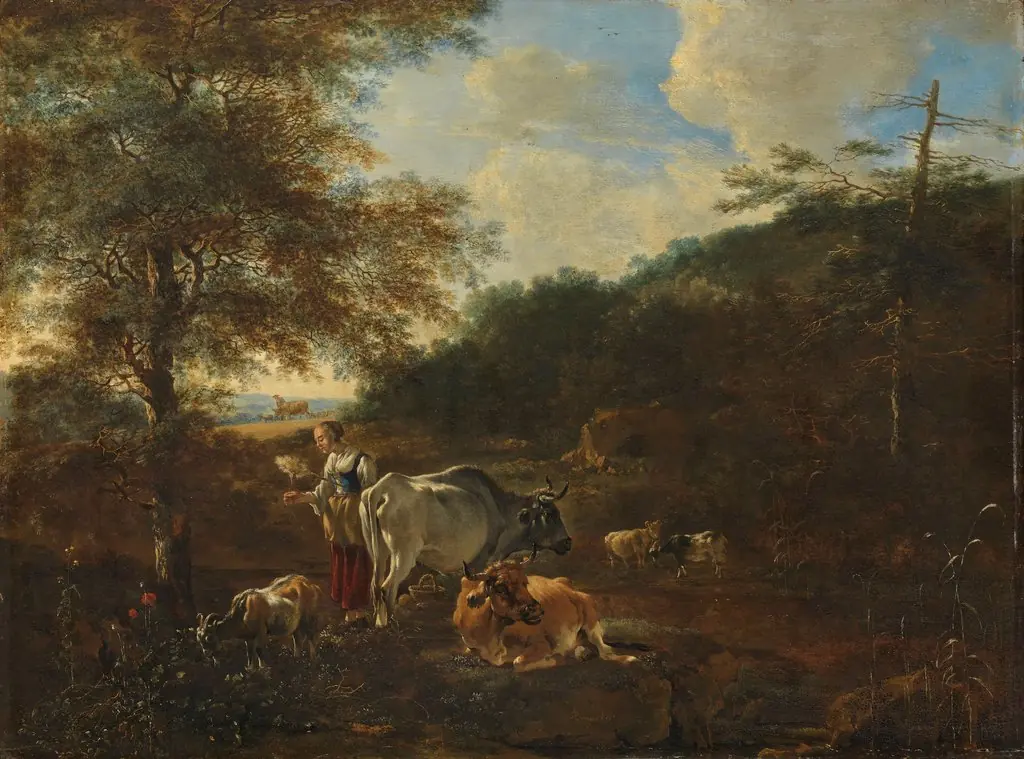
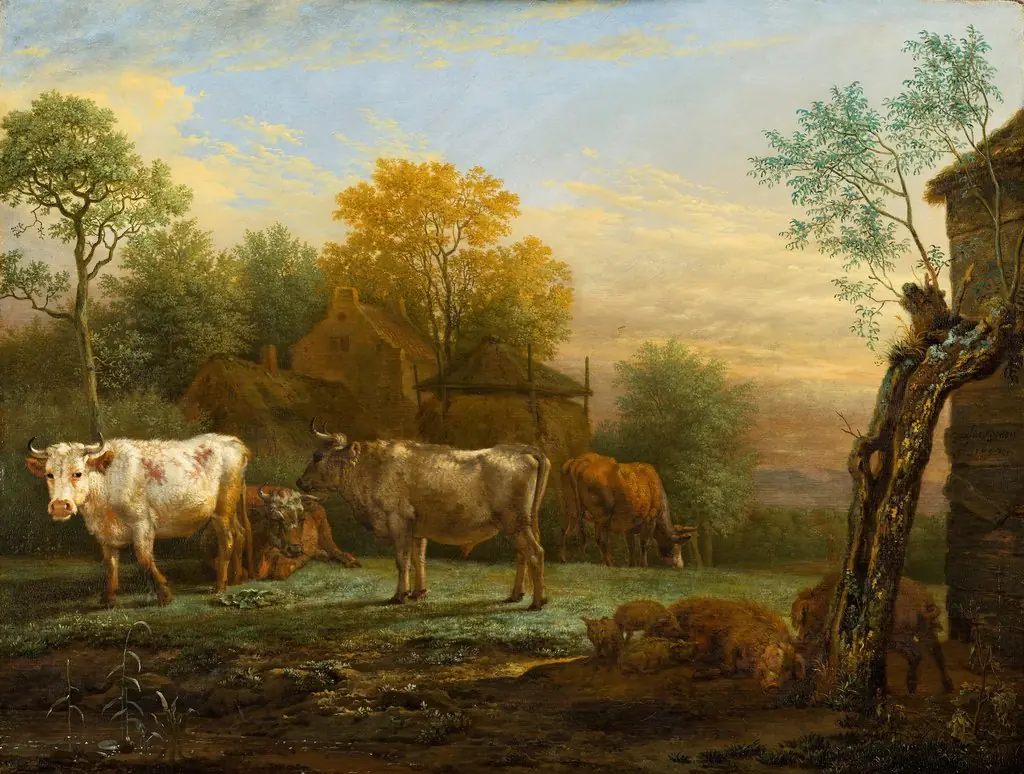
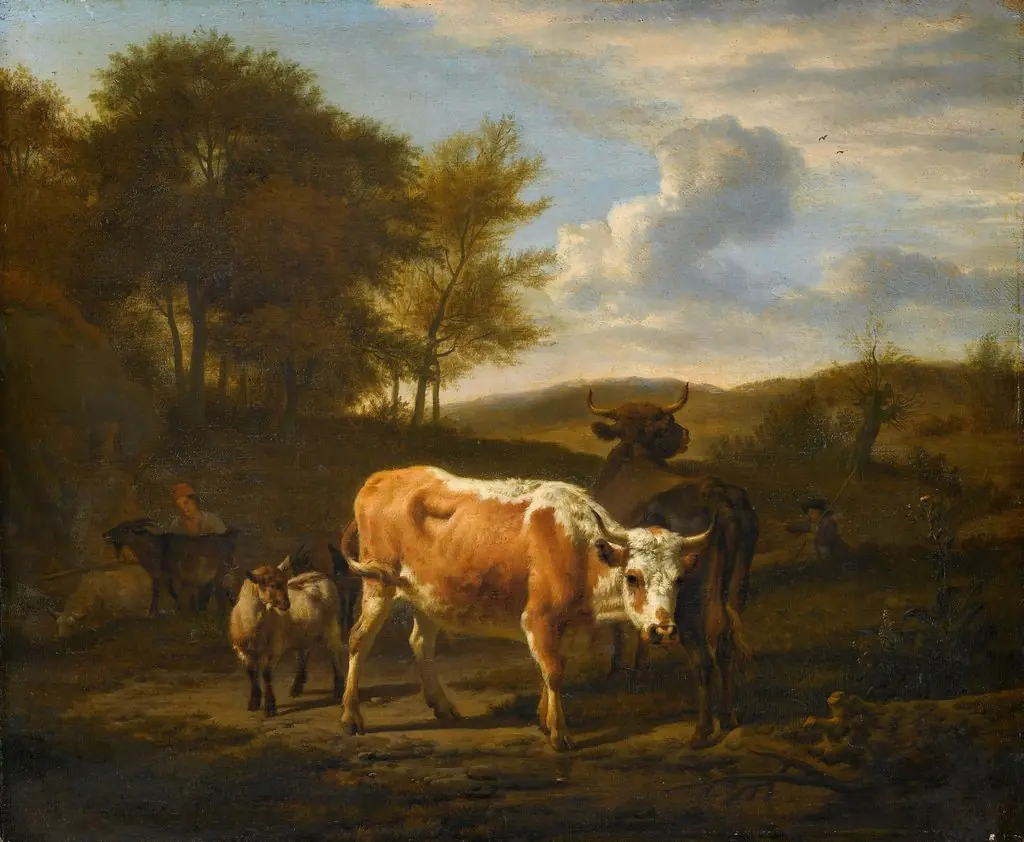
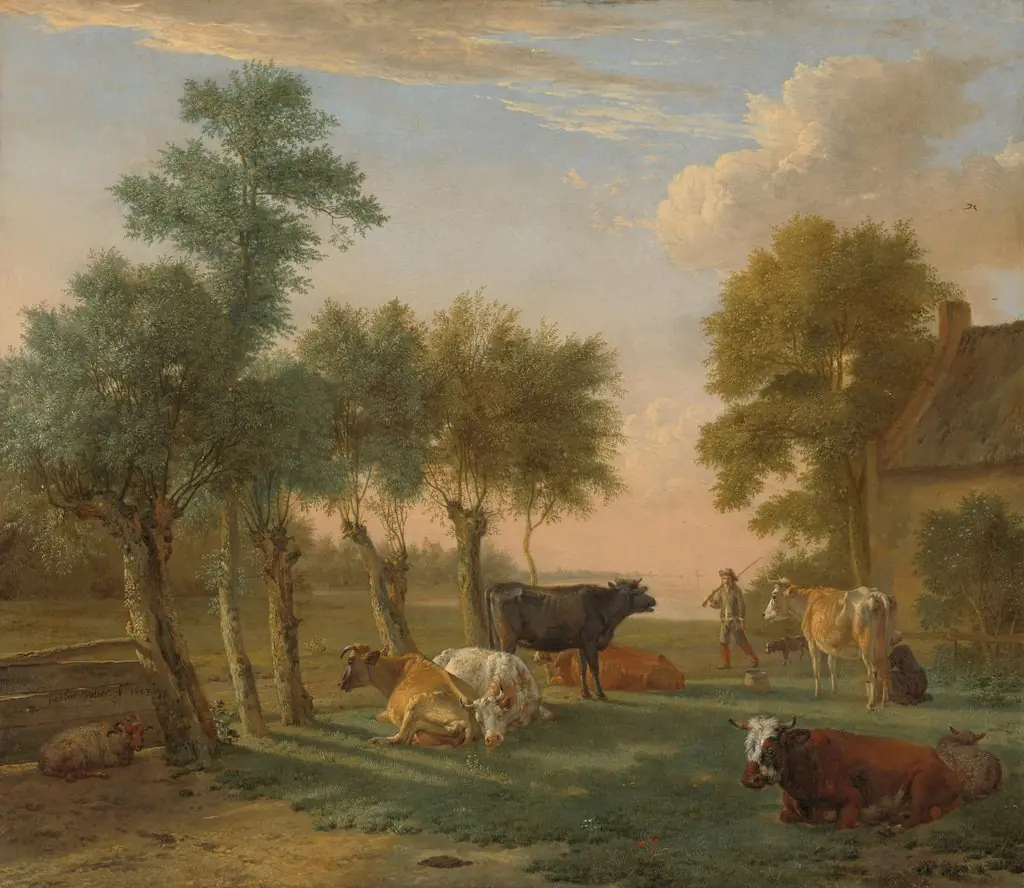
Adolf Karel Maximiliaan Engel’s 1827 oil painting presents a tranquil rural scene. A pair of cows, one speckled white and black, the other brown with white markings, graze beneath a solitary tree that dominates the right side of the composition. The surrounding landscape unfolds with additional trees and shrubbery beneath a softly diffused sky, all rendered in warm, golden light.
Subject & Meaning
The work captures a moment of pastoral calm, emphasizing the harmonious relationship between livestock and their natural environment. The placement of the cows near the tree suggests a sheltering presence, while the expansive, hazy backdrop conveys a sense of openness and serenity typical of early‑19th‑century idealized countryside.
Own this work as a print
Artist & collection
Artist
Dutch painter Adolf Karel Maximiliaan Engel made quiet, earth-toned oil landscapes in the 1820s.