Artwork
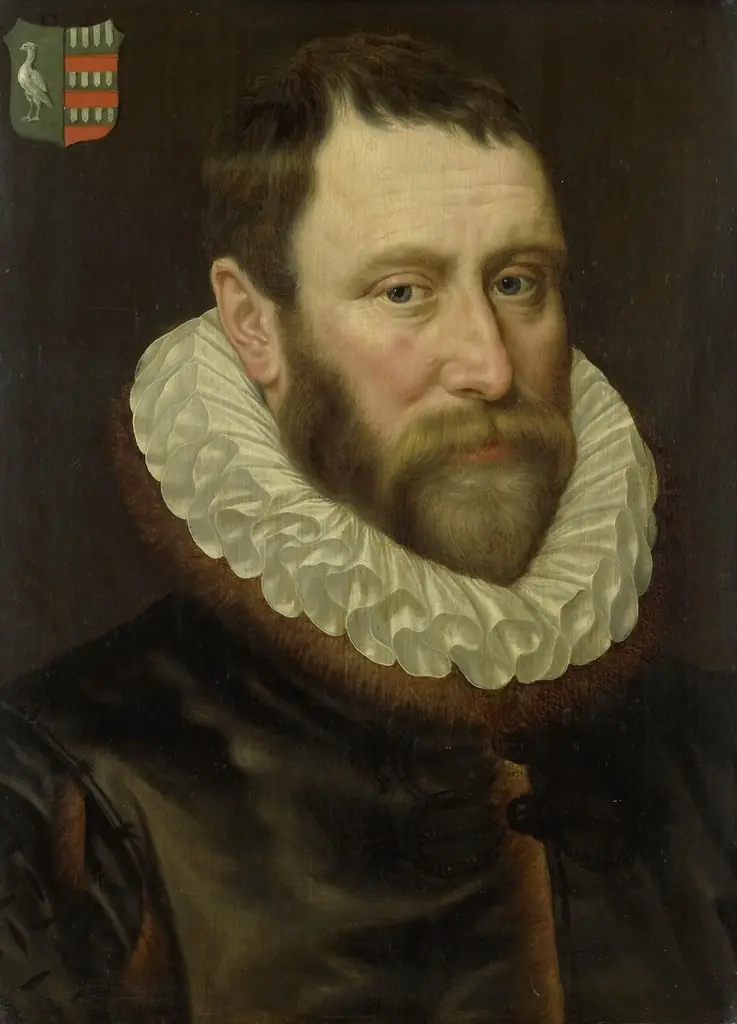
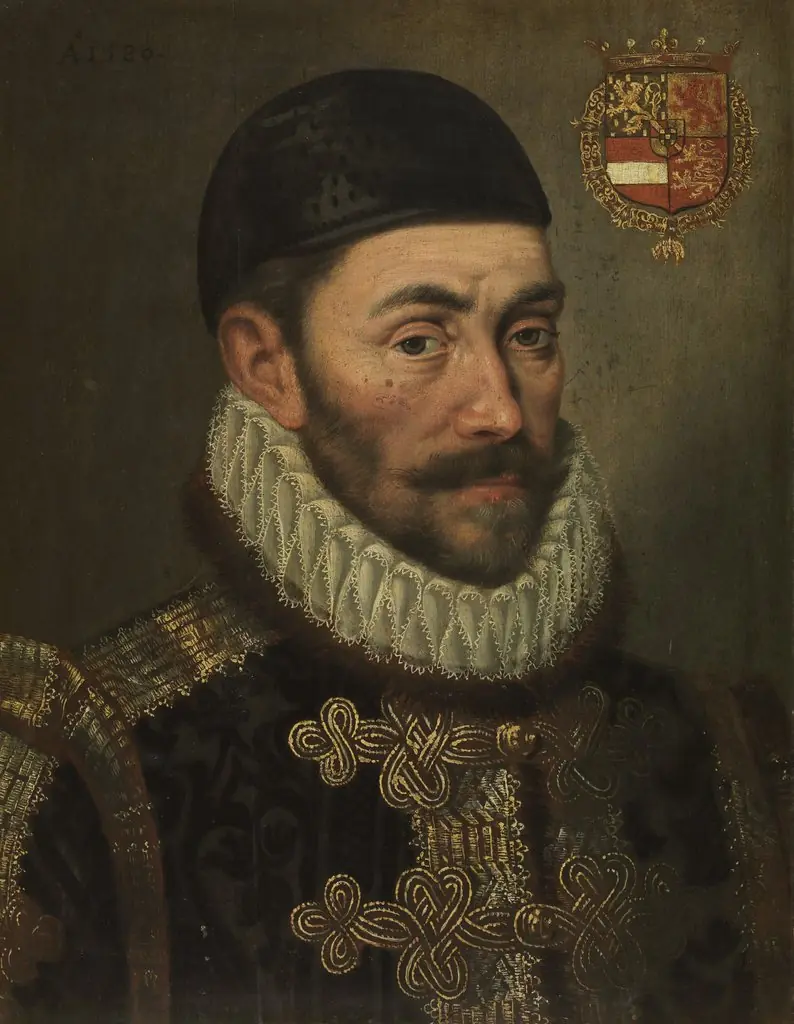
Portrait of William I (1533-1584), Prince of Orange
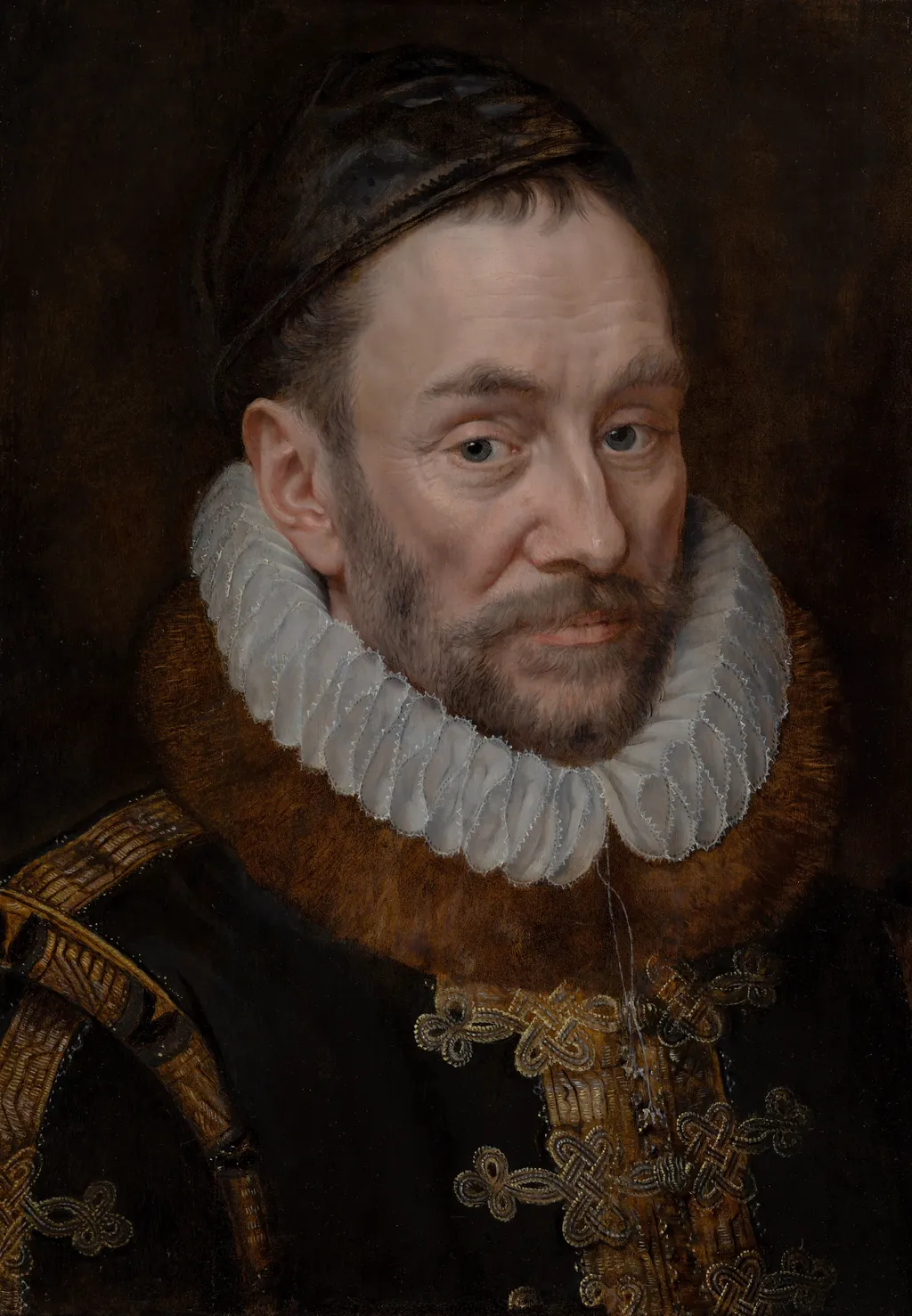
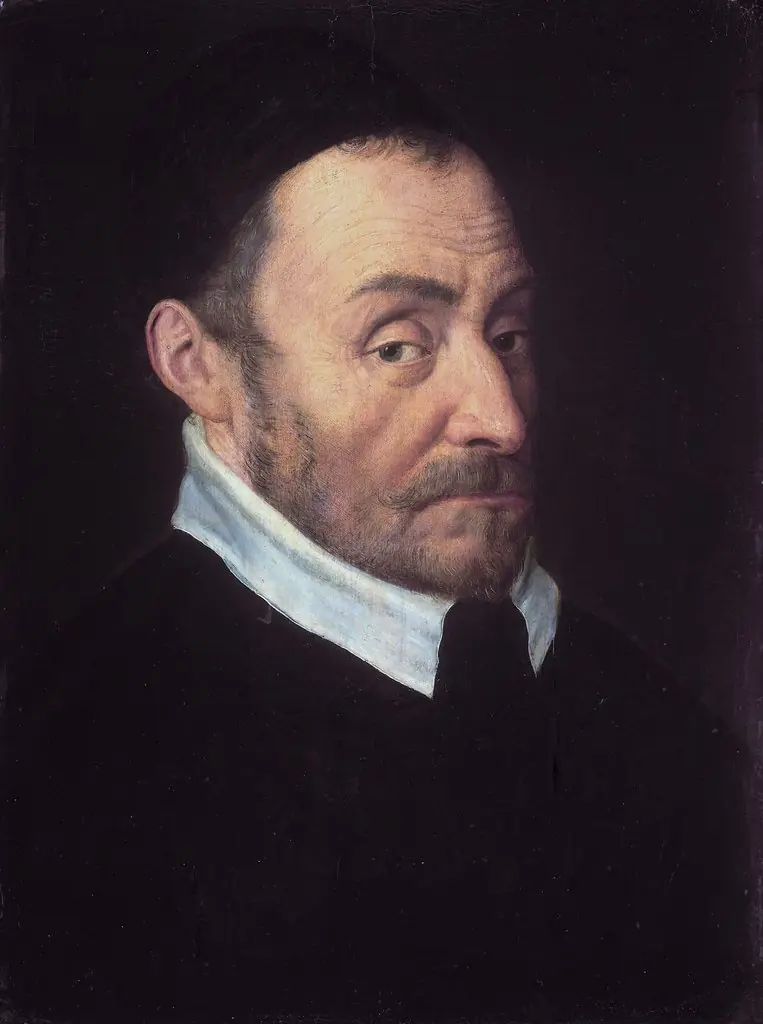
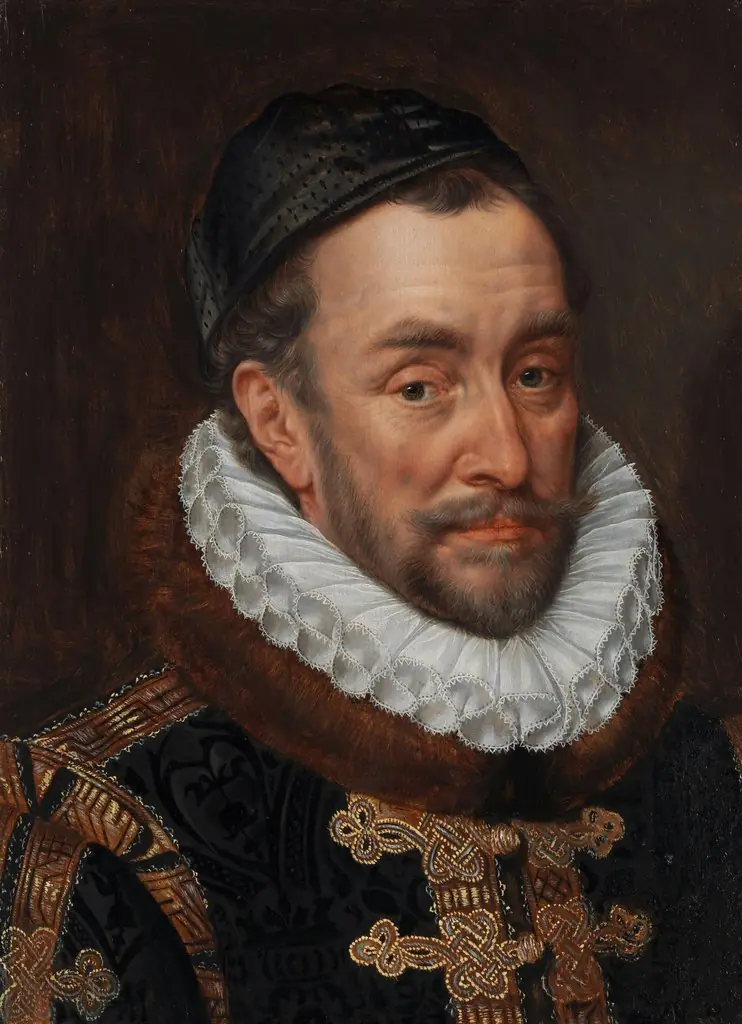
Portrait of William I (1533-1584), Prince of Orange is an oil painting by the Dutch Golden Age artist Adriaen Thomasz. Key. It is held in the collection of the Mauritshuis. Adriaen Thomasz.
About this work
Subject & Meaning
The subject is dressed in period attire featuring a ruff, a zucchetto, and fur, elements that underscore his high status.
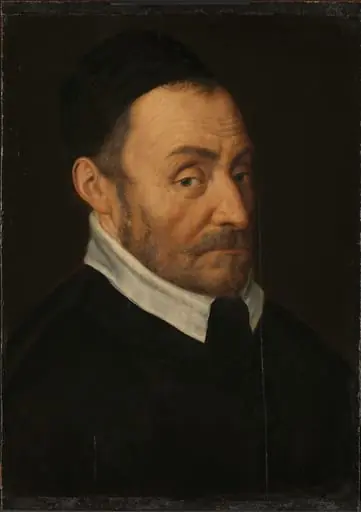
The painting depicts William the Silent, Prince of Orange, portrayed as a man with brown hair, a beard, and a moustache. His visage is marked by wrinkles, conveying the gravity of his age and experience. The subject is dressed in period attire featuring a ruff, a zucchetto, and fur, elements that underscore his high status.
As a portrait created in 1579, the work serves as a formal representation of the Prince, capturing his physical likeness and dignified presence during a pivotal era in his life.
Technique & Style
Executed in 1579 by Adriaen Thomasz. Key, this portrait is an oil painting on a wooden panel. The work measures 48 cm in height and 34 cm in width.
Stylistically, the piece functions as a formal likeness of William the Silent, characterized by meticulous attention to facial features such as wrinkles, brown hair, a beard, and a moustache. The artist also renders specific details of the sitter's attire and accessories, including a ruff, a zucchetto, and fur elements, capturing the textures and physical presence of the subject with precision.
History & Provenance
The work titled Portrait of William I (1533-1584), Prince of Orange was created by Adriaen Thomasz. Key in 1579 as an oil painting on panel. It entered the collection of the Mauritshuis where it remains on display in room 1.
The painting was commissioned to depict William the Silent, showing him with brown hair, a beard, moustache, and ruff, reflecting his status as a central figure of the Dutch Revolt. Its dimensions measure 48 cm by 34 cm.
The provenance indicates a continuous ownership chain from the artist to the Mauritshuis, with no recorded sales or transfers, establishing institutional stewardship since its creation.
The dating is anchored to the year 1579, consistent with contemporary records of the subject's life and the artist’s activity. Creation history reflects the portrait’s role in shaping public perception of William I, combining realistic facial detail with symbolic elements such as the fur trim and zucchetto, underscoring its political and cultural significance in the late 16th century.
The painting is held in the Mauritshuis, where it is installed in room 1 of the collection. Its medium is oil paint on panel, and the work measures 48 cm in height by 34 cm in width.
No specific accession number is recorded in the available sources, and no exhibition history beyond its current placement at the Mauritshuis is documented.
Overview
Adriaen Thomasz. Key’s oil portrait, executed in 1590, presents William I, Prince of Orange (1533–1584). The work focuses tightly on the sitter’s face, set against a dark, unadorned backdrop that draws attention to his expression and attire. The painting exemplifies the careful observation and compositional restraint characteristic of late‑16th‑century Flemish portraiture.
Context
Key’s portraiture, including this depiction of William I, contributed to the development of Flemish court portrait conventions. The work’s compositional clarity and handling of light influenced subsequent artists, most notably Peter Paul Rubens, who drew upon Key’s approach to rendering aristocratic subjects in his own oeuvre.
Own this work as a print
Artist & collection
Artist
Adriaen Thomasz. Key (c. 1544 in Antwerp – after 1589 in Antwerp) was a Flemish painter of portraits and religious paintings, a draughtsman and a printmaker. He worked for a while in the Antwerp workshop of the…