Artwork
Satire on Dutch politics around 1619
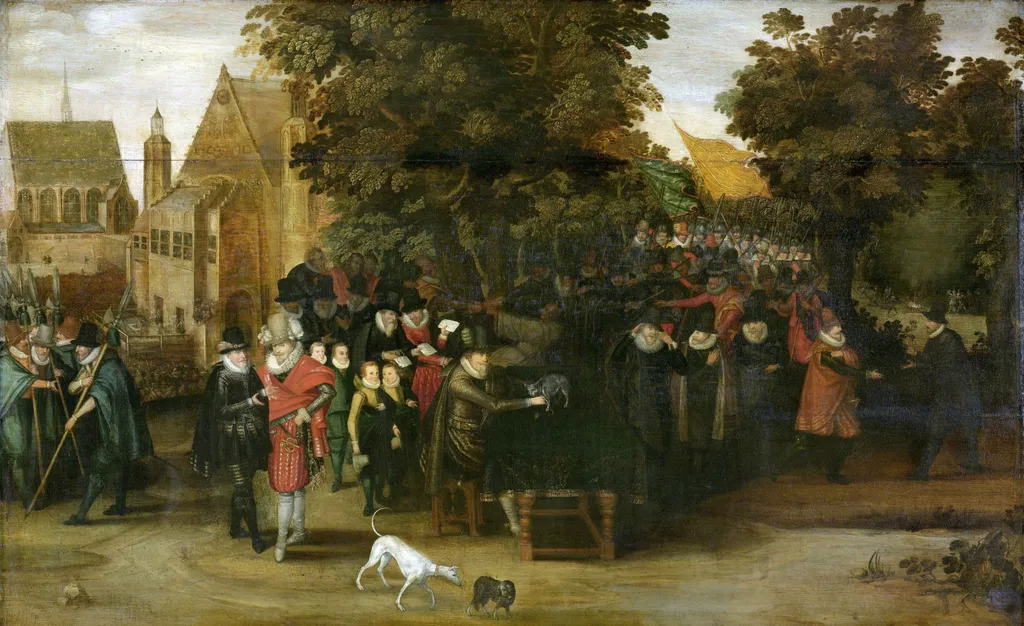
Satire on Dutch politics around 1619 is an oil painting by the Dutch Golden Age artist Adriaen van de Venne. It dates from 1619 and is held in the collection of the Rijksmuseum.
About this work
Subject & Meaning
The work is part of the Rijksmuseum collection, acquired from Jan Bernd Bicker, and measures 63.
The painting portrays a symbolic landscape that critiques contemporary Dutch political tensions of 1619, using a tree as a central emblem of stability amid turmoil. Van de Venne’s composition reflects the era’s anxieties through allegorical visual cues rather than literal narrative, inviting viewers to interpret the scene as commentary on governance and social order.
The work is part of the Rijksmuseum collection, acquired from Jan Bernd Bicker, and measures 63.7 by 101.9 centimeters on panel.
The artist, Adriaen van de Venne, was active in the early 17th century, known for blending naturalistic detail with emblematic imagery to convey moral and political messages.
Technique & Style
The painting is executed in oil on panel, a common support for Northern European cabinet pictures of the early 17th century. The handling combines meticulous detail with a light, luminous palette, typical of Adriaen van de Venne’s early manner. Trees, foliage, and figures are rendered with fine brushwork and subtle glazes, while the overall tonality favors silvery greens and warm browns.
The composition is a satirical landscape that critiques Dutch political affairs circa 1619, using allegorical figures and emblematic motifs to convey its message. The dense, wooded setting provides a stage for the narrative, with carefully observed natural elements framing the satirical content.
History & Provenance
Created in 1619 by Adriaen van de Venne, this oil painting on panel was commissioned or owned by Jan Bernd Bicker. The work, which depicts a tree within a landscape setting, measures 63.7 cm in height and 101.9 cm in width. It currently resides in the collection of the Rijksmuseum.
Overview
Adriän van de Venne’s oil on canvas, titled Satire on Dutch Politics around 1619, presents a bustling town square populated by figures in early‑seventeenth‑century dress. A solitary tree dominates the composition, while a church and additional foliage recede into the background, giving the scene depth. Central to the gathering is a seated man, surrounded by interlocutors, and a dog darts across the foreground, underscoring the lively atmosphere.
Context
The early seventeenth century saw the Dutch Republic grappling with internal factionalism and external threats, a climate that inspired numerous satirical works. Van de Venne’s painting aligns with this trend, employing everyday street scenes to critique political actors. Its genre setting mirrors the broader Dutch artistic focus on civic life, while its allegorical content connects it to the era’s rich tradition of moralizing visual commentary.
Own this work as a print
Artist & collection
Artist
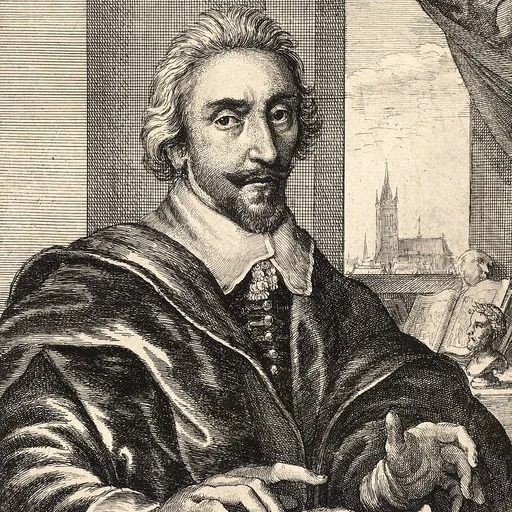
Adriaen Pietersz van de Venne (1589 – 12 November 1662), was a versatile Dutch Golden Age painter of allegories, genre subjects, and portraits, as well as a miniaturist, book illustrator, designer of political satires, and versifier.

 Untitled
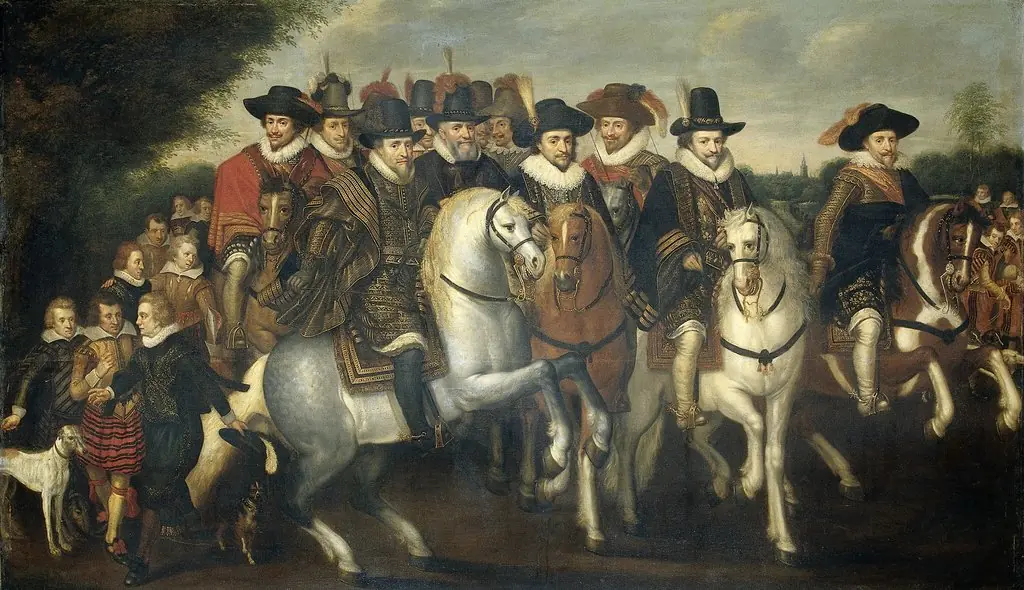 Prince Maurits accompanied by his two brothers, Frederick V, Elector of the Palatinate, and some counts of Nassau on horseback
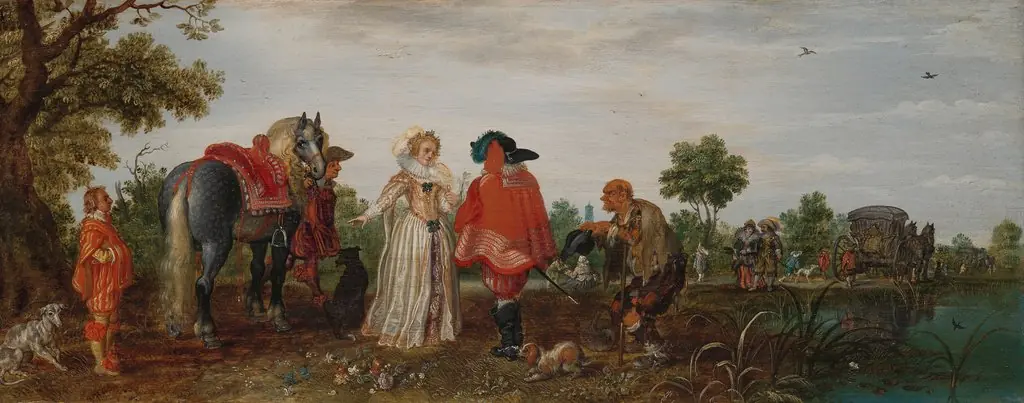 Spring
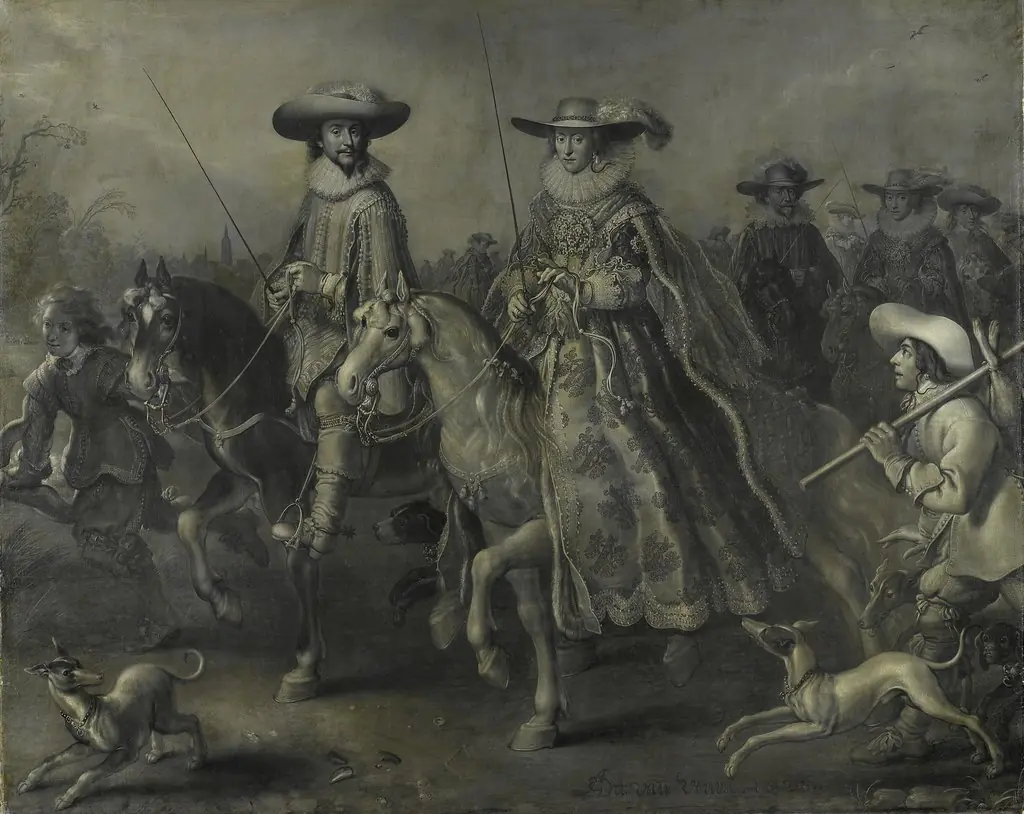 Frederick V (1596-1632), Elector of the Palatinate, King of Bohemia, and his wife Elizabeth Stuart (1596-1662) on horseback
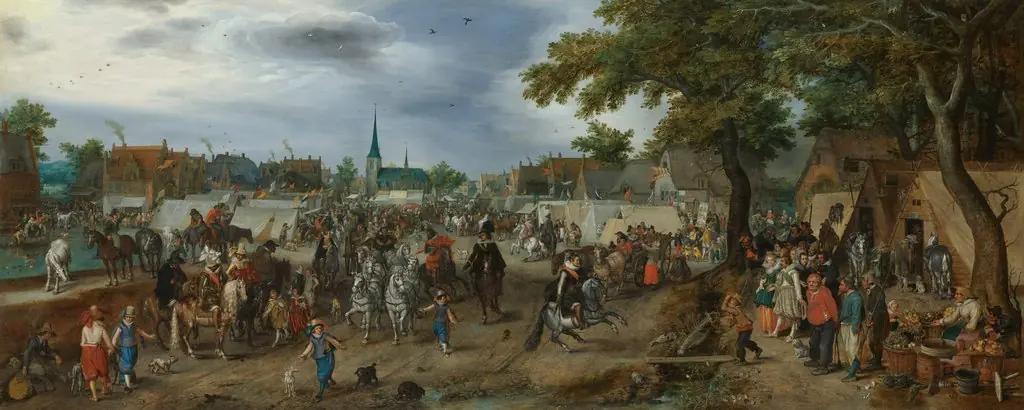 Prince Maurice and Frederick Henry at the Valkenburg Horse Fair
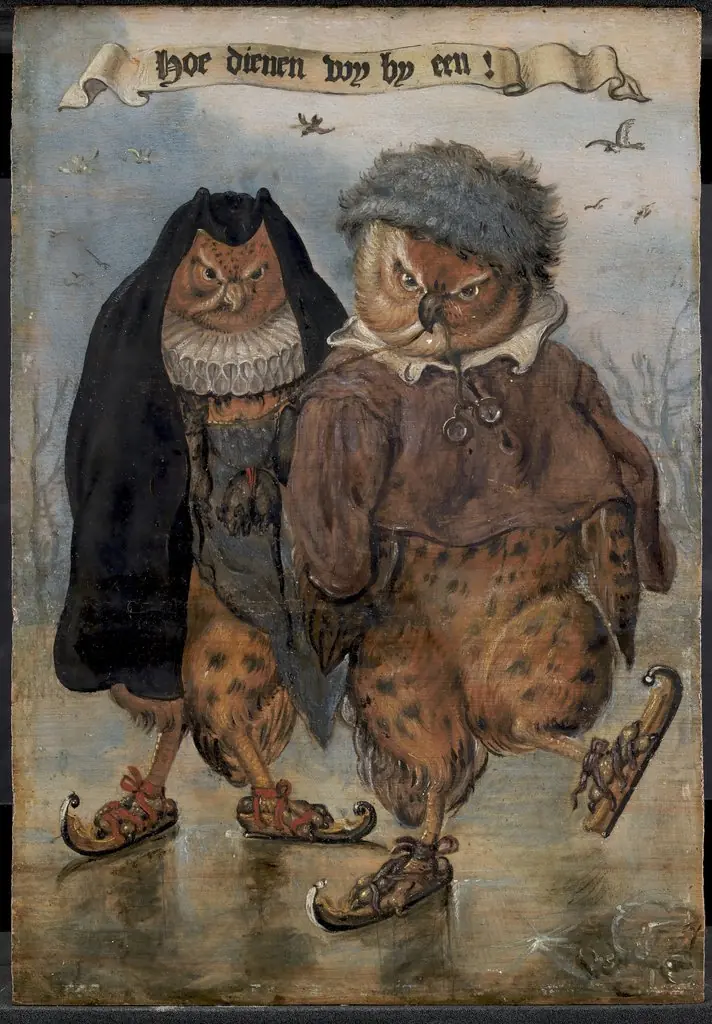 How Well We Go Together
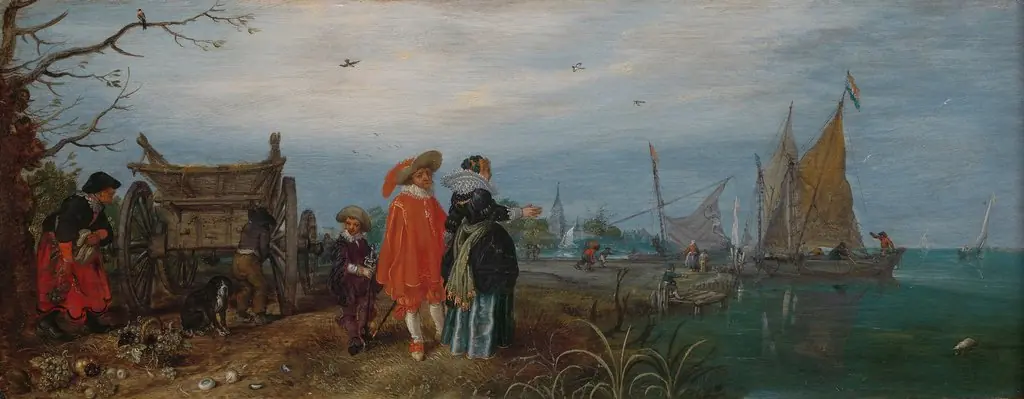 Autumn
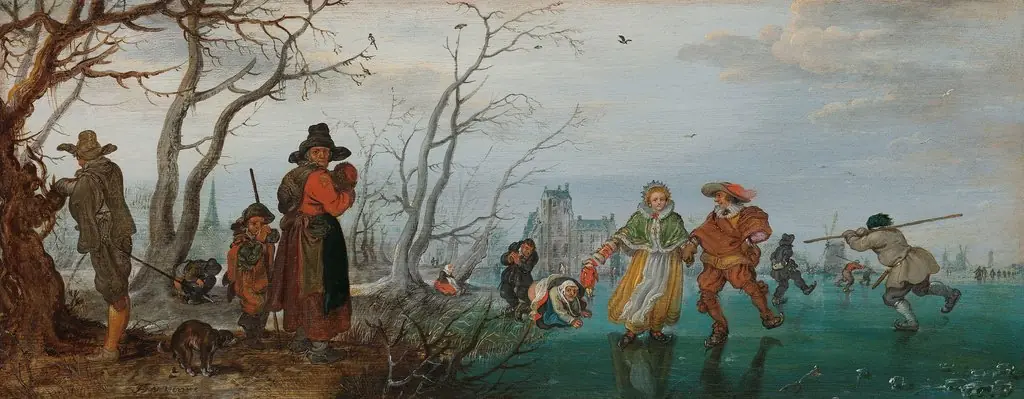 Winter
- Country Wedding
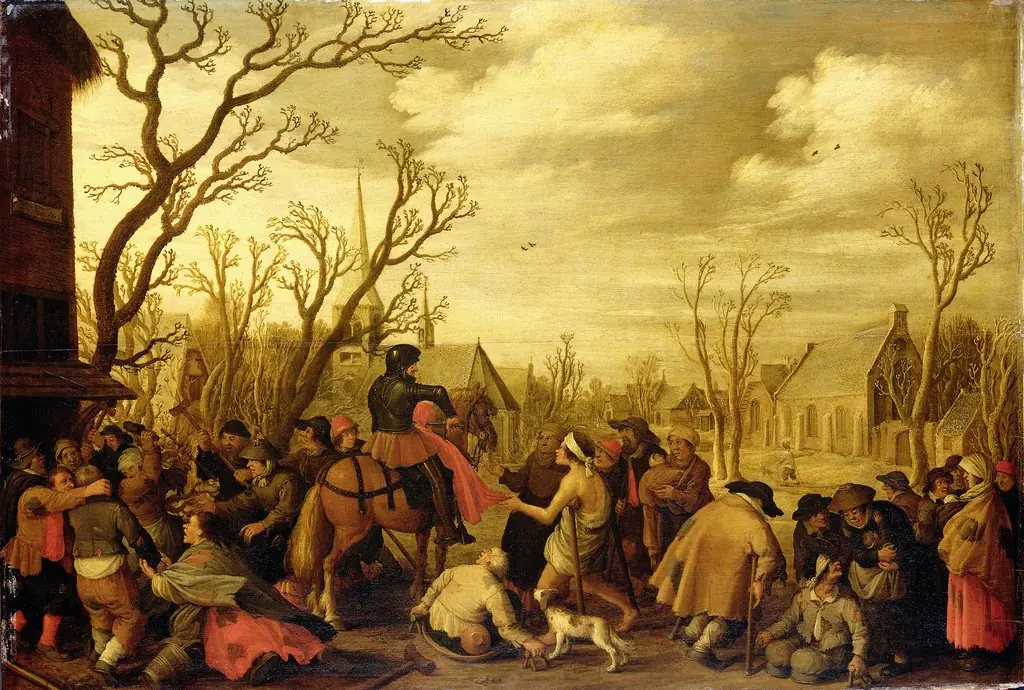 St Martin cutting off part of his cloak for a beggar
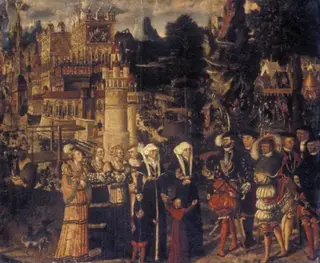 An historical scene
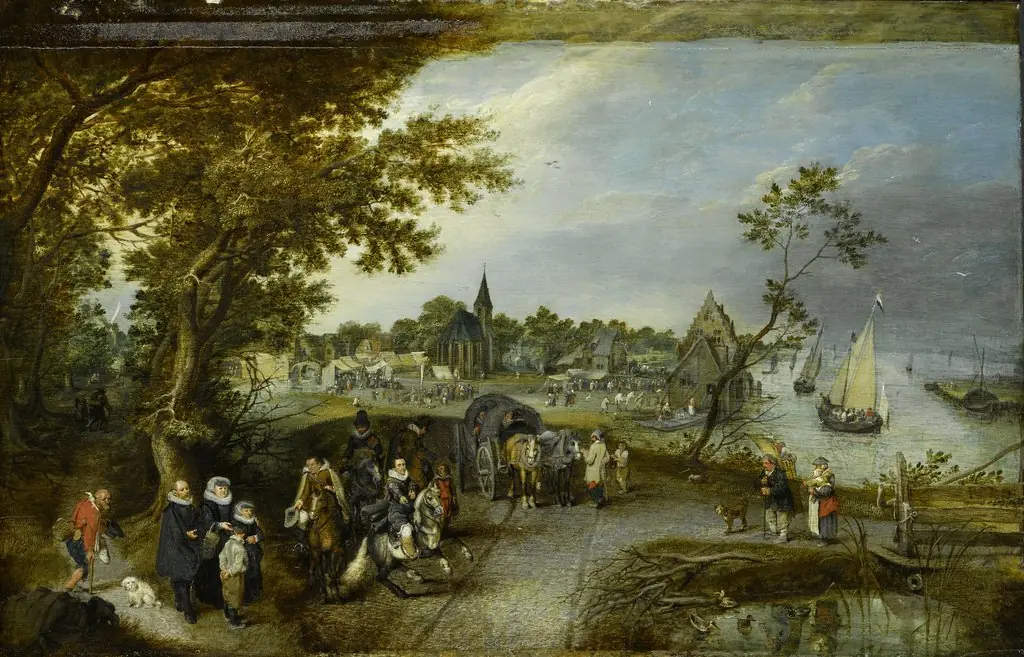 Landscape with figures and a village kermis
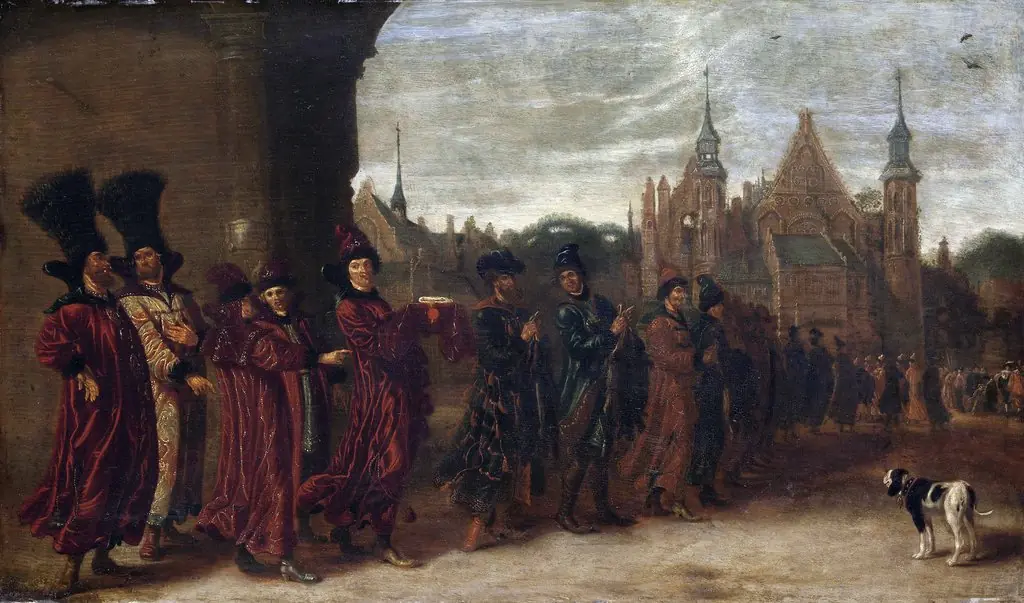 Russian ambassadors at the Binnenhof in The Hague
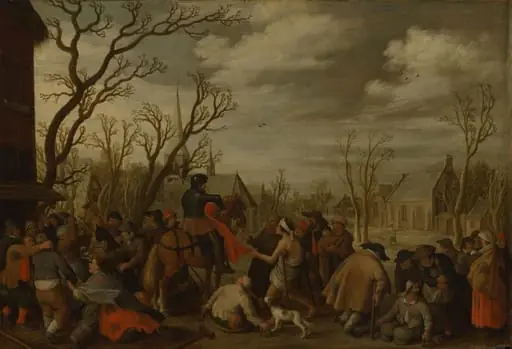 Untitled
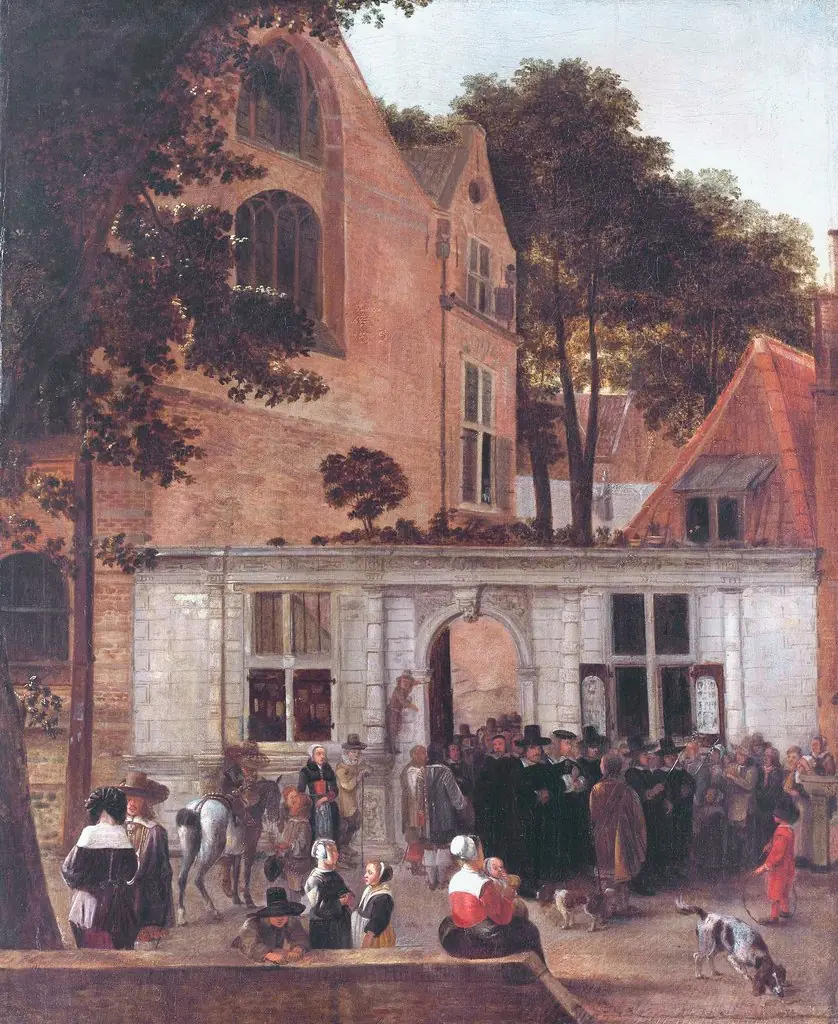 The conferring of a degree at the University of Leiden around 1650
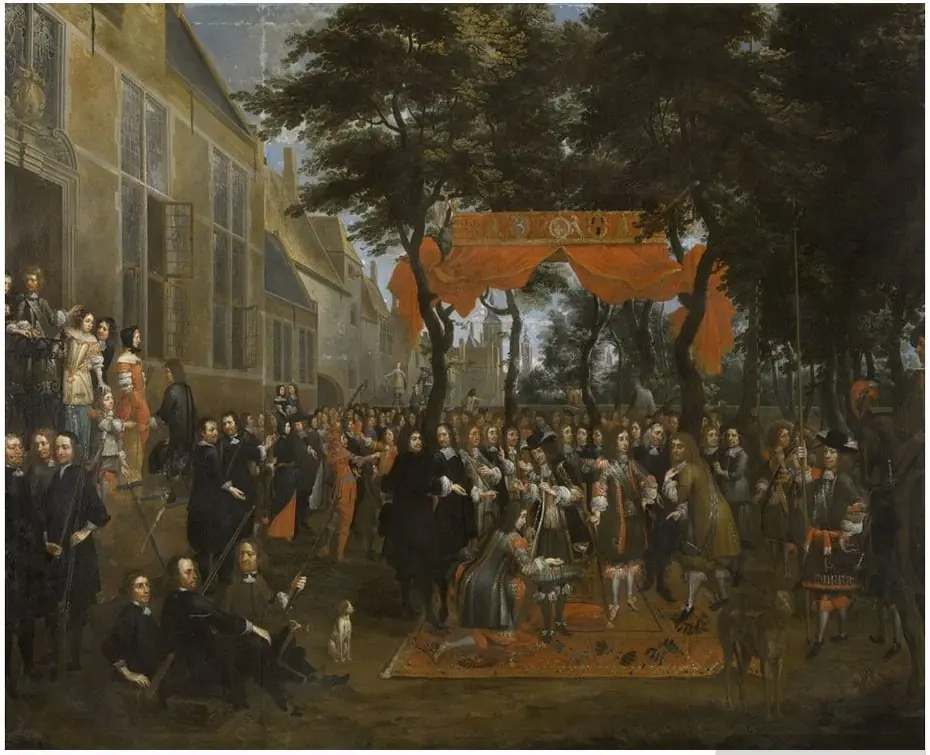 The Reception of Charles II and his Brothers
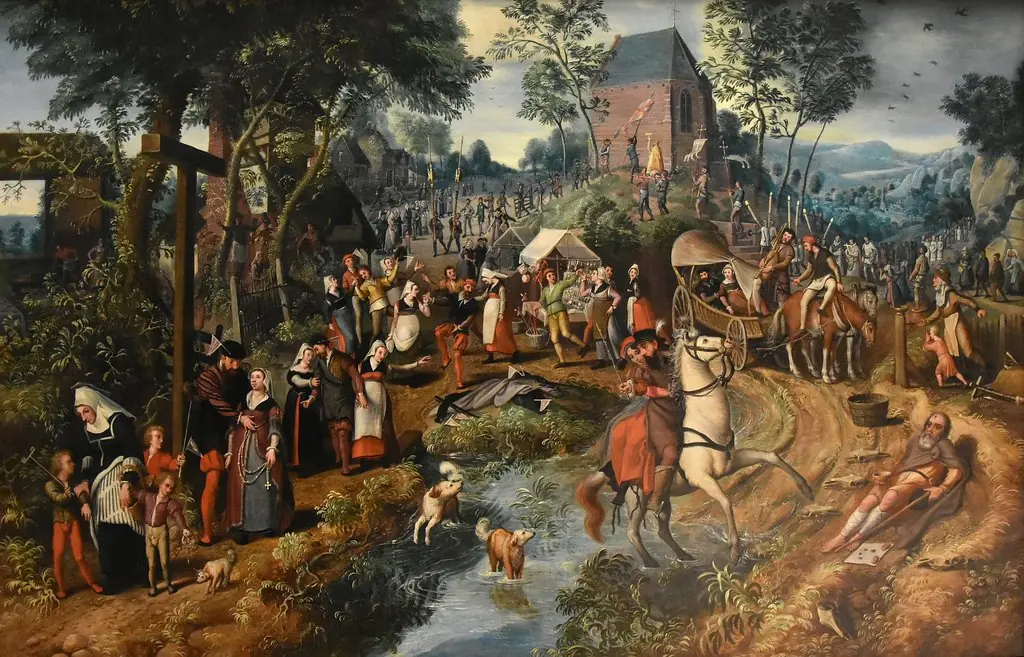 The Return from a Pilgrimage to Saint Anthony
 Allegory on the tyranny of the Duke of Alva in the Netherlands
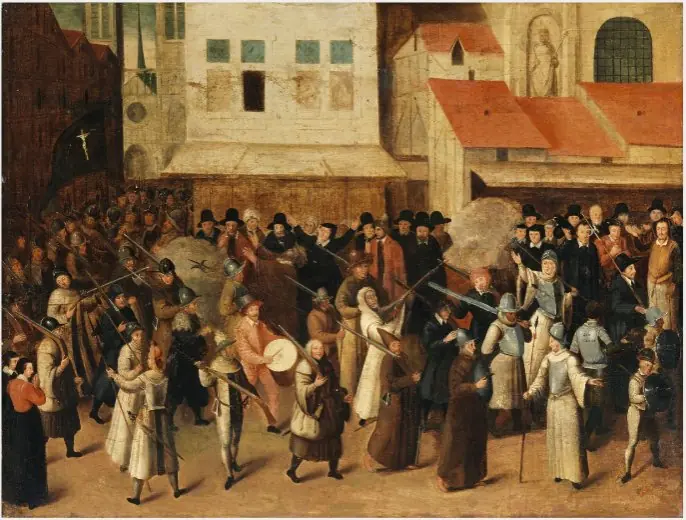 The Procession of the League