Artwork
Prince Maurits accompanied by his two brothers, Frederick V, Elector of the Palatinate, and some counts of Nassau on horseback
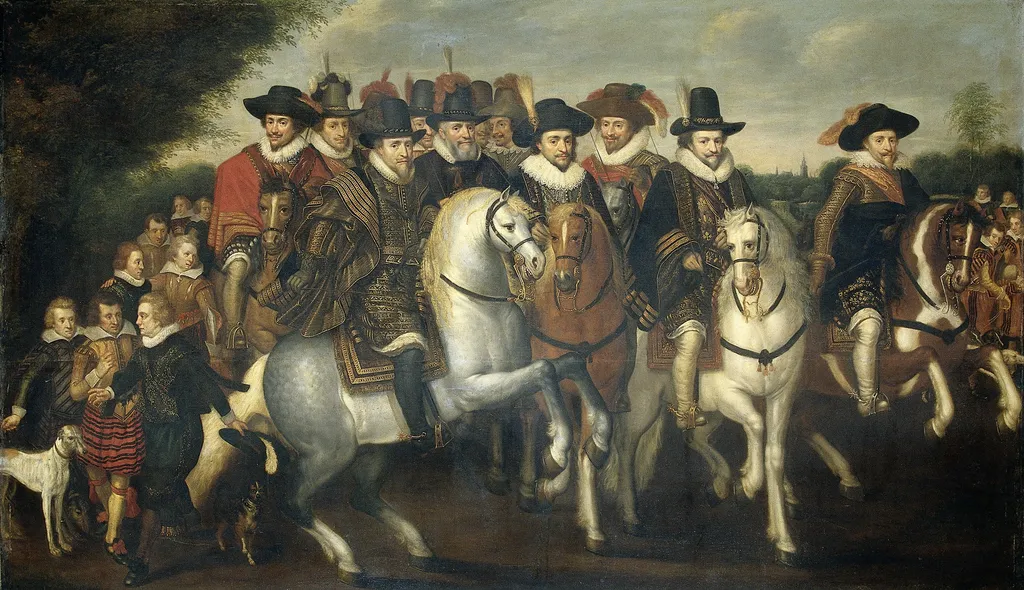
Prince Maurits accompanied by his two brothers, Frederick V, Elector of the Palatinate, and some counts of Nassau on horseback is an oil painting by the Flemish Baroque painting artist Adriaen van de Venne. It dates from 1625 and is held in the collection of the Rijksmuseum.
About this work
Subject & Meaning
The inclusion of the Elector of the Palatinate further emphasizes the family's high-level political alliances and status within the European nobility.
This 1625 equestrian portrait by Adriaen van de Venne depicts Prince Maurice of Nassau mounted on horseback, accompanied by his brothers Frederick Henry and Philip William. The composition also includes Frederick V, Elector of the Palatinate, alongside other counts from the House of Nassau. By grouping these specific figures in a shared equestrian setting, the work functions as a dynastic statement, visually asserting the unity and military prominence of the Nassau family during the early seventeenth century.
The inclusion of the Elector of the Palatinate further emphasizes the family's high-level political alliances and status within the European nobility.
Technique & Style
Executed in 1625, this large-scale equestrian portrait is an oil painting on canvas. The work measures 172 cm in height and 283 cm in width, presenting a broad horizontal format that accommodates multiple figures on horseback. As a formal group portrait, the composition depicts Prince Maurits alongside his brothers and various counts of Nassau, utilizing the oil medium to render the details of the riders and their mounts within the genre of equestrian portraiture.
History & Provenance
The painting was created by Adriaen van de Venne in 1625, executed in oil paint on canvas. It belongs to a body of work associated with the collection Willem V Prince of Orange Nassau and has been held at the Prinsenhof, as well as at the Rijksmuseum and the National Art Gallery of the Netherlands.
No specific commission, patron, or detailed ownership chain is documented in the available sources beyond these institutional holdings.
The equestrian portrait by Adriaen van de Venne, created in 1625, is held in the collection of the Rijksmuseum in the Netherlands. The work is part of the National Art Gallery of the Netherlands and originates from the collection of Willem V, Prince of Orange-Nassau, formerly associated with the Prinsenhof. While the painting resides in this major national institution, the provided sources do not list specific accession numbers or detail any exhibition history for the artwork.
Context
The 1625 oil portrait by Adriaen van de Venne shows Prince Maurits riding with his brothers Frederick V and several Nassau counts, a composition recorded in both the artist’s catalogue entry and the work’s Wikidata record. Art historians view the piece as a emblem of early Dutch court portraiture that intertwines dynastic pride with emerging equestrian symbolism, situating van de Venne within the decorative genre that blended realism with propagandistic narrative. Its inclusion in the Rijksmuseum and National Gallery collections, originally assembled for Prince William V, underscores its role as a visual artifact of the Dutch Republic’s political elite.
Overview
Adriaen van de Venne completed this oil painting in 1625. Titled Prince Maurits accompanied by his two brothers, Frederick V, Elector of the Palatinate, and some counts of Nassau on horseback, the work captures a formal equestrian gathering. It features Prince Maurits of Nassau alongside his siblings, Frederick Henry of Orange-Nassau and Frederick V of the Palatinate, accompanied by other Nassau counts. This piece exemplifies Van de Venne's portraiture during the Dutch Golden Age.
Artist & collection
Artist
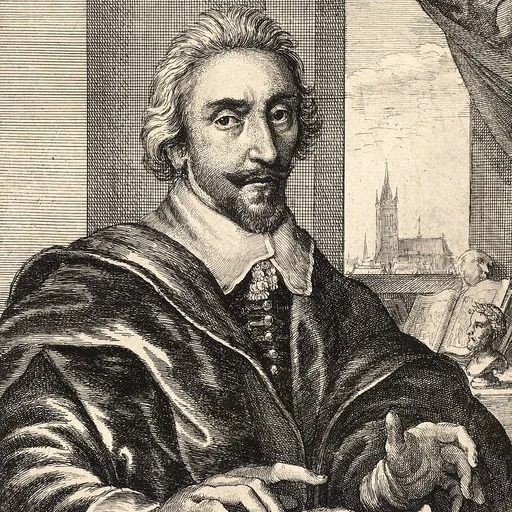
Adriaen Pietersz van de Venne (1589 – 12 November 1662), was a versatile Dutch Golden Age painter of allegories, genre subjects, and portraits, as well as a miniaturist, book illustrator, designer of political satires, and versifier.

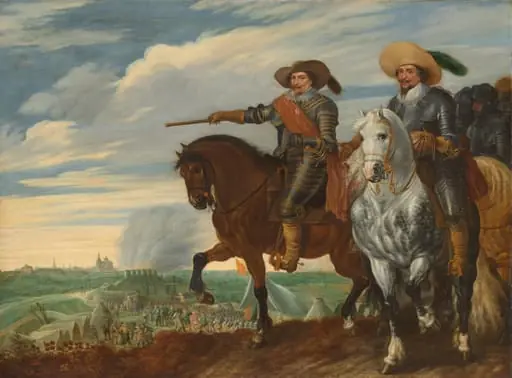 Frederick Henry and Ernst Casimir of Nassau-Dietz at the Siege of ’s Hertogenbosch
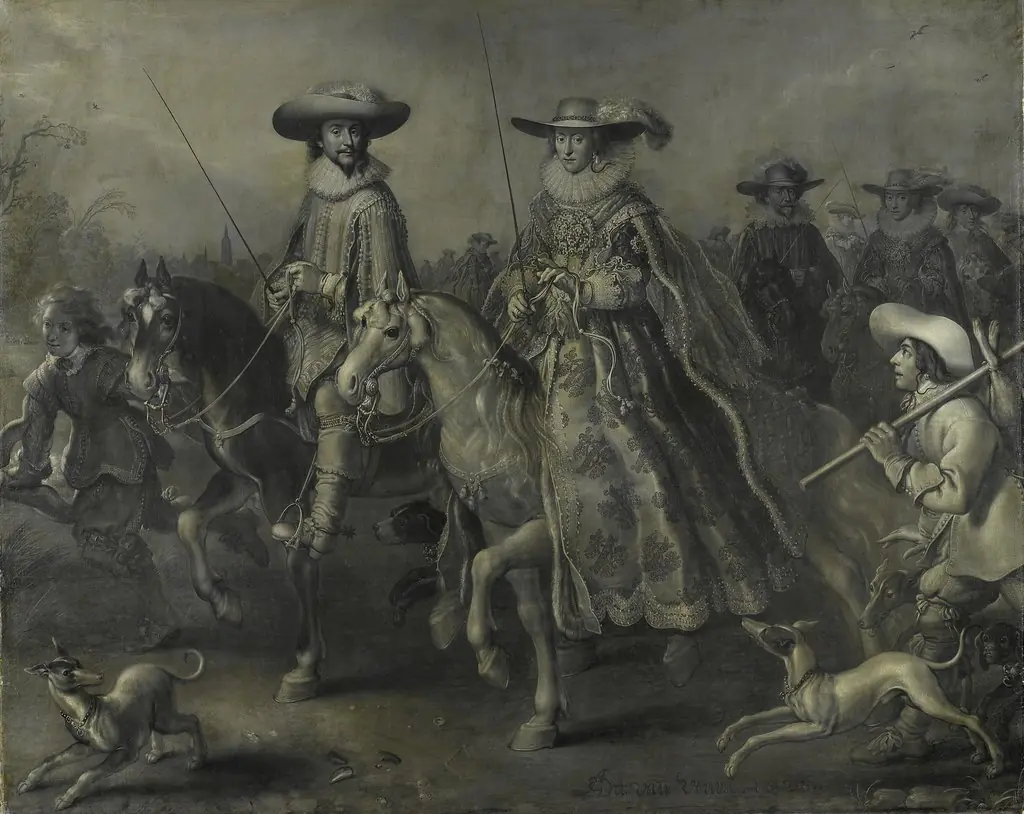
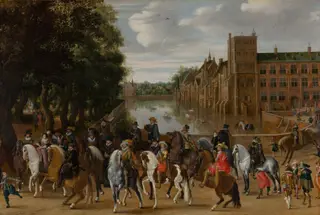 The Princes of Orange and their Families on Horseback, Riding Out from The Buitenhof, The Hague
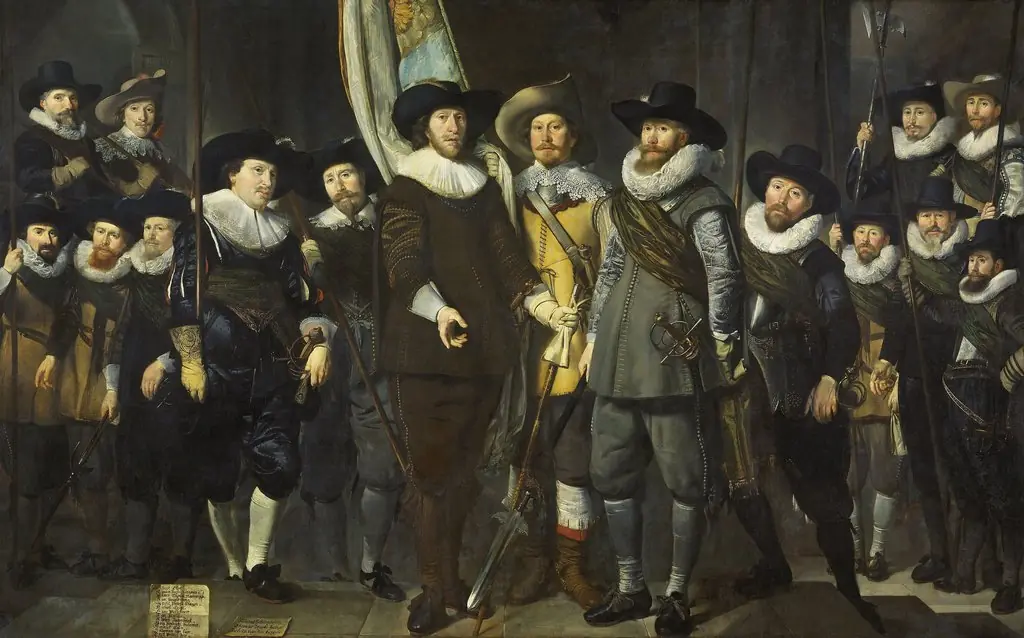 Officers and other civic guardsmen of the IIIrd District of Amsterdam, under the command of Captain Allaert Cloeck and Lieutenant Lucas Jacobsz Rotgans
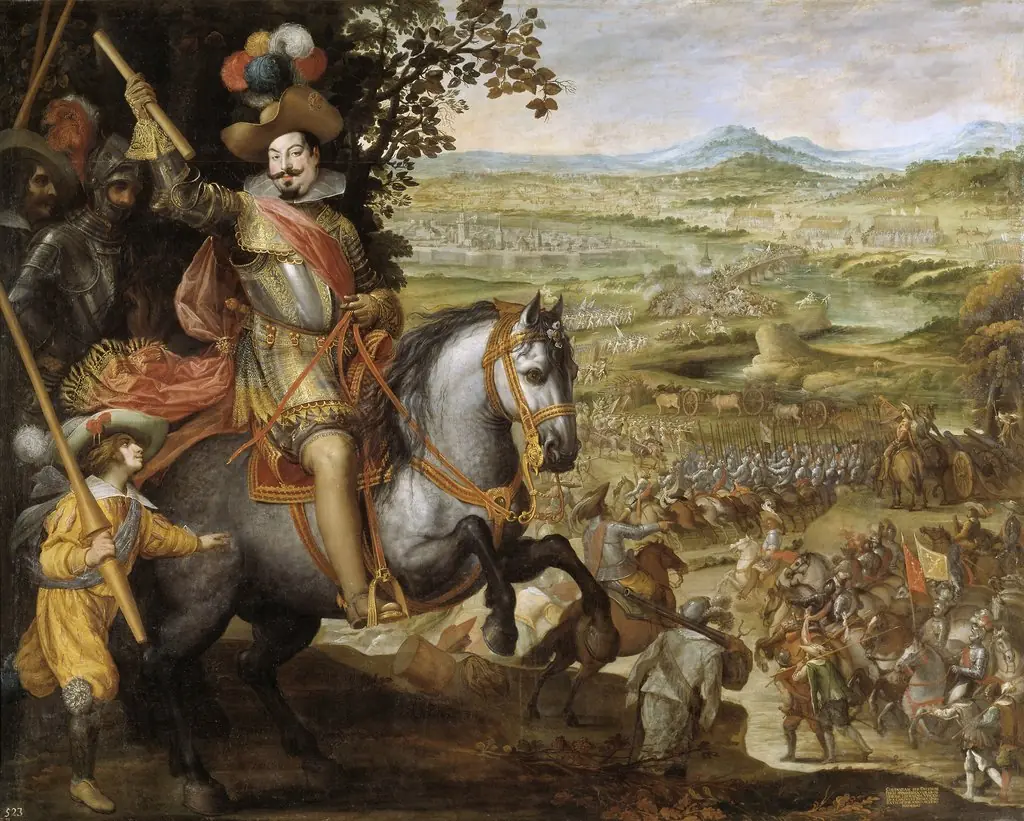 The Relief of Constance
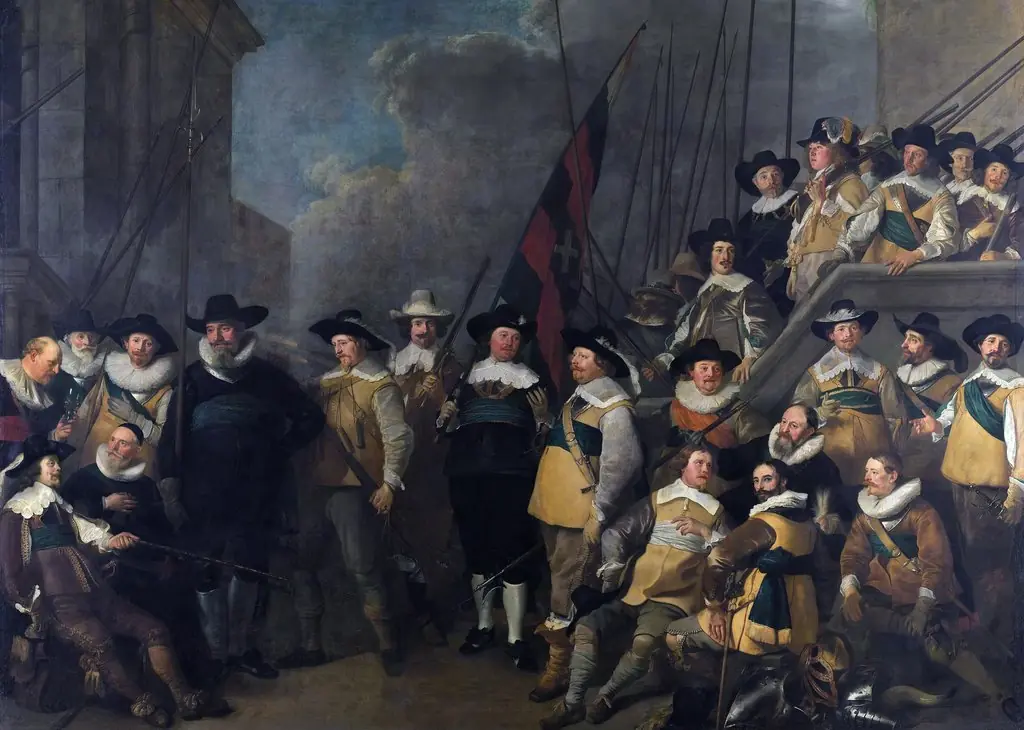 Officers and other Civic Guardsmen of the V District in Amsterdam under the command of Captain Cornelis de Graeff and Lieutenant Hendrick Lauwrensz
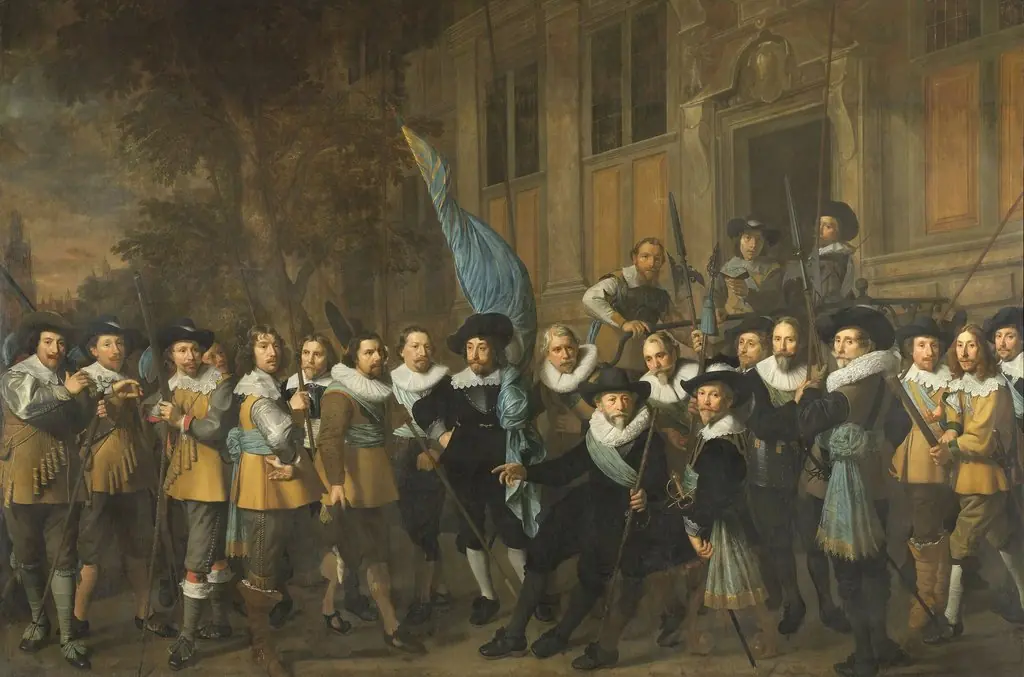 Officers and other civic guardsmen of the IVth District of Amsterdam, under the command of Captain Jan Claesz van Vlooswijck and Lieutenant Gerrit Hudde
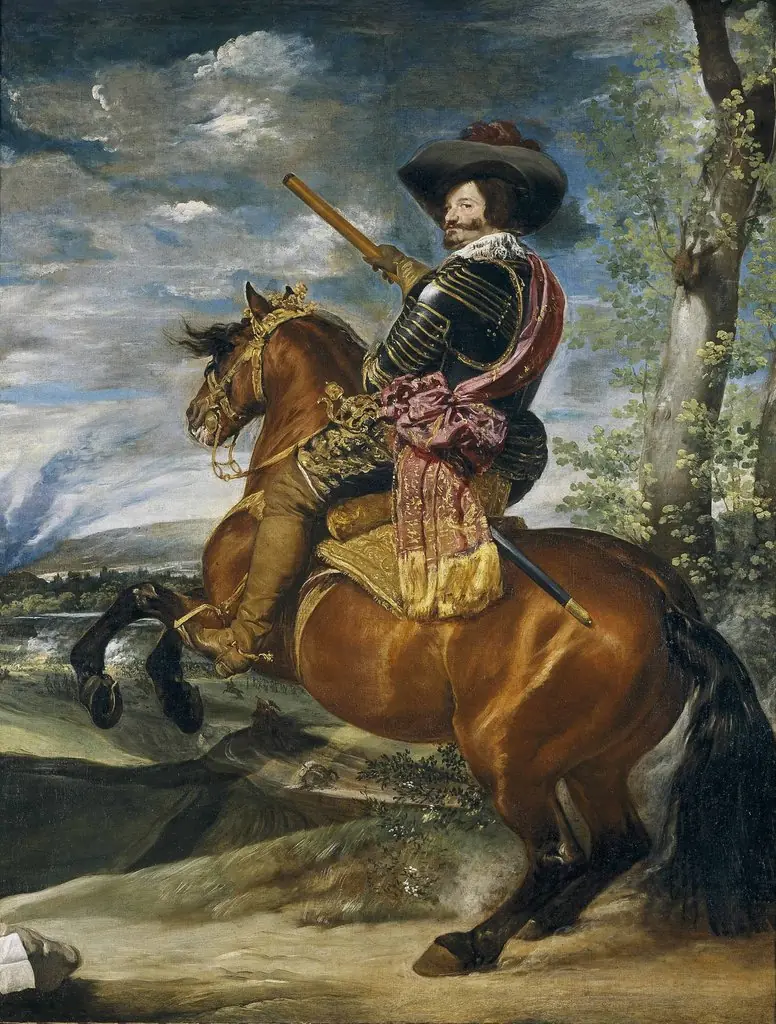 Equestrian Portrait of the Count-Duke of Olivares
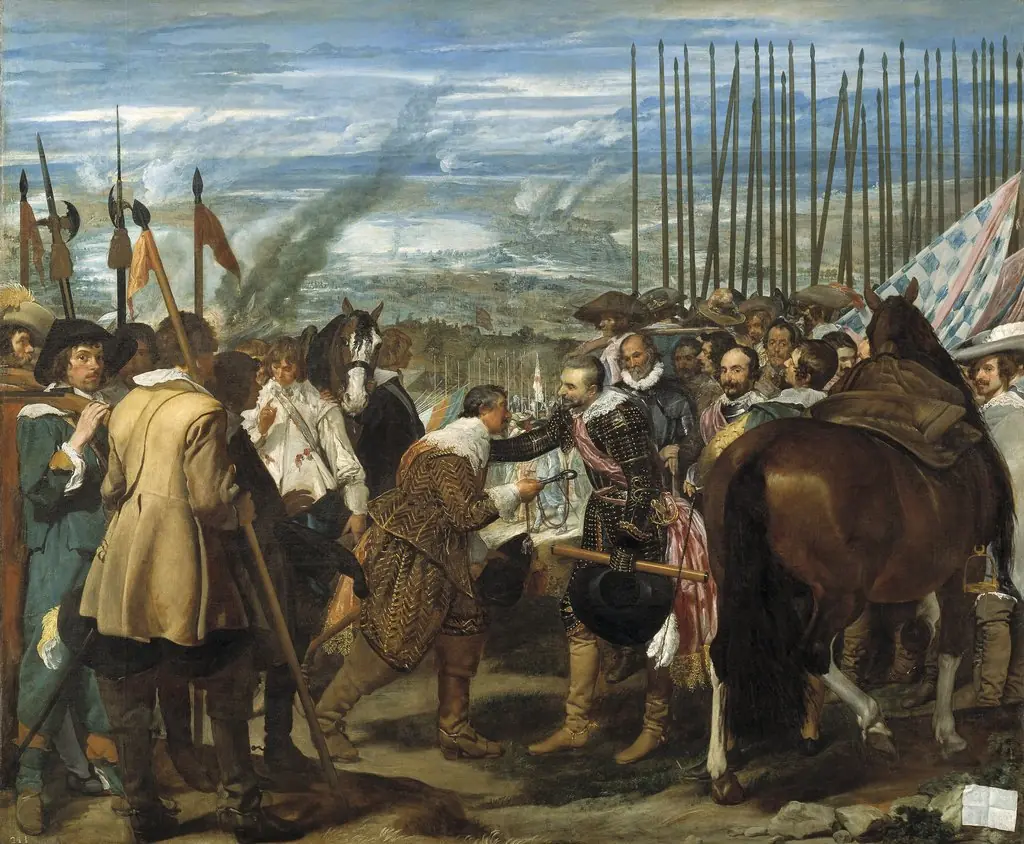 The Surrender of Brea