Artwork
Allegory on the tyranny of the Duke of Alva in the Netherlands
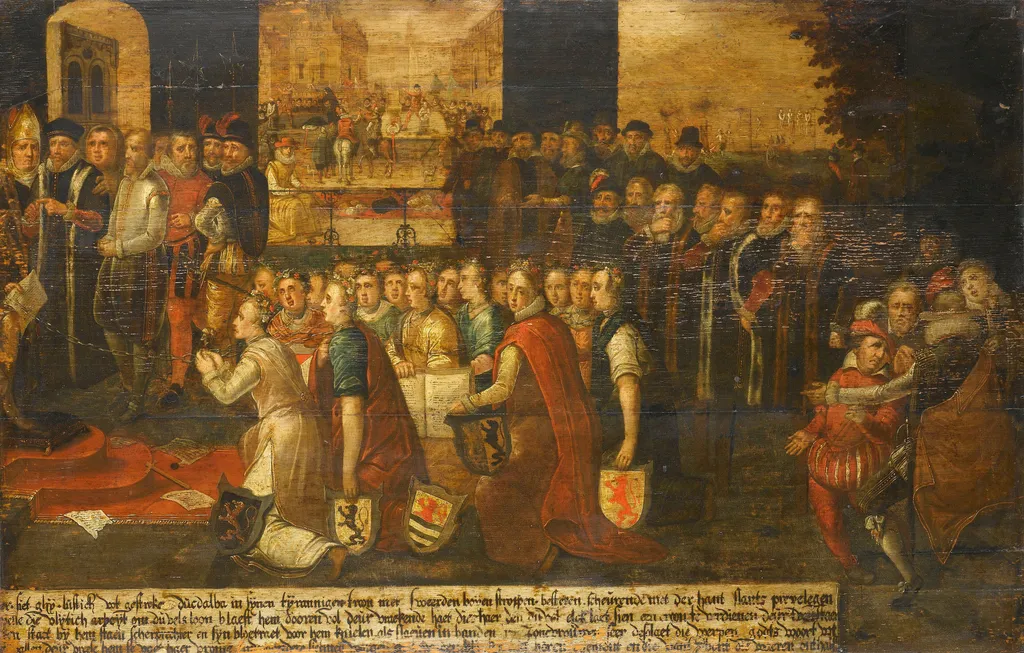
Allegory on the tyranny of the Duke of Alva in the Netherlands is an oil painting by the Flemish Baroque painting artist Unknown. It dates from 1626 and is held in the collection of the Rijksmuseum.
About this work
Technique & Style
Handling shows careful glazing and fine brushwork, consistent with studio practices of the period, to build luminous passages and subtle tonal transitions.
The painting is executed in oil on a wooden panel support, a common medium in Northern European works of the early seventeenth century. Handling shows careful glazing and fine brushwork, consistent with studio practices of the period, to build luminous passages and subtle tonal transitions. Stylistically, the composition is an allegorical tableau, employing personifications and emblematic motifs to convey political critique.
The palette relies on muted earth tones heightened by localized accents, and figures are arranged in a shallow, stage-like space that directs attention to the central action.
History & Provenance
Created in 1626, this oil-on-panel allegory originates from the Northern Low Countries. The work is attributed to an anonymous artist. Its provenance traces to the Royal Dutch Antiquarian Society before entering the collection of the Rijksmuseum in Amsterdam. The painting measures 76 cm in height and 117 cm in width.
The painting Allegory on the tyranny of the Duke of Alva in the Netherlands is held by the Rijksmuseum in Amsterdam, which also lists the Royal Dutch Antiquarian Society as a collecting entity. The work, created in 1626, is an anonymous oil-on-panel allegory measuring 76 cm in height and 117 cm in width. The provided sources do not contain specific inventory or accession numbers for the piece. Furthermore, no exhibition history is recorded in the available documentation.
Overview
The oil painting titled Allegory on the tyranny of the Duke of Alva in the Netherlands portrays a crowded interior scene. A multitude of figures, some standing, others kneeling, occupy a room filled with symbolic objects such as a table draped in red, an open large book, and several heraldic shields. The composition conveys a solemn, reverent atmosphere.
Subject & Meaning
At the center, a man in a white robe holds a staff and stands upon a red carpet, suggesting authority or judgment. He is flanked by a woman in a red dress and a man wearing a black hat, figures that may represent different social or political roles within the allegory of oppression under the Duke of Alva.
Context
The work references the historical period of the Spanish Duke of Alva’s rule over the Netherlands, a time marked by harsh repression. By presenting an allegorical scene rather than a literal narrative, the painting comments on the broader themes of tyranny and resistance.
Artist & collection









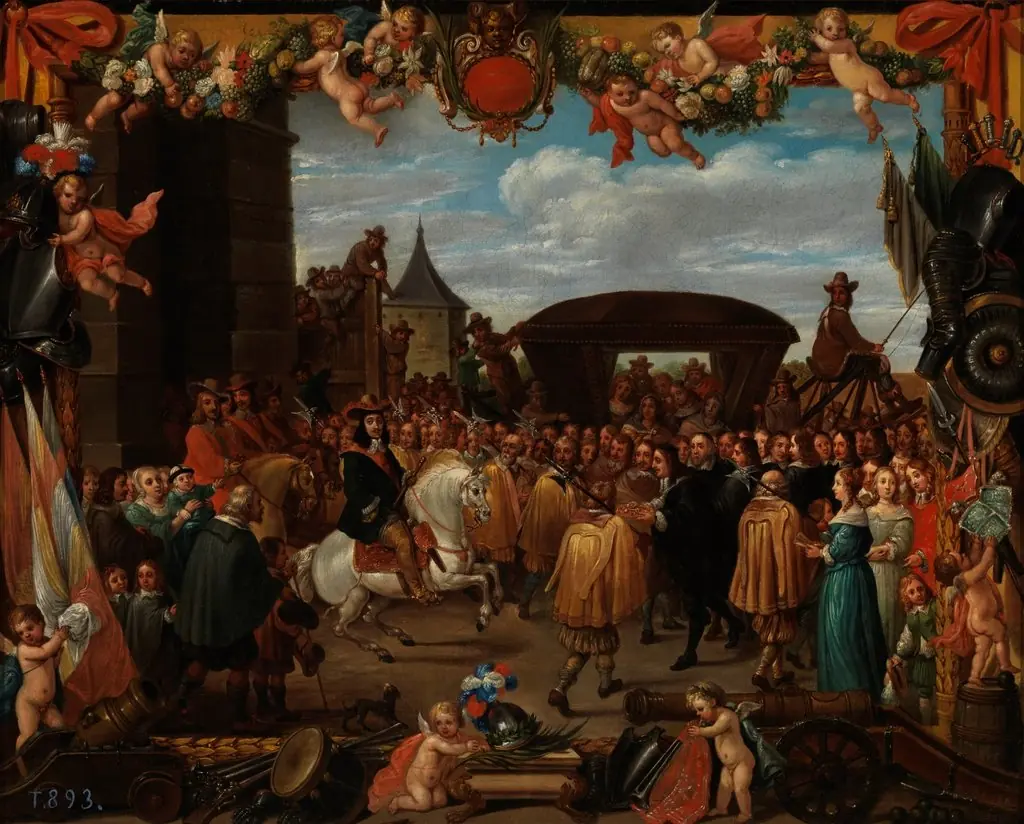 Entrada triunfal de don Juan José de Austria (?)
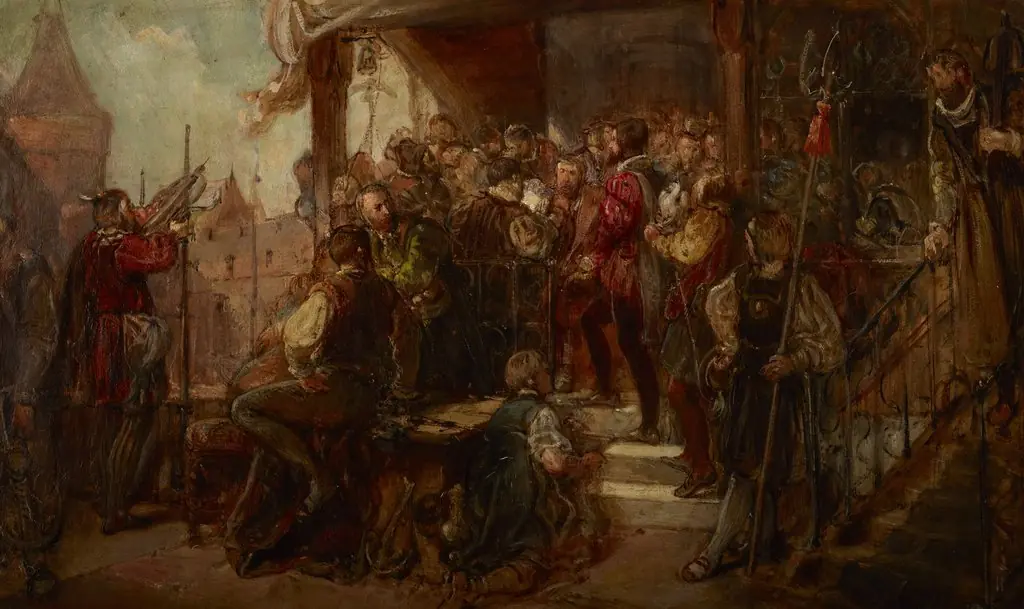 Presenting the Fowler to the Fowler Brotherhood (Sketch)
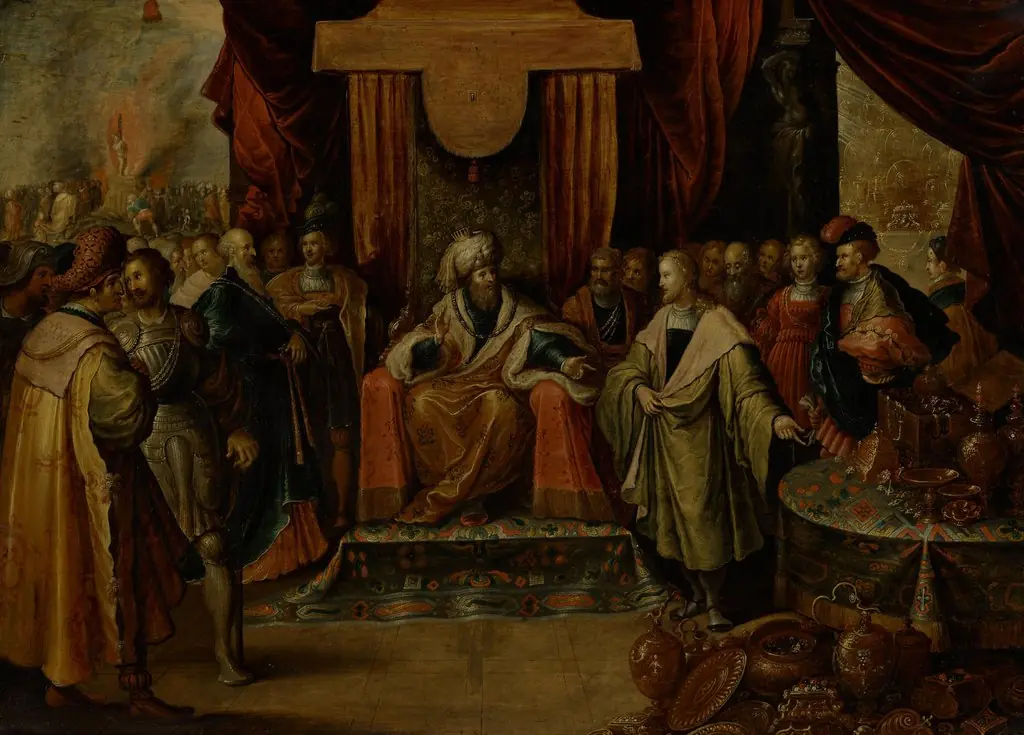 Solon und Krösus
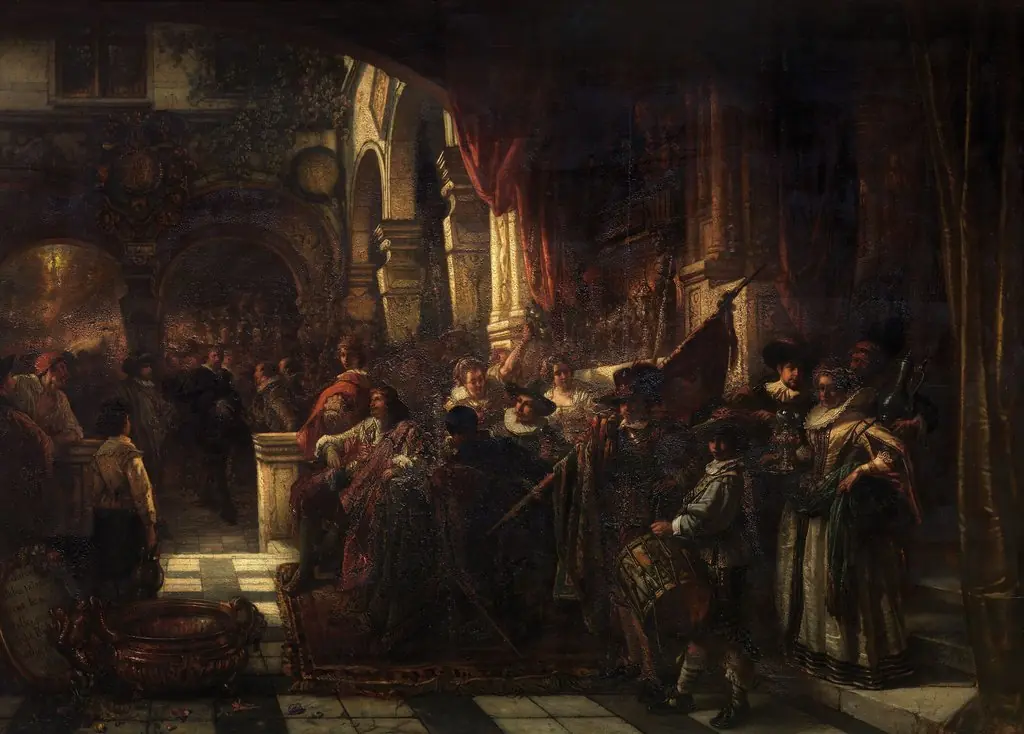 The Reception of Peter Paul Rubens by the Antwerp Arquebusiers
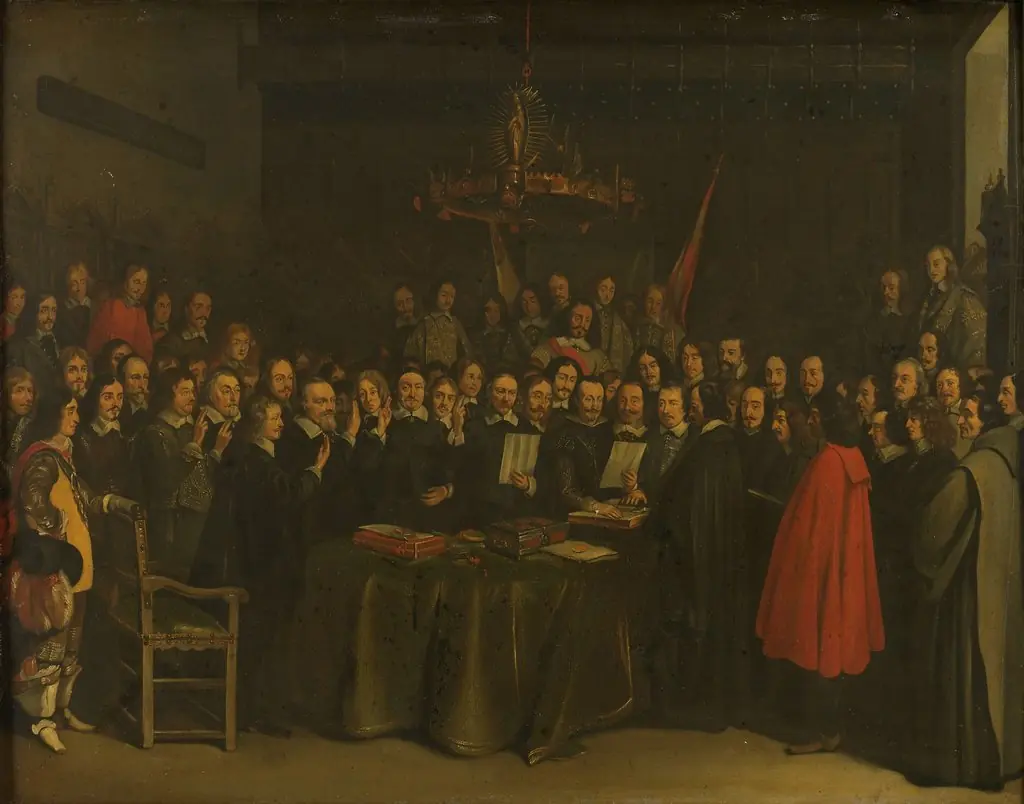 Ratification of the Peace of Münster between Spain and the Dutch Republic in the town hall of Münster, 15 May 1648
 Untitled
 Death of the leader
 Władysław IV after the Battle of Smoleńsk
 Saul Welcoming David after his Victory over Goliath
 Charles II Giving Audience at Christ's Hospital
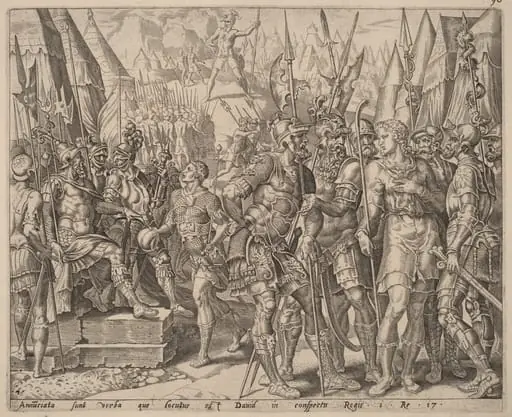 David's Brother Relating to Him Goliath's Challenge
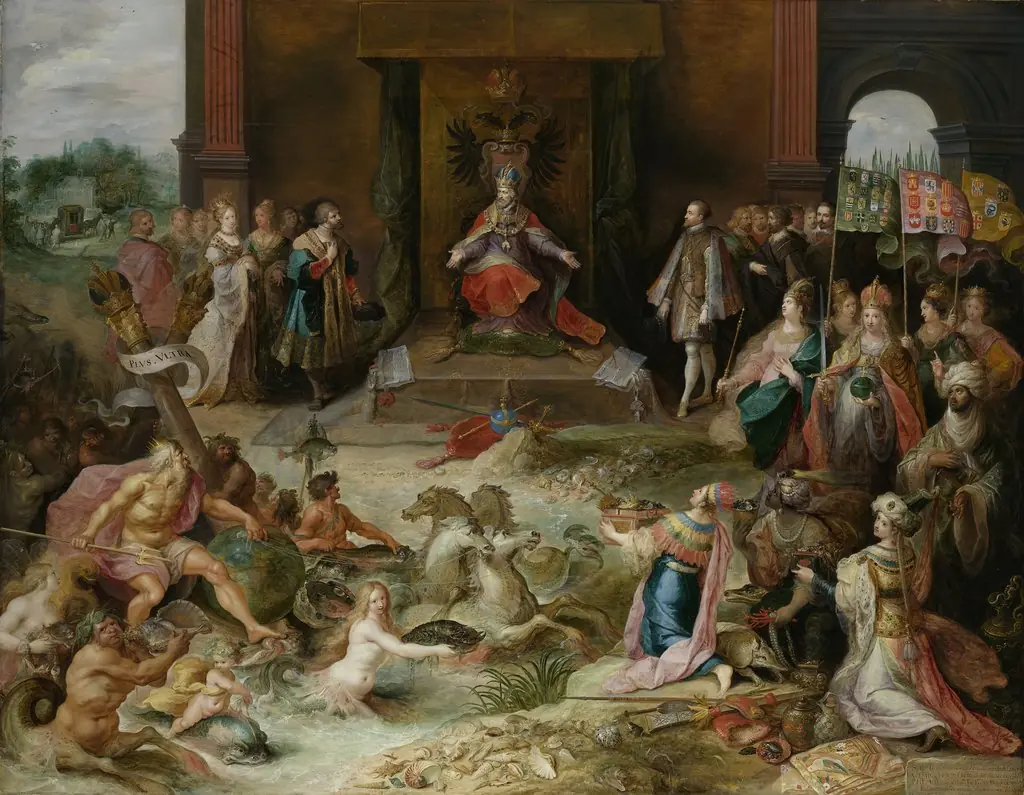
- Allegory on the Abdication of Emperor Charles V in Brussels