Artwork
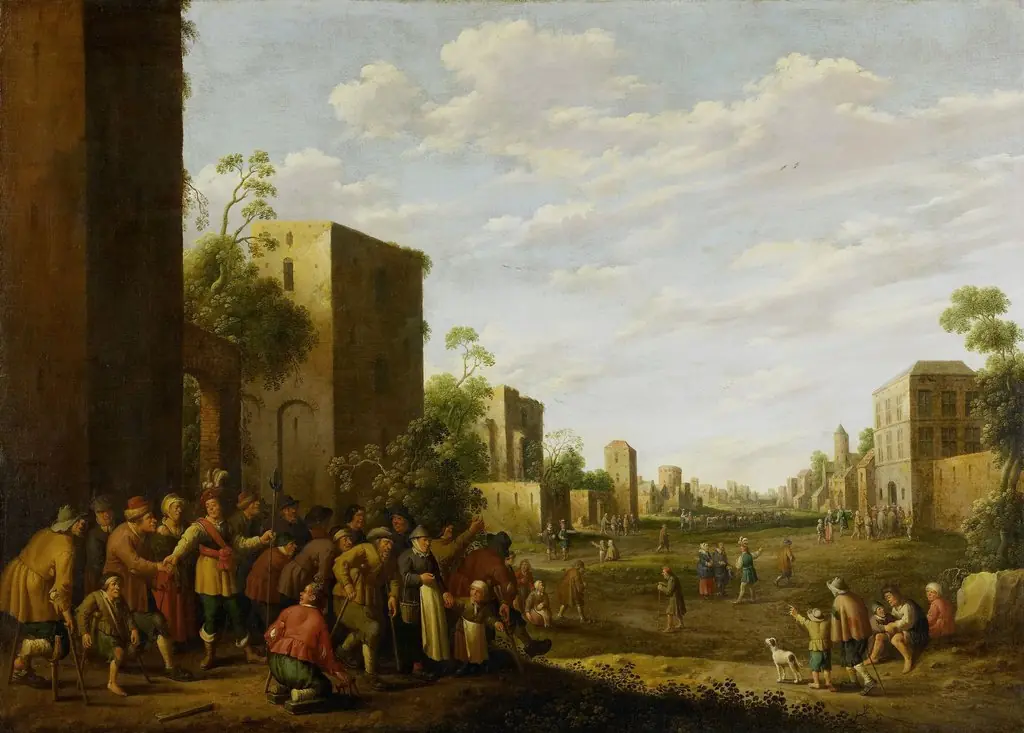
St Martin cutting off part of his cloak for a beggar
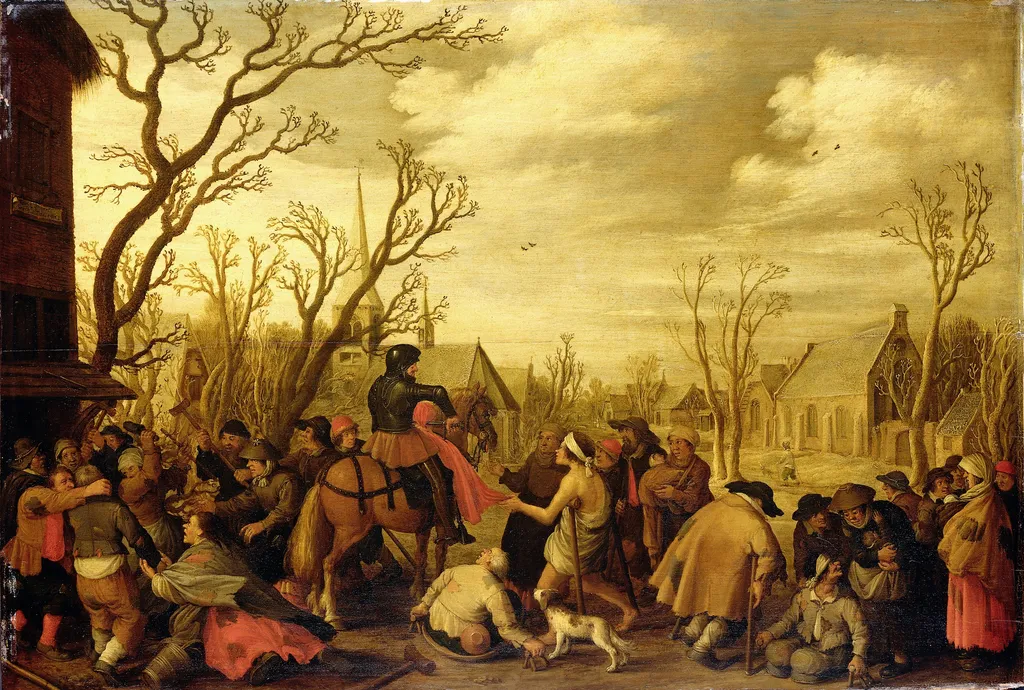
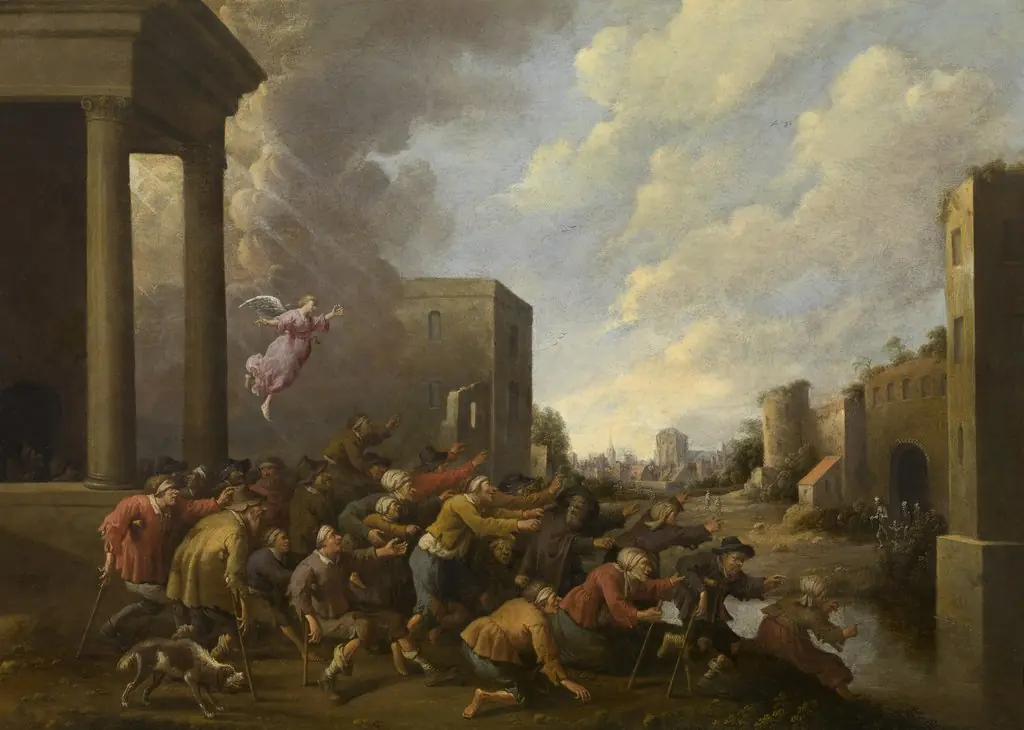
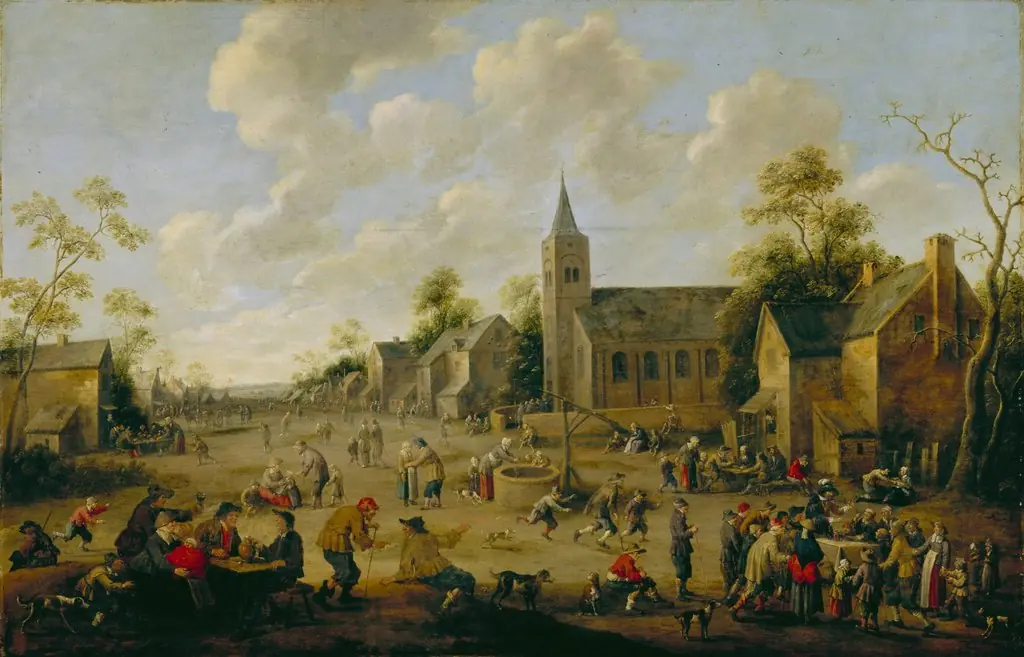
St Martin cutting off part of his cloak for a beggar is an oil painting by the Dutch Golden Age artist Joost Cornelisz Droochsloot. It dates from 1623 and is held in the collection of the Rijksmuseum.
About this work
Subject & Meaning
The painting depicts Saint Martin in the act of dividing his cloak with a destitute beggar, a moment that embodies charitable charity and Christian compassion.
The painting depicts Saint Martin in the act of dividing his cloak with a destitute beggar, a moment that embodies charitable charity and Christian compassion. The iconography centers on the saint’s gesture of sharing his outer garment, symbolizing self‑sacrifice and the Christian duty to aid the poor. This scene conveys a moral lesson about generosity and the spiritual reward of giving, reflecting the broader religious narrative of Christian charity in Dutch art of the early 17th century.
Technique & Style
The work was painted on panel using oil paint, a combination that provided a smooth, durable surface suited to the detailed rendering of narrative religious scenes. Its formal composition centers on Saint Martin sharing his cloak with a beggar, a motif rendered with crisp outlines and a restrained palette that emphasizes both narrative clarity and material richness.
History & Provenance
St Martin cutting off part of his cloak for a beggar was created by Joost Cornelisz Droochsloot in 1623, executed in oil paint on panel. The work entered the collection of the Rijksmuseum, where it is currently held. It is also associated with the holdings of the Limburg Museum.
The painting's inception date of 1623 establishes its place within Droochsloot's early career, shortly after he had begun producing religious scenes in his native Utrecht. No further details of commission, intermediate ownership, or acquisition circumstances are documented in the available sources.
Overview
St Martin cutting off part of his cloak for a beggar is a 1623 oil painting by Joost Cornelisz Droochsloot, depicting a biblical act of charity. The work is characteristic of Droochsloot's religious narratives, executed during the Dutch Golden Age.
Context
Droochsloot's work was influenced by the religious and social values of his time, with the scene's emphasis on charity resonating with both Catholic and emerging Protestant virtues in 17th-century Netherlands.
Legacy
As part of Droochsloot's oeuvre, the painting contributes to the artist's reputation for capturing religious and everyday life scenes, though its individual impact on the broader art historical canon is not distinctly outlined.
Own this work as a print
Artist & collection
Artist
Joost Cornelisz Droochsloot or Droogsloot (1586 – May 14, 1666), was a Dutch painter of village scenes, landscapes, genre pictures, moral allegories and biblical stories.