Artwork
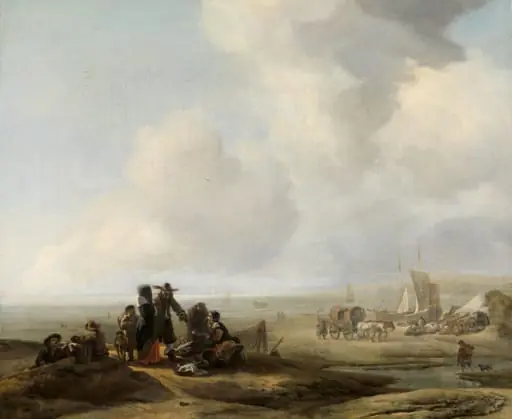
Beach at Katwijk
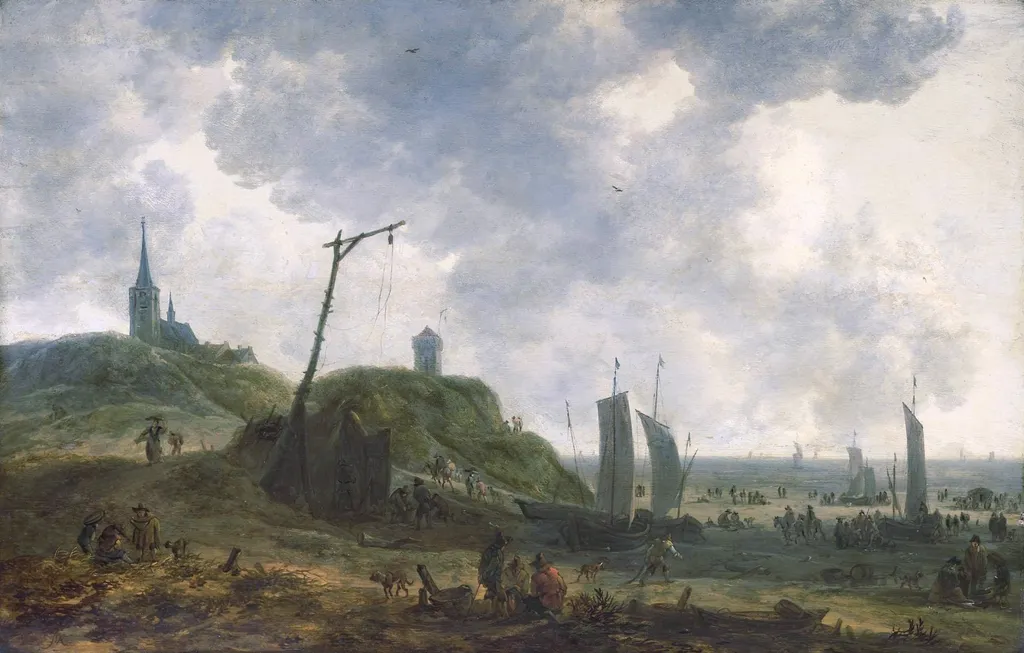
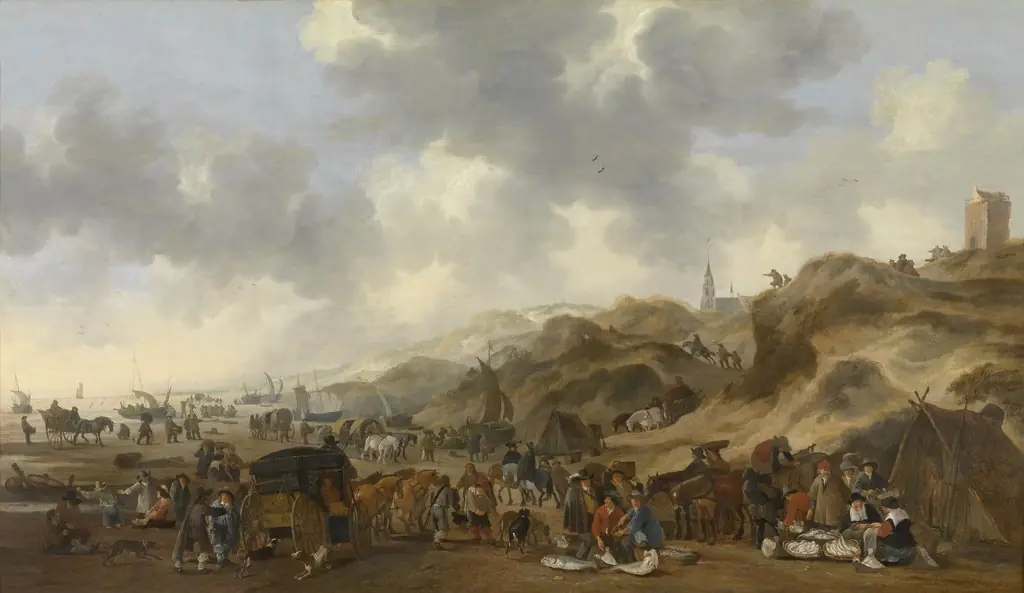
Beach at Katwijk is an oil painting by the Dutch Golden Age artist Adriaen van der Cabel. It dates from 1650 and is held in the collection of the Rijksmuseum.
About this work
Technique & Style
Classified as a landscape painting, it belongs to the marine-beach genre that flourished among Dutch artists working along the North Sea shore.
Beach at Katwijk is executed in oil paint on panel, a support typical of mid-seventeenth-century Dutch cabinet-scale landscapes. The work measures 47 by 73.5 cm in a horizontal landscape format suited to its coastal subject. Classified as a landscape painting, it belongs to the marine-beach genre that flourished among Dutch artists working along the North Sea shore.
Stylistically, the painting reflects Adriaen van der Cabel's handling of the Katwijk beach motif, a popular subject among Dutch Italianate and tonal painters of the period. The modest dimensions and panel support suggest a finely worked surface intended for close viewing rather than large-scale display.
History & Provenance
Beach at Katwijk is an oil painting on panel created in 1650 by Adriaen van der Cabel. The work measures 47 cm in height and 73.5 cm in width and is classified as a landscape. It belongs to the collection of the Rijksmuseum in Amsterdam, where it has been housed since its acquisition.
The painting was executed in the Dutch Republic during the mid‑17th century, reflecting the artist’s activity in the coastal town of Katwijk.
The provenance records indicate continuous ownership by the Rijksmuseum from the time of its creation, with no documented private sales or transfers. The work was catalogued in the museum’s collection as early as the 19th century and has remained part of the public display.
No evidence of external commission or patronage is noted in the sources; the painting appears to have been produced independently by the artist before entering the museum’s holdings.
Beach at Katwijk is held in the collection of the Rijksmuseum, where it is registered under the accession number SK-A-1465. The work was created by Adriaen van der Cabel in 1650 as an oil painting on panel measuring 47 cm in height by 73.5 cm in width. It has been part of the museum's exhibition history, appearing in displays focused on Dutch landscape painting.
Context
Adriaen van der Cabel painted Beach at Katwijk in 1650, a landscape created on panel using oil paint. The work depicts a Dutch shoreline scene and was produced during van der Cabel's active period as a marine and coastal artist specializing in such genres.
Overview
Painted around 1650 by Adriaen van der Cabel, Beach at Katwijk is an oil-on-canvas landscape capturing a quiet coastal moment in the Netherlands. Though van der Cabel spent much of his career in France and Italy, this work reflects his early engagement with Dutch coastal subjects. It is part of the Rijksmuseum’s collection, representing the observational rigor of Dutch Golden Age painting.
Subject & Meaning
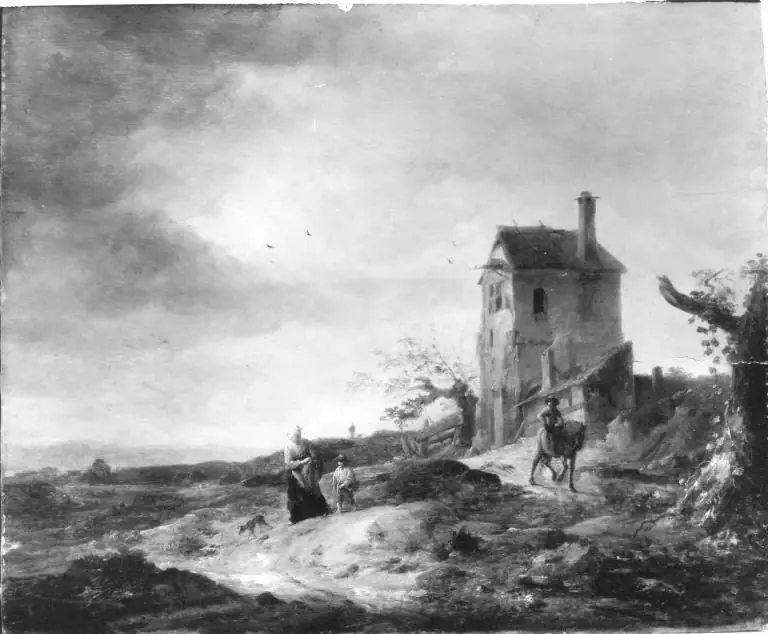
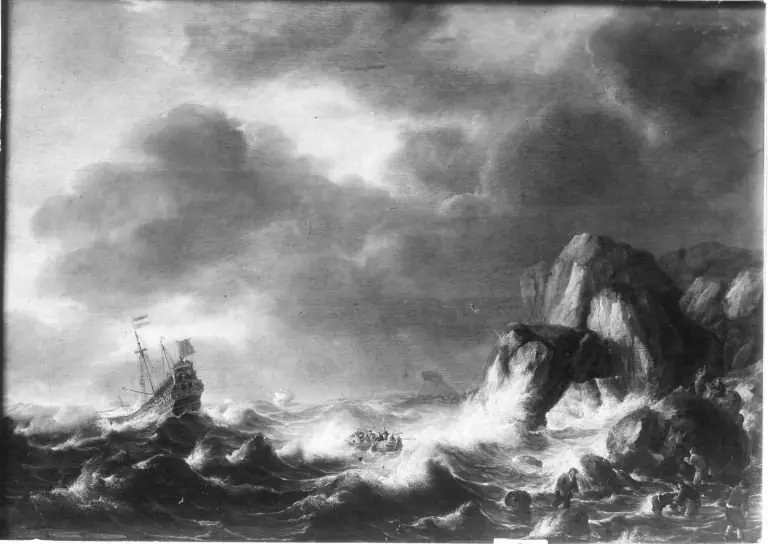
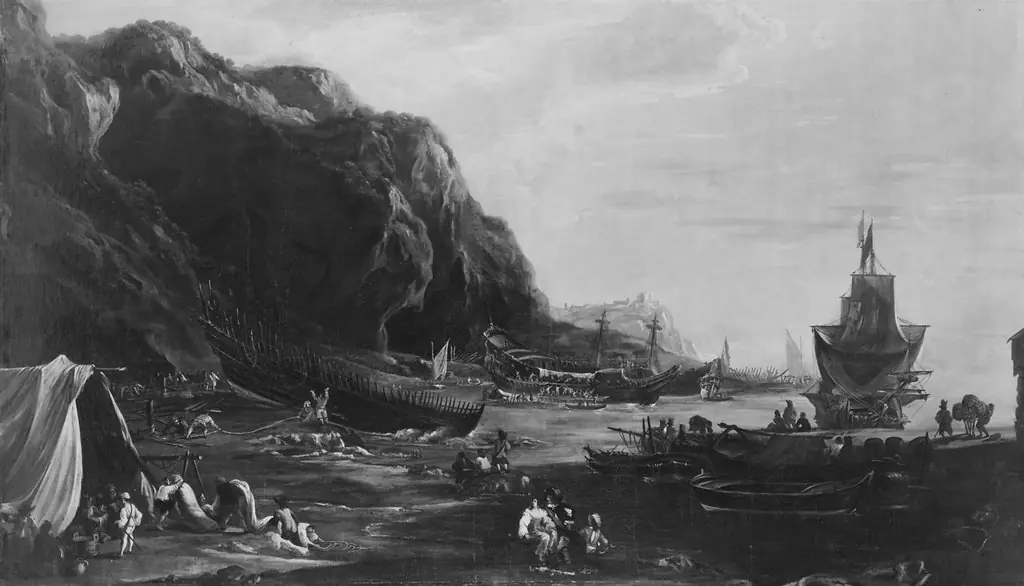
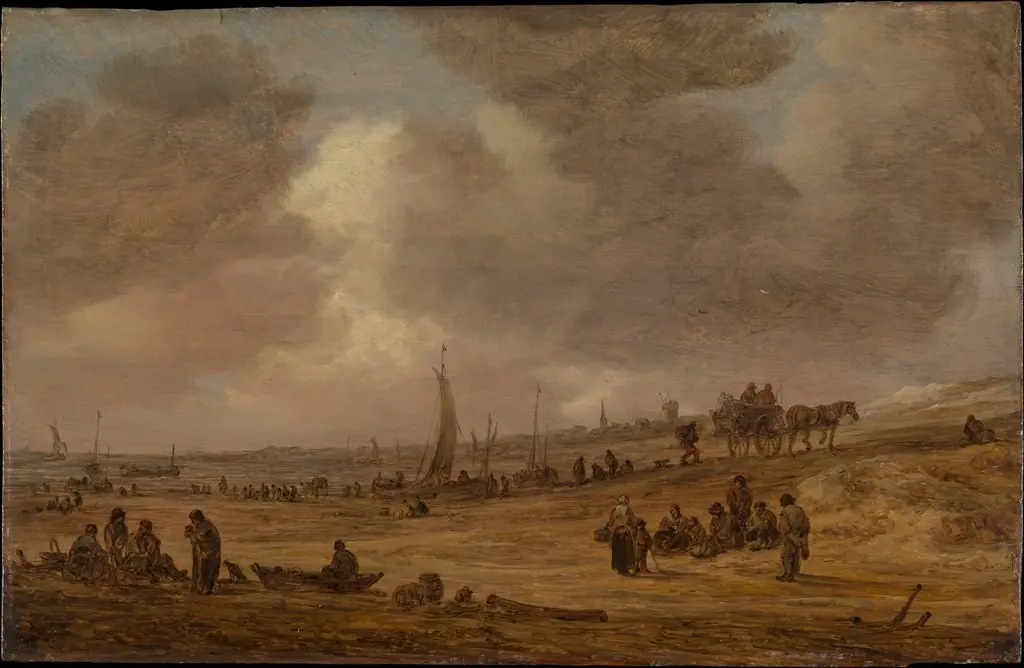
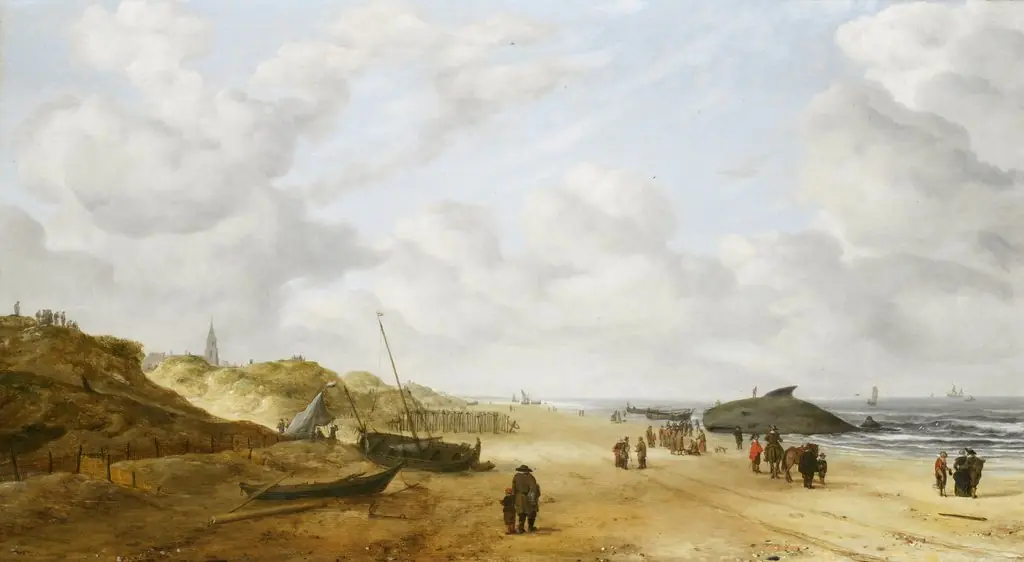
The scene portrays ordinary life along the North Sea shore: figures stroll, converse, and tend to boats; animals move among them. The presence of a church steeple on the dune suggests a settled community, grounding the activity in a specific place. Rather than idealizing nature, the painting treats the beach as a working and social space, reflecting the everyday rhythms of coastal Dutch life.
Legacy
Though less known than some of his peers, van der Cabel’s work contributed to the development of Dutch coastal painting. Beach at Katwijk exemplifies how everyday scenes could be rendered with sensitivity to light and atmosphere. It remains a reference for understanding the quiet, unembellished vision that defined much of Dutch Golden Age landscape art.
Own this work as a print
Artist & collection
Artist
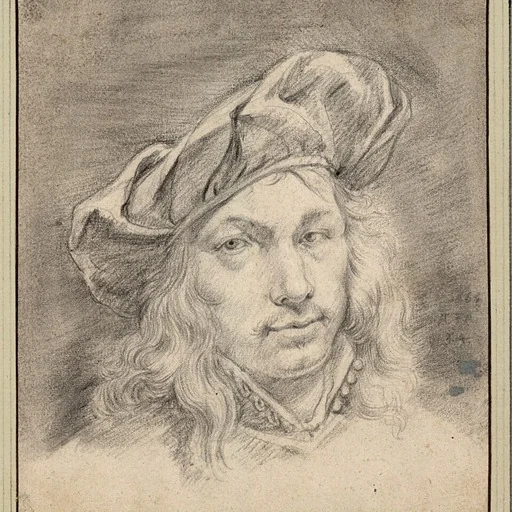
Adriaen van der Cabel or Ary van der Touw (1631 – 16 June 1705), was a Dutch Golden Age landscape painter active in France and Italy.