Artwork
Galatea and Acis
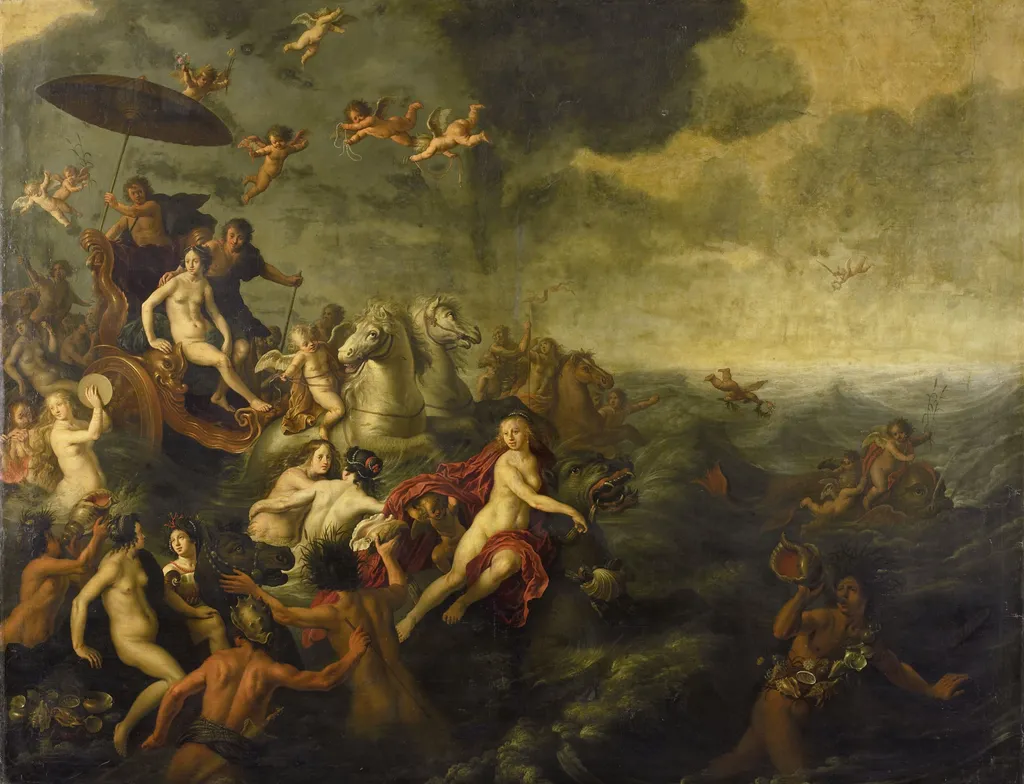
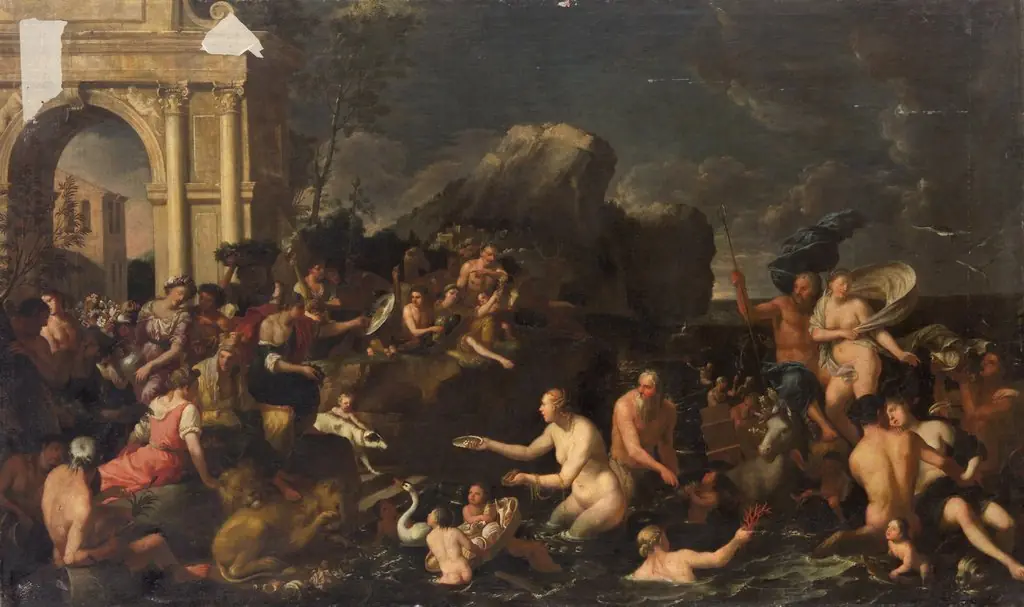
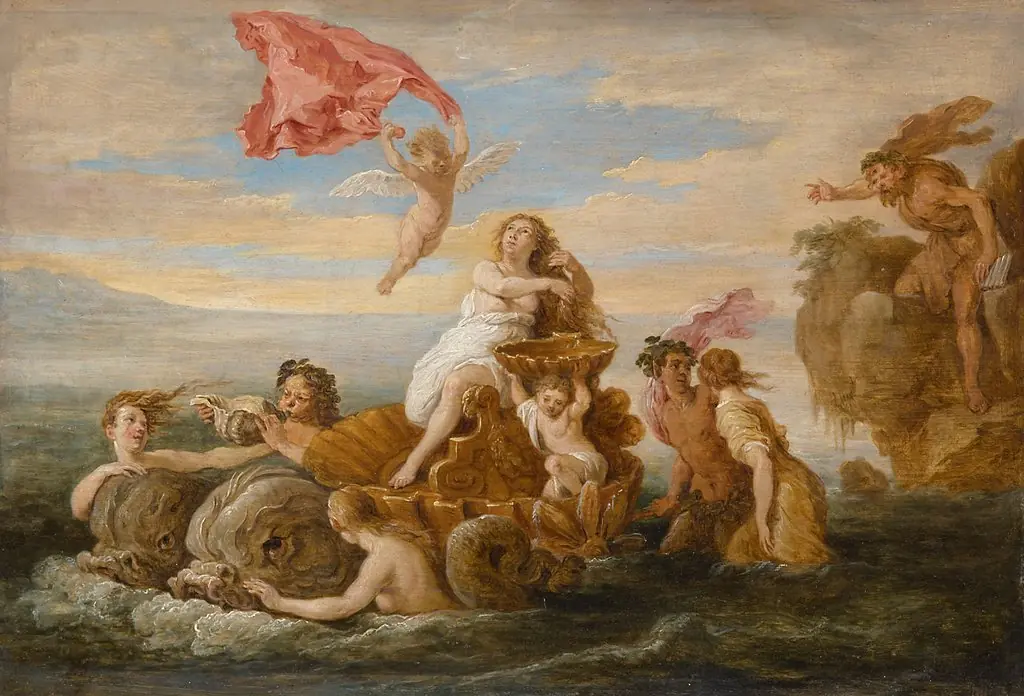
Galatea and Acis is an oil painting by the Flemish Baroque painting artist Adriaen van Nieulandt the younger. It dates from 1651 and is held in the collection of the Rijksmuseum.
About this work
Subject & Meaning
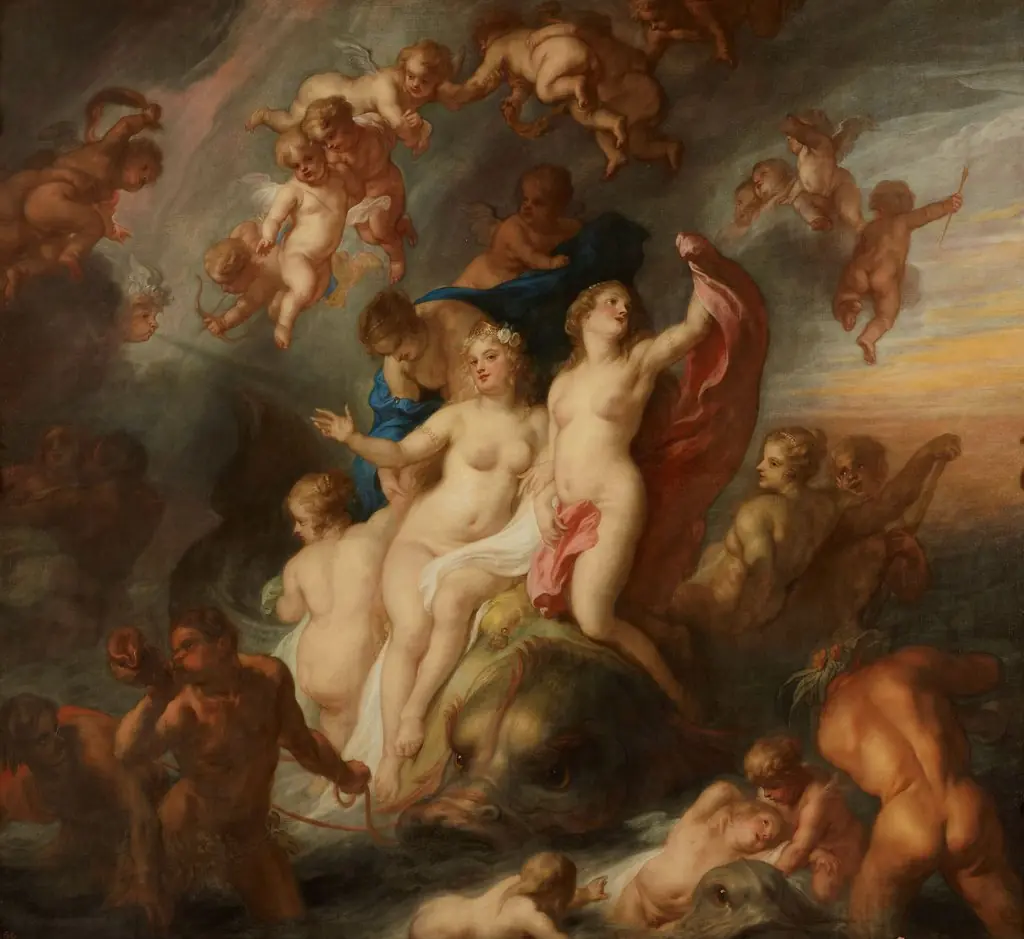
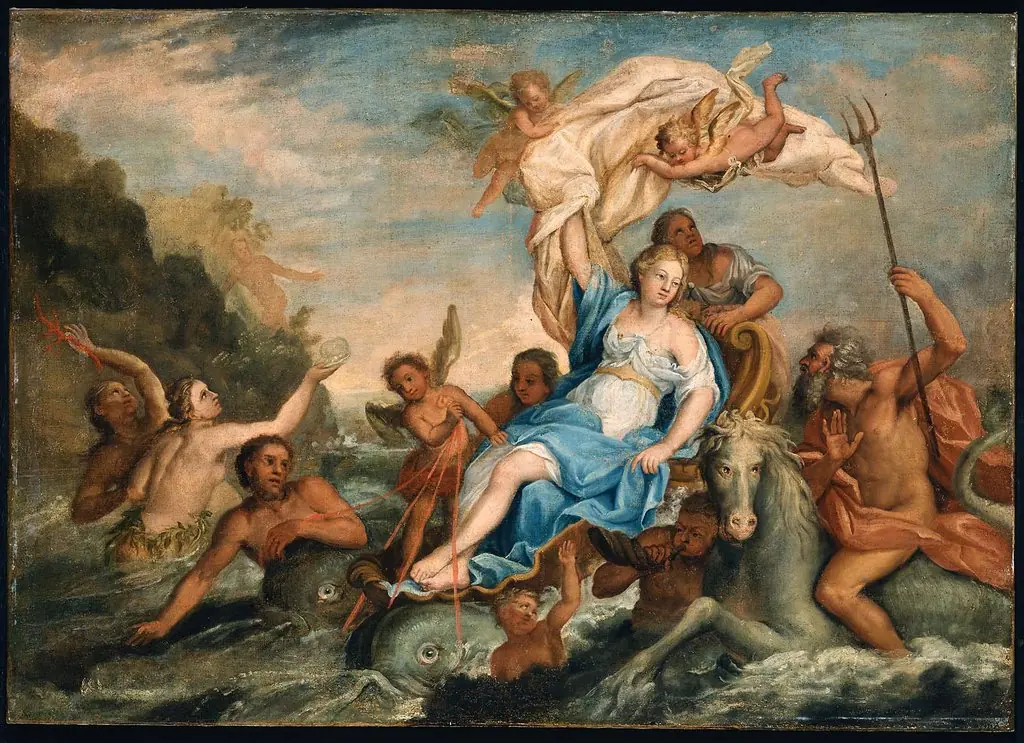
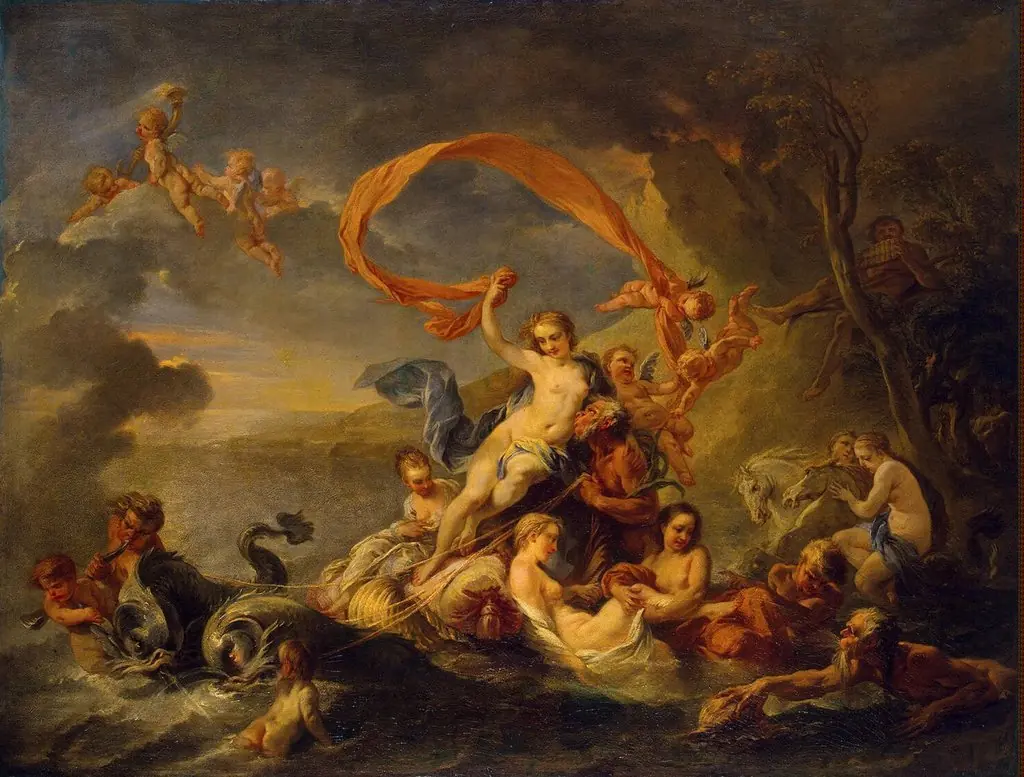
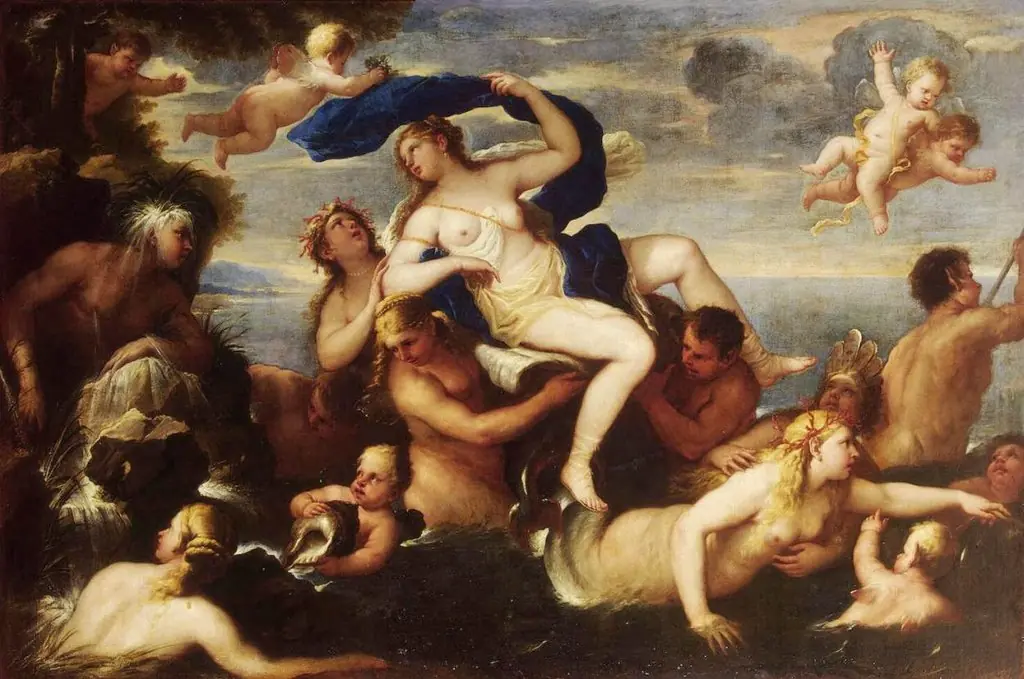
The painting depicts the Ovidian myth of Acis and Galatea, a story from Metamorphoses in which the sea-nymph Galatea falls in love with the mortal Acis.
The painting depicts the Ovidian myth of Acis and Galatea, a story from Metamorphoses in which the sea-nymph Galatea falls in love with the mortal Acis. Neptune’s jealous Cyclops rival, Polyphemus, kills Acis with a boulder, but Galatea transforms the blood of her slain lover into a Sicilian river that bears his name. In van Nieulandt’s composition, Galatea’s grief and the violent disruption of Acis’s death are conveyed through her upward gesture and the stormy sea, underscoring the tragic consequences of thwarted love and divine jealousy.
The scene’s iconography aligns with Netherlandish mythological painting of the period, emphasizing human pathos against a turbulent natural backdrop to evoke classical precedent while serving contemporary moral reflection on love and loss.
Technique & Style
The work Galatea and Acis is an oil painting executed on canvas, measuring 155.5 cm in height by 201 cm in width. Adriaen van (I) Nieulandt the younger rendered the mythological scene using oil paint, a technique evident in the layered brushwork that defines the figures and landscape. The composition reflects a classical approach to form, with careful modeling of the bodies and a balanced spatial arrangement characteristic of 17th-century Dutch mythological painting.
The surface handling suggests careful application, consistent with the artist’s documented precision in smaller-scale works. The painting’s current condition, while not detailed in available records, would be subject to conservation assessment given its age and medium.
The stylistic treatment emphasizes clarity of line and color harmony, aligning with the tonal refinement seen in Dutch Baroque works of the period.
History & Provenance
Galatea and Acis is an oil painting on canvas created in 1651 by Adriaen van Nieulandt the younger, depicting the mythological figures Acis and Galatea. The work measures 155.5 cm in height and 201 cm in width and was originally owned by Abraham Bredius before entering the collection of the Rijksmuseum, where it remains on display. Its provenance traces a clear chain of ownership from the artist to Bredius and then to the museum, reflecting a documented acquisition history consistent with 17th-century Dutch collecting practices.
Overview
Adriaen van Nieulandt the Younger, a Dutch painter of Flemish ancestry, executed the oil painting Galatea and Acis in 1651. The work belongs to the Flemish Baroque tradition and is presently part of the Rijksmuseum’s collection. It presents a dramatic mythological episode rendered with vigorous movement and a crowded composition of nude figures.
Own this work as a print
Artist & collection
Artist
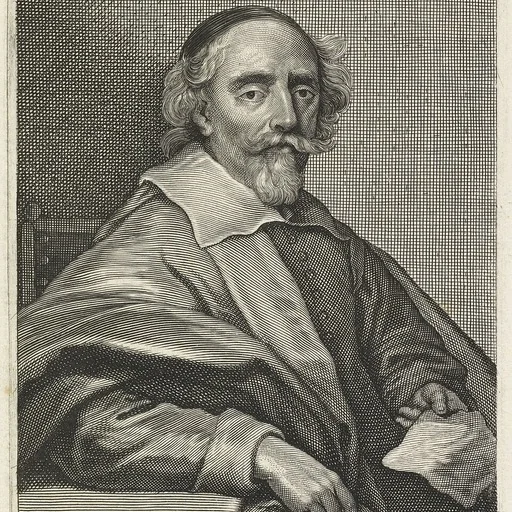
Adriaen van Nieulandt the younger
Adriaen van Nieulandt (1586 or 1587, Antwerp - buried 7 July 1658, Amsterdam) was a Dutch painter, draughtsman and engraver of Flemish descent.