Artwork
Ecce homo
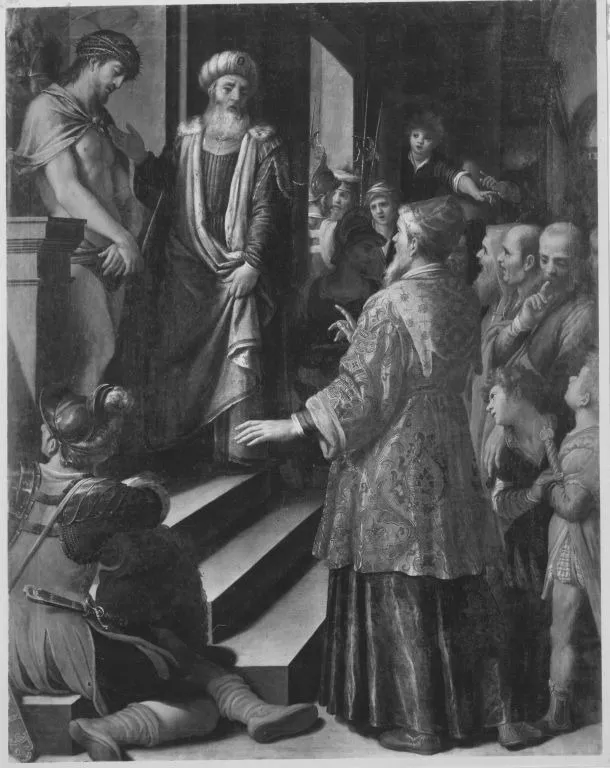
Ecce homo is an unspecified painting by the Early Baroque Italian artist Agostino Ciampelli. It dates from 1599 and is held in the collection of the Bavarian State Painting Collections.
About this work
Subject & Meaning
The painting portrays Jesus Christ in the moment of condemnation, presenting the phrase 'Ecce Homo' as he is presented to the crowd. The work draws on traditional iconography of the trial before Pilate, emphasizing themes of suffering and injustice. Its meaning centers on the sacrificial nature of Christ's Passion and the injustice of his sentencing.
Technique & Style
The work is classified as a painting, a religious work by Agostino Ciampelli dated 1597, depicting the Ecce Homo subject.
The work is classified as a painting, a religious work by Agostino Ciampelli dated 1597, depicting the Ecce Homo subject. Its measured dimensions are 142.7 cm in height by 113.8 cm in width, a tall, modestly wide format suited to a devotional composition centered on Jesus Christ. It is held in the Bavarian State Painting Collections at the Alte Pinakothek.
The available sources do not specify the medium (such as oil or tempera), the support (panel or canvas), the handling of paint, the condition of the surface, or the formal and stylistic qualities of the work.
History & Provenance
The religious painting Ecce Homo was created by the artist Agostino Ciampelli in 1597. The work depicts Jesus Christ and is currently held within the Bavarian State Painting Collections. It is located at the Alte Pinakothek.
While the specific circumstances of its original commission and the detailed chain of ownership prior to its entry into the Bavarian collection are not provided in the available records, the date of inception is firmly established as 1597.
Context
Agostino Ciampelli's 1597 Ecce homo, housed in Munich's Alte Pinakothek, portrays Christ moments before crucifixion as described in biblical narratives. The work's religious genre aligns with Counter-Reformation artistic goals of emotional spiritual engagement. Its composition and iconography have been analyzed in scholarship as exemplifying Baroque techniques used to convey theological narratives through visual drama.
Overview
Agostino Ciampelli's 1599 painting Ecce homo is an early example of Italian Baroque art, currently held in the Alte Pinakothek collection.
Artist & collection
Artist
Agostino Ciampelli (29 August 1565 – 22 April 1630) was an Italian painter of the Baroque period.

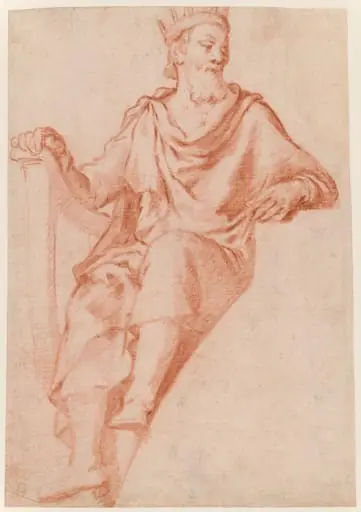
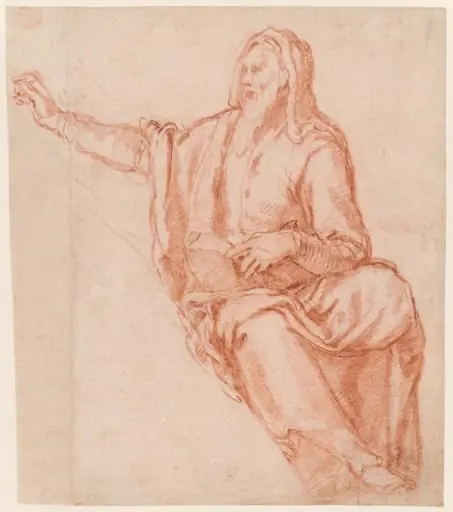
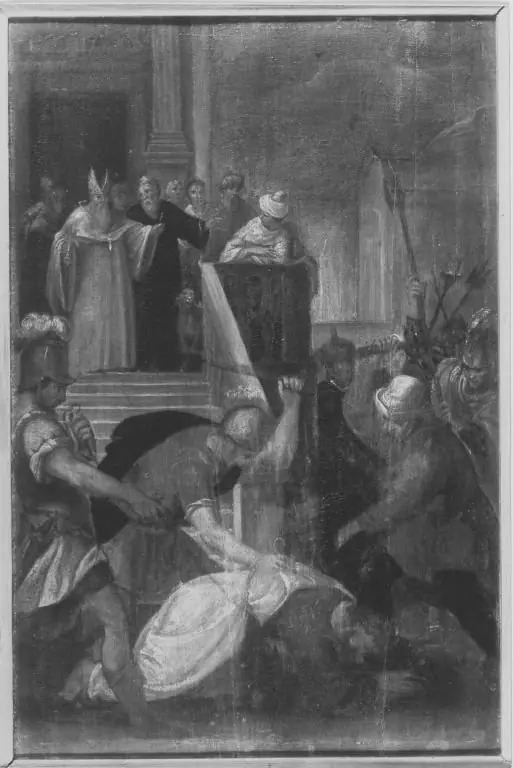 Christus vor Kaiphas (Kopie nach)
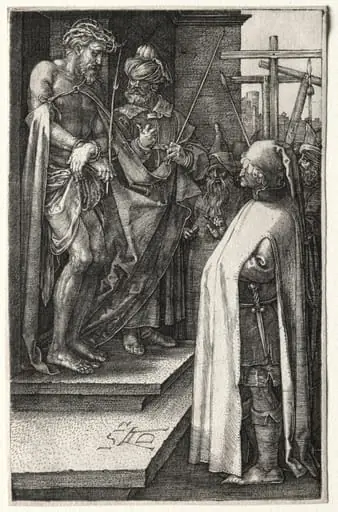 Christ Shown to the People
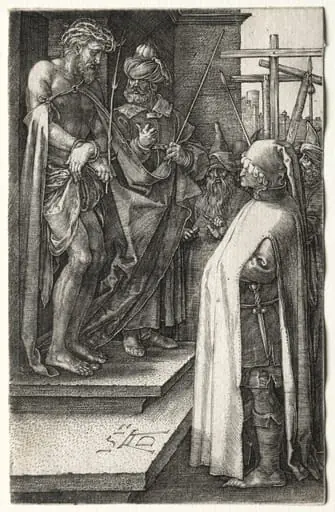 Ecce Homo
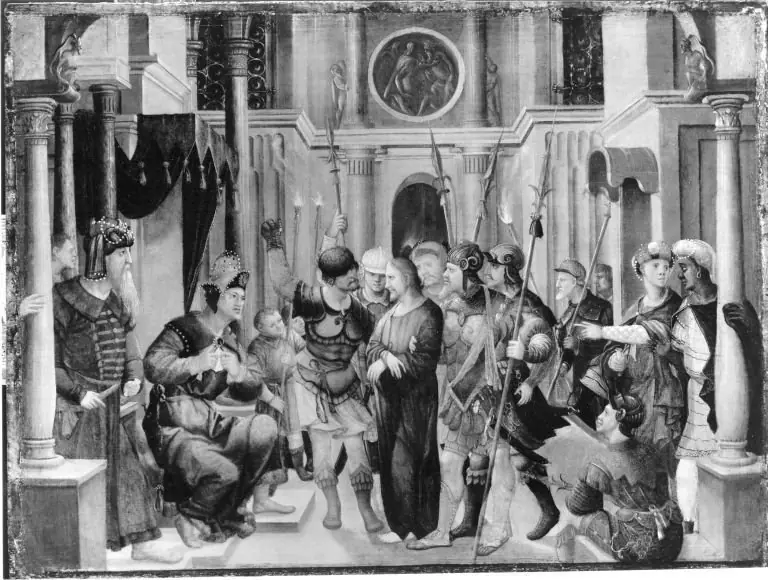 Christ standing for Kaiphas
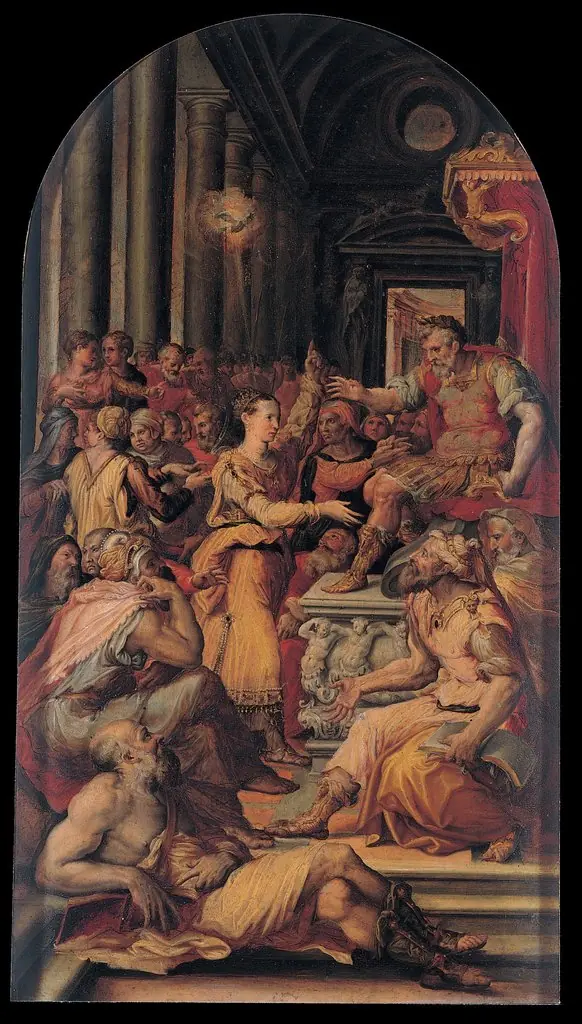 The Dispute of Saint Catherine
![The Betrothal of Margaret of Austria to Philip III, King of Spain [verso], by Raffaello Schiaminossi](https://artifactworldgallery.com/img/raffaello-schiaminossi--the-betrothal-of-margaret-of-austria-to-philip-iii-king-of-s--509229b9feb3b80f-w320.webp) The Betrothal of Margaret of Austria to Philip III, King of Spain [verso]
The Betrothal of Margaret of Austria to Philip III, King of Spain [verso]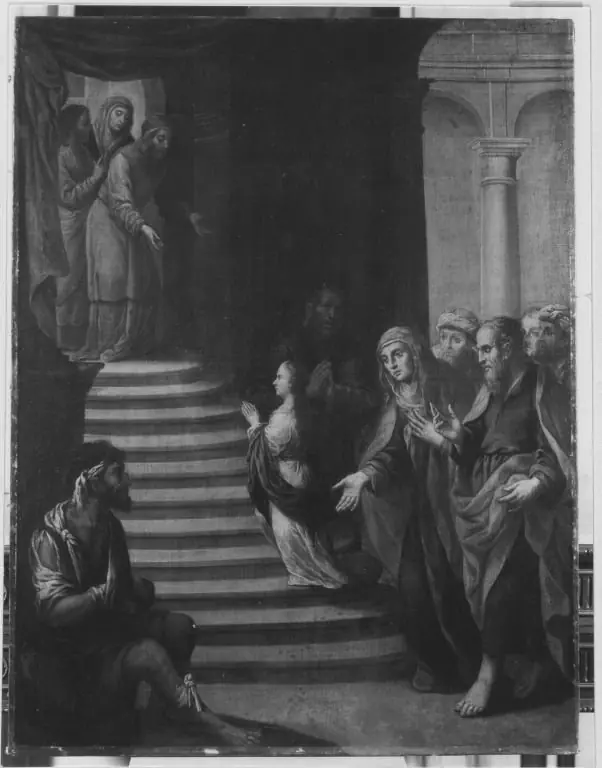 Tempelgang Mariae
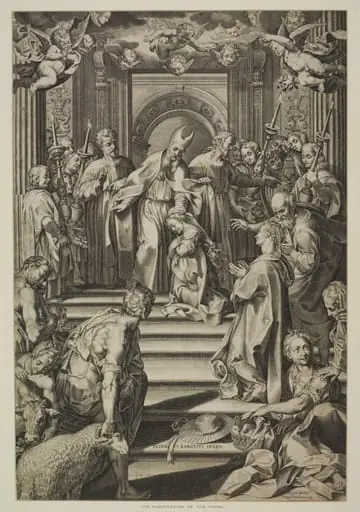 The Purification of the Virgin
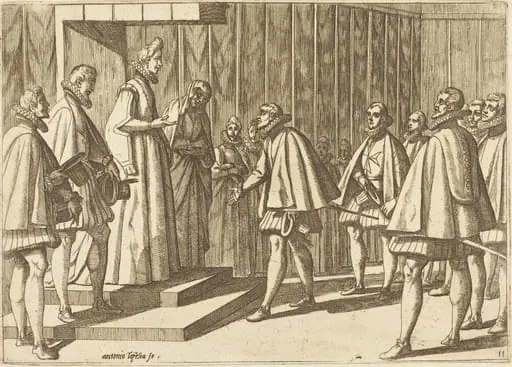 Italian Prince before Margaret of Austria
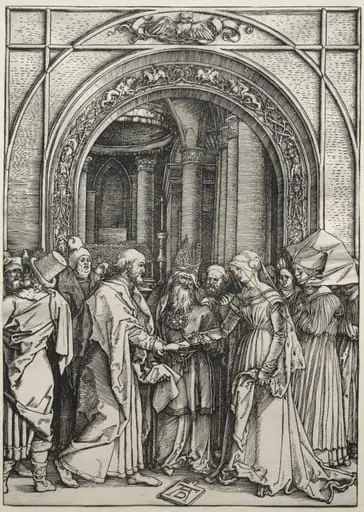 The Betrothal of the Virgin