Artwork
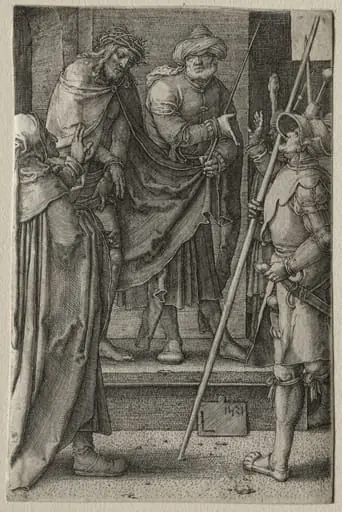
Ecce Homo
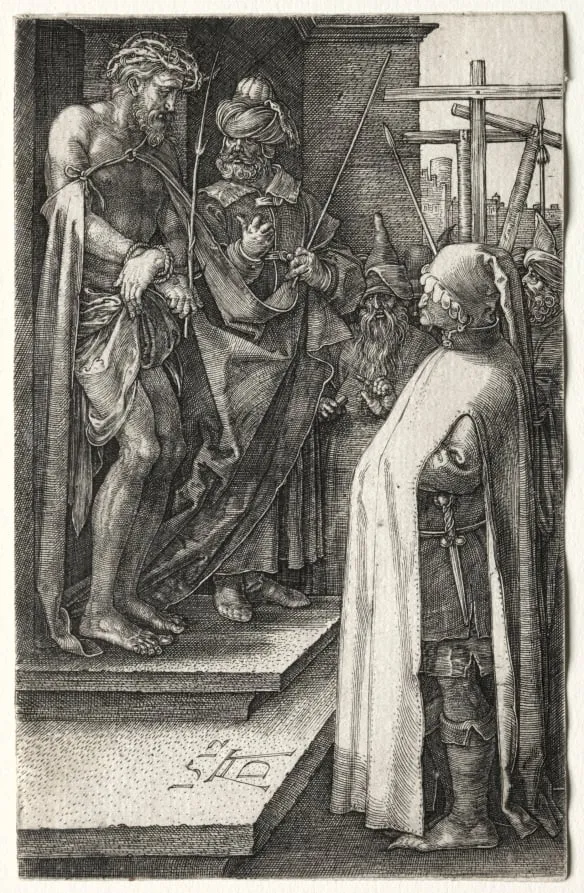
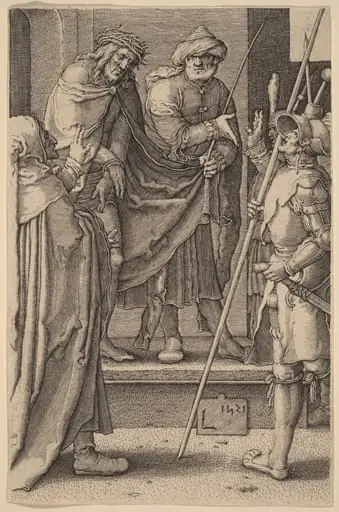
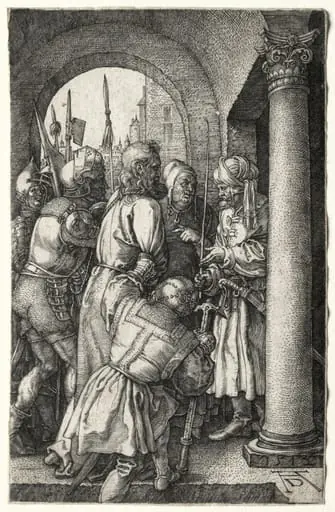
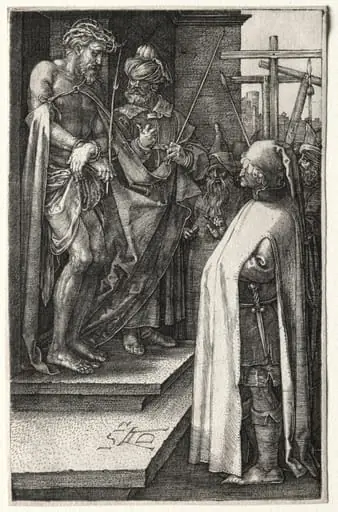
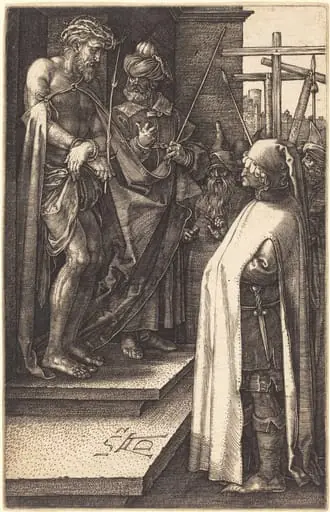
Ecce Homo is a print by the Renaissance artist Albrecht Dürer. It dates from 1515 and is held in the collection of the Cleveland Museum of Art.
- Accession no.
- 1921.1168
- Credit line
- Gift of The Print Club of Cleveland
About this work
Overview
Ecce Homo is a print from Albrecht Dürer's Engraved Passion series, depicting the moment Christ is presented to the crowd. This work showcases Dürer's mastery of engraving techniques to convey dramatic intensity.
Subject & Meaning
The scene focuses on Christ's anguish as he stands for judgment, juxtaposed with the calm indifference of the man before him, highlighting the emotional contrast between suffering and apathy.
Technique & Style
Dürer utilized a burin on copperplate to achieve intricate textures and tonal variations by crossing lines at differing angles and thicknesses, creating a sense of depth and drama.
Context
Employing chiaroscuro, Dürer leveraged light and dark to amplify the emotional impact, characteristic of the artistic innovations of his time.
History & Provenance
Part of the Engraved Passion series, specific historical ownership or exhibition details are not provided in the available information.
Legacy
This engraving demonstrates Dürer's influence on the development of printmaking and his ability to evoke powerful emotions through meticulous line work and shading techniques.
Artist & collection
Artist
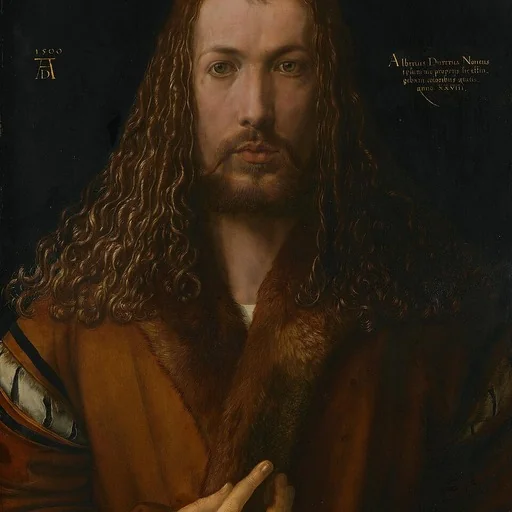
Albrecht Dürer spent his life in Nuremberg, a busy German city where artists traded prints like currency.

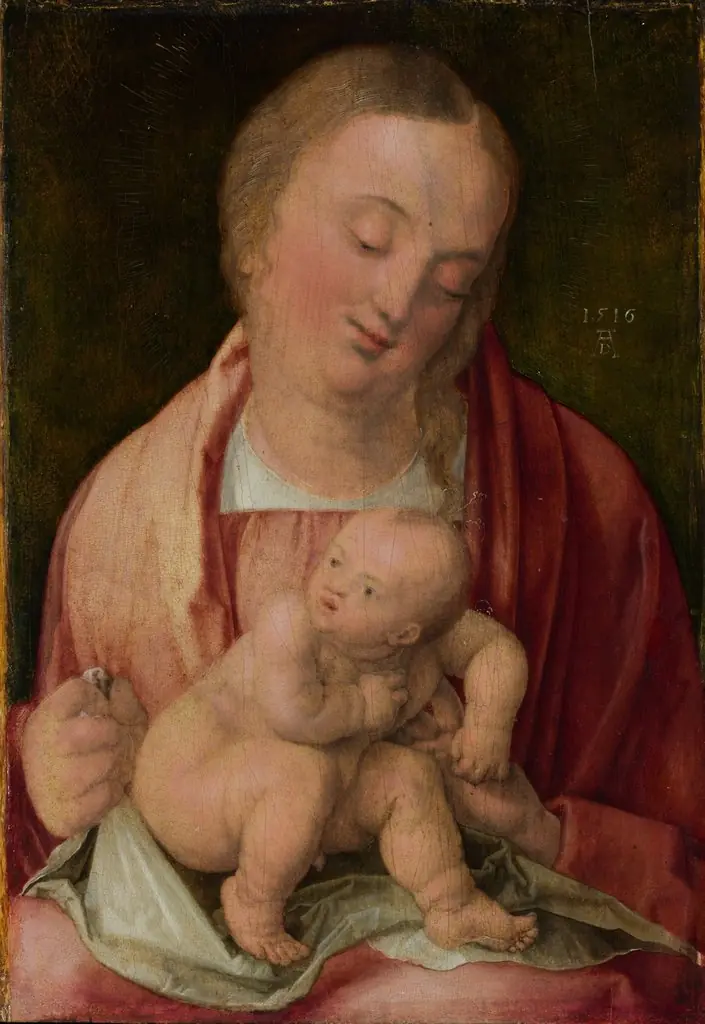
![Madonna and Child [obverse], by Albrecht Dürer](https://artifactworldgallery.com/img/albrecht-durer--madonna-and-child-obverse--d7b8ebf05d22ebe5-w320.webp)
![Lot and His Daughters [reverse], by Albrecht Dürer](https://artifactworldgallery.com/img/albrecht-durer--lot-and-his-daughters-reverse--b4ebf9b282faa17a-w320.webp)