Artwork
A market stall in the Indies
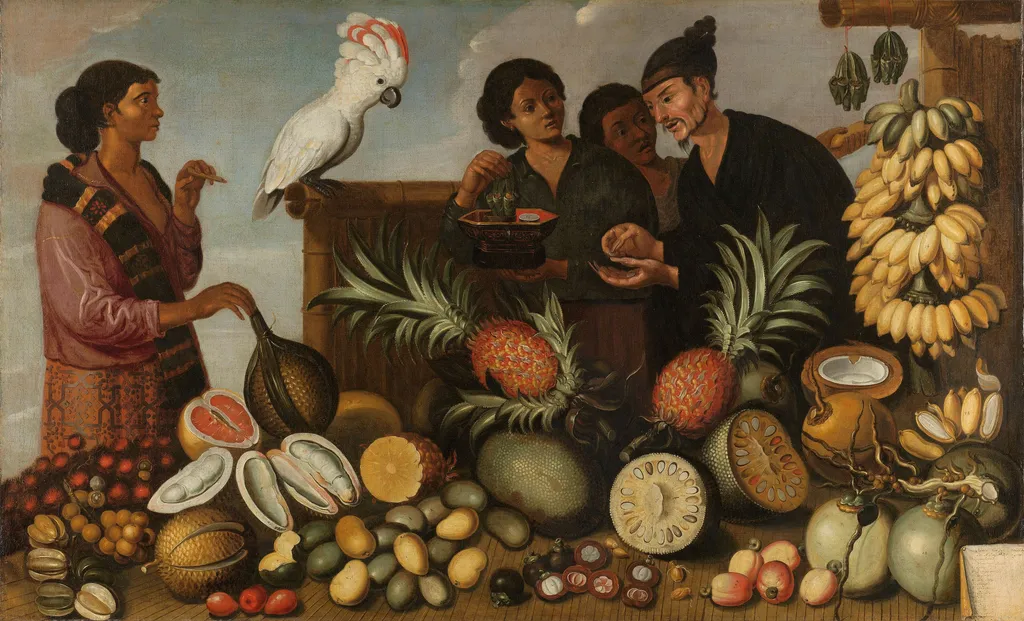
A market stall in the Indies is an oil painting by the Dutch Golden Age artist Albert Eckhout. It dates from 1650 and is held in the collection of the Rijksmuseum. Created around 1650, this oil painting records a bustling market scene in Dutch Brazil.
About this work
Subject & Meaning
The work embodies the European fascination with exotic flora and fauna from the tropics, translating colonial exploration into artistic commodity.
The painting depicts a market stall scene in a colonial setting, featuring a bird as a central element. As a still life composition, it represents the Dutch colonial encounter with the natural world of the Americas, specifically Brazil, where Eckhout worked under the patronage of Johan Maurits of Nassau-Siegen. The work embodies the European fascination with exotic flora and fauna from the tropics, translating colonial exploration into artistic commodity.
The market stall format suggests commerce and exchange, while the detailed naturalism reflects both scientific documentation and aesthetic appropriation of the "New World."
Technique & Style
Created in 1650, this work is an oil painting executed on a canvas support. The piece measures 106 cm in height and 174.5 cm in width. Stylistically, it is classified as a still life, featuring depictions of birds within the composition.
History & Provenance
The painting A Market Stall in the Indies is dated to 1650 and attributed to Albert Eckhout, a Dutch artist active in Brazil during the mid-17th century.
It entered the collection of the Rijksmuseum in Amsterdam, where it remains held today. The work was created during Eckhout’s documented service under Johan Maurits, Count of Nassau-Siegen, who governed Dutch Brazil from 1637 to 1644. The painting reflects the colonial context of the period, depicting flora, fauna, and Indigenous subjects in a still-life arrangement.
The painting A market stall in the Indies by Albert Eckhout is held in the collection of the Rijksmuseum in Amsterdam. Created in 1650, the work is an oil painting on canvas measuring 106 cm in height and 174.5 cm in width. While the source confirms its presence in the Rijksmuseum, no specific inventory or accession number is provided in the available records. The provided sources do not contain information regarding the work's exhibition history.
Overview
Created around 1650, this oil painting records a bustling market scene in Dutch Brazil. The composition centers on a table laden with an array of tropical produce, bananas, coconuts, pineapples, nuts and shells, surrounded by four figures. A white bird perches on the table, while a woman in a patterned dress leans forward, and three men, one in a hat, examine a bowl. The work belongs to the Rijksmuseum collection.
Own this work as a print
Artist & collection
Artist
Albert Eckhout (c.1610–1665) was a Dutch portrait and still life painter. Eckhout, the son of Albert Eckhourt and Marryen Roeleffs, was born in Groningen, but his training as an artist and early career are unknown. A…

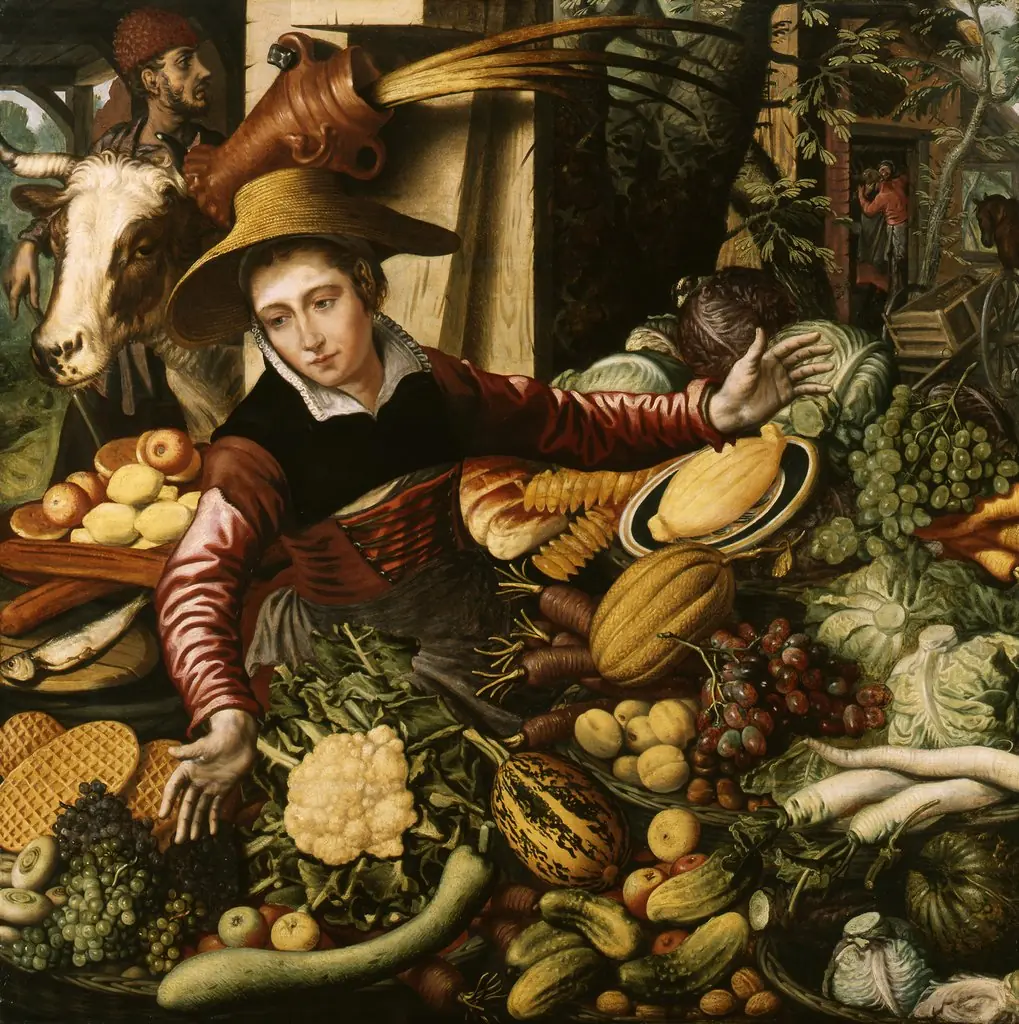 Market Woman at the Vegetable Stall
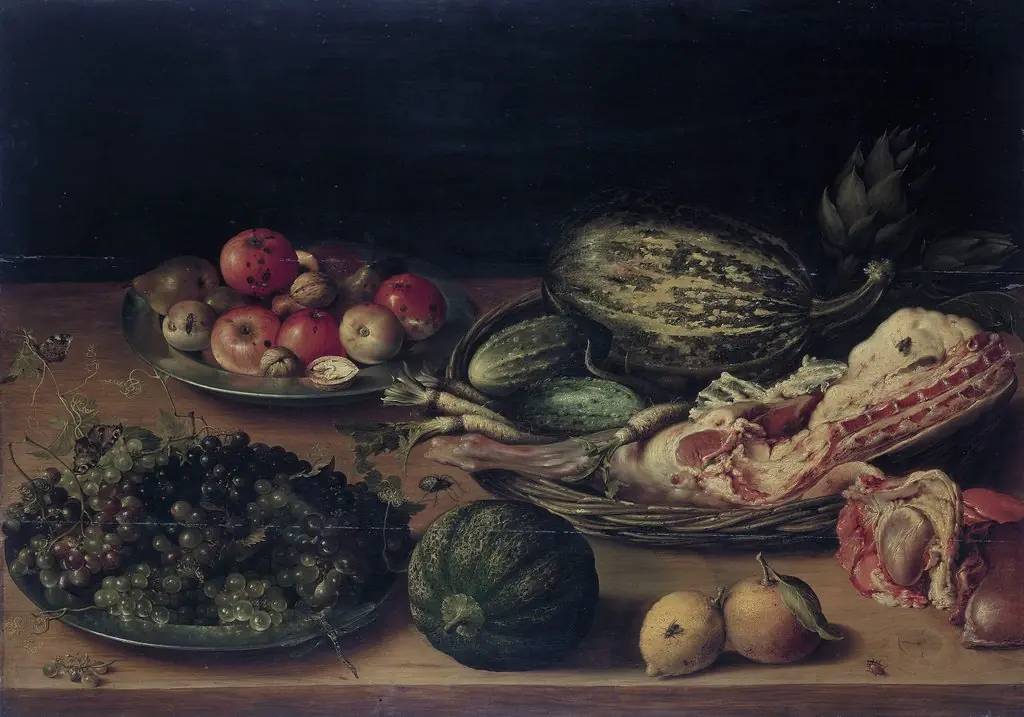 Still life with fruit, vegetables and joint of veal
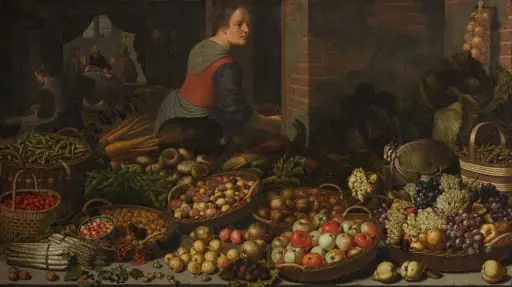 Still Life with Fruit and Vegetables, with Christ at Emmaus in the background
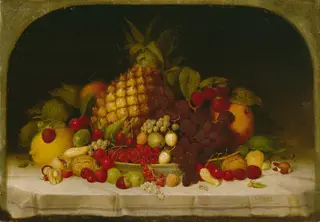 Fruit Piece
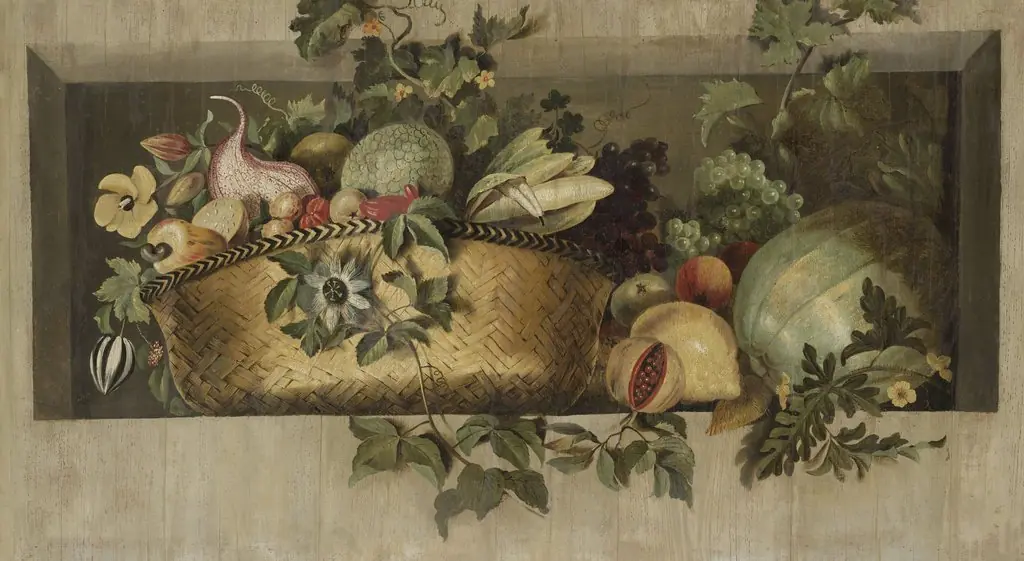 Still Life with Fruit and Flower Garlands
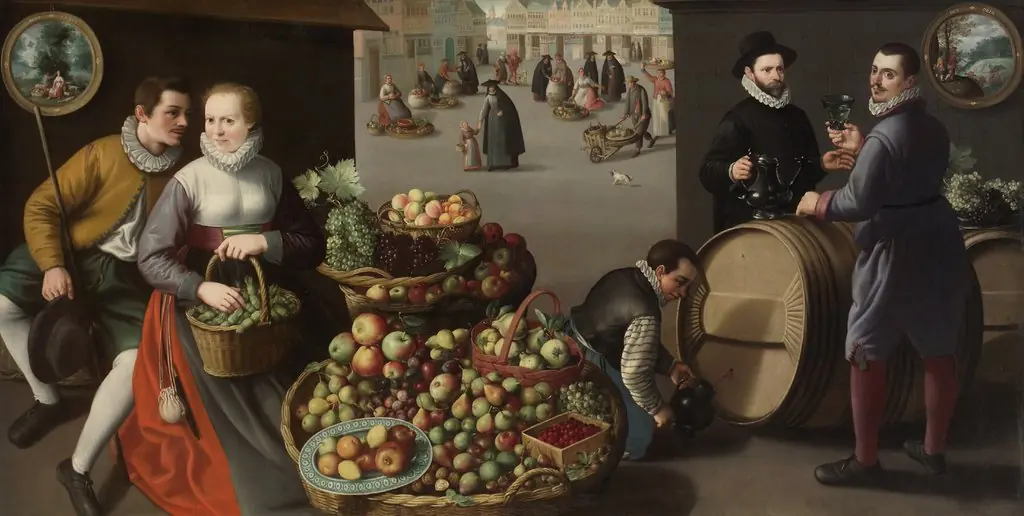 Obstmarkt (September-Oktober)
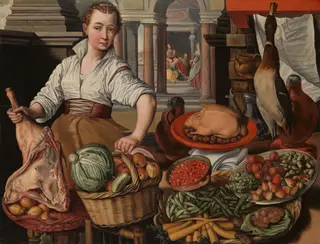 Kitchen Scene, with Jesus in the House of Martha and Mary in the background
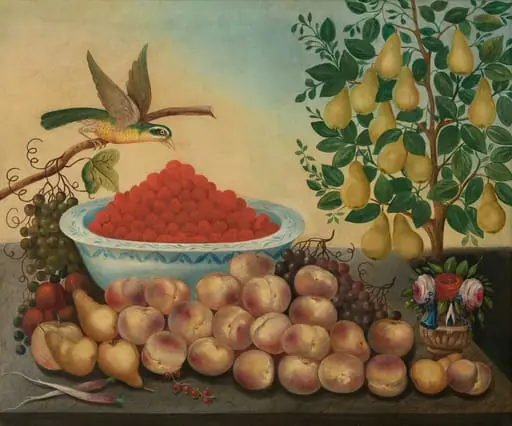 Still Life: Fruit, Bird, and Dwarf Pear Tree
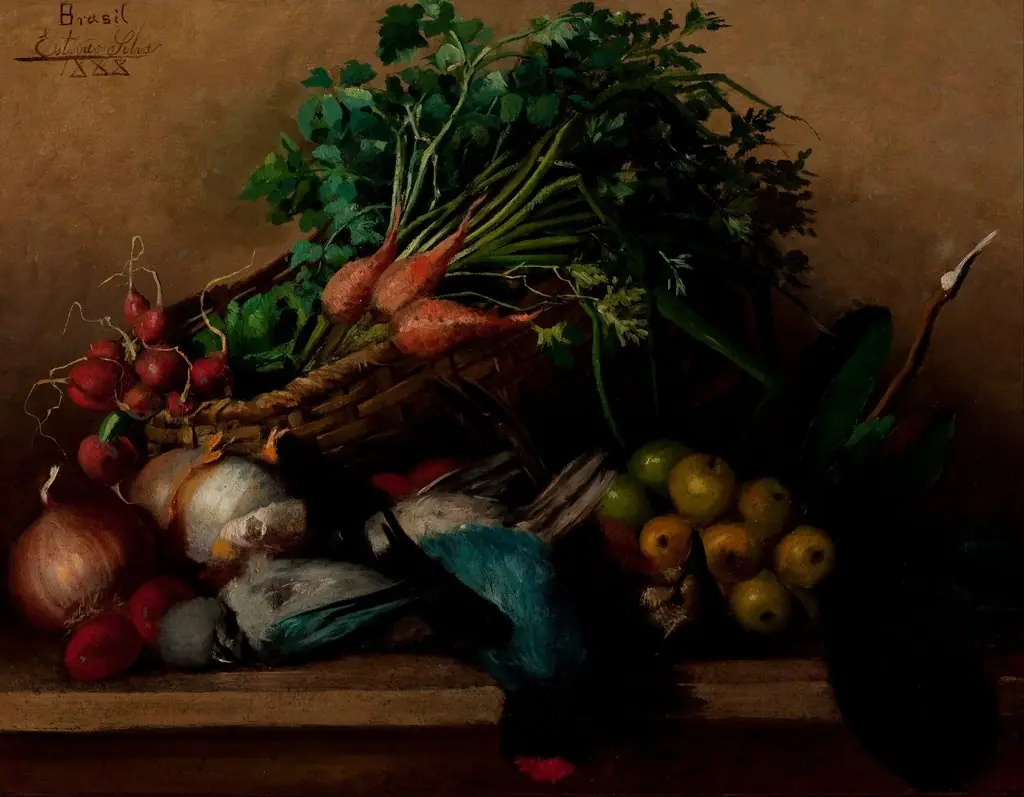 Still Life
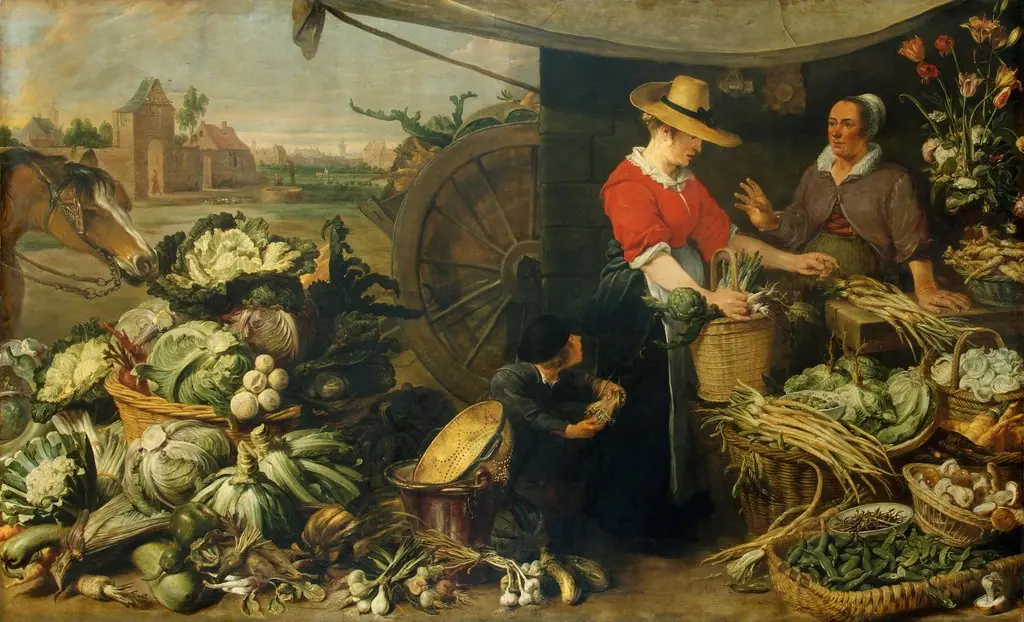 Greengrocery Stall
 Bodegón de frutas y verduras
- The Fruit Market