Artwork
Maidstone, Vermont
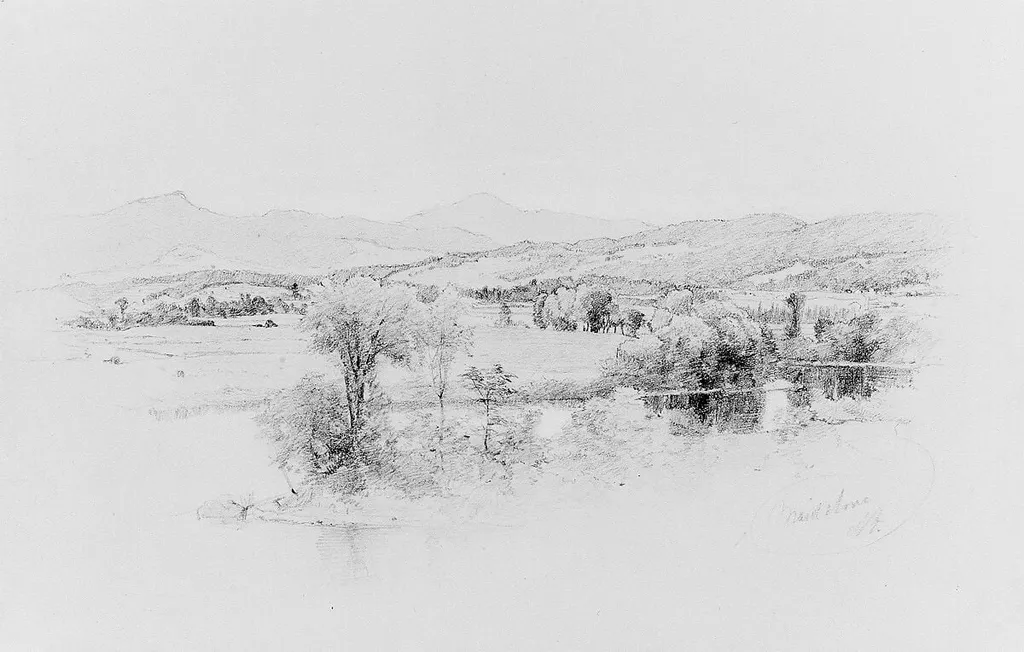
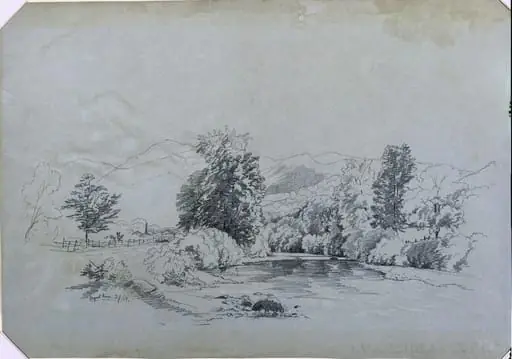
Maidstone, Vermont is a gouache drawing by the Romanticist artist Albert Fitch Bellows. It dates from 1856 and is held in the collection of the Metropolitan Museum of Art.
About this work
The white gouache (a thick, chalky paint) makes the light on the water pop against the brown paper.
A quiet Vermont hillside slopes into a creek, trees bare except for a few stubborn leaves. A wooden bridge crosses the water, and a tiny figure walks toward the far bank.
Bellows drew this in 1865, right after the Civil War. The empty landscape feels like a pause, no battlefields, just a single person moving forward. The white gouache (a thick, chalky paint) makes the light on the water pop against the brown paper.
If you like this quiet mood, look up landscapes, american.
Subject & Meaning
The work depicts a rural landscape centered on a prominent tree, rendered in graphite and white gouache on brown wove paper. Executed in 1856, the composition emphasizes the natural environment of Maidstone, Vermont, with the tree serving as a focal point amid rolling terrain. The scene aligns with mid-19th-century American landscape traditions, conveying the quietude and expansiveness of the New England countryside.
Through its restrained technique and subdued palette, the drawing evokes a sense of timelessness and the sublime in nature.
Technique & Style
Created in 1856, Maidstone, Vermont is executed in graphite and white gouache applied to brown wove paper. The work functions as a landscape drawing that captures a specific tree and its surrounding environment. The artist utilizes the white gouache to create highlights against the toned brown support, a technique that enhances the modeling of the foliage and light effects.
The sheet measures 19.1 cm in height and 31.6 cm in width. Stylistically, the piece belongs to the landscape genre, focusing on natural forms rather than architectural or human subjects.
History & Provenance
Maidstone, Vermont was created in 1856 by Albert Fitch Bellows. The work is executed in graphite and white gouache on brown wove paper. While some records attribute the piece generally to Bellows, internal museum classification firmly identifies him as the artist.
The painting depicts a landscape featuring trees and is currently held in the collection of the Metropolitan Museum of Art within its American Wing.
Overview
Albert Fitch Bellows’s drawing Maidstone, Vermont presents a tranquil rural scene rendered in graphite and white gouache on a brown‑toned wove paper. The composition captures a gently sloping hillside that descends toward a modest creek, crossed by a simple wooden bridge. A lone figure is shown walking toward the opposite bank, emphasizing the solitude of the landscape.
Context
Bellows, a member of the Hudson River School circle, devoted his career to depicting the American wilderness. Maidstone, Vermont exemplifies his interest in modest, everyday scenery rather than grandiose vistas, aligning with a broader mid‑19th‑century shift toward more intimate, localized landscape subjects.
Artist & collection

Artist
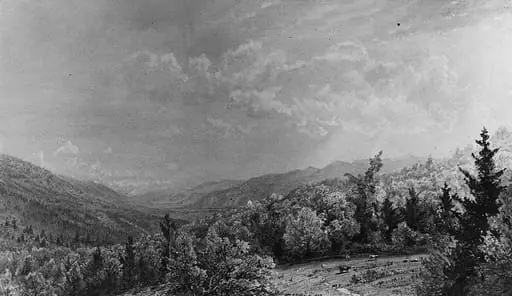
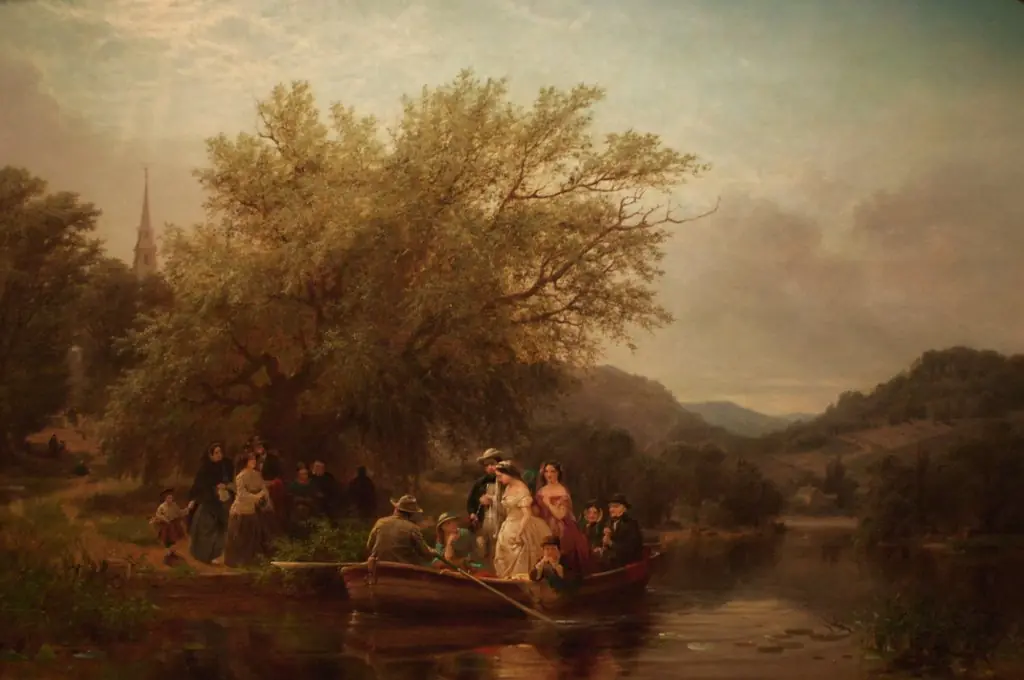
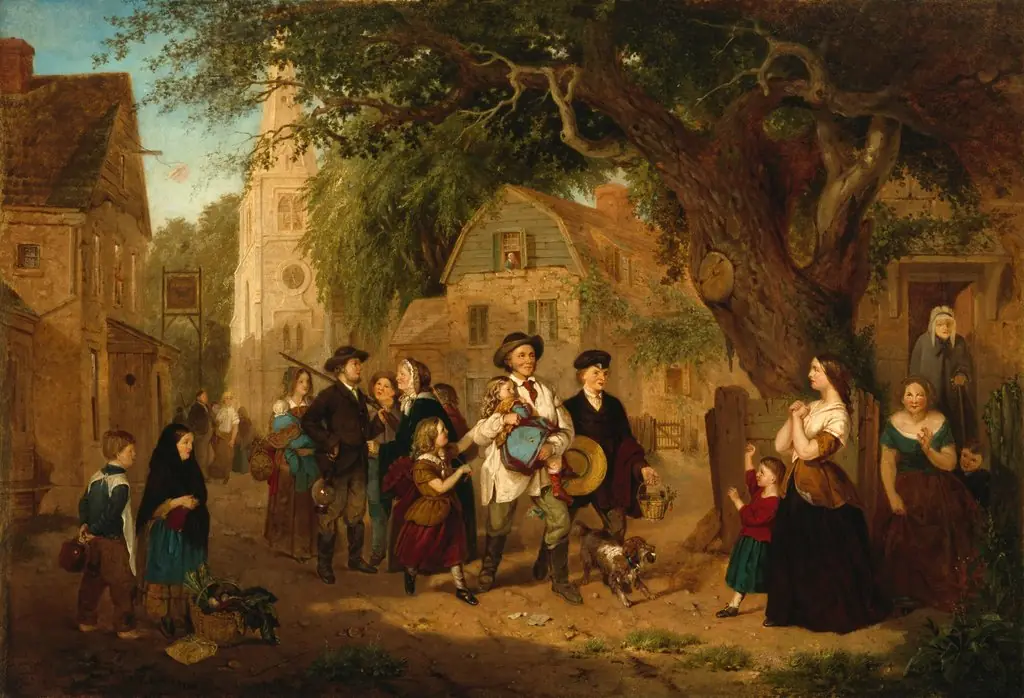
Albert Fitch Bellows (November 20, 1829 – November 24, 1883) was an American landscape painter of the Hudson River School.

- From the Flume House, Franconia, New Hampshire
 At Five Ponds, North Waterford, Maine
 Boquet River
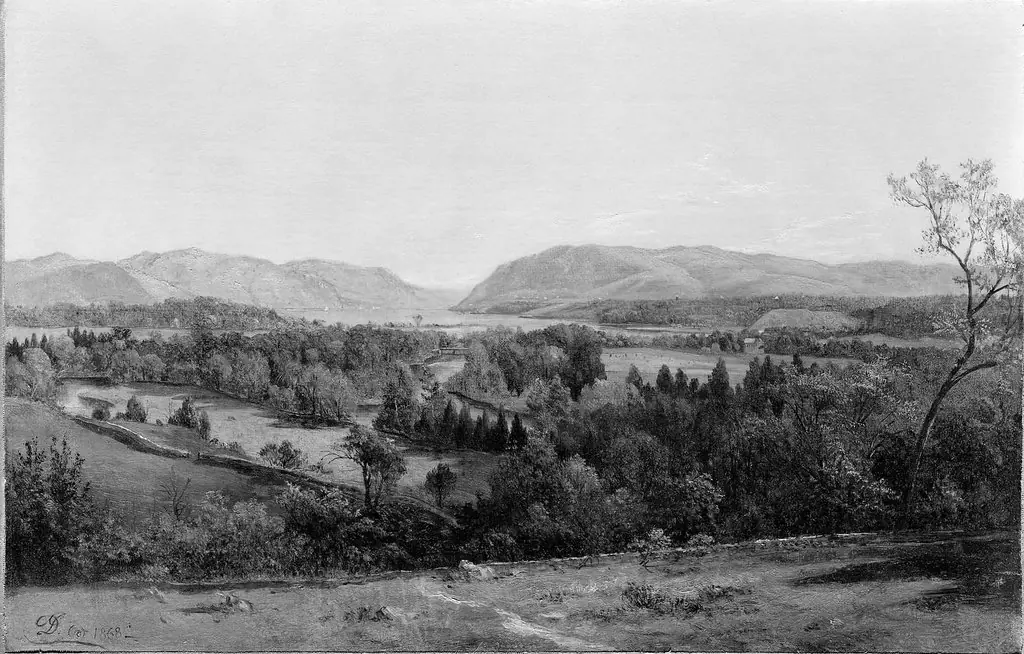 Cornwall on the Hudson
 A View near Lowther
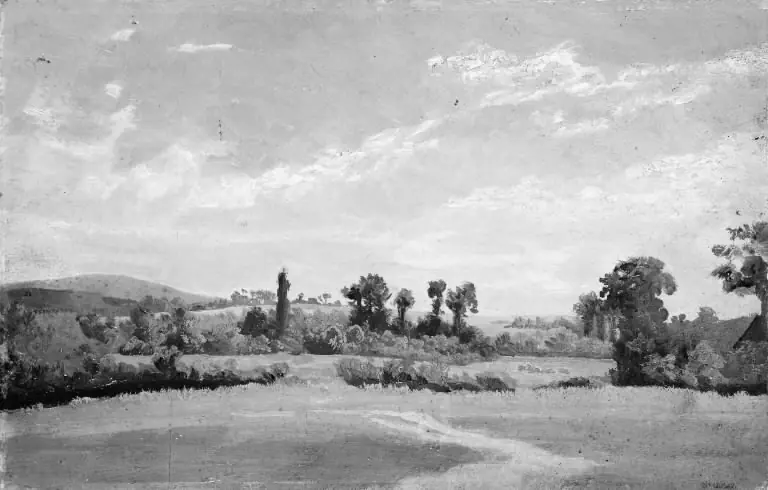 Open Landscape with Low Hills. Summer
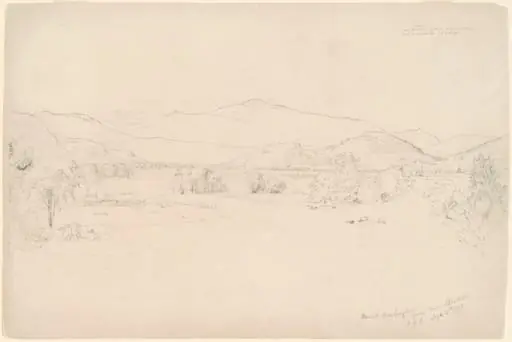 Study for "View of Mt. Washington"
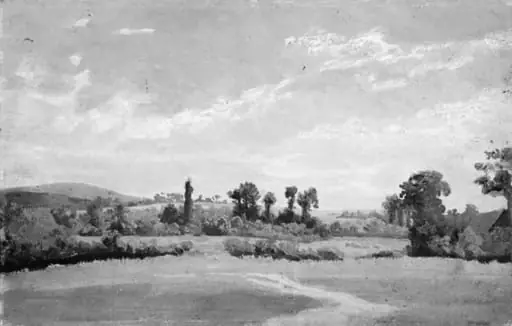 Open Landscape with Low Hills. Summer
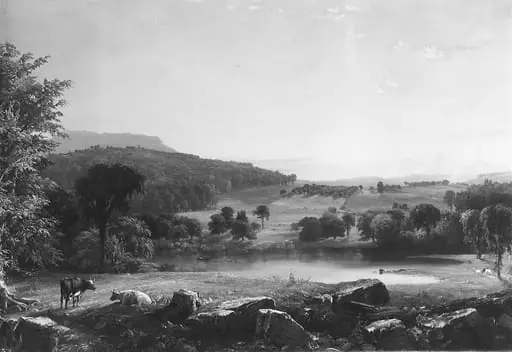 View near Sherburne, Chenango County, New York
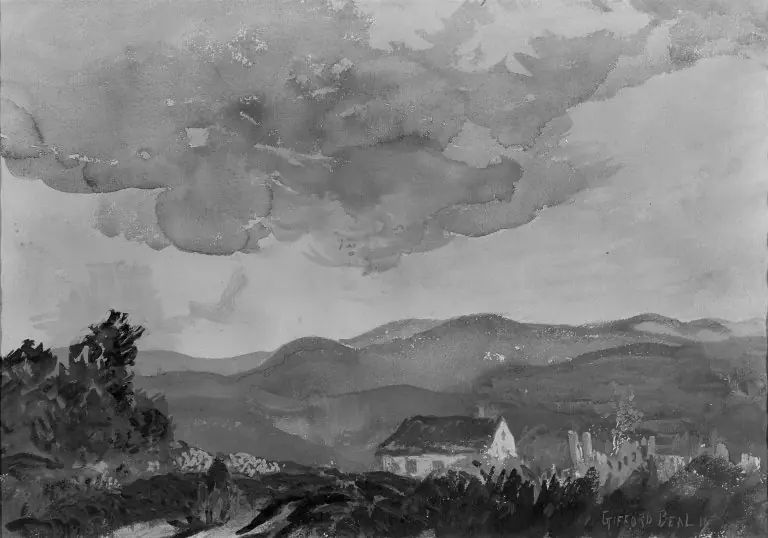 Ramapo Hills
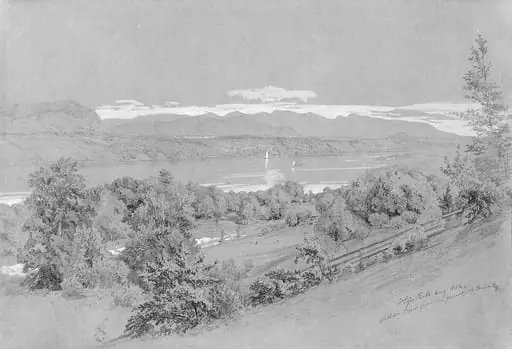 Hyde Park
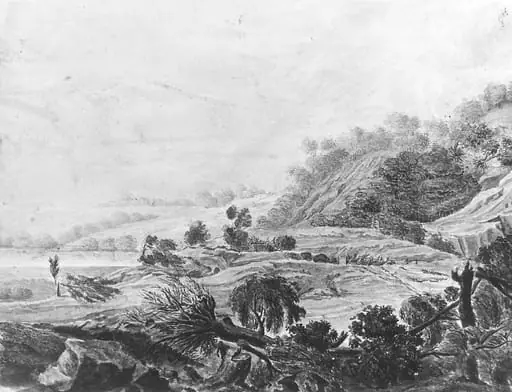 After the Tornado