Artwork
The Birth of Venus
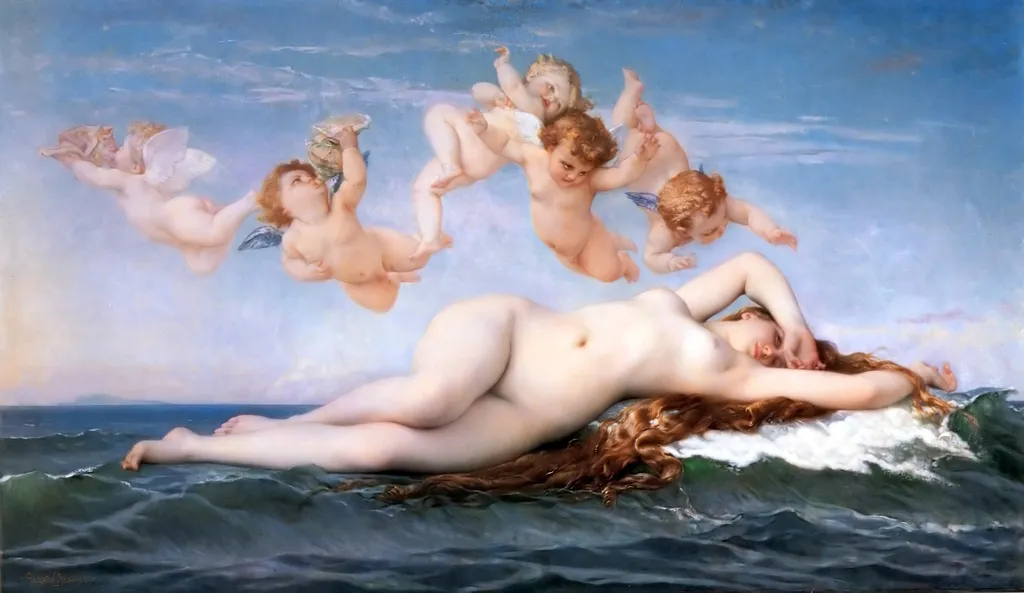
The Birth of Venus is an oil painting by the Academic Art artist Alexandre Cabanel. It dates from 1875 and is held in the collection of the Metropolitan Museum of Art.
About this work
Subject & Meaning
The work is classified as a mythological painting and prominently features nudity, adhering to the conventions of academic art.
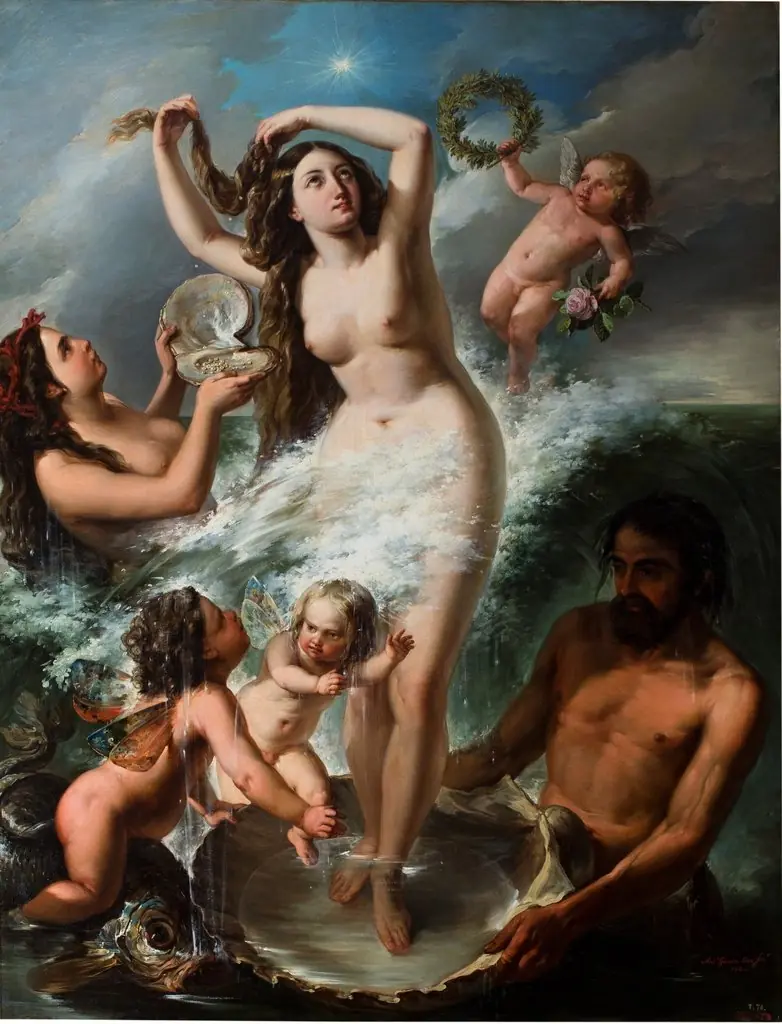
Alexandre Cabanel's 1875 oil painting depicts the mythological birth of Aphrodite, also known as Venus. The composition features the goddess emerging from the sea, a central element of her origin story. Surrounding the main figure are putti and other mythical creatures, which populate the marine setting.
The work is classified as a mythological painting and prominently features nudity, adhering to the conventions of academic art. By illustrating this specific classical narrative, the artwork represents the divine arrival of the goddess of love from the ocean waves, utilizing traditional iconography such as the sea environment and attendant spirits to convey the supernatural nature of the event.
Technique & Style
Executed in 1875, Alexandre Cabanel's The Birth of Venus is an oil painting on canvas that exemplifies the Academic art movement. The work measures 106 by 182.6 centimeters and depicts the mythological emergence of Aphrodite from the sea, surrounded by putti and mythical creatures. As a mythological nude, the piece utilizes the fluidity of oil paint to render the smooth, idealized skin tones characteristic of Cabanel's style, contrasting the figure against the marine background.
The composition adheres to classical traditions while maintaining the polished finish and technical precision associated with late nineteenth-century French academic training. The medium allows for the subtle gradations of light and shadow that define the goddess's form within this large-scale narrative scene.
History & Provenance
Alexandre Cabanel executed the mythological painting The Birth of Venus in 1875. Created using oil paint on canvas, the work measures 106 by 182.6 centimeters and depicts the birth of Aphrodite surrounded by putti and mythical creatures within an academic art style. The painting entered the collection of the Metropolitan Museum of Art, where it is cataloged under the accession number 94.24.1.
While the specific original commissioner and the detailed ownership chain prior to its museum acquisition are not detailed in the available records, the work's inception is firmly established at the beginning of 1875. It remains a significant example of Cabanel's engagement with classical nude subjects during the late nineteenth century.
The work is held by the Metropolitan Museum of Art, New York, where it is recorded with the accession number 94.24.1. The painting entered the museum’s collection in 1894 as a gift of Erwin Davis. It has been exhibited at the Metropolitan Museum of Art on multiple occasions, including in the 1984 installation "The Metropolitan Museum of Art: 100 European Paintings" and in the 2004–2005 exhibition "The Age of Napoleon: Costume from Revolution to Empire, 1789–1815," where its academic and mythological themes were contextualized within the broader European tradition.
Legacy
The Birth of Venus by Alexandre Cabanel, completed in 1875, is represented in the Metropolitan Museum of Art and is frequently cited as a quintessential example of 19th‑century academic mythological painting. Its large scale, oil on canvas format and composition featuring Venus, a putto and symbolic sea elements underscore its technical mastery and adherence to academic conventions;. The work’s enduring reputation stems from its idealized treatment of the mythological birth of Aphrodite, which has influenced scholarly discussions of academic art and continues to be referenced in studies of Victorian-era painting.
Overview
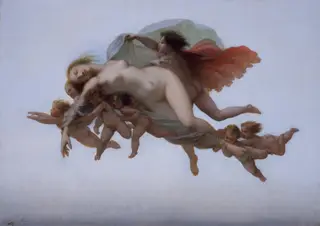
This oil painting, titled The Birth of Venus, presents a central female figure floating serenely on the water's surface. She is depicted nude with long, flowing red hair, surrounded by five winged cherubs. The composition places her against a backdrop of a clear sky and calm waters, establishing a scene of ethereal beauty and mythological allusion.
Artist & collection

Artist
Alexandre Cabanel (French:; 28 September 1823 – 23 January 1889) was a French painter.