Artwork
Cleopatra Testing Poisons on Condemned Prisoners
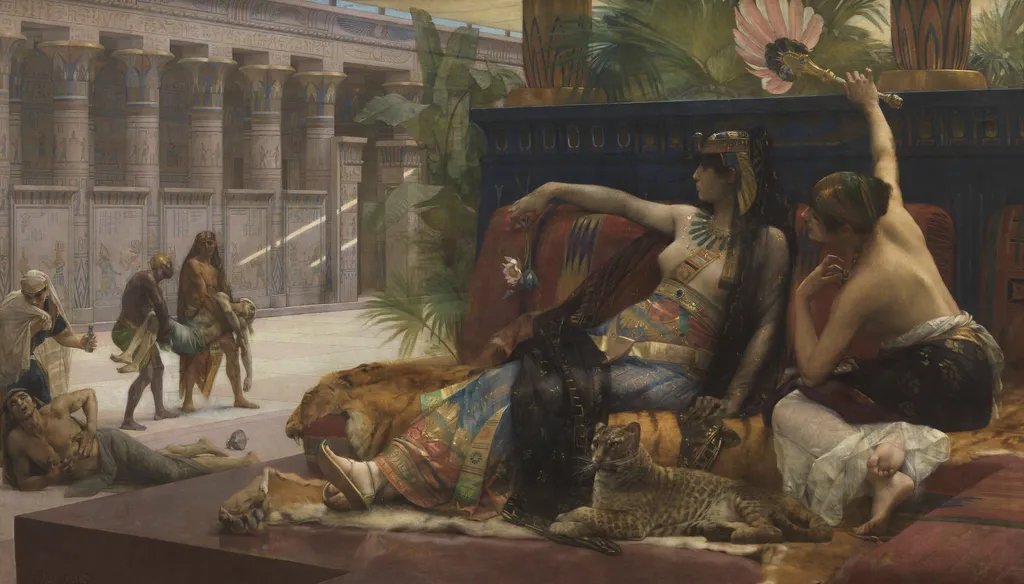
Cleopatra Testing Poisons on Condemned Prisoners is an oil painting by the Academic Art artist Alexandre Cabanel. It is held in the collection of the Royal Museum of Fine Arts Antwerp.
About this work
Subject & Meaning
The splendor of the palace, with its hieroglyphs and columns inspired by the temples of Edfu and Philae, intensifies the cruelty of the scene.
Alexandre Cabanel's painting depicts the Egyptian queen Cleopatra VII reclining on a banquette in the foreground, observing condemned prisoners being poisoned, a scene drawn from Plutarch's biography of Mark Antony in which Cleopatra tested toxins to find a painless means of suicide. Cleopatra is shown in profile in the manner of ancient Egyptian art, wearing the Néret vulture crown worn by queens since the Fourth Dynasty, with the bird's head projecting above her brow and its wings framing her face. She sits upon fabrics and a preserved tiger skin, accompanied by an undressed courtesan waving a fly-whisk and a leopard at her feet, an animal associated with royal power.
To the left, in stark contrast, condemned men writhe in agony or are carried as corpses, overseen by a woman holding a vial of poison. The splendor of the palace, with its hieroglyphs and columns inspired by the temples of Edfu and Philae, intensifies the cruelty of the scene. Cleopatra watches with a cold, indifferent gaze, embodying the nineteenth-century orientalist archetype of the femme fatale.
History & Provenance
The painting was exhibited at the Salon of 1887 in Paris, where it drew critical acclaim. It was painted for the Museum of the Academics, an institution established in 1852 by the Royal Academy of Fine Arts of Antwerp, which purchased the work directly from Cabanel in 1887. The canvas measures 162.6 by 287.6 cm and is held by the Royal Museum of Fine Arts Antwerp (Koninklijk Museum voor Schone Kunsten Antwerpen).
A smaller preparatory version from 1883, kept in a private collection, was later exhibited as part of the "Flower Power" show at the Museum of Impressionisms in Giverny, and a separate preparatory study of the Cleopatra figure is held by the Béziers Museum of Fine Arts.
Legacy
The painting was hailed by Parisian critics at the 1887 Salon, marking the height of Cabanel's reputation. It quickly became a reference point for nineteenth-century orientalist history painting. Contemporary scholars note its role in defining the academic salon style of the period, known as l'art pompier, and it remains one of the most discussed examples of late French academic painting in the collection of the Royal Museum of Fine Arts Antwerp.
Overview
Alexandre Cabanel's 1887 oil painting, Cleopatra Testing Poisons on Condemned Prisoners, depicts the Egyptian queen observing the fatal effects of various substances on individuals. Housed at the Royal Museum of Fine Arts Antwerp, this work exemplifies the academic style of L'art pompier and is recognized as a significant example of 19th-century Orientalist art. The composition captures a dramatic moment, blending historical narrative with exotic elements.
Technique & Style
Executed in oil, Cleopatra Testing Poisons on Condemned Prisoners aligns with the L'art pompier movement, characterized by its academic precision and dramatic historical narratives. Cabanel employs a rich palette and meticulous detail, evident in Cleopatra's elaborate golden attire and the ornate architectural elements. The serene demeanor of the exotic animals contrasts with the distressed figures of the prisoners, enhancing the scene's tension and psychological depth through carefully rendered forms and textures.
Context
Cabanel frequently explored historical and Orientalist subjects, and this painting stands as a definitive example of 19th-century Orientalism. The fascination with ancient Egypt and the exotic East was a prevalent cultural trend, which Cabanel expertly captured. The dramatic narrative and visual grandeur of Cleopatra Testing Poisons on Condemned Prisoners extended its influence beyond the canvas, serving as an inspiration for theatrical productions and early cinematic works.
Artist & collection
Artist
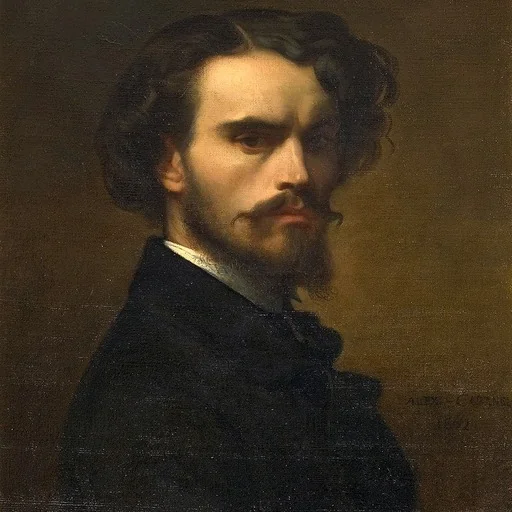
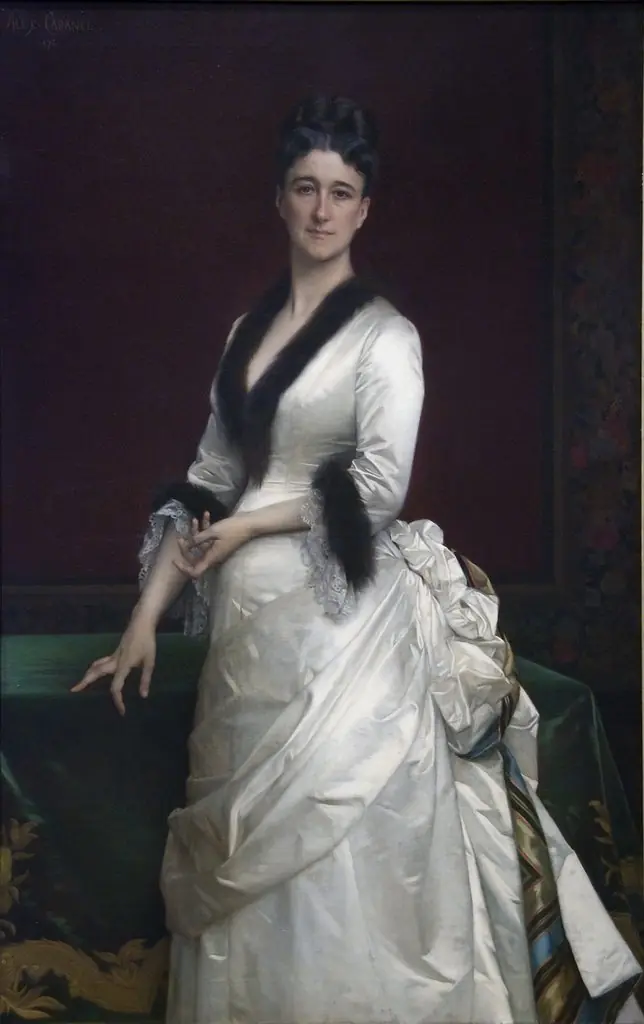
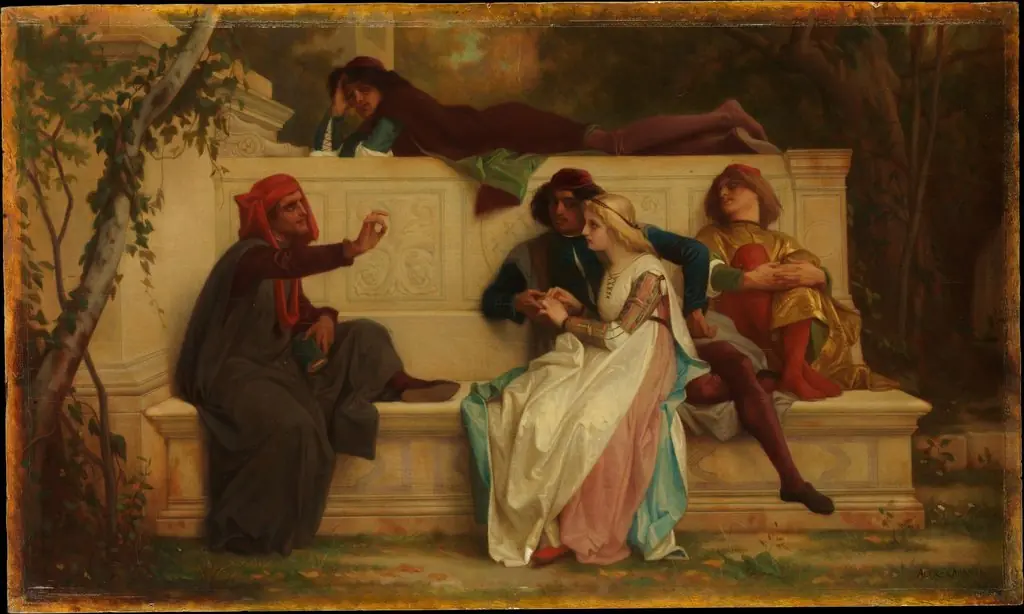
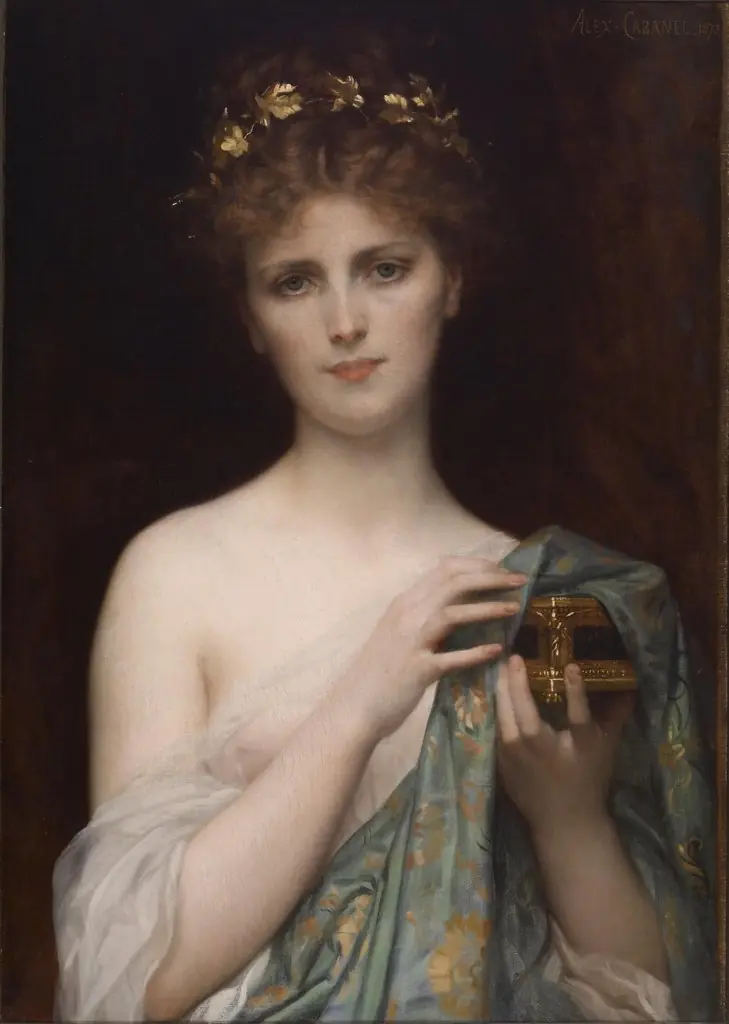
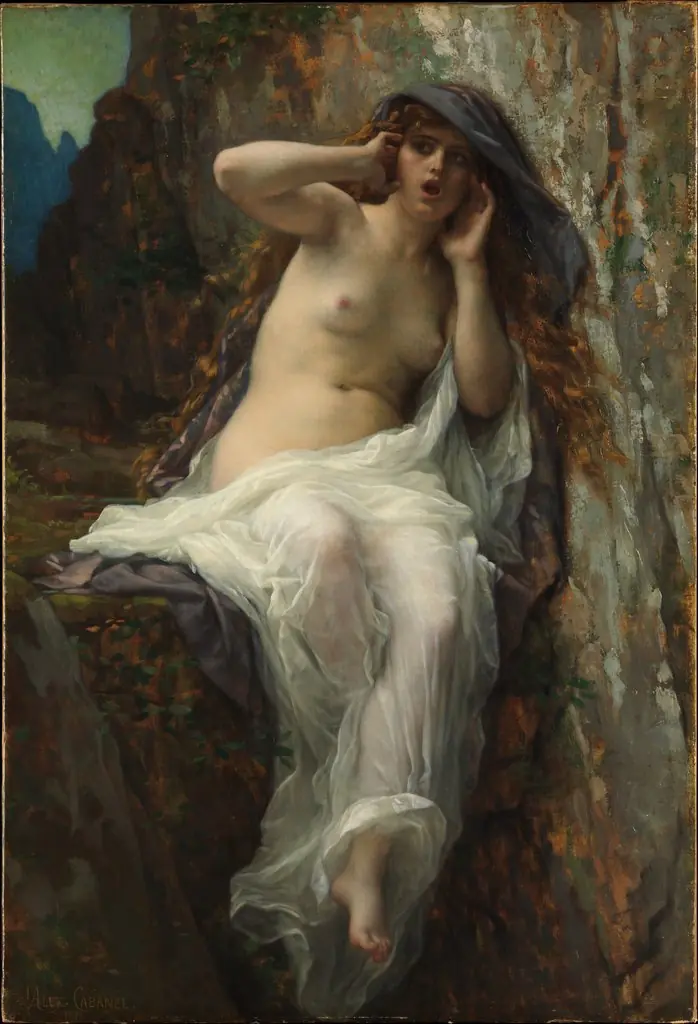
Alexandre Cabanel (French:; 28 September 1823 – 23 January 1889) was a French painter.

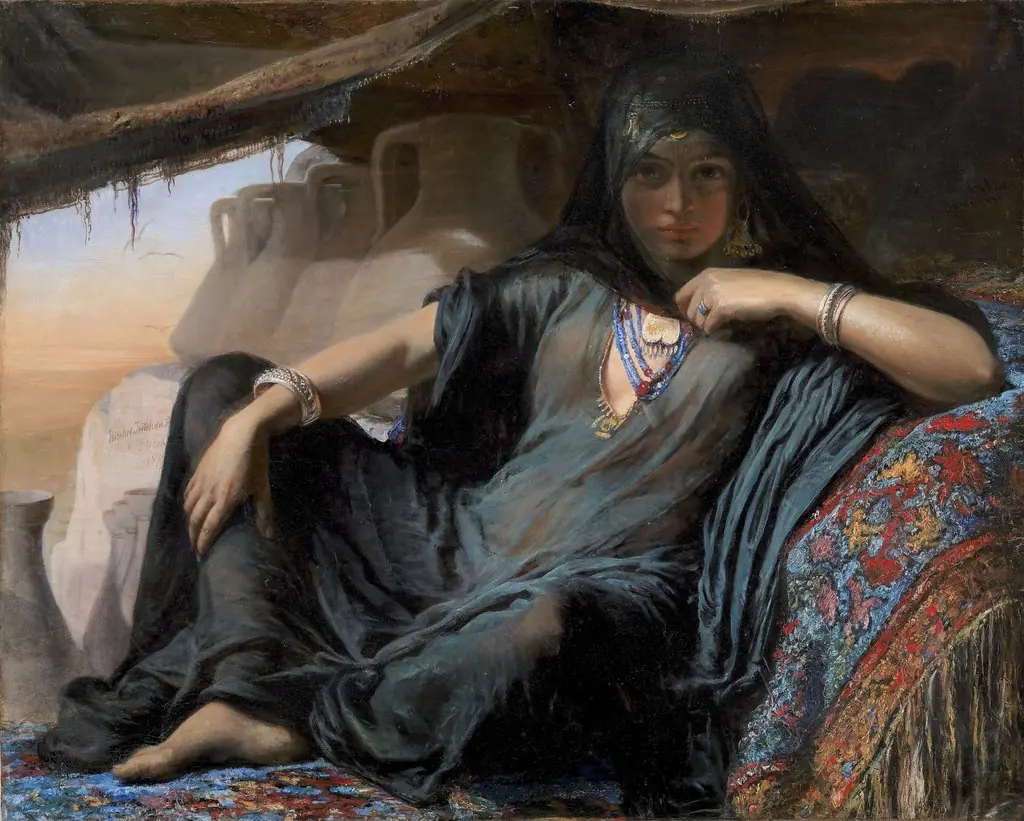 An Egyptian Pot Seller at Gizeh
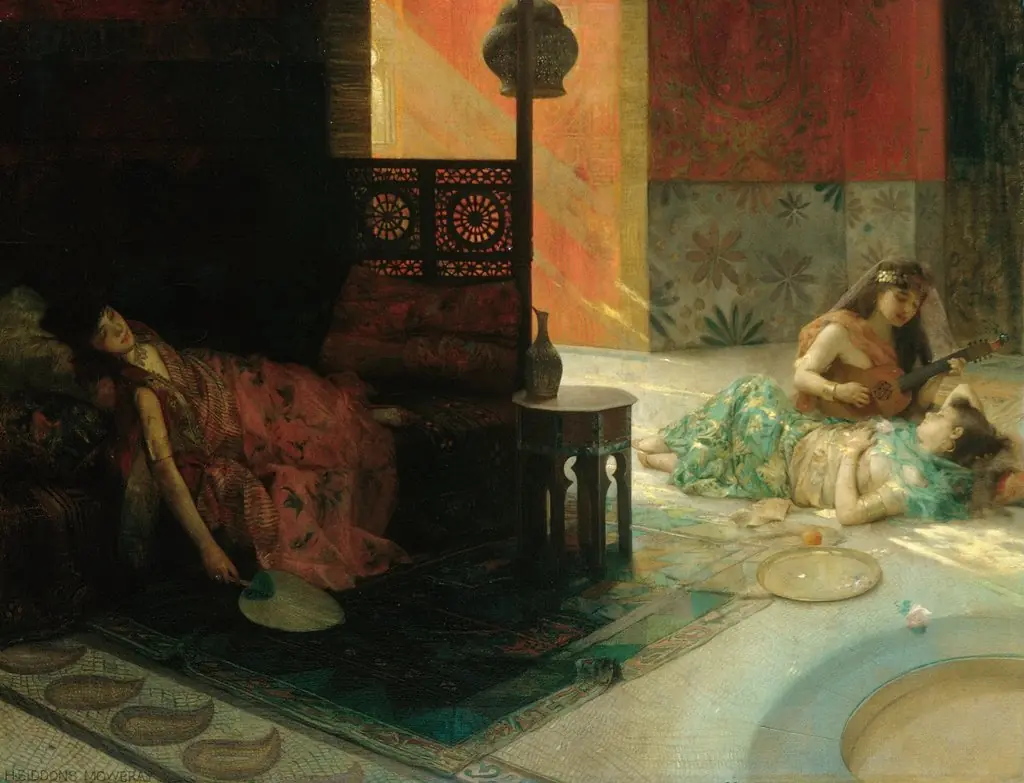 Harem Scene
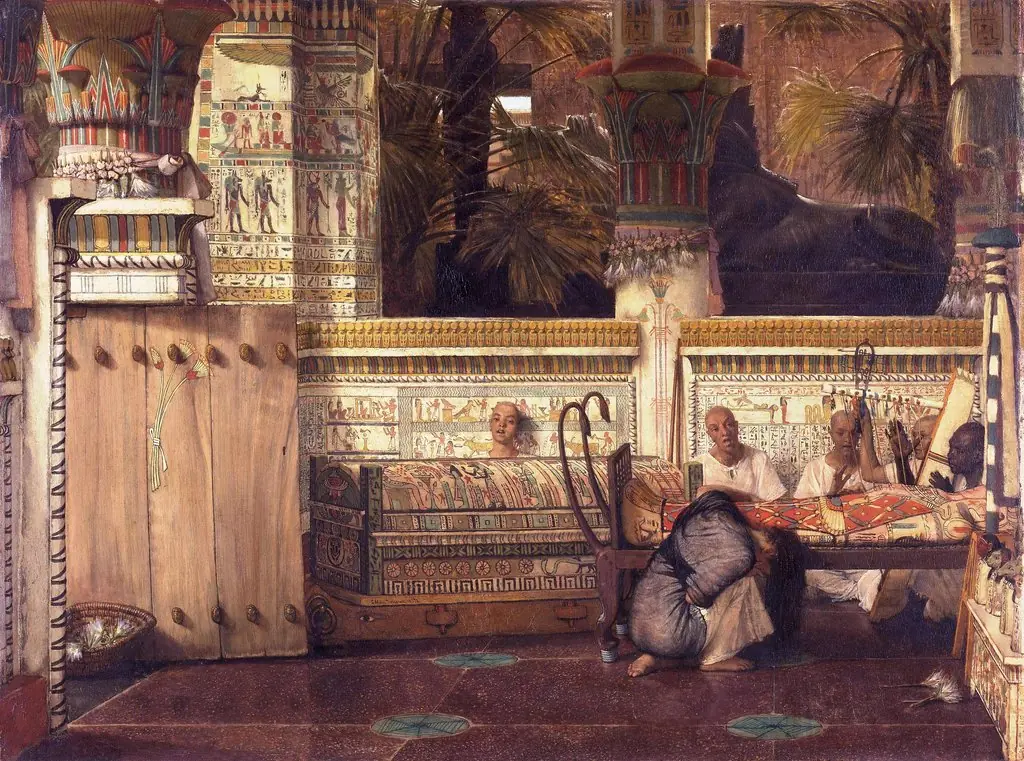 The Egyptian Widow
 De Egyptische weduwe
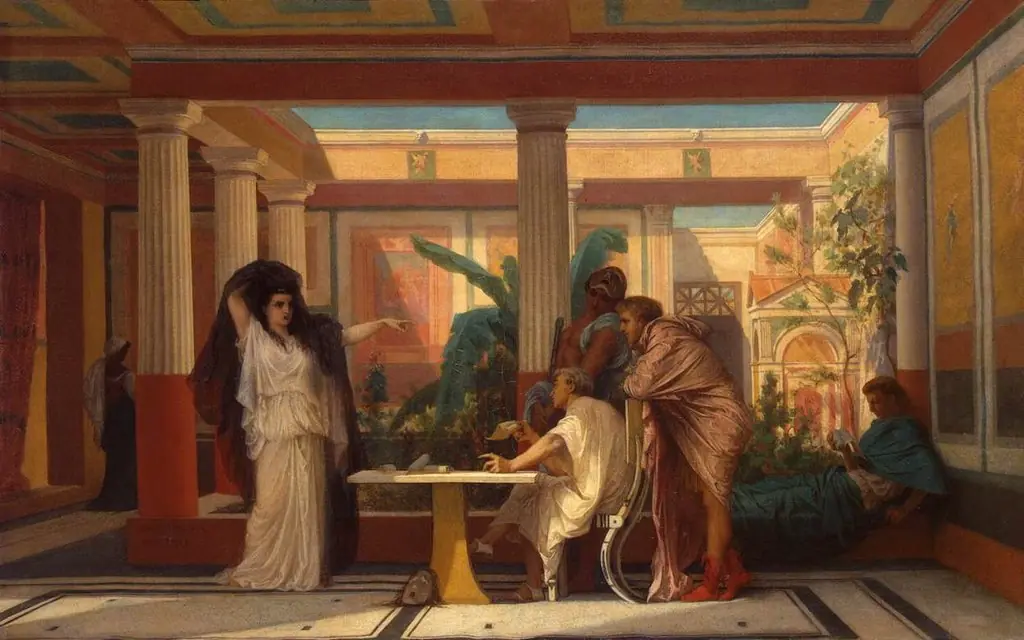 Theatrical Rehearsal in the House of an Ancient Rome Poet
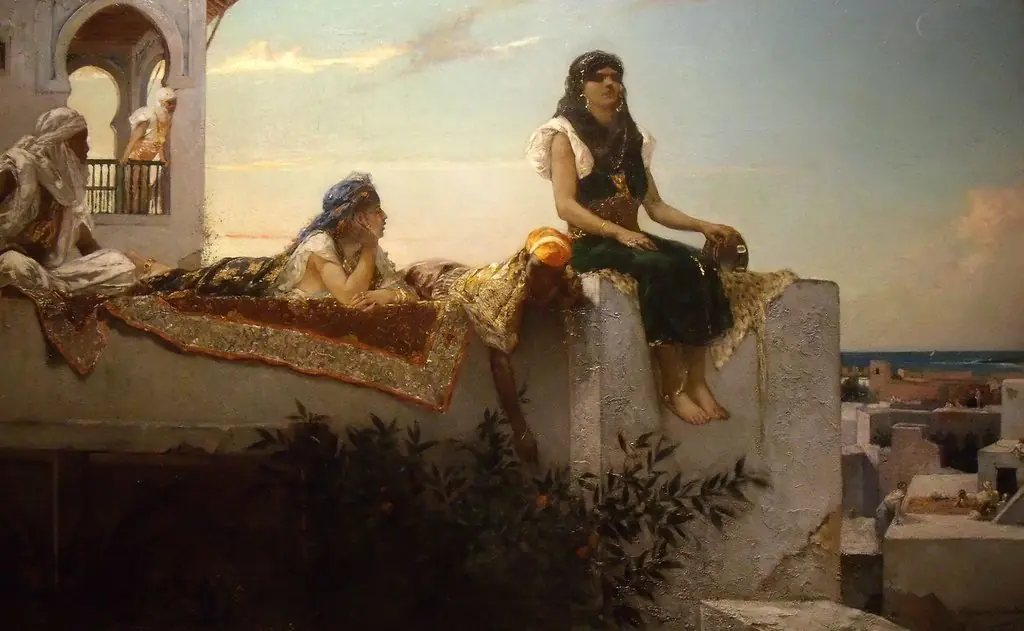 Evening on Terraces (Morocco)
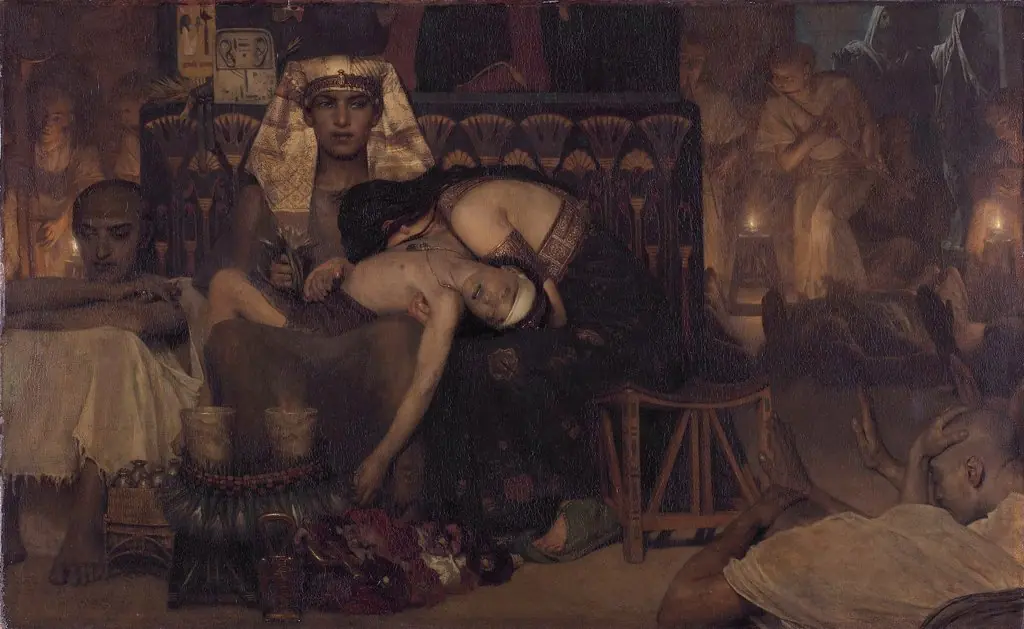 Death of the Pharaoh's Firstborn Son
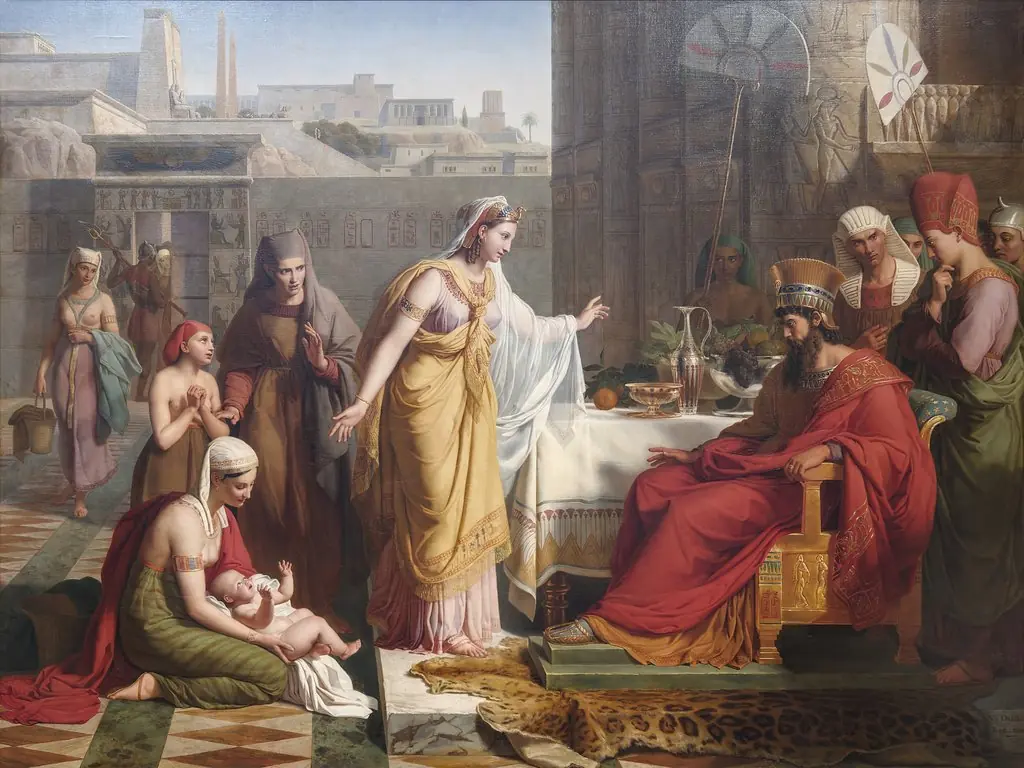 Moïse enfant présenté à Pharaon
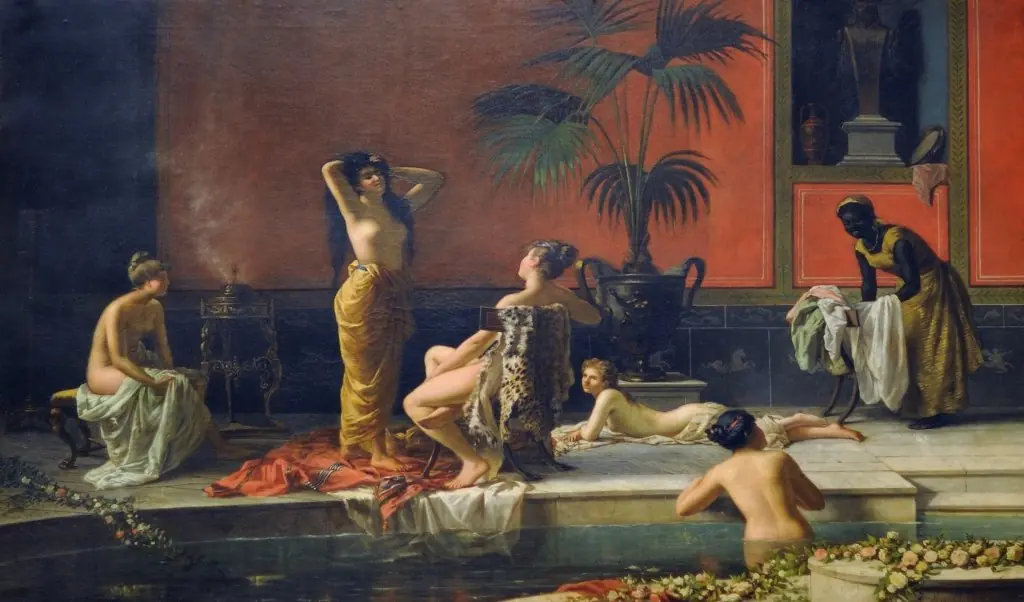 Pompeian bath
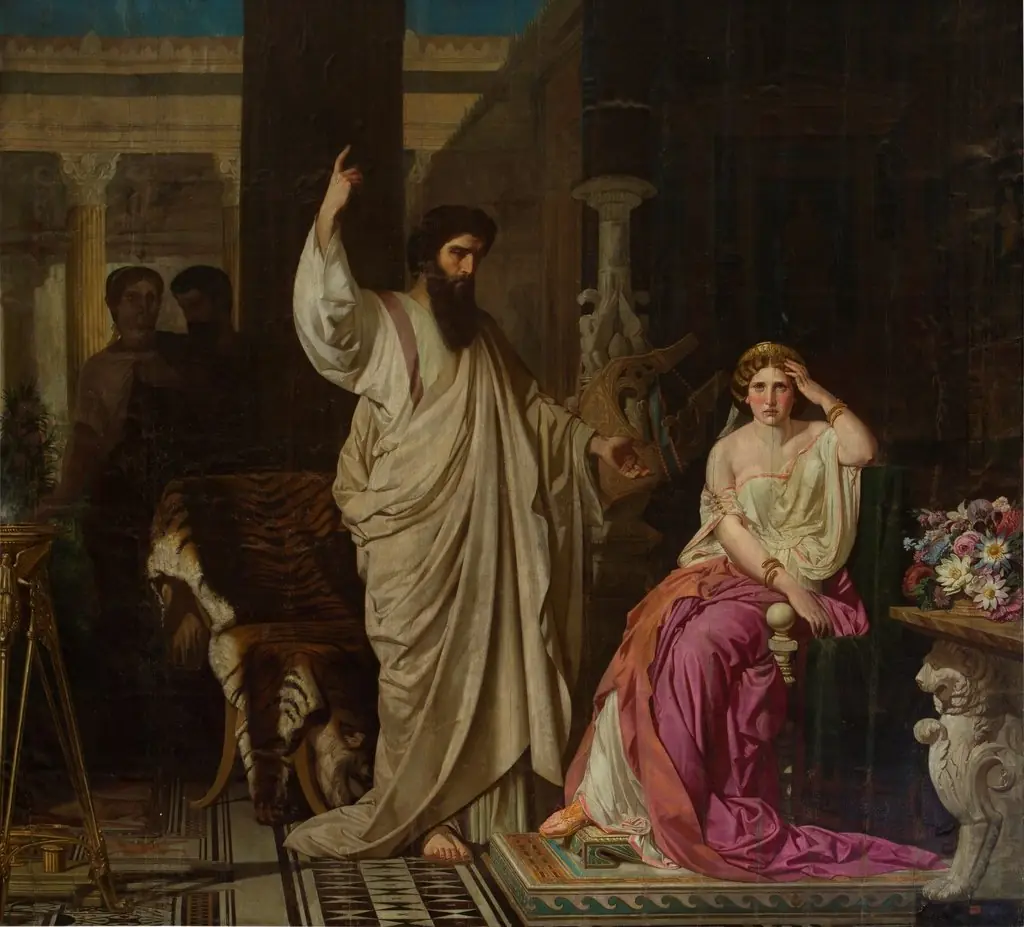 Saint Paul surprised by Nero at the moment of converting Sabina Poppaea