Artwork
Don Quixote Charging the Sheep
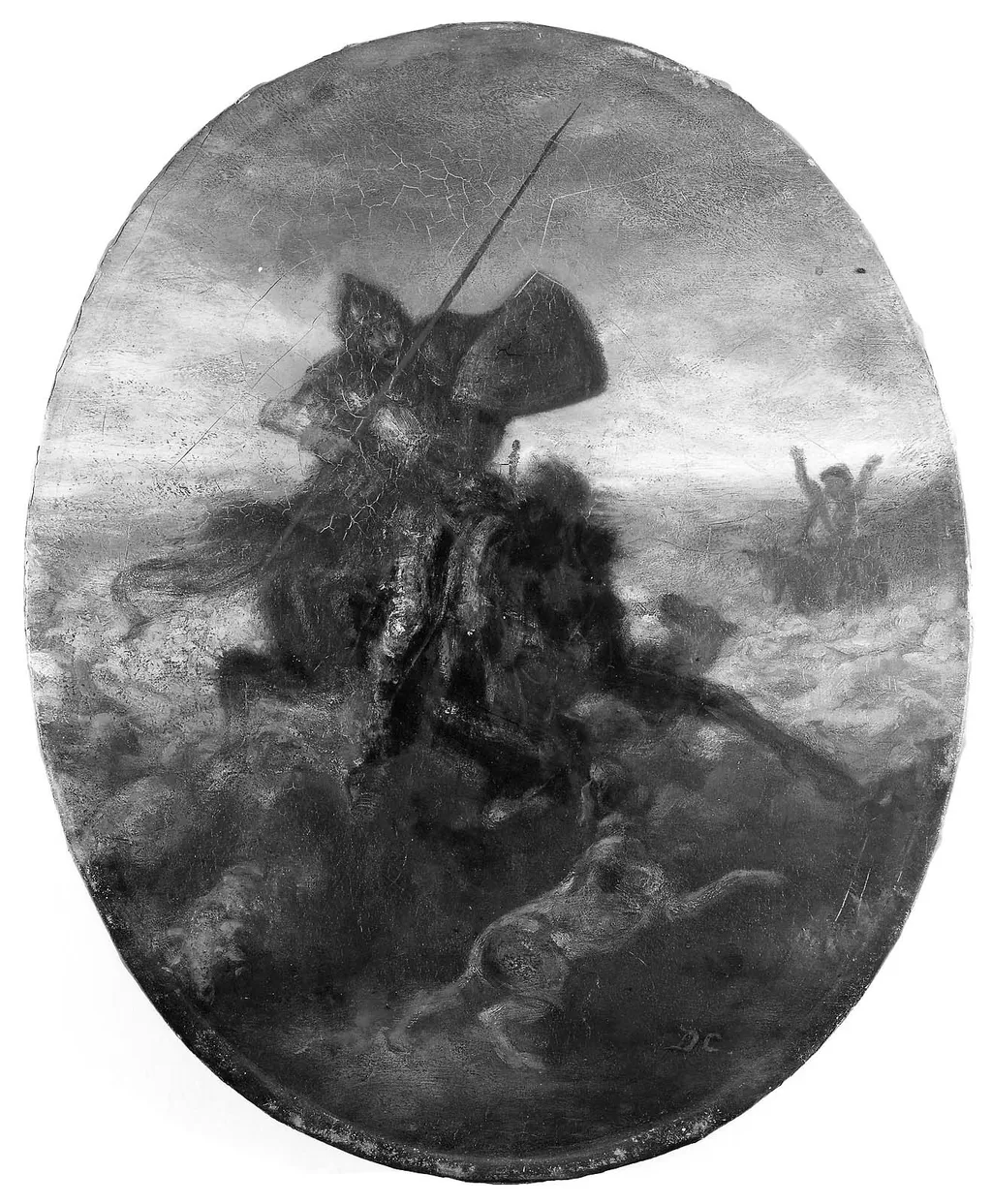
Don Quixote Charging the Sheep is an oil painting by Alexandre Gabriel Decamps. It dates from 1841 and is held in the collection of the Museum of Fine Arts Boston.
About this work
Overview
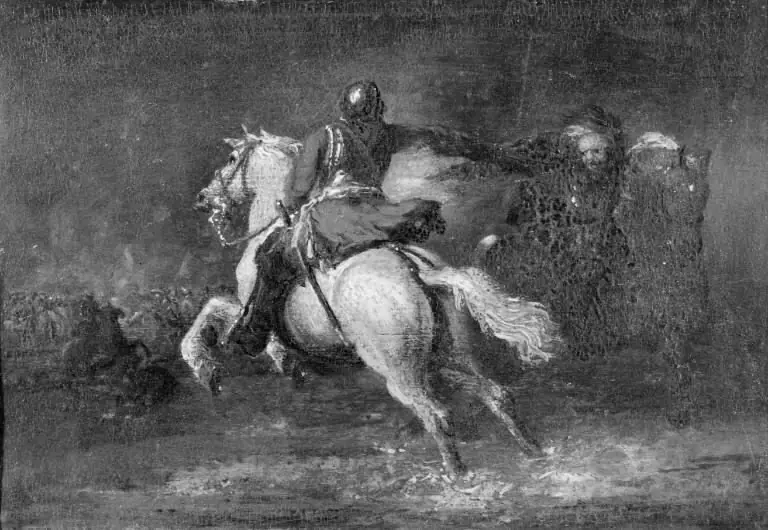
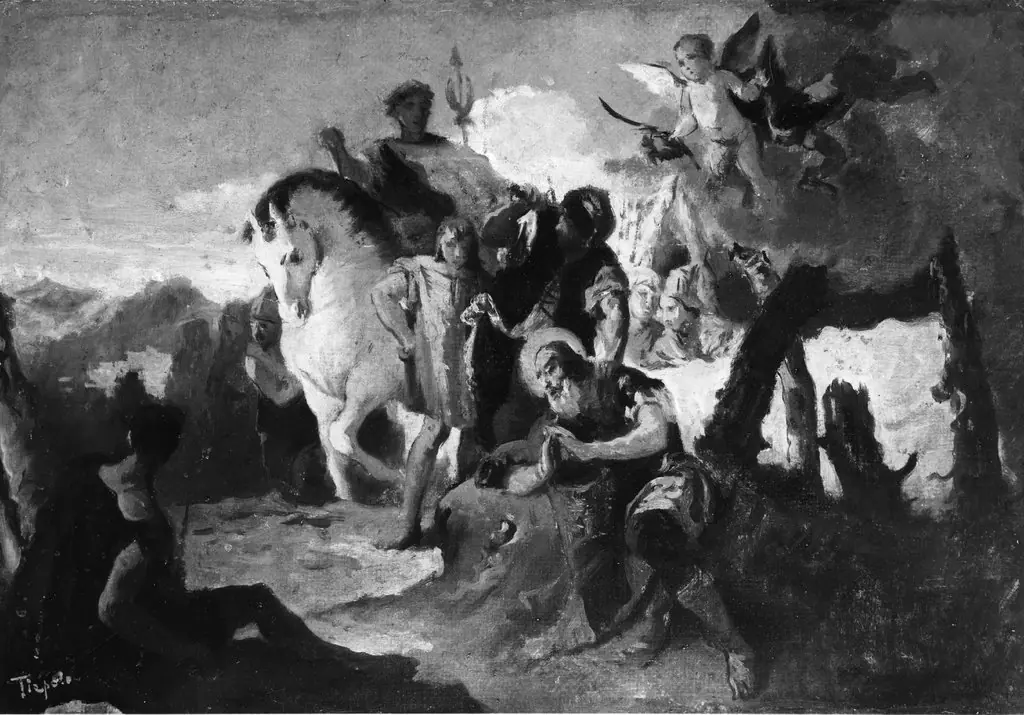
The composition centers on Don Quixote mounted on his horse Rocinante, clad in armor with a flowing cape, as he thrusts his lance toward the fleeing animals.
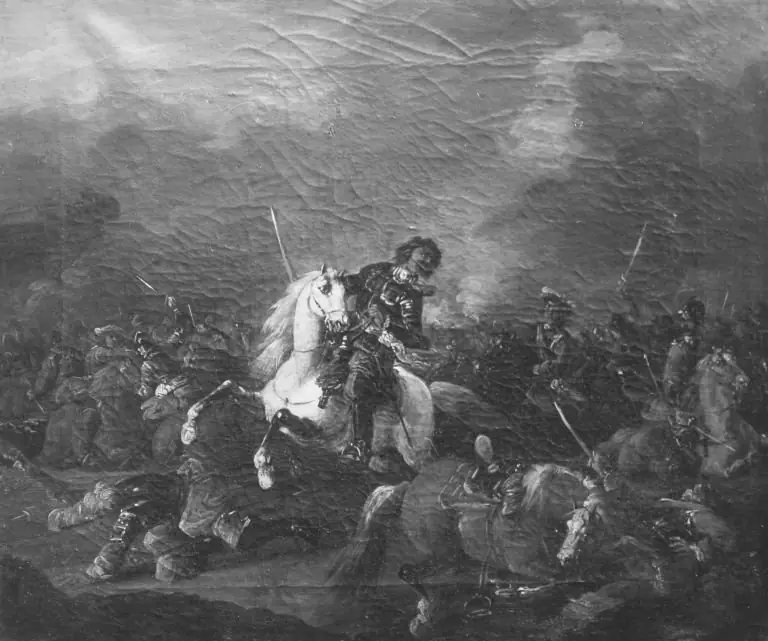
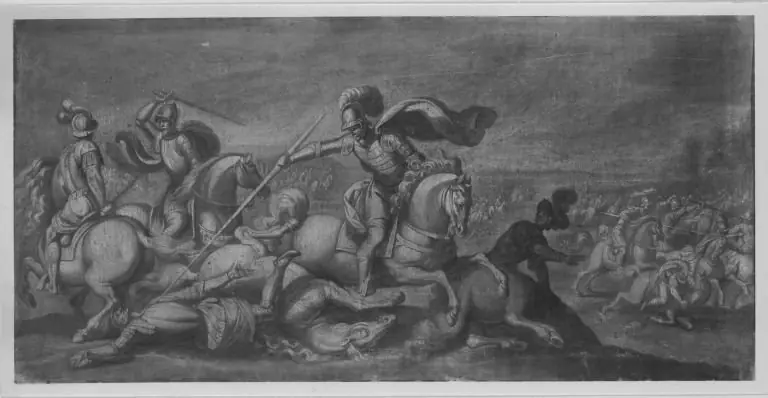
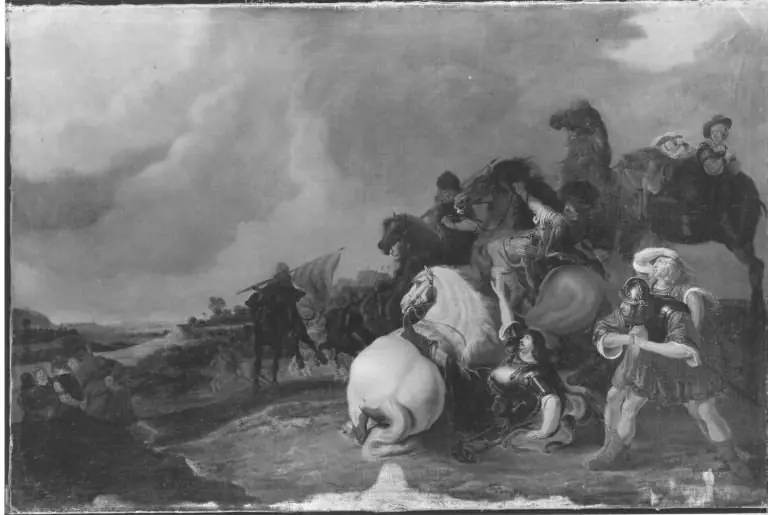
Alexandre Gabriel Decamps's 1841 oil painting, Don Quixote Charging the Sheep, depicts the titular character from Miguel de Cervantes' novel attacking a flock of sheep, which he mistakes for an army. The composition centers on Don Quixote mounted on his horse Rocinante, clad in armor with a flowing cape, as he thrusts his lance toward the fleeing animals. Decamps renders the scene with a dynamic, almost chaotic energy, capturing the moment of delusion and the sheep's panicked scattering across a rugged landscape under a cloudy sky.
The artist employs loose, expressive brushwork and a muted, earthy palette to emphasize the absurdity and tragedy of the knight's quest. This work reflects Decamps's interest in literary subjects and his ability to infuse narrative scenes with dramatic movement and psychological depth. Created during the height of his career, the painting exemplifies the Romantic era's fascination with individualism and the sublime, while also showcasing Decamps's unique approach to historical and literary illustration. The piece remains a significant example of 19th-century French art that bridges literary adaptation and visual storytelling.
Subject & Meaning
The composition presents the legendary figure of Don Quixote in a moment of reckless bravery, confronting a herd of sheep as if they were adversaries. The frantic reaction of the animals and the rider’s forward thrust convey a sense of absurd heroism, echoing the novel’s satire of chivalric excess.
Technique & Style
Decamps employs strong chiaroscuro, juxtaposing illuminated forms against deep shadows to heighten drama. The rider and horse emerge sharply from a darker background, while the sky’s muted tones frame the scene. Brushwork suggests swift movement, especially in the flowing cape and the scattered sheep, reinforcing the painting’s kinetic energy.
History & Provenance
Created circa 1841, the canvas entered the Museum of Fine Arts, Boston, where it remains on view. Its acquisition history reflects the 19th‑century American interest in European genre scenes, though specific details of earlier ownership are not recorded in the museum’s catalog.
Context
Decamps, a French painter known for Orientalist subjects and vivid narrative scenes, often infused his works with theatricality. This piece aligns with his interest in literary themes, translating Cervantes’s text into a visual tableau that captures both humor and pathos within a single, dynamic instant.
Own this work as a print
Artist & collection
Artist
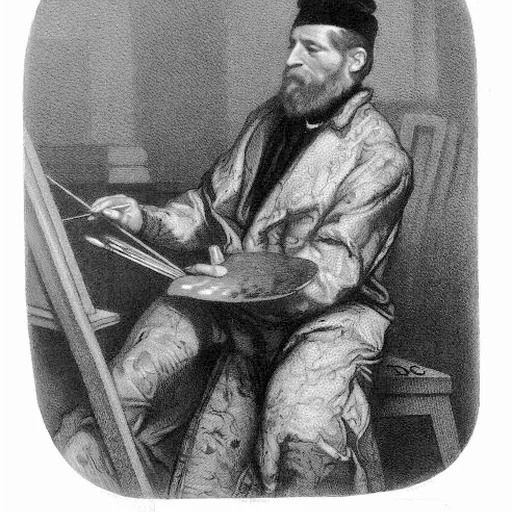
Alexandre-Gabriel Decamps was a French painter noted for his Orientalist works.