Artwork
The Good Samaritan
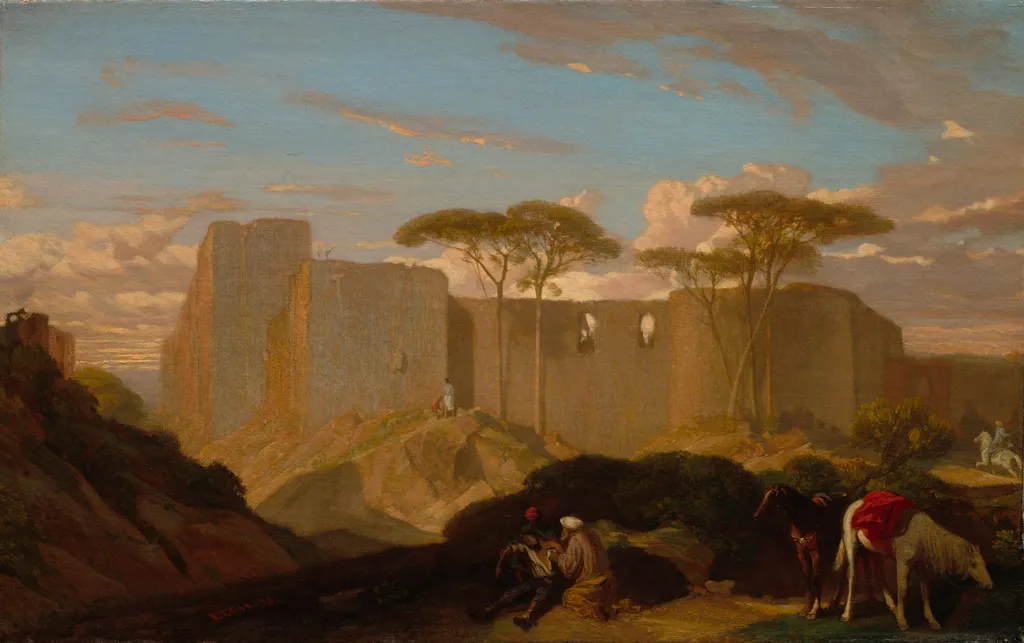
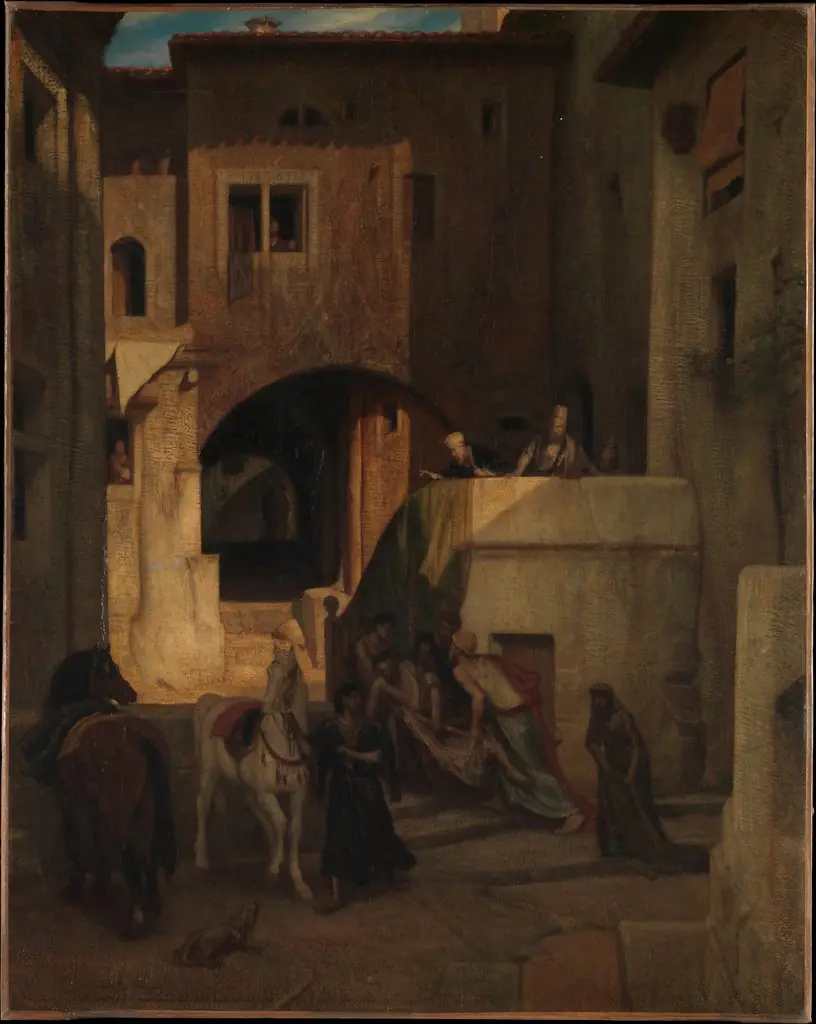
The Good Samaritan is an unspecified painting by the French Romanticist artist Alexandre Gabriel Decamps. It dates from 1842 and is held in the collection of the Cleveland Museum of Art.
About this work
Subject & Meaning
By focusing on this singular event, the artwork functions as a didactic tool meant to evoke reflection on ethical duty and mercy.
Alexandre-Gabriel Decamps's 1842 painting illustrates the biblical parable of the Good Samaritan, a narrative central to Christian teachings on compassion and neighborly love. As a work of religious art, the piece visually interprets this specific gospel story, which depicts a traveler being aided by a Samaritan after being ignored by others. The composition serves as a moral representation of charity and human kindness, adhering to the traditional iconography associated with this well-known scriptural lesson.
By focusing on this singular event, the artwork functions as a didactic tool meant to evoke reflection on ethical duty and mercy.
History & Provenance
The Good Samaritan was created by Alexandre Gabriel Decamps in 1842 in France. According to the Cleveland Museum of Art's records, the painting is held in that institution's collection under accession number CMA 1980.253. No further details regarding an earlier ownership chain, commission, or intermediate provenance are documented in the available sources.
The work is held by the Cleveland Museum of Art, where it is inventoried as 1980.253. The painting entered the museum’s collection in 1980.
It has been exhibited once in the museum’s galleries, as part of the 1983 reinstallation of European paintings.
Overview
Alexandre Gabriel Decamps's The Good Samaritan (1842) is an oil painting that reinterprets the biblical parable through the lens of Orientalism, a defining characteristic of the artist's mature career. The composition places the narrative within a sun-drenched, arid landscape featuring a ruined structure in the background, evoking the Near East rather than traditional European settings. In the foreground, the injured traveler sits on the ground while the Samaritan, mounted on a white horse with a distinctive red saddle blanket, attends to him.
Decamps employs a loose, vigorous brushwork and a warm, earthy palette to capture the intensity of the light and the texture of the terrain. Painted in 1842, this work exemplifies Decamps's ability to infuse religious subjects with contemporary exoticism and dramatic realism, moving away from academic idealism toward a more direct observation of nature and human interaction. The painting stands as a significant example of French Romanticism's engagement with Eastern themes, showcasing the artist's unique synthesis of narrative clarity and atmospheric depth.
Technique & Style
The artwork presents a serene landscape, featuring a ruined structure in the background beneath a sky of blue and white clouds. Decamps employed a muted color palette, which allows the foreground figures and the architectural ruin to emerge distinctly against the lighter background tones. This deliberate use of color and composition contributes to an overall atmosphere of calmness and tranquility, characteristic of the artist's approach to religious narrative.
Own this work as a print
Artist & collection
Artist
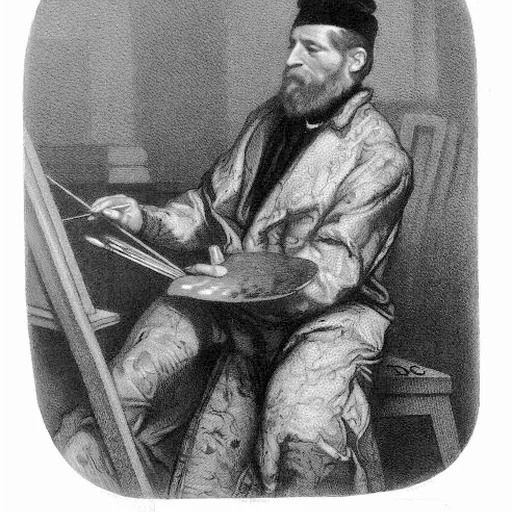
Alexandre-Gabriel Decamps was a French painter noted for his Orientalist works.

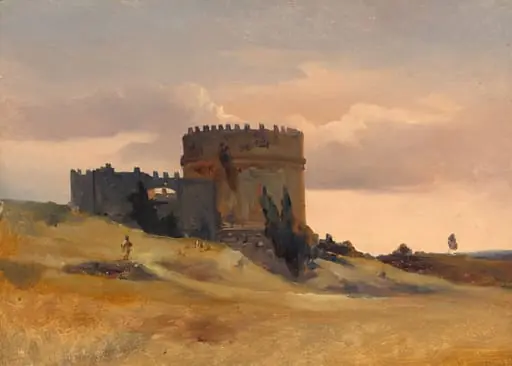 The Tomb of Caecilia Metella
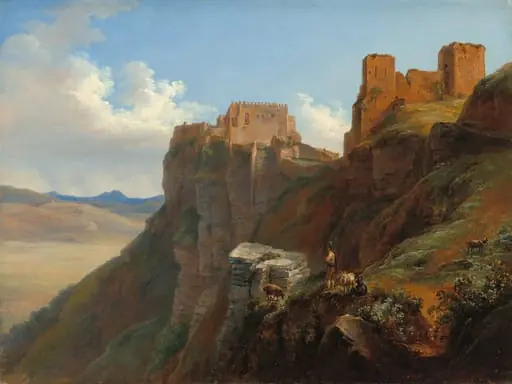 View of the Castello di San Giuliano, near Trapani, Sicily
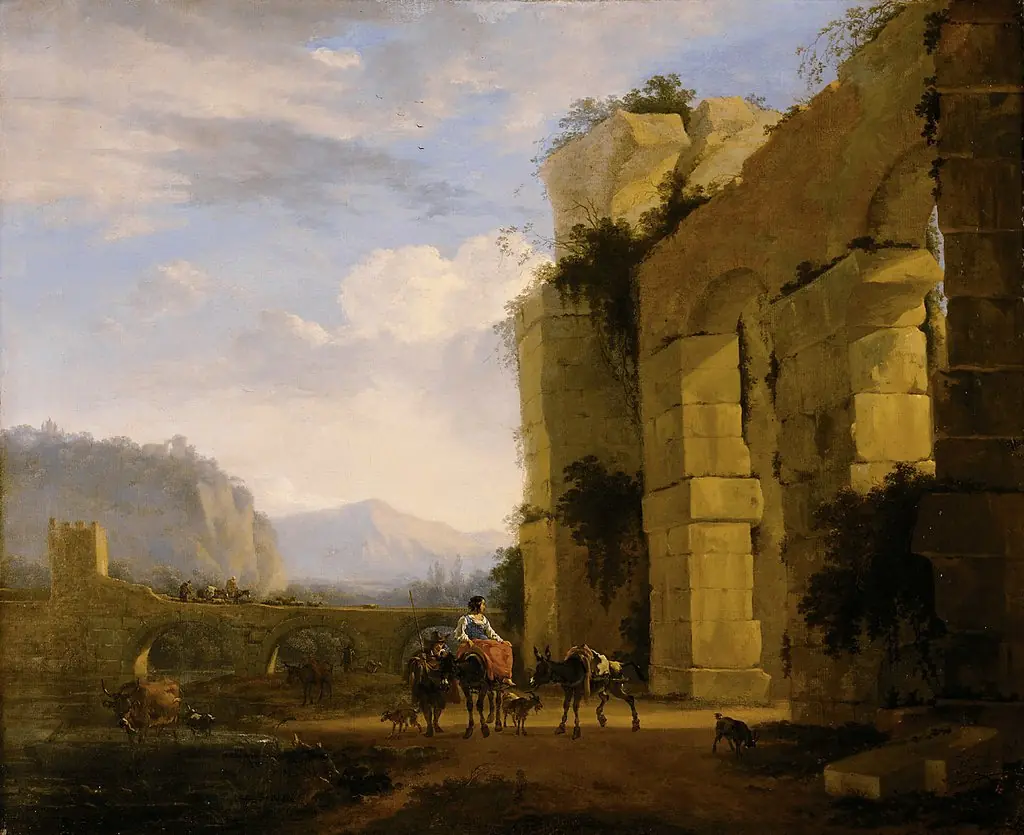 Landscape with the ruin of an aquaduct
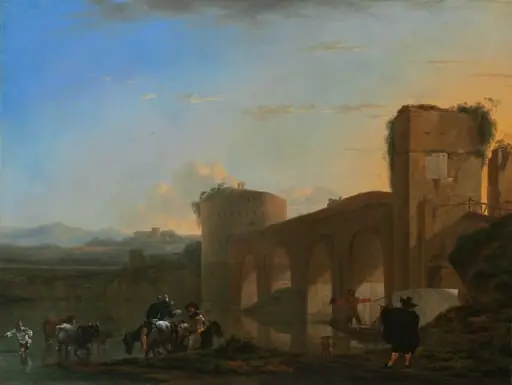 The Tiber River with the Ponte Molle at Sunset
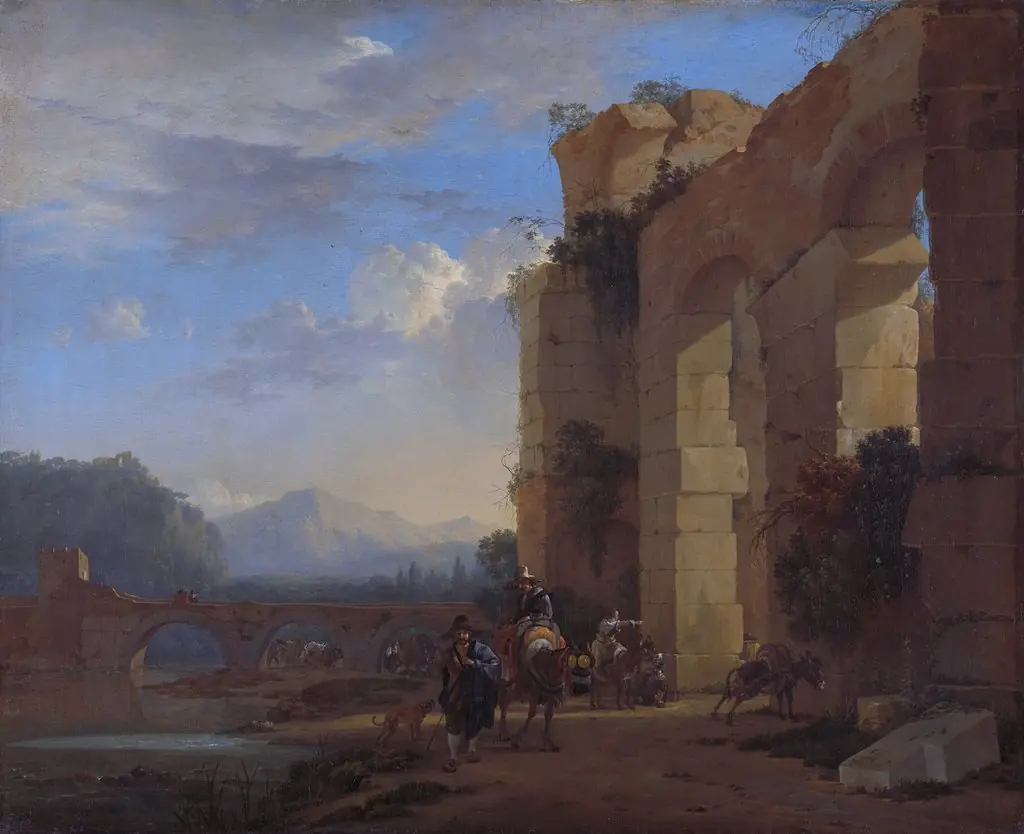 Muleteers beside an Italian Ruin
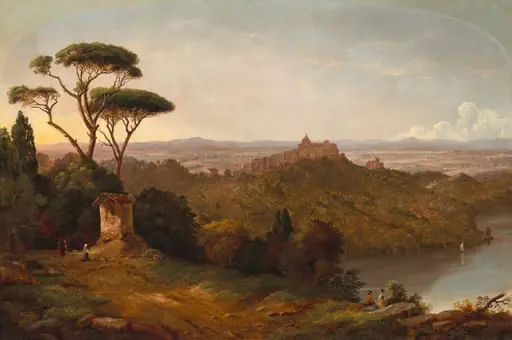 Castle Gondolfo, Lake Albano, Italy
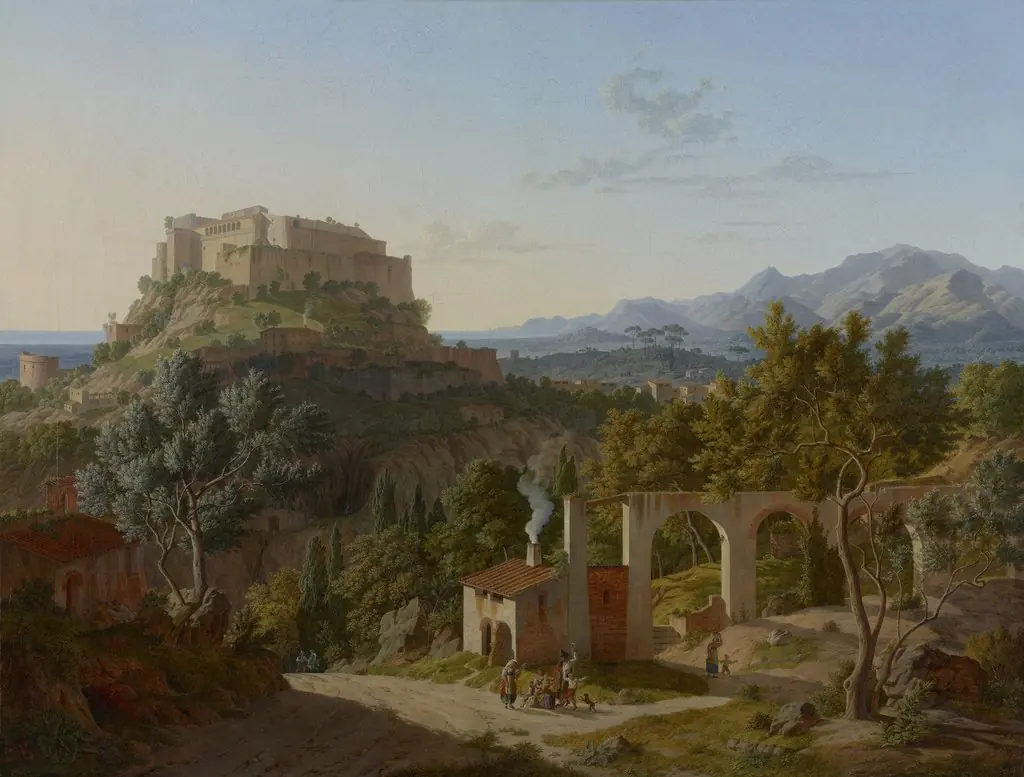 Landscape with the Castle of Massa di Carrara
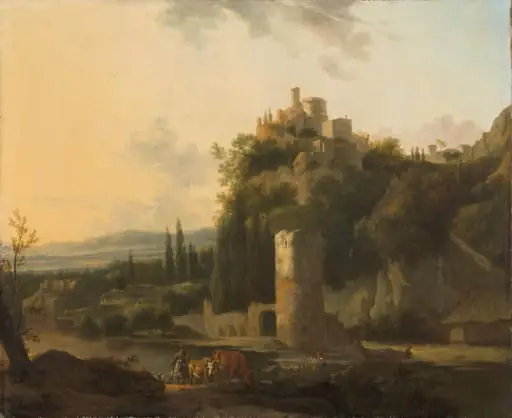 Italina landscape with round tower
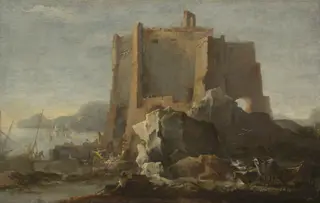 Landscape with Rock and Fortress
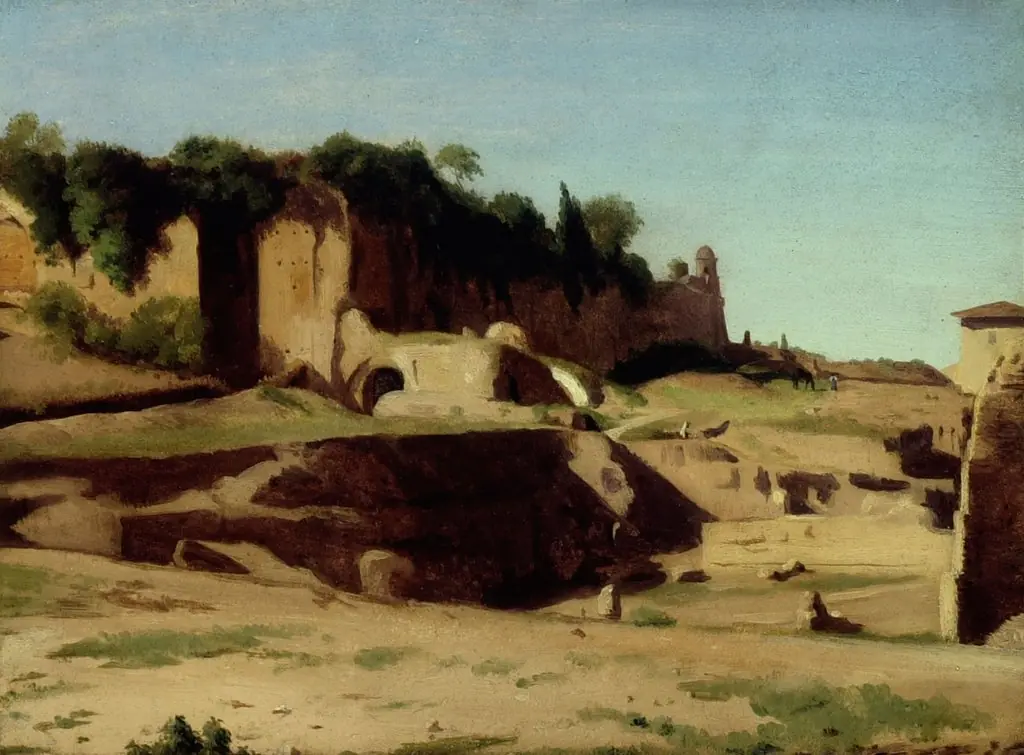 The Imperial Palace on the Palatine, Rome
 The Imperial Palace on the Palatine, Rome
- The Good Samaritan