Artwork
The Rooks Have Returned
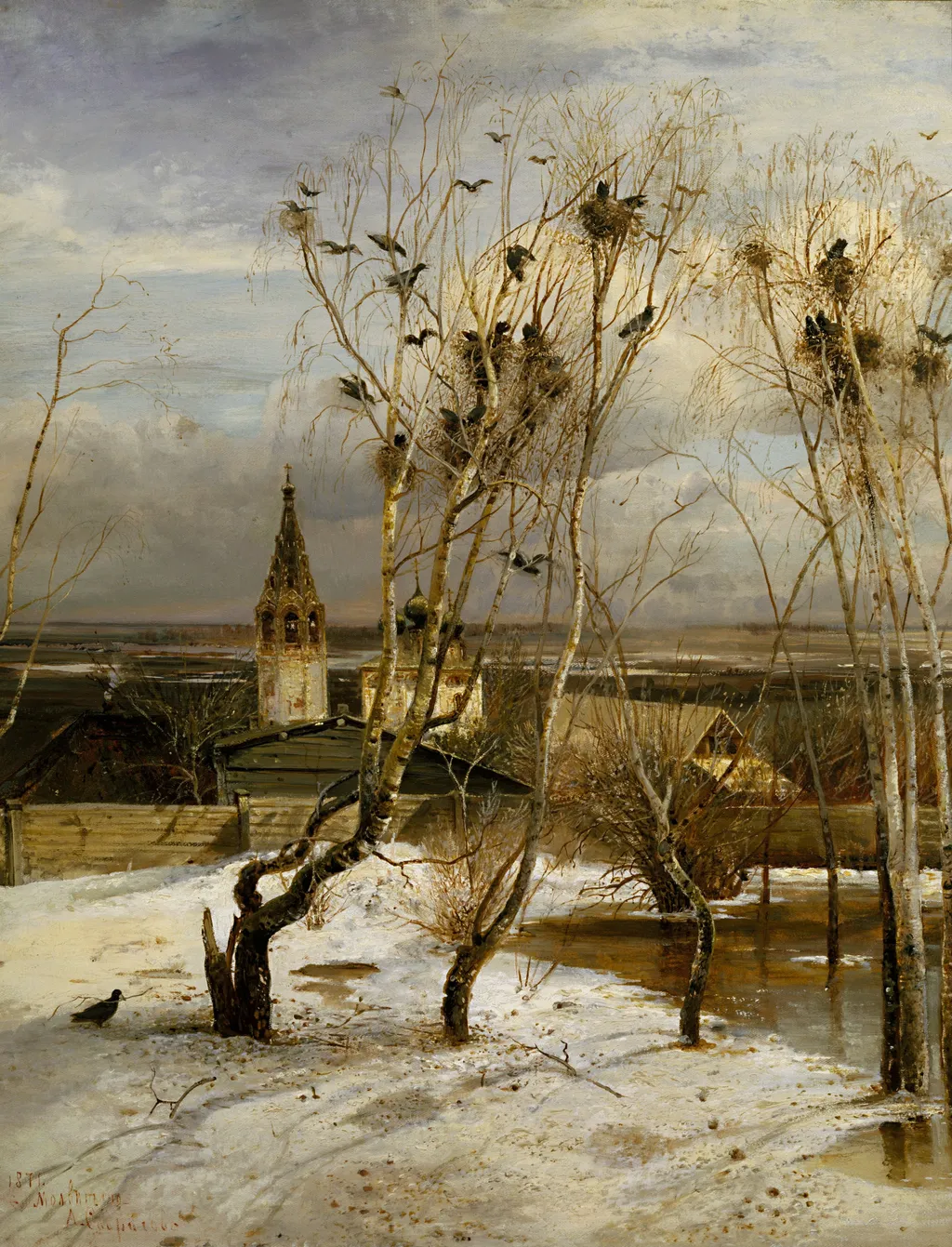
The Rooks Have Returned is an oil painting by the Realist artist Alexei Savrasov. It dates from 1871 and is held in the collection of the Tretyakov Gallery.
About this work
The Rooks Have Returned is an oil painting made in 1871 by Russian artist Alexei Savrasov. It measures about 62 × 48.5 cm and shows a quiet landscape scene.
The work is often called Savrasov’s most famous piece, and scholars see it as an important stage in the development of Russian landscape painting.
You might want to look up the museum where it lives: Tretyakov Gallery.
Overview
5 cm, the work is widely recognized as Savrasov's most famous creation and a pivotal achievement in the development of Russian landscape painting.
The Rooks Have Returned is an 1871 oil on canvas painting by Russian artist Alexei Savrasov. Measuring 62 by 48.5 cm, the work is widely recognized as Savrasov's most famous creation and a pivotal achievement in the development of Russian landscape painting. It is held in the State Tretyakov Gallery in Moscow under inventory number 828. The painting captures the transition from winter to spring in a rural setting, establishing a new type of lyrical landscape that broke from academic tradition to find profound emotional resonance in an unadorned, native environment.
Subject & Meaning
The painting depicts a vertical landscape centered on the arrival of rooks, signaling the end of winter. Leafless birch trees in the foreground host numerous dark birds perched and in flight, along with their nests. Behind this avian activity sits a wooden church with a tall bell tower and onion domes, enclosed by a wooden fence. The ground is a patchwork of melting snow, muddy puddles, and wet earth under an overcast sky of layered gray and pale blue clouds. No human figures are present. The returning rooks and the thawing landscape symbolize the rebirth of nature and the resilience of life. The Church of the Resurrection in the background reinforces this theme of spiritual and natural renewal, connecting the physical transition of seasons to the resurrection of Christ and the enduring Russian soul.
Technique & Style
Executed in oil on canvas, the painting employs a muted palette of browns, grays, dirty whites, and dull golds to convey the damp, cold atmosphere of early spring. Savrasov's handling of paint varies across the composition. The sky is rendered with smooth brushwork, while the bark of the birch trees and the patchy snow are built with textured, visible strokes that emphasize the physical roughness of the thawing ground. This stylistic approach aligns with Realism, rejecting idealized or polished academic conventions in favor of a direct, unembellished observation of nature. Critics later termed this approach the mood landscape, as the unassuming, even trivial, episode of birds returning home is infused with deep emotional and lyrical significance.
History & Provenance
Savrasov began the painting in March 1871 during a trip to the village of Molvitino in the Kostroma Governorate, the location confirmed by his inscription in the lower left corner. The church depicted is the late 17th-century Church of the Resurrection. Scholars debate whether his initial sketches were made in Yaroslavl shortly before the Kostroma trip, under the influence of the healing vastness of nature following the death of his newborn daughter in February 1871. After returning from Molvitino, Savrasov continued work in Yaroslavl and completed the canvas in Moscow by early May. Originally titled Here Come the Rooks by the artist, the painting was purchased by Pavel Tretyakov in the summer of 1871. It was first exhibited at the Moscow Society of Art Lovers in autumn 1871, and later that year at the 1st exhibition of the Society for Travelling Art Exhibitions in Saint Petersburg, where it was listed in the catalogue with an exclamation mark under its current name.
Context
Created during a tumultuous period in Savrasov's life, the work emerged shortly after he joined the Peredvizhniki, or Wanderers, in 1870, a movement that rejected government-sponsored academic art. The death of his daughter in 1871 profoundly affected him, and scholars such as Faina Maltseva and Vladimir Petrov argue that his grief catalyzed his vivid creative response to the arriving spring. The painting's critical reception was highly positive. Artist Ivan Kramskoi declared it the best landscape at the exhibition, and critic Vladimir Stasov called it the most original painting by Savrasov. Fellow painter Isaac Levitan praised the soft soul behind its apparent simplicity, while art historian Alexei Fedorov-Davydov noted its general cultural significance beyond its artistic merit. Critic Boris Asafiev identified the canvas as a symbol of the artistic renewal of the Russian landscape for far ahead.
Legacy
The Rooks Have Returned is regarded as a foundational work of the realistic Russian landscape, encouraging painters to abandon idealized compositions and embrace the unvarnished reality of native scenery, such as broken roads and untidy trees. It marked the high point of Savrasov's career and defined the lyrical mood landscape style that influenced his students, including Isaac Levitan and Konstantin Korovin. The painting has remained a centerpiece of the Tretyakov Gallery collection, and numerous replicas by the artist have dispersed across the globe. However, the personal tragedy surrounding its creation foreshadowed Savrasov's later decline into alcoholism and poverty, from which he never recovered artistically.
Own this work as a print
Artist & collection
Artist
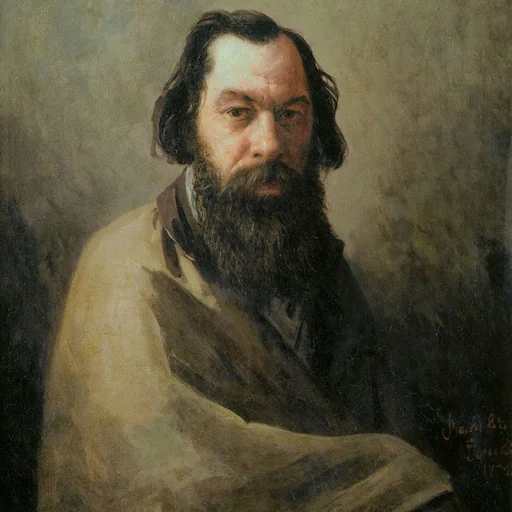
Alexei Kondratyevich Savrasov (Russian: Алексе́й Кондра́тьевич Савра́сов; 24 May 1830 – 8 October 1897) was a Russian landscape painter and creator of the lyrical landscape style.