Artwork
Bords de rivière (Orillas del río) (La Tamise à Hampton Court, premiers jours d'octobre)
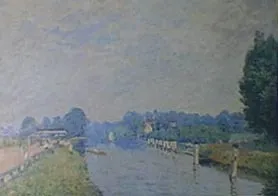
Bords de rivière (Orillas del río) (La Tamise à Hampton Court, premiers jours d'octobre) is an oil painting by the Impressionist artist Alfred Sisley. It dates from 1874 and is held in the collection of the National Museum of Fine Arts, Argentina.
About this work
Overview
Painted in 1874, Bords de rivière (Orillas del río) is an oil landscape by Alfred Sisley, a French-born artist who lived and worked primarily in France.
Painted in 1874, Bords de rivière (Orillas del río) is an oil landscape by Alfred Sisley, a French-born artist who lived and worked primarily in France. It captures a stretch of the River Thames near Hampton Court during early October, part of a small group of works Sisley produced during a brief visit to England. The painting reflects his consistent focus on natural light and quiet rural waterways, distinguishing him among his Impressionist peers.
Subject & Meaning
The scene portrays the Thames at Hampton Court with its gentle banks, distant bridge, and modest architecture, all rendered without human figures. The absence of activity emphasizes stillness and the quiet rhythm of nature. Sisley’s choice of location and season suggests an interest in transitional moments—autumn’s subdued light and the river’s calm flow convey a contemplative mood, rooted in observation rather than narrative.
Technique & Style
Sisley applied oil paint with loose, fluid brushwork that suggests movement in the water and rustling foliage without defining details. His palette favors muted greens, soft blues, and pale grays, harmonizing with the overcast autumn sky. The brushstrokes are deliberate yet unforced, capturing the atmosphere’s texture and the play of diffused light, characteristic of his Impressionist approach to en plein air painting.
History & Provenance
Sisley painted this work during a short stay in England in 1874, a rare departure from his usual French locales. The painting remained in private collections before entering the National Museum of Fine Arts in Buenos Aires, where it has been held since the mid-20th century. Its journey from rural England to South America reflects the international circulation of Impressionist works in the decades following their creation.
Context
In 1874, Sisley was part of the first Impressionist exhibition in Paris, yet he chose to work in England, drawn by the Thames’ unspoiled scenery and the relative stability of the British art market. While his French contemporaries focused on urban life, Sisley remained devoted to rural waterways. This painting exemplifies his quiet resistance to spectacle, favoring subtle, everyday naturalism over dramatic composition.
Legacy
Though less celebrated than Monet or Renoir, Sisley’s consistent dedication to landscape and light influenced later generations of plein air painters. Bords de rivière stands as a testament to his ability to evoke mood through restrained color and attentive observation. Its presence in Buenos Aires underscores the global reach of Impressionism beyond Europe, even as Sisley’s work remained largely outside the mainstream of his time.
Artist & collection
Artist
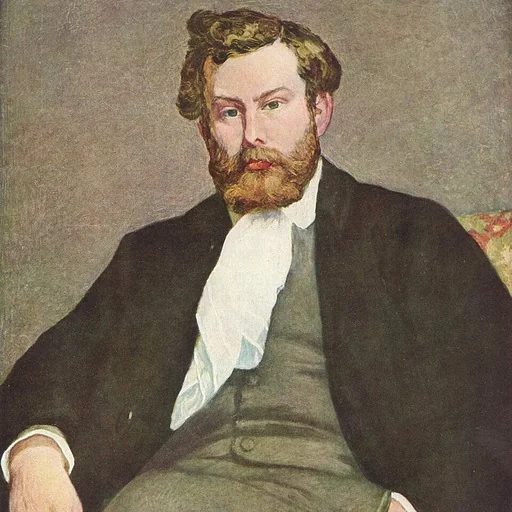
Alfred Sisley (; French: ; 30 October 1839–29 January 1899) was a French-Born British Impressionist landscape painter who was born to British parents, but spent most of his life in France.

Museum
National Museum of Fine Arts, Argentina
Continue through works from the same source collection.
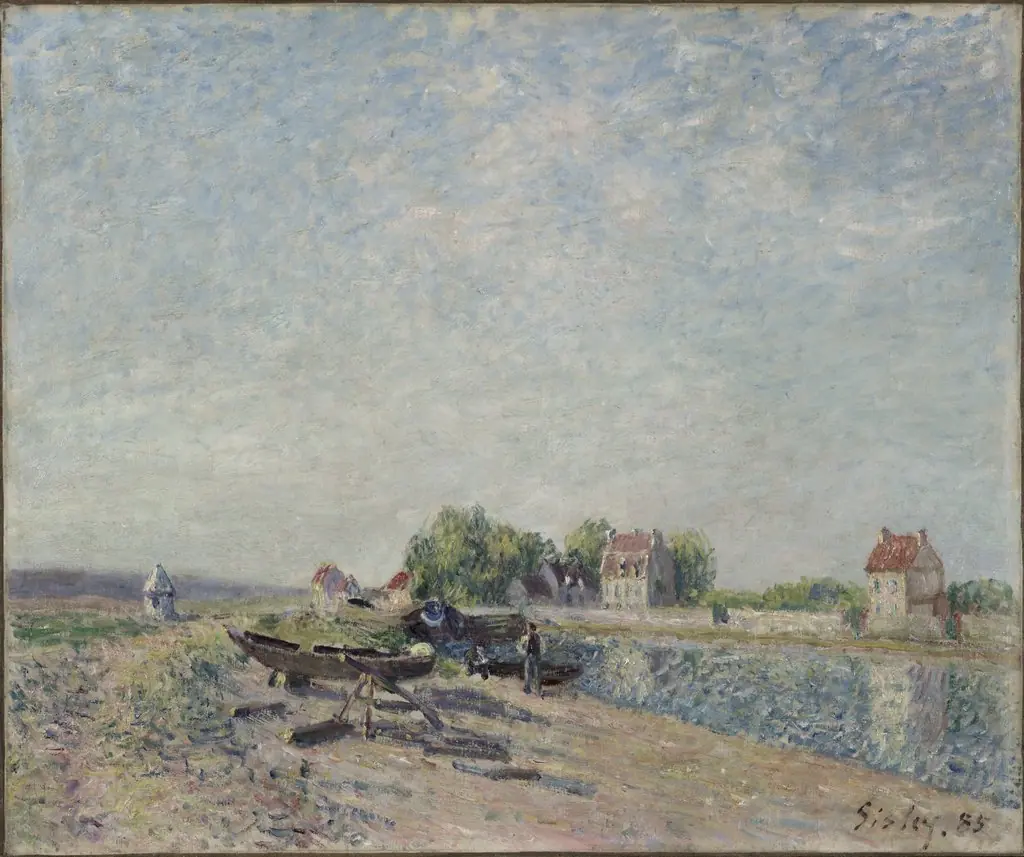
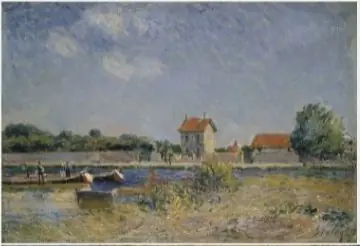 The Banks of the Canal du Loing at Saint-Mammès
 La Seine au Point du jour (D. 297)
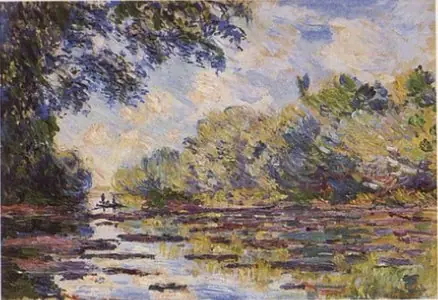 Bras de Seine à Giverny
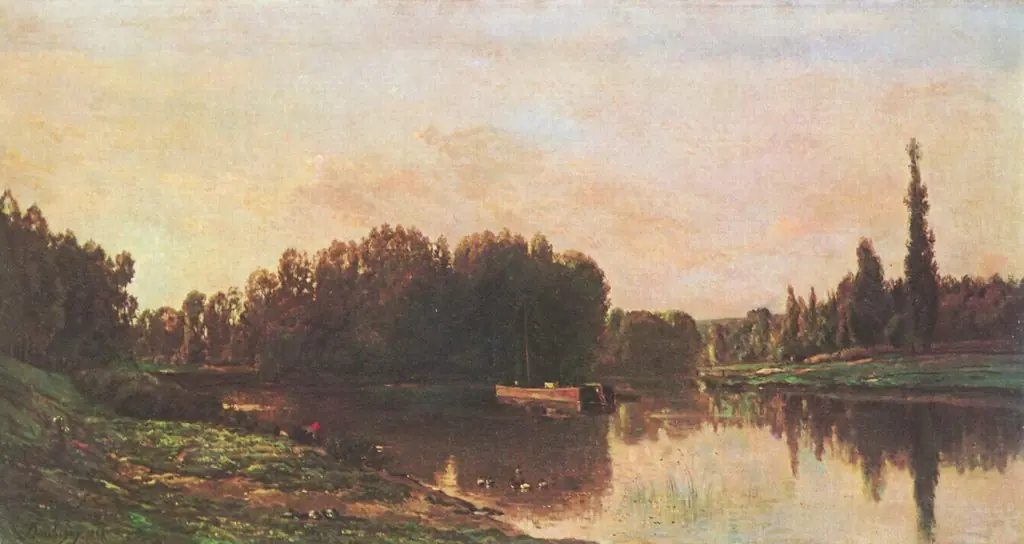 The Confluence of the Rivers Seine and Oise
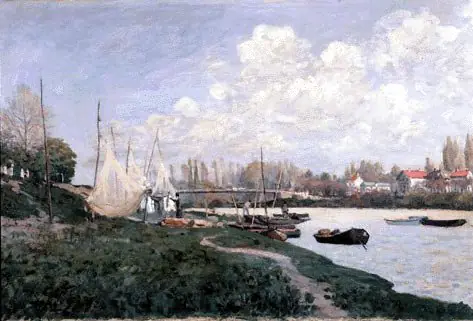 Drying Nets
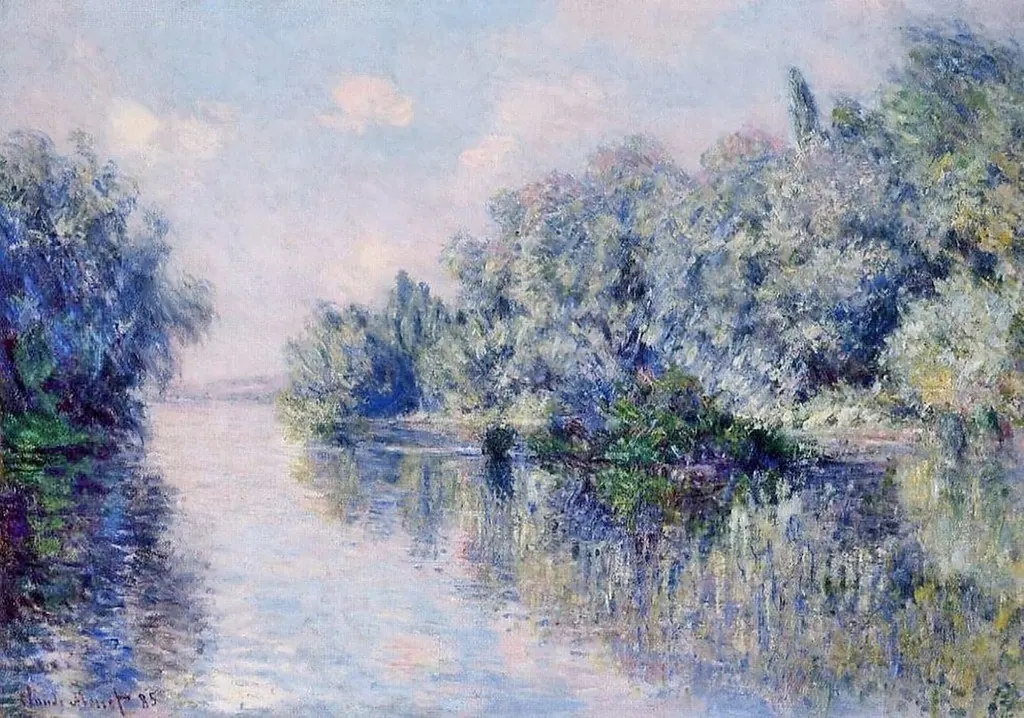 The Seine near Giverny
 Landschap met brug
 La Seine à Billancourt
 Banks of the Loing River
 The Bridge at Saint-Mammès
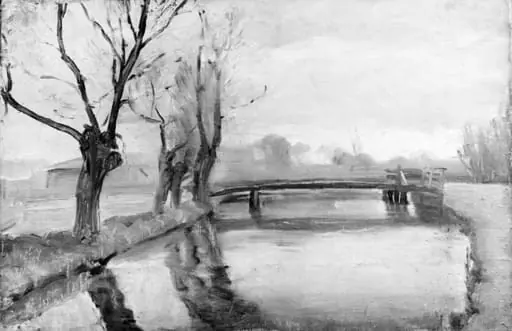 River Landscape with a Bridge
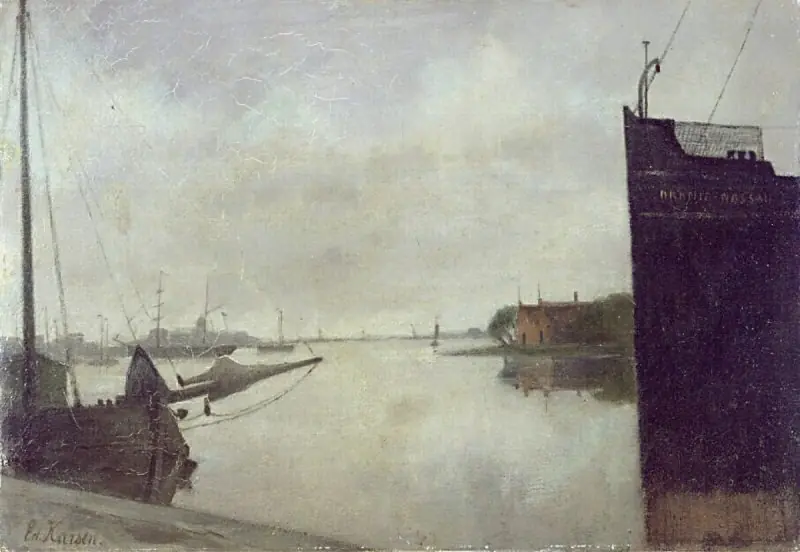 Aan het IJ