Artwork
Composition with Four Figures [recto and verso]
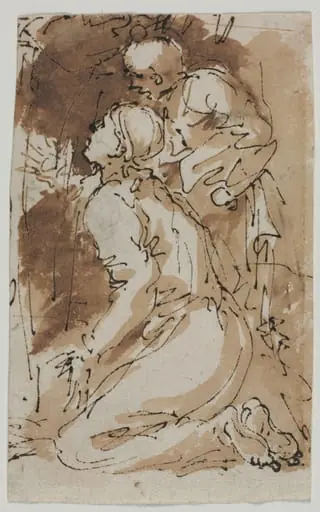
![Composition with Four Figures [recto and verso], by Washington Allston, ink, 1805](https://artifactworldgallery.com/img/washington-allston--composition-with-four-figures-recto-and-verso--9b3b2a9e089f65e0-w1024.webp)
Composition with Four Figures [recto and verso] is an ink drawing by the Romanticist artist Washington Allston. It dates from 1805 and is held in the collection of the National Gallery of Art.
- Inscription
- Inscribed:from dettached mount: in brown ink recto: original sketch on two sides, by Washington Allstyn/ Made for the late John Vanderlyn; in brown ink verso: Sketch on two sides original by Washington Allstyn; lower right verso in graphite: 4
About this work
Overview
This sketch reflects Allston's interest in dramatic human interaction and emotional expression, themes that would define his later oil paintings.
Created in 1805, Composition with Four Figures [recto and verso] is a pen and brown ink drawing with gray wash over graphite on laid paper by the American artist Washington Allston. Executed during Allston's formative years in Europe, this work exemplifies his early engagement with Romantic sensibilities and the influence of British and Continental masters. The composition depicts four figures in a rustic outdoor setting: three men stand clustered together, their gazes directed toward a woman kneeling on the ground.
Her posture suggests exhaustion or supplication, and she holds a small, indistinct object. The background features simplified architectural forms and trees rendered with rapid, loose linework, establishing a mood of narrative immediacy rather than topographical precision. The use of wash creates atmospheric depth, contrasting the dark ink lines with lighter tonal areas.
This sketch reflects Allston's interest in dramatic human interaction and emotional expression, themes that would define his later oil paintings. It serves as a significant document of the artist's development as he transitioned from academic training to a more expressive, imaginative style characteristic of American Romanticism.
Subject & Meaning
The composition depicts three men gathered together while a kneeling woman occupies the foreground. The woman appears fatigued, cradling a small object in her hands, and the men’s gazes are directed toward her. Simple architectural forms and trees form a sparse background, suggesting an outdoor setting that frames the interaction without elaborate narrative detail.
Technique & Style
Allston employed a combination of pen lines and a gray wash to model volume, allowing tonal variation through layered ink strokes. The underlying graphite provides a loose framework, while the uneven, sketchy lines convey immediacy. Cross‑hatching and wash work together to suggest shadow, giving the figures a provisional, study‑like quality.
History & Provenance
Created circa 1805, the drawing reflects Allston’s early practice of rapid figure studies. The work remains on laid paper, preserving its original material condition. Its dual‑sided format indicates it was likely used as a reference or preparatory sketch, a common approach for the artist during this period.
Own this work as a print
Artist & collection
Artist
Washington Allston spent his life chasing the glow of stories more than fame. Born in South Carolina, he studied law at Harvard before the itch to paint pulled him across the Atlantic to London. There he fell in with…

![A Study from Life [and] Study for Angel Releasing Saint Peter from Prison, by Washington Allston](https://artifactworldgallery.com/img/washington-allston--a-study-from-life-and-study-for-angel-releasing-saint-peter--13db111bb86c178e-w320.webp)
![A Young Woman Overcome by Love [recto], by Jean-Baptiste Deshays](https://artifactworldgallery.com/img/jean-baptiste-deshays--a-young-woman-overcome-by-love-recto--8f8b1d64ee16ec55-w320.webp) A Young Woman Overcome by Love [recto]
A Young Woman Overcome by Love [recto]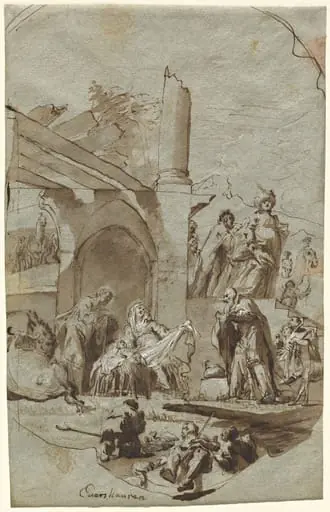 The Adoration of the Magi
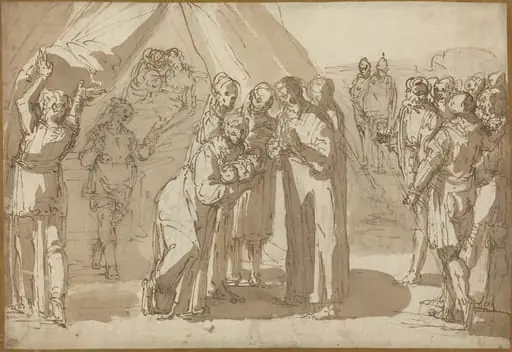 Birth Scene
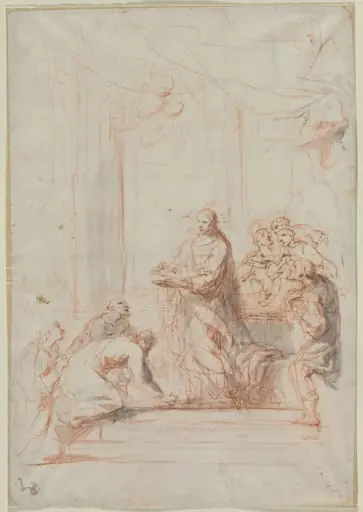 Christ Administering the Host
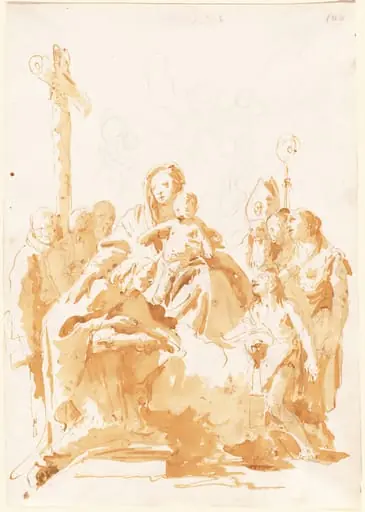 The Virgin and Child Adored by Bishops, Monks, and Women
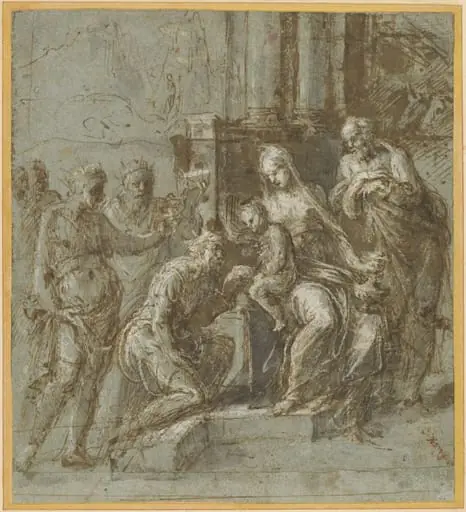 The Adoration of the Magi
![Mary Magdalene [recto], by Biagio Pupini](https://artifactworldgallery.com/img/biagio-pupini--mary-magdalene-recto--342e893fb59810dd-w320.webp) Mary Magdalene [recto]
Mary Magdalene [recto]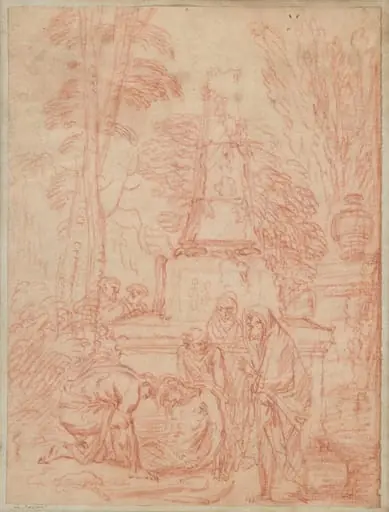 Tobit Burying the Dead
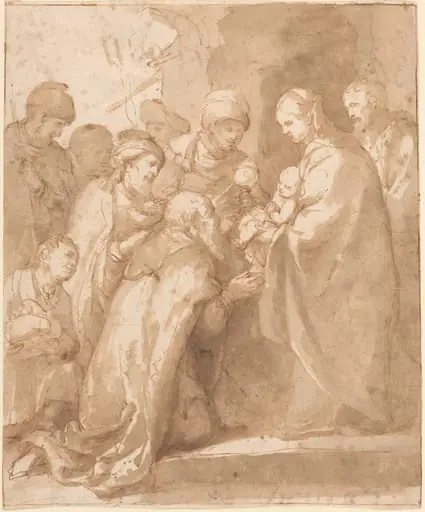 The Adoration of the Magi
 Adoration of the Shepherds
 Two Figures in Classical Dress
- Figure Studies (recto)