Subject
Kneeling
Kneeling is a subject in art. The gallery holds 61 works in this subject in art, including works by Titian, Paolo Veronese and Raphael.
Kneeling is a basic human position where one or both knees touch the ground. According to Merriam-Webster, kneeling is defined as "to position the body so that one or both knees rest on the floor".
Key artists
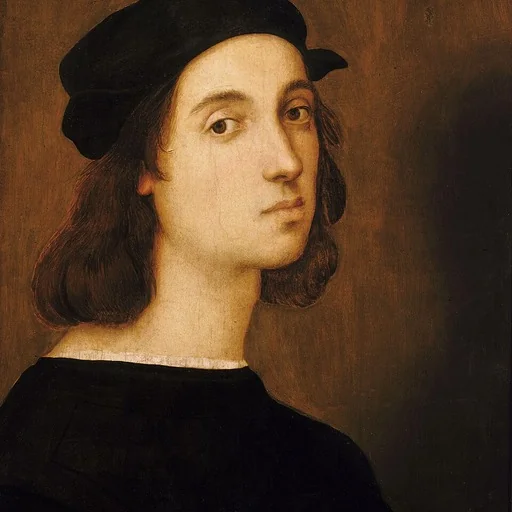

Overview
Kneeling is a fundamental human position in which one or both knees touch the ground, the body resting upon them. Defined by Merriam-Webster as positioning the body so that one or both knees rest on the floor, this posture appears in at least 65 works across the collection under discussion, spanning subjects from religious narrative to mythological scene and genre painting. The motif recurs throughout art history not merely as a descriptive detail but as a loaded gesture carrying meanings of submission, devotion, supplication, and transformation. Its persistence reflects both inherited primate behaviors of deference and the deeply codified rituals of religious, civic, and romantic life that artists have been called upon to represent.
Iconography & meaning
The iconography of kneeling operates along several registers. In religious contexts, the posture directs the knees toward what Britannica describes as the realm of the underworld, while raised hands reach toward the heavenly gods, creating a vertical axis of communication between earth and divinity. Christianity particularly favored kneeling as a sign of worship, with biblical precedent in Philippians stating that at the name of Jesus every knee should bend. The posture distinguishes full prostration from single-knee genuflection, the latter serving as a gesture of respect toward the Eucharist or sacred persons.
In secular and romantic contexts, kneeling carries different valences. The marriage proposal position, typically one knee on the ground, has been linked to medieval feudal submission though its historical origins remain uncertain. Courtly love imagery sometimes showed knights kneeling before ladies, blending erotic and hierarchical submission. In funerary sculpture, kneeling can express grief and eternal devotion, as in works where the posture eternalizes a passionate farewell. Military and chivalric contexts transformed kneeling into a ritual of initiation and honor, the bent knee marking admission into a sacred brotherhood rather than defeat.
Across movements & periods
The treatment of kneeling evolved significantly across periods. In ancient Greece, the posture and related proskynesis were considered ritual practices associated with women, poorly accepted for free men. Athenian votive reliefs suggest gendered conventions that later Western art would partly inherit and partly transform.
Christian art from the early period through the Renaissance made kneeling central to devotional practice and its representation. Raphael's Transfiguration, painted 1516-1520 and now in the Pinacoteca Vaticana, originally commissioned for Narbonne Cathedral, includes kneeling figures among the apostles at the base, their postures linking earthly witness to divine vision. The painting's lower register, combining the possessed boy narrative with the transfigured Christ, uses kneeling to mediate between human affliction and supernatural power.
The medieval revival of the nineteenth century, exemplified by Edmund Blair Leighton's Accolade from 1901, reimagined kneeling within chivalric fantasy. The kneeling knight receiving the accolade embodies not religious submission but romantic idealism and social ritual, his posture signaling willing participation in a code of honor rather than deference to divine authority. The woman who confers the knighthood stands above him, reversing typical gender dynamics while preserving the hierarchical logic of the gesture.
Modern and contemporary treatments have continued to exploit kneeling's semantic range, from political protest to intimate personal gesture, though the sources do not specify particular modern works beyond the general collection holdings.
Notable depictions
Several works in and beyond the collection stand as particularly significant treatments of the kneeling motif. Raphael's Transfiguration represents perhaps the most historically consequential example, the last painting by the High Renaissance master, combining technical brilliance with theological weight. Its kneeling apostles participate in a vision that the painting itself enacts for the viewer.
Edmund Blair Leighton's Accolade offers a contrasting, secular paradigm. The 1901 painting's kneeling knight, illuminated against shadowed witnesses, has become an iconic image of Victorian medievalism, reproduced widely and influencing popular imagination of chivalric ritual. The work's popularity stems partly from its ambiguous emotional register, the restraint of its figures allowing projection of multiple meanings onto the ceremonial moment.
Alfredo Oliani's funerary sculpture The Last Goodbye, created around 1945 for the Cantarella family tomb in São Paulo Cemetery, presents a radically different kneeling figure: a man bent over a woman's body in a gesture of loving farewell and passionate kiss. The work's sensuality and eroticism, unusual for funerary art, sublimates grief through physical intensity. Oliani's sculpture has become a landmark in Brazilian funerary art, demonstrating how kneeling can express not submission to higher power but desperate clinging to earthly love.
Within the collection, Titian's Venus of Urbino and Rembrandt's The Return of the Prodigal Son represent canonical treatments from the Renaissance and Baroque respectively, the former using subsidiary kneeling figures to structure erotic display, the latter making the father's receptive posture central to the parable's meaning of unconditional acceptance.
Legacy
The kneeling motif's afterlife extends across media and cultural domains. In religious practice, the posture remains central to Christian, Jewish, and Islamic worship, with dedicated kneelers and prayer rugs institutionalizing the position. The Catholic liturgy specifies moments of kneeling during Mass, while Islamic sujud on prayer rugs represents perhaps the most physically complete form of the gesture.
In visual culture, the motif's persistence in stock photography, political imagery, and popular media testifies to its continued legibility. The marriage proposal position has become so conventional that its absence in public proposals can seem remarkable. Sports training has recently reclaimed kneeling positions, with half-kneeling and tall kneeling exercises gaining popularity in functional fitness for their demands on core stability and hip mobility.
The scholarly and curatorial attention to kneeling in art, evidenced by extensive Wikimedia Commons categories dedicated to the subject, suggests ongoing interest in cataloging and analyzing this fundamental posture. Yet the motif also carries contested meanings: kneeling during national anthems has become a polarizing political gesture, demonstrating how the same physical position can be read as respectful or disrespectful depending on context. The sources do not specify particular contemporary art works or movements beyond the general collection, leaving room for further research into how twenty-first century artists have engaged with this ancient posture.
Works
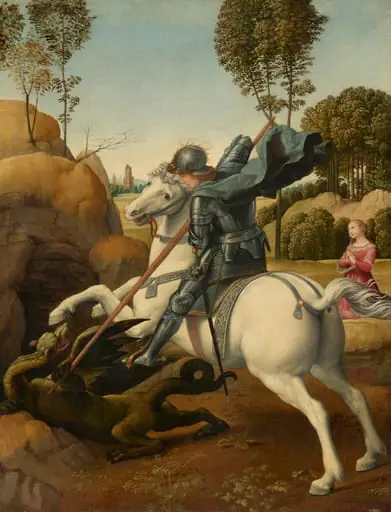 Saint George and the Dragon
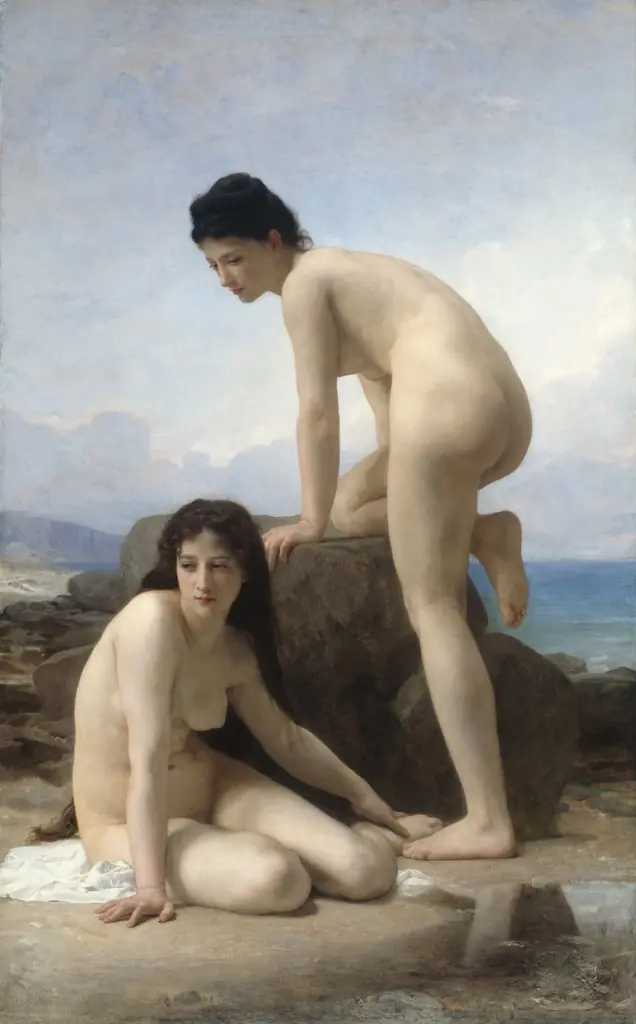 The Two Bathers
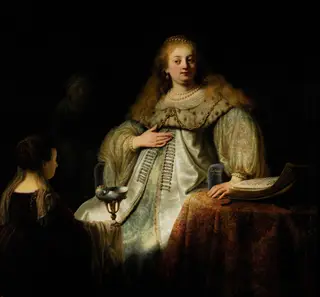 Judith at the Banquet of Holofernes
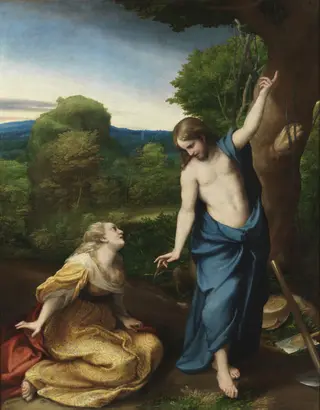 Noli me tangere
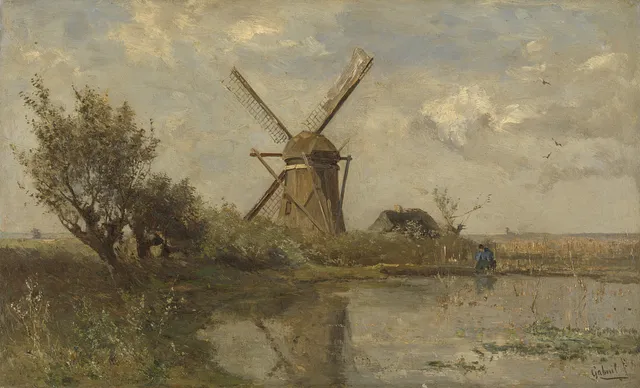
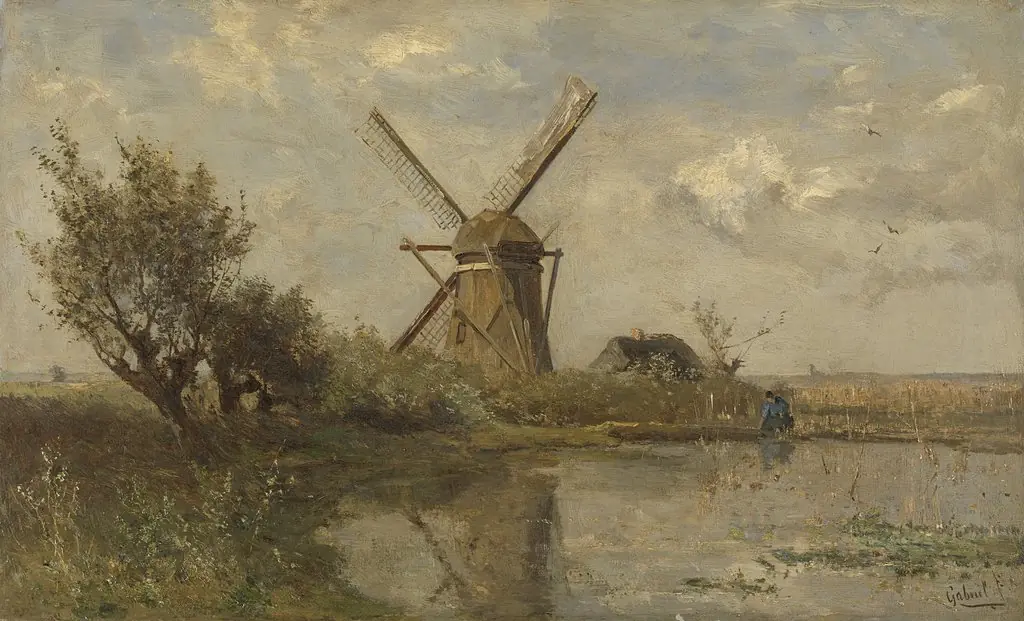 Windmill on a pond
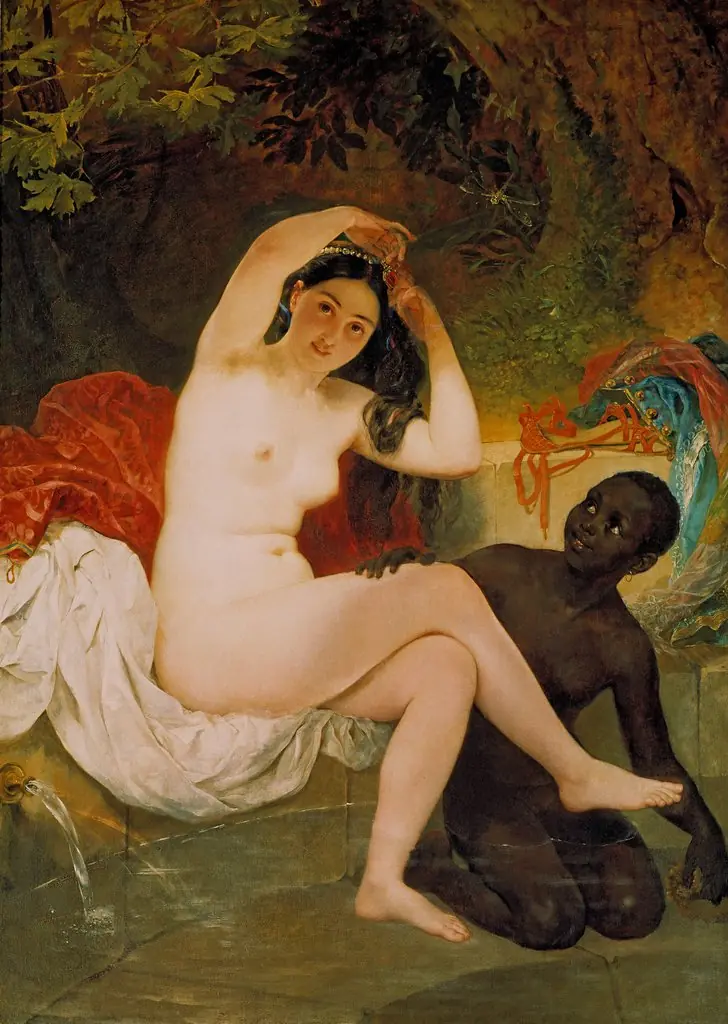 Bathsheba
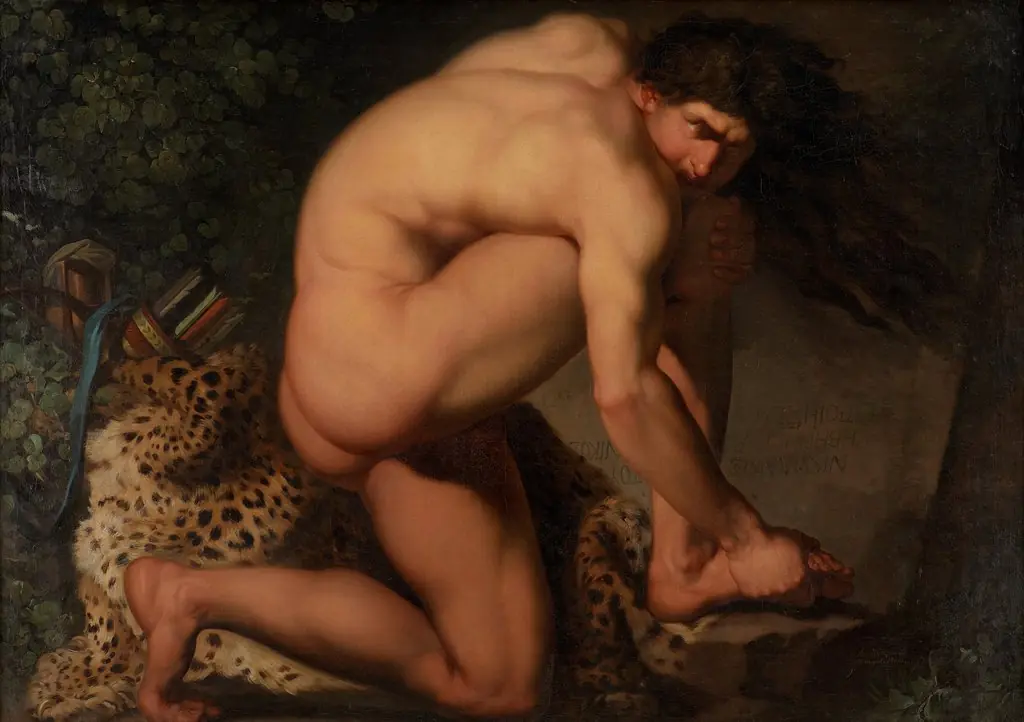 The Wounded Philoctetes
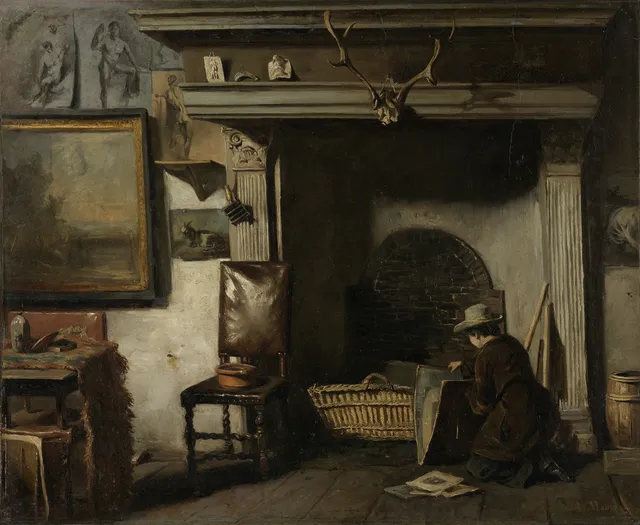
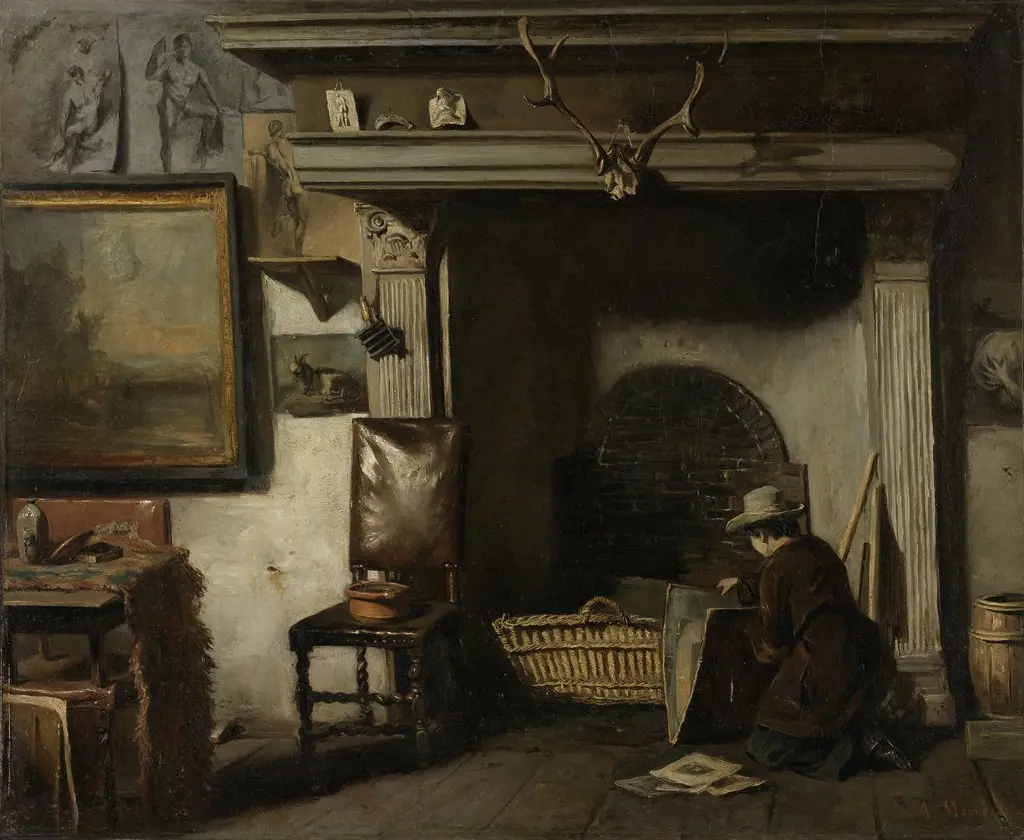 The Studio of the Haarlem Painter Pieter Frederik van Os
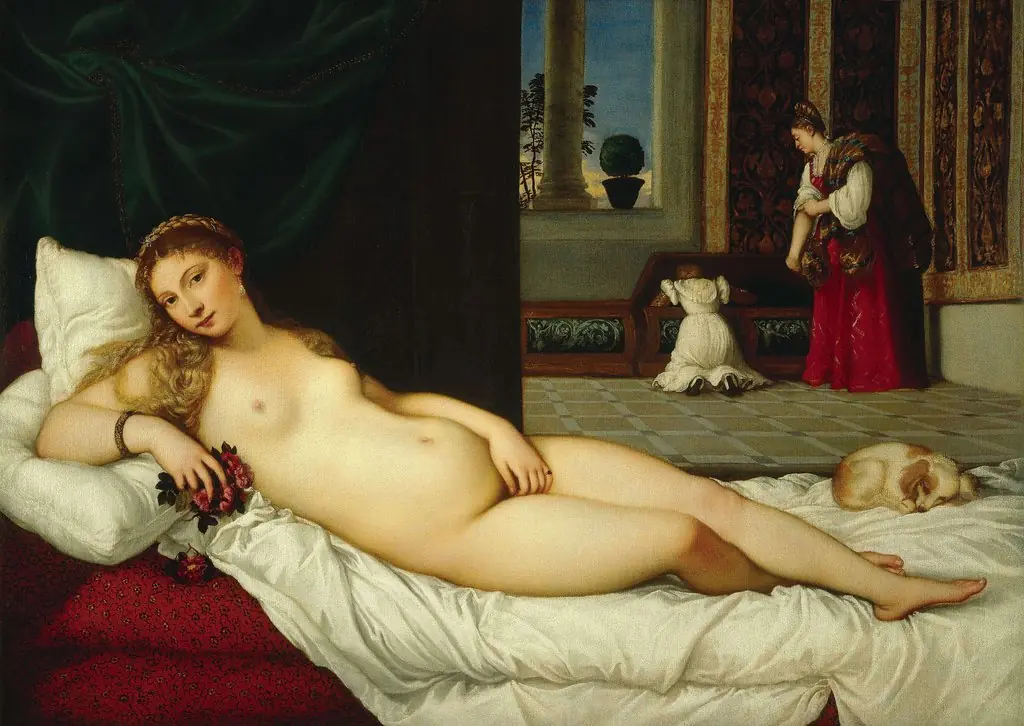 Venus of Urbino
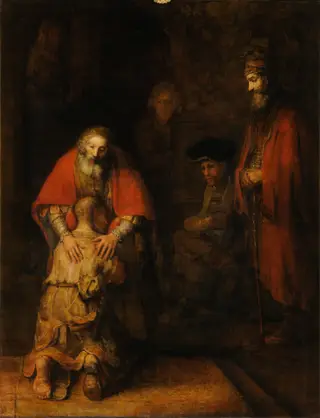 The Return of the Prodigal Son
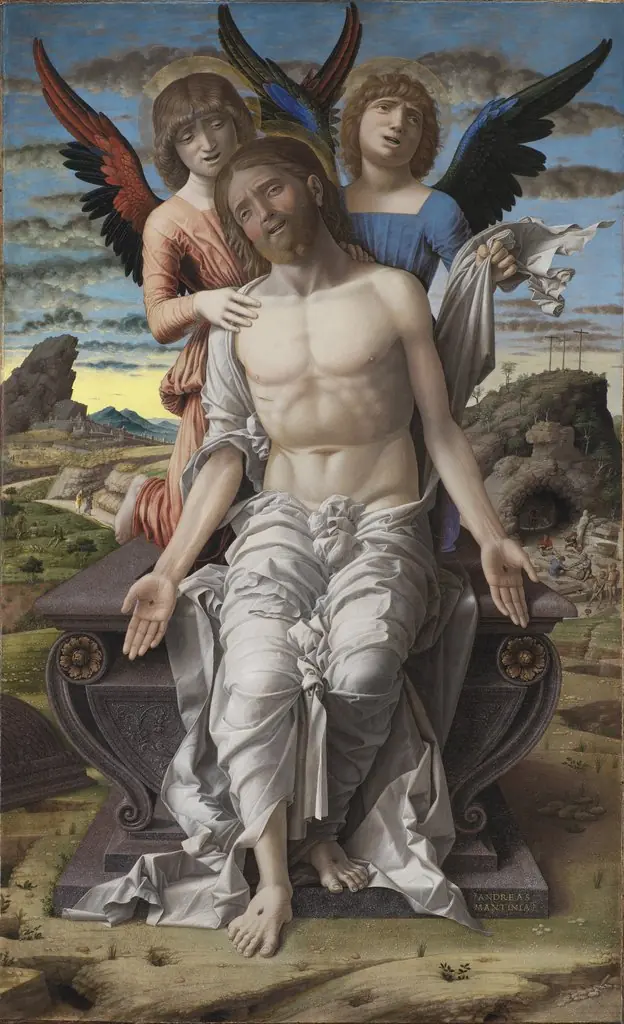 Christ as the Suffering Redeemer
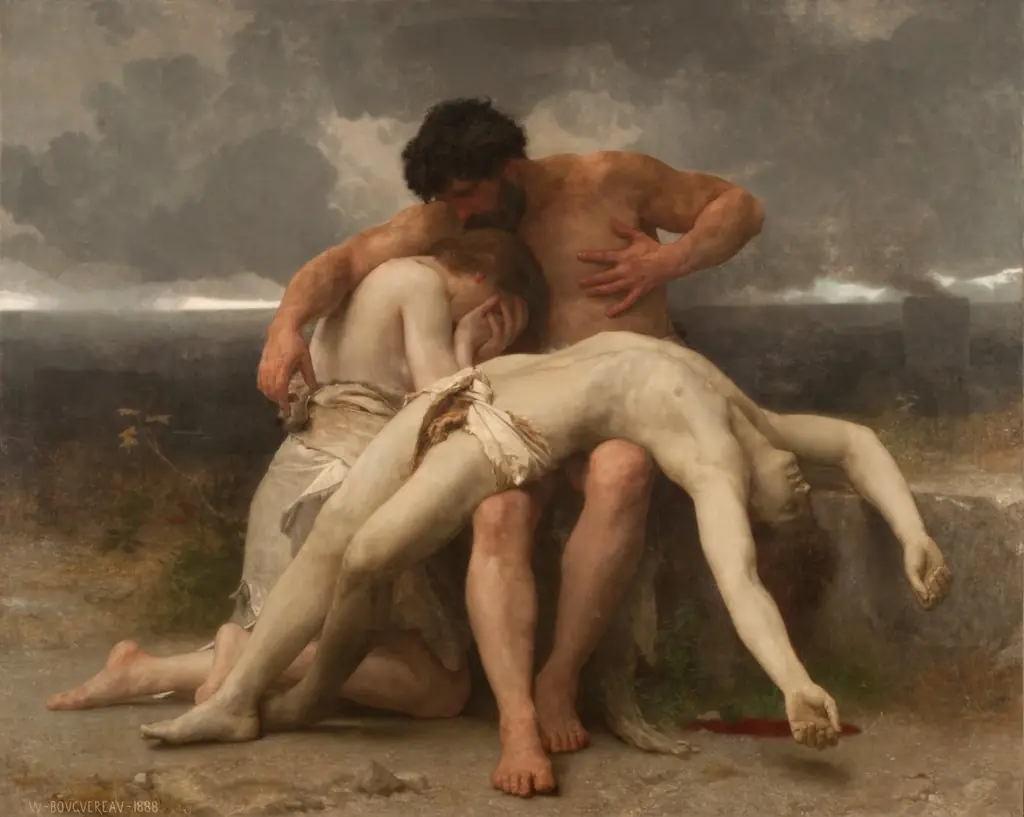 The First Mourning
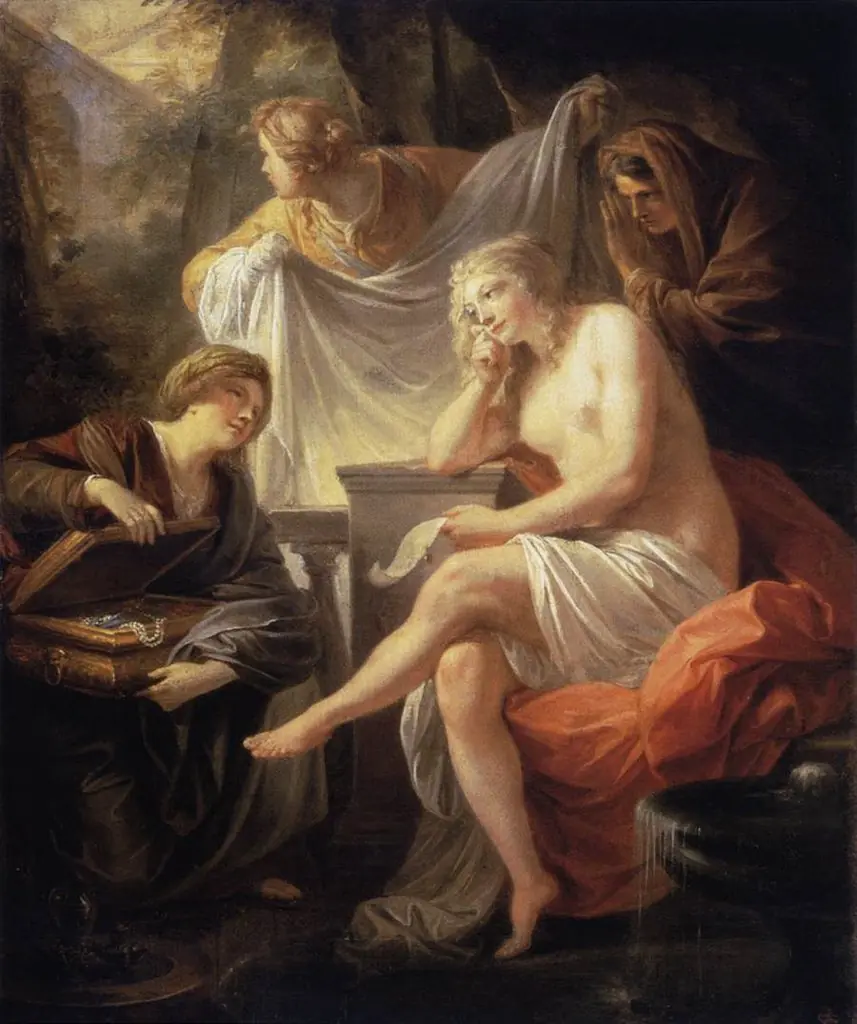 Bathsheba at her bath
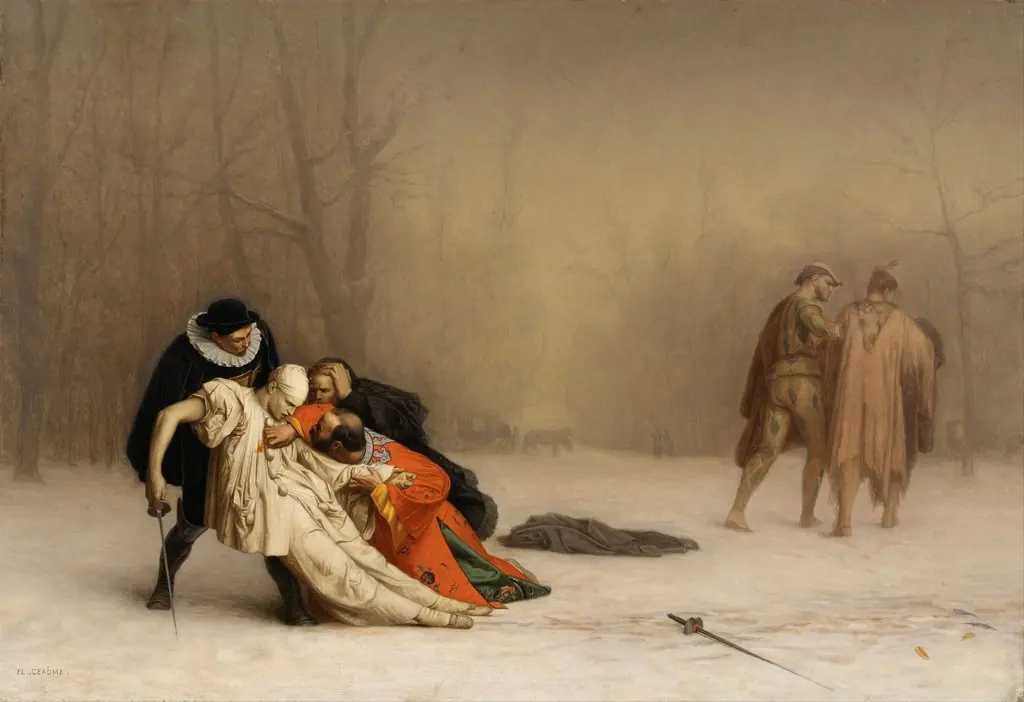 The Duel After the Masquerade
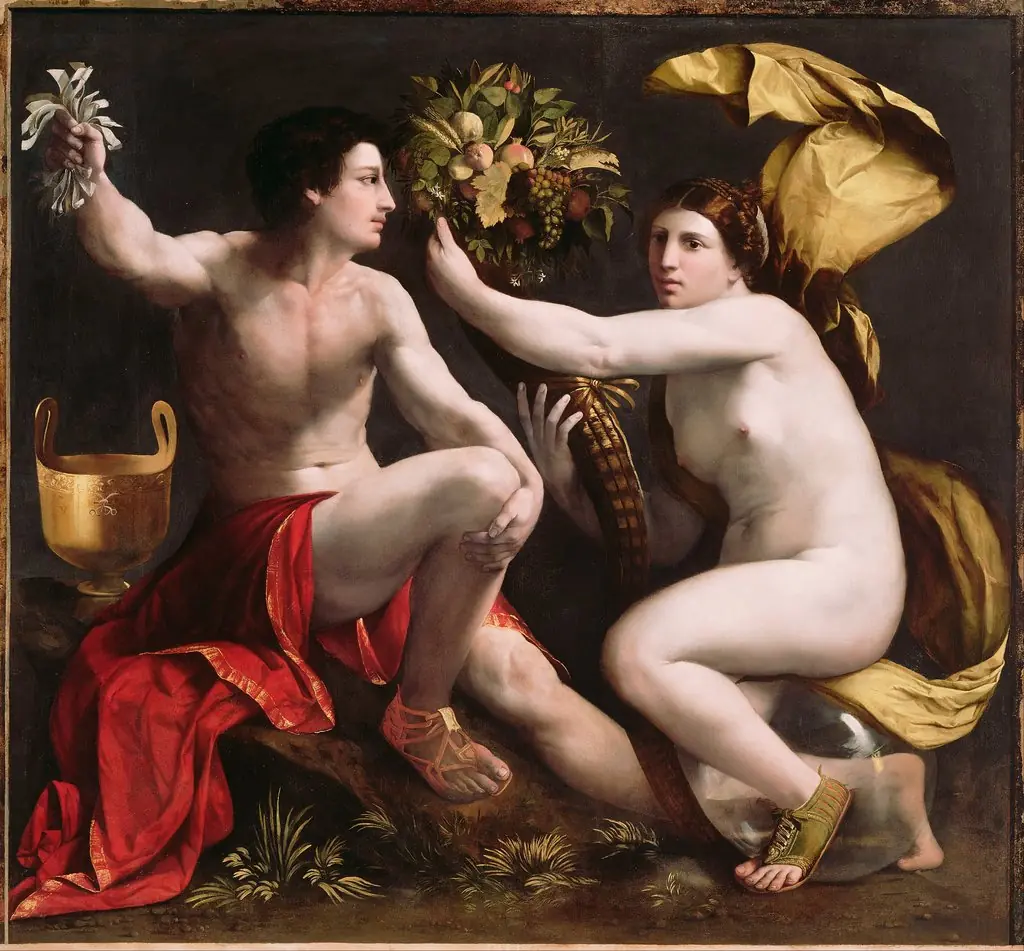 An Allegory of Fortune
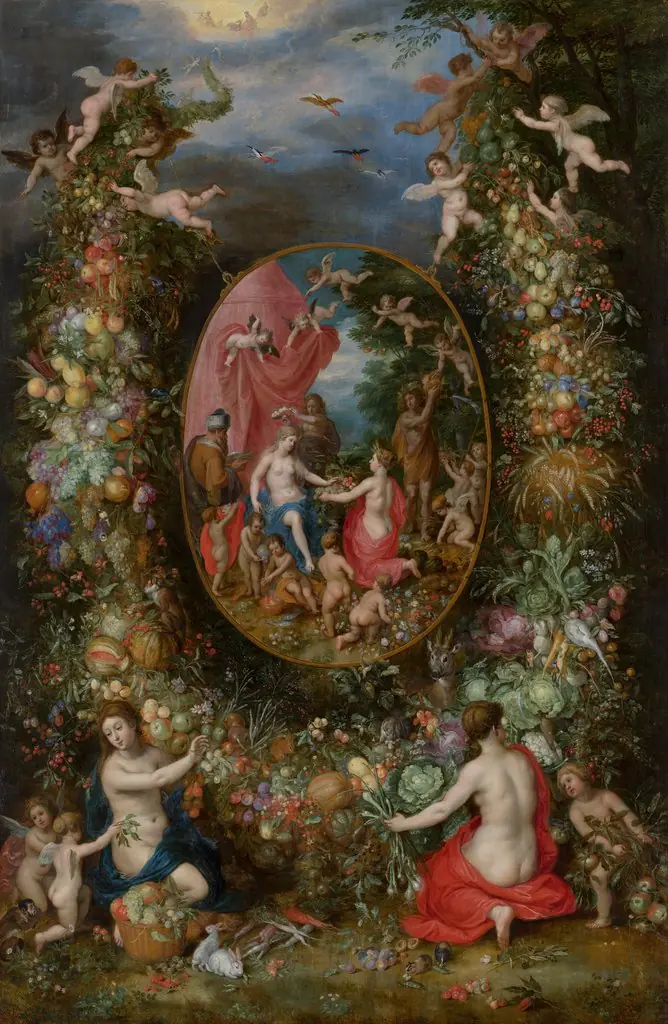 Garland of Flowers around an Allegory of Farming
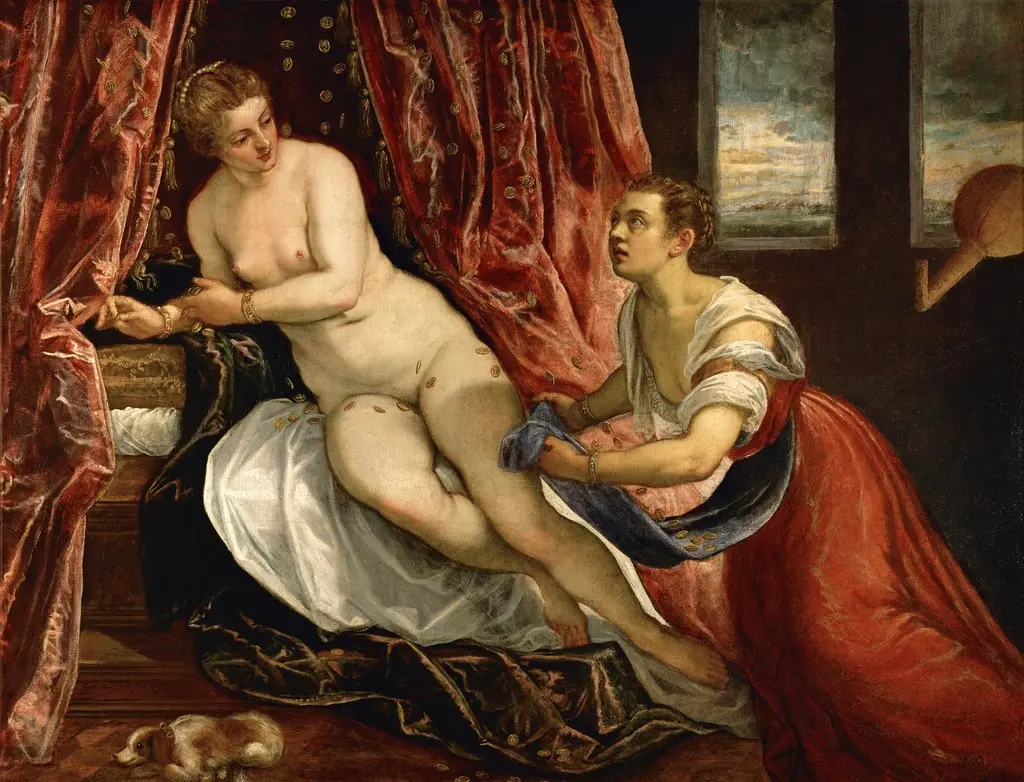 Danae
Danae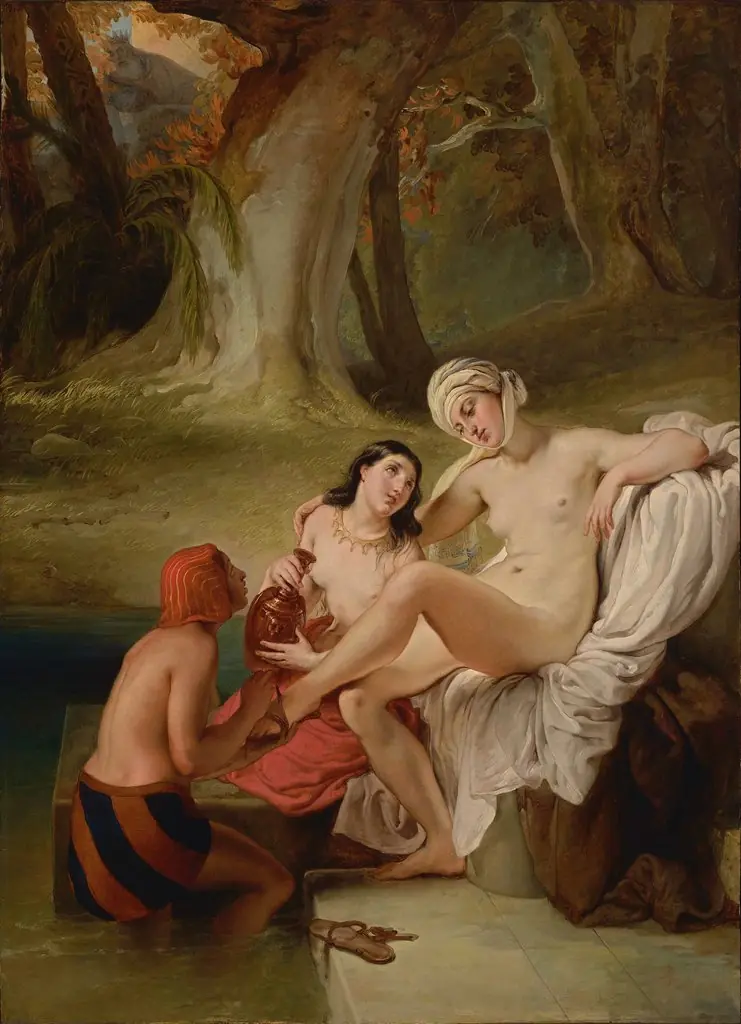 Bathsheba Bathing
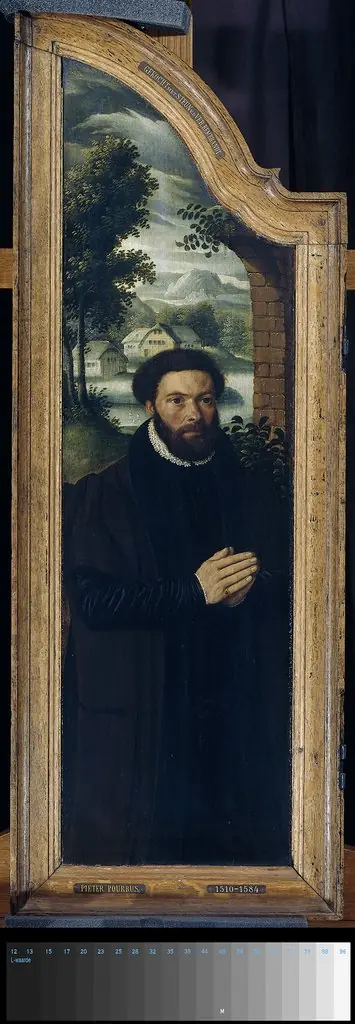 Wing of a Triptych with the Portrait of Julien de Brouckere
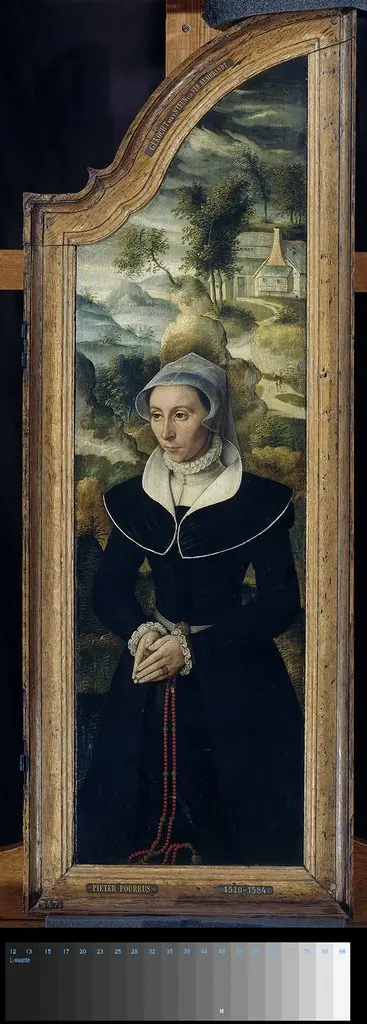 Wing of a Triptych with the Portrait of Elisabeth Canneel
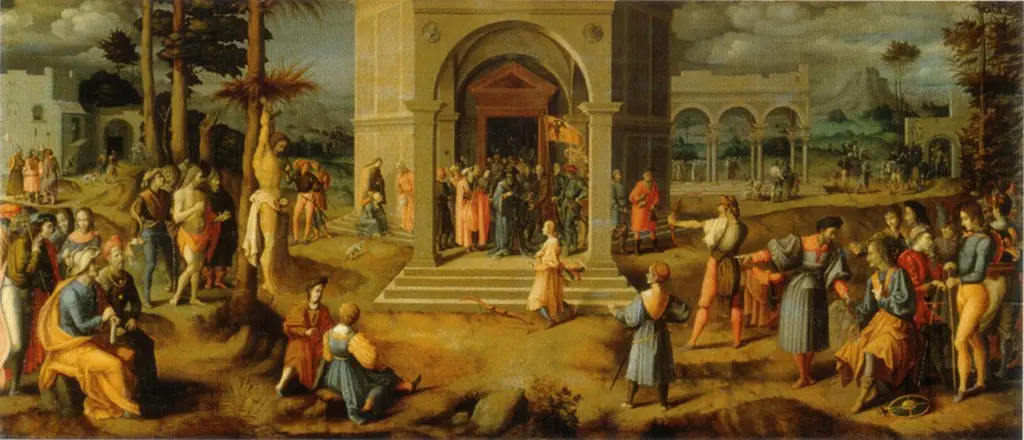 The Legend of the King's Sons
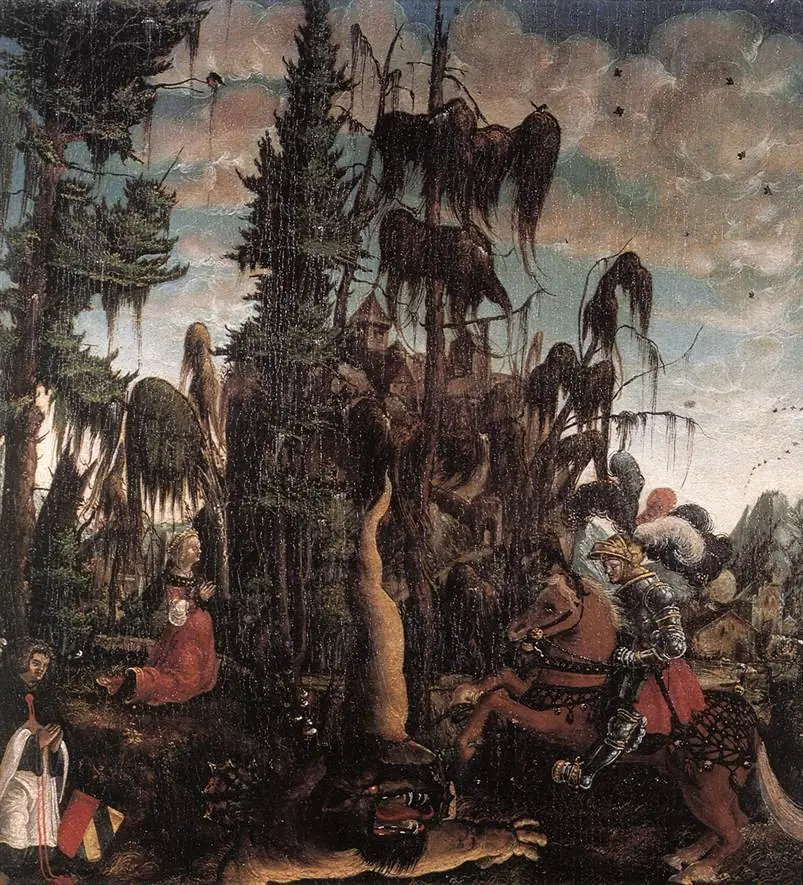 St George Freeing the Princess
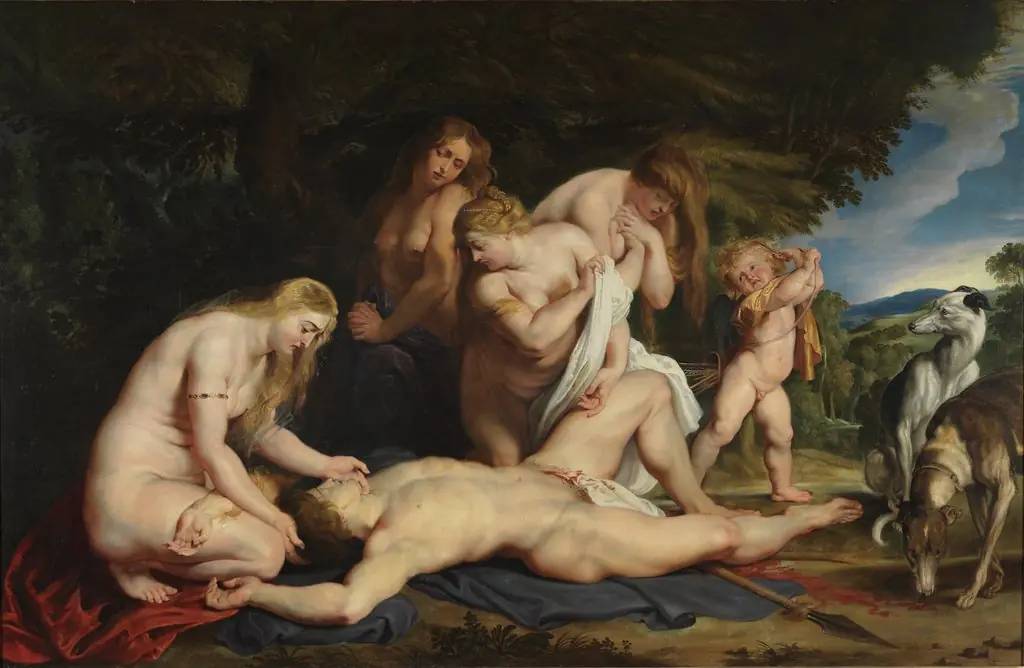 The Death of Adonis
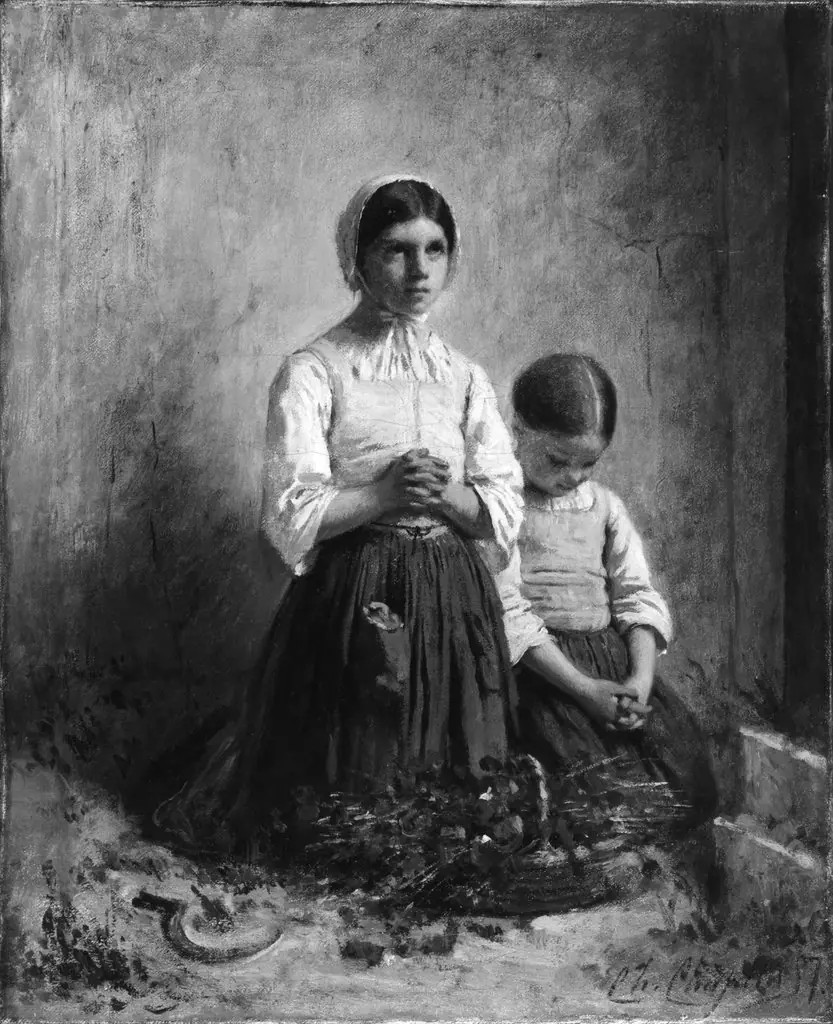 Devotion
 Landscape.
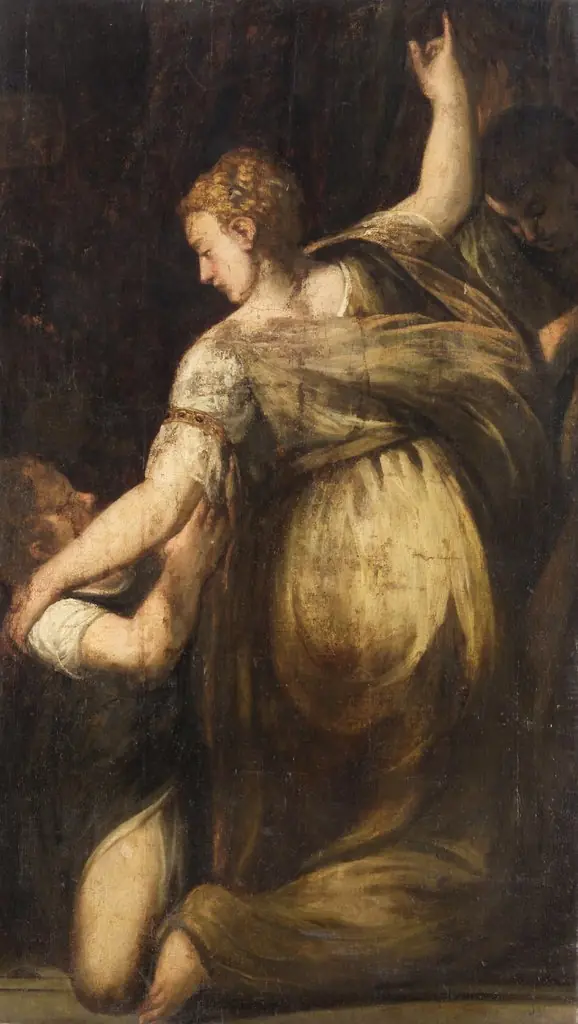 Kneeling Woman with Child
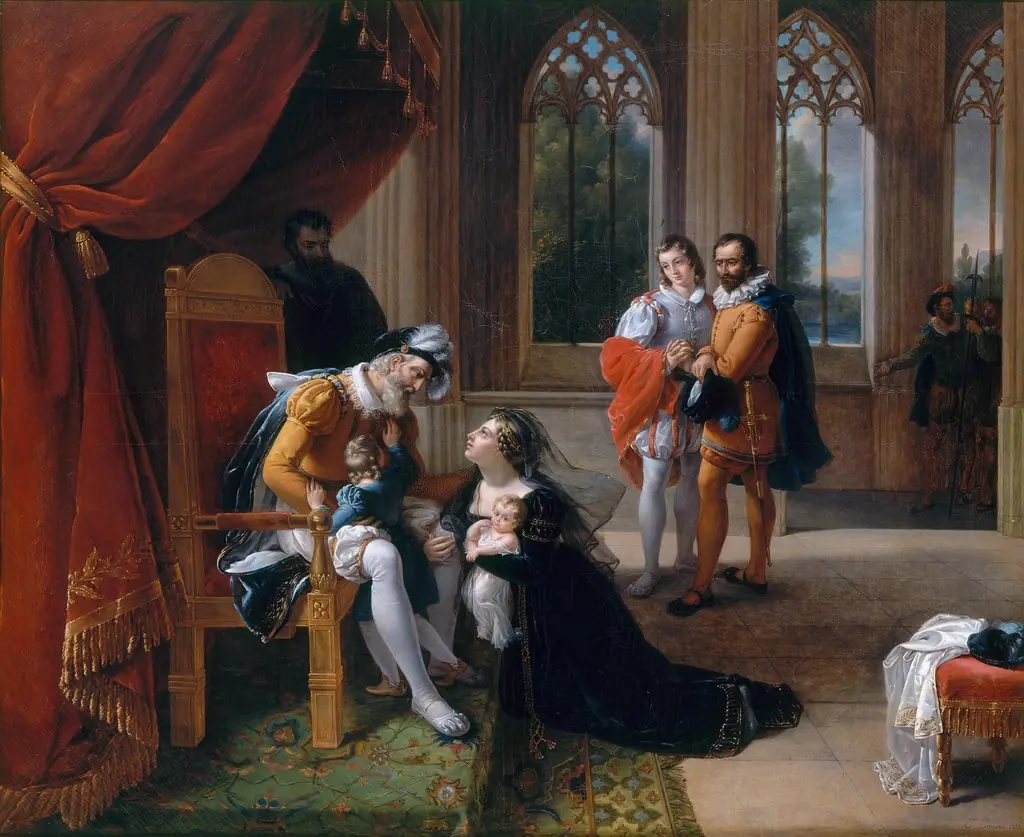 Inès de Castro and Her Children Throwing Themselves at the Feet of King Alphonso IV of Portugal
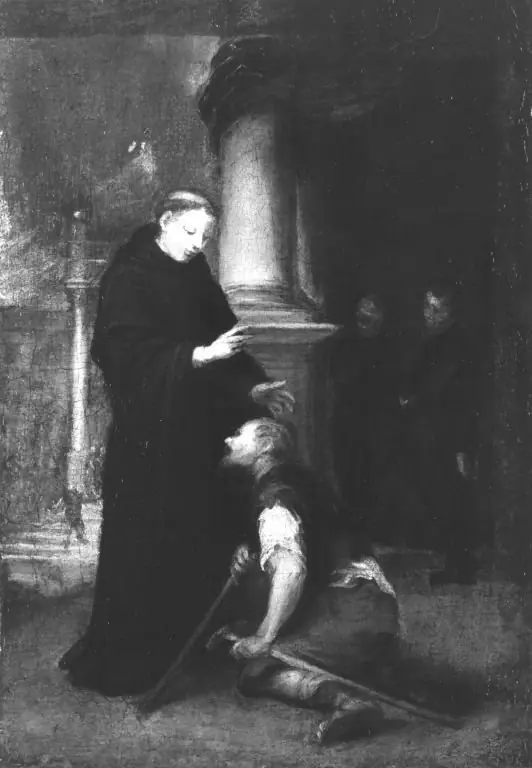 Der hl. Thomas von Villanueva heilt einen Lahmen (Skizze)
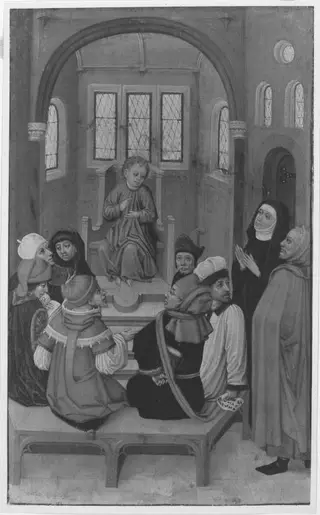 Der zwölfjährige Jesus im Tempel
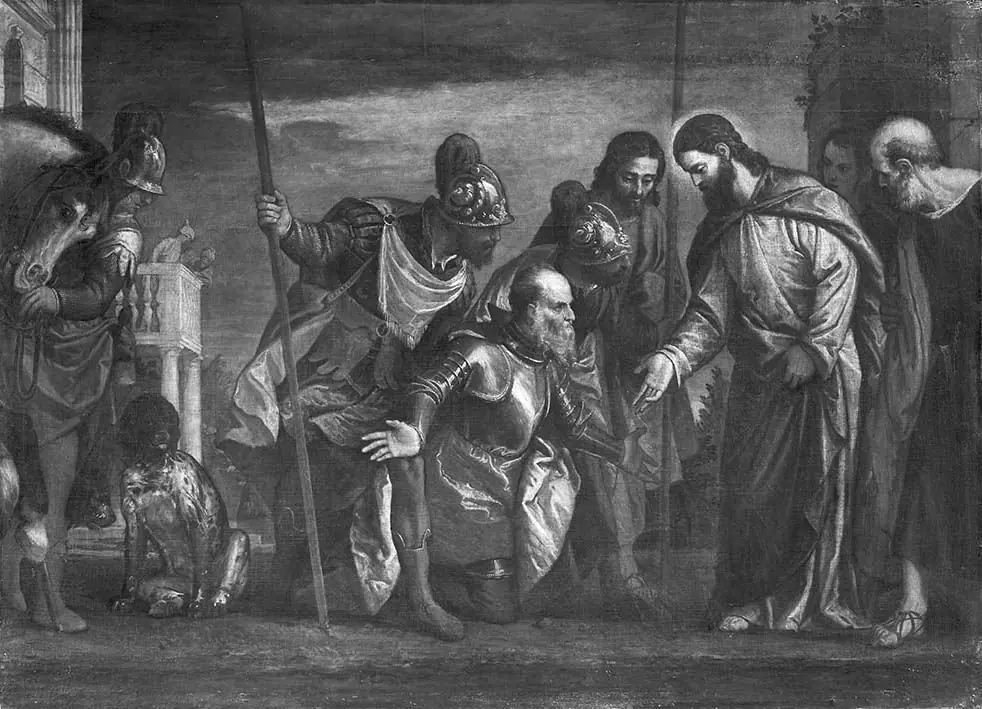 Christ and the Centurion
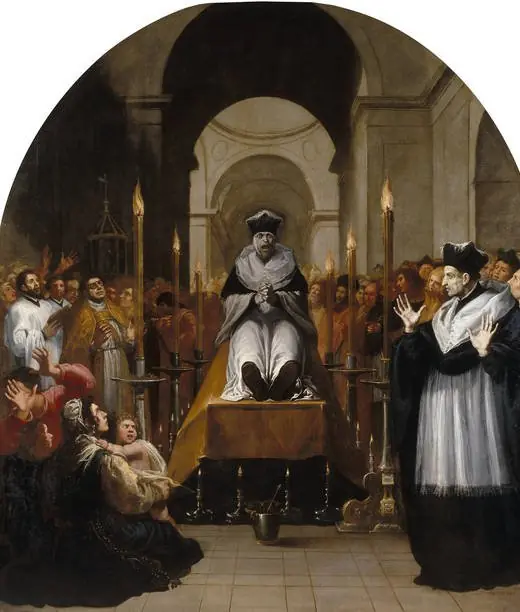 Saint Bruno’s Conversion before the Body of Diocrès
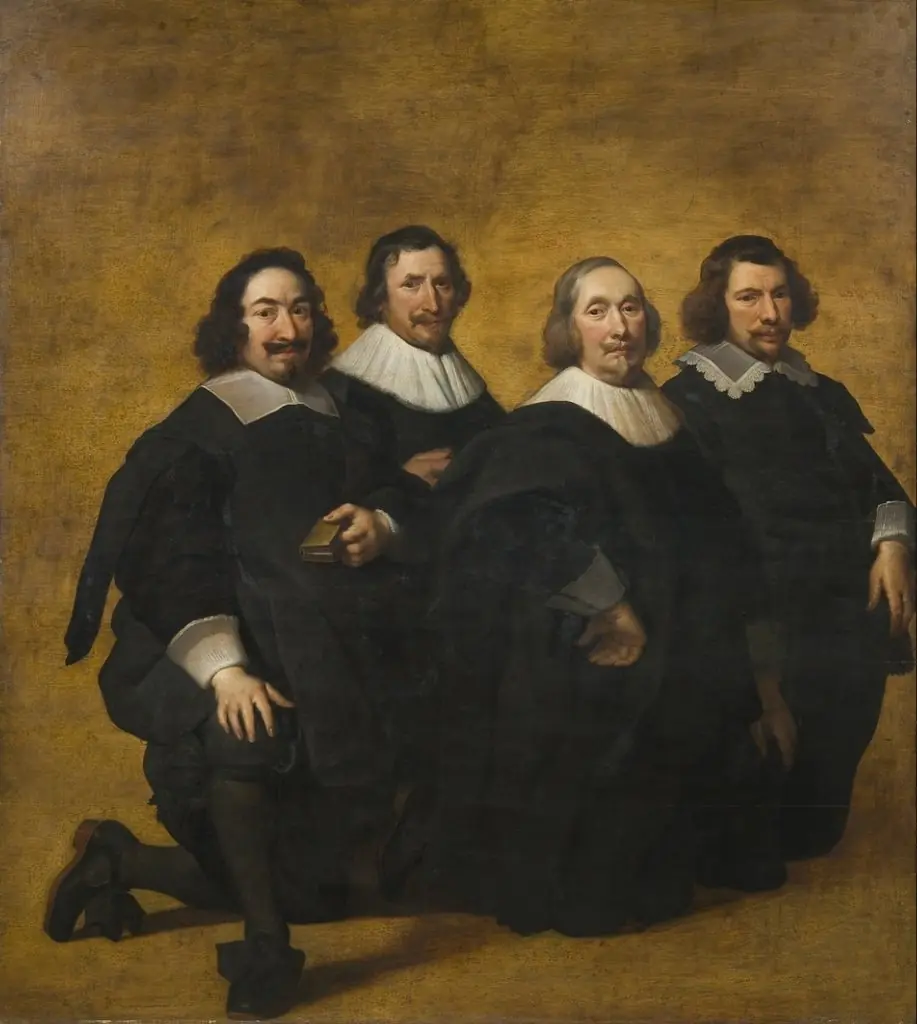 Portrait of four kneeling men
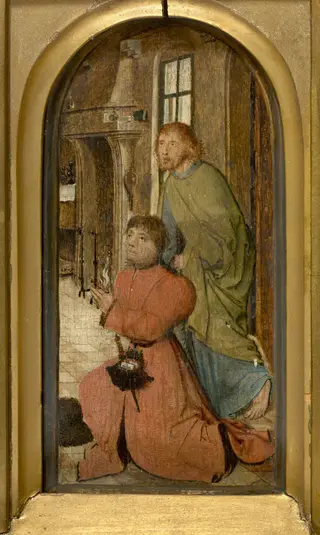 Donor and his Patron, Saint Simon Zelotes
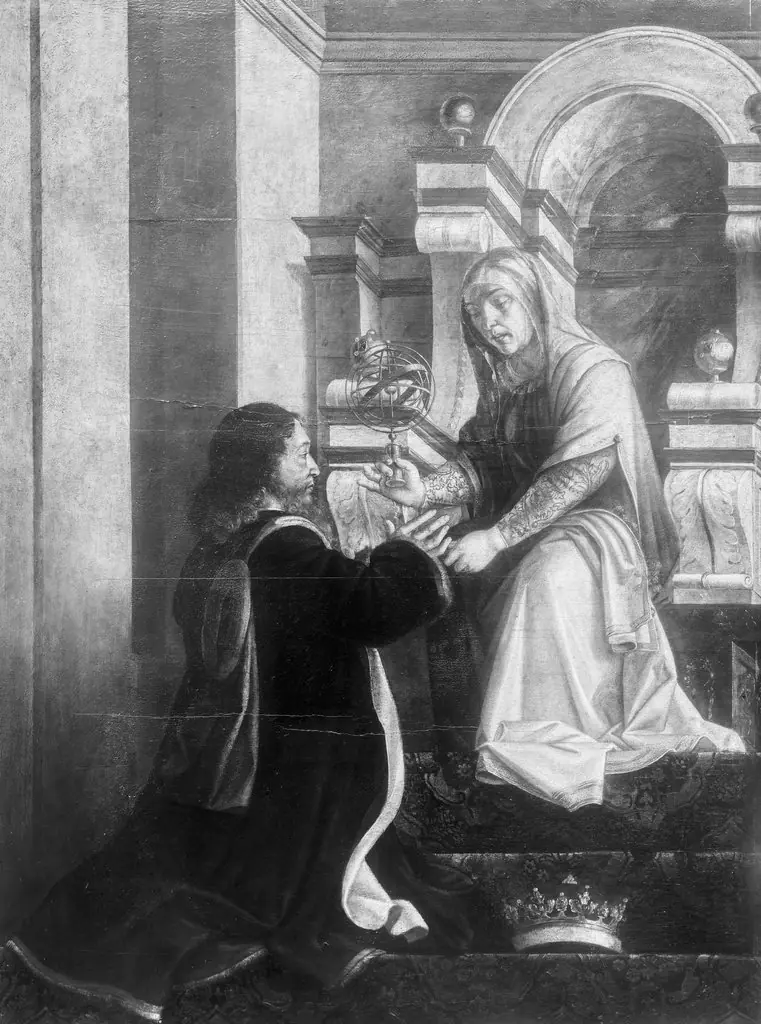 The astronomy
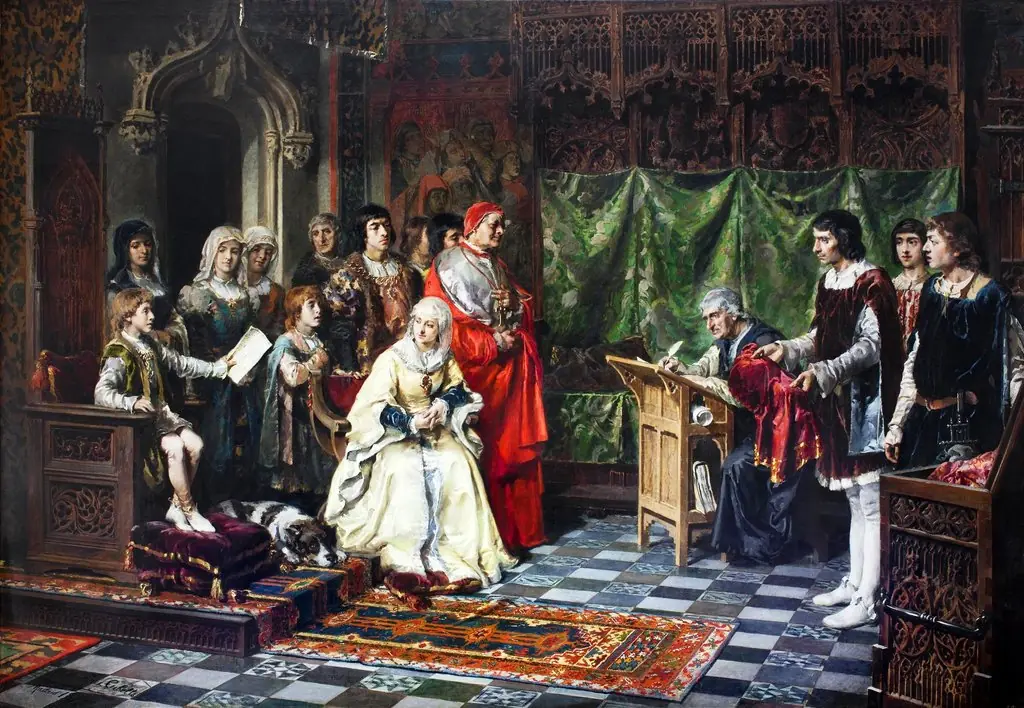 Educación del príncipe don Juan
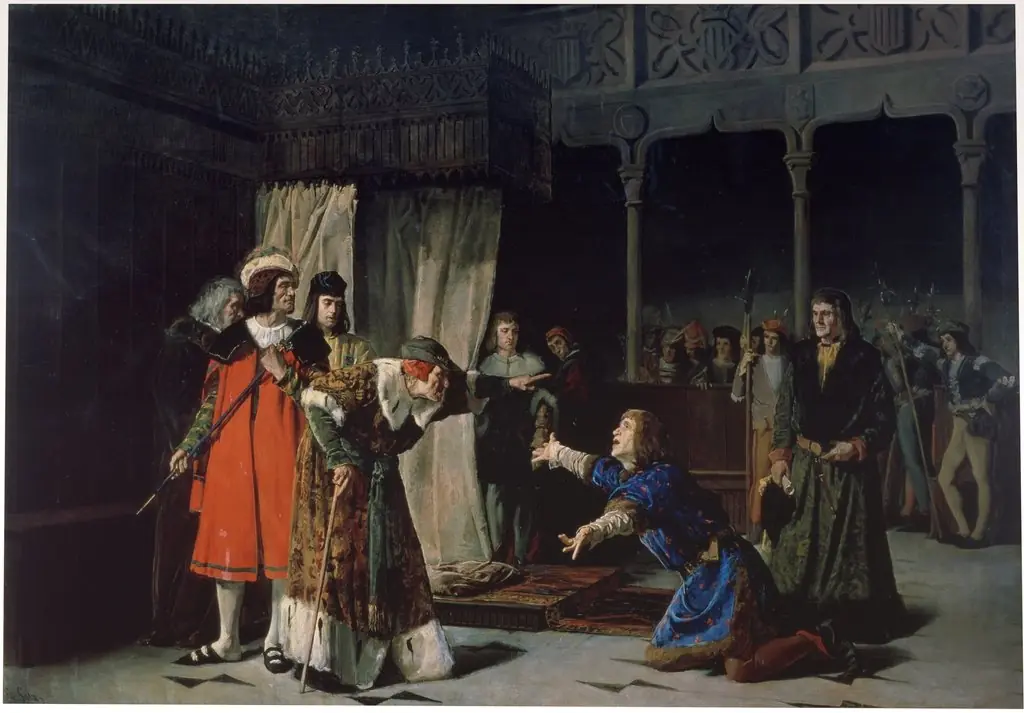 La prisión del príncipe de Viana
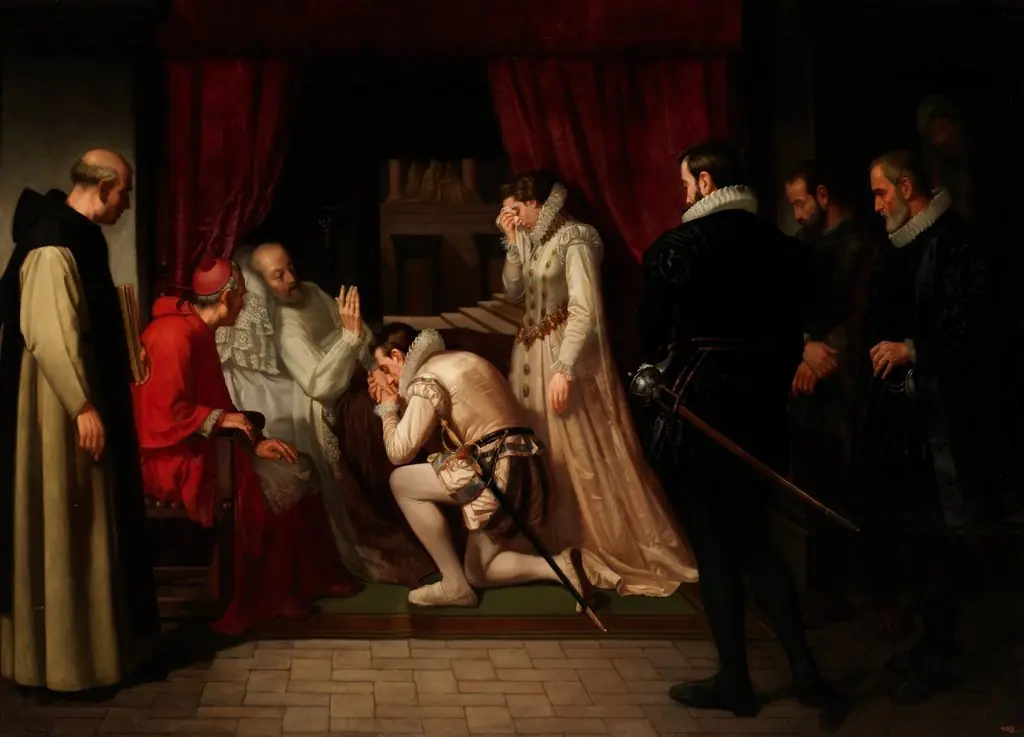 Últimos momentos de Felipe II
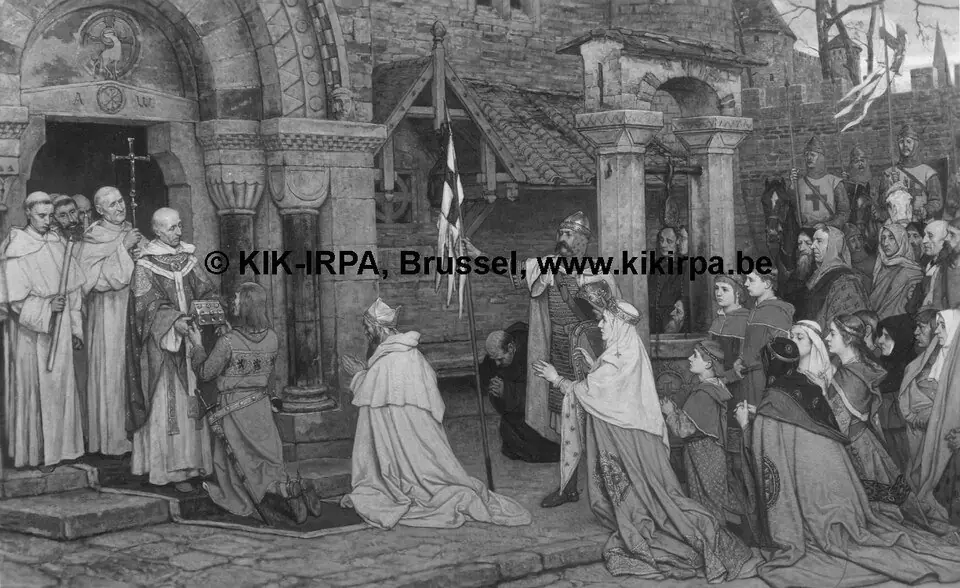 Thierry of Alsace Brings the Holy Blood to Bruges
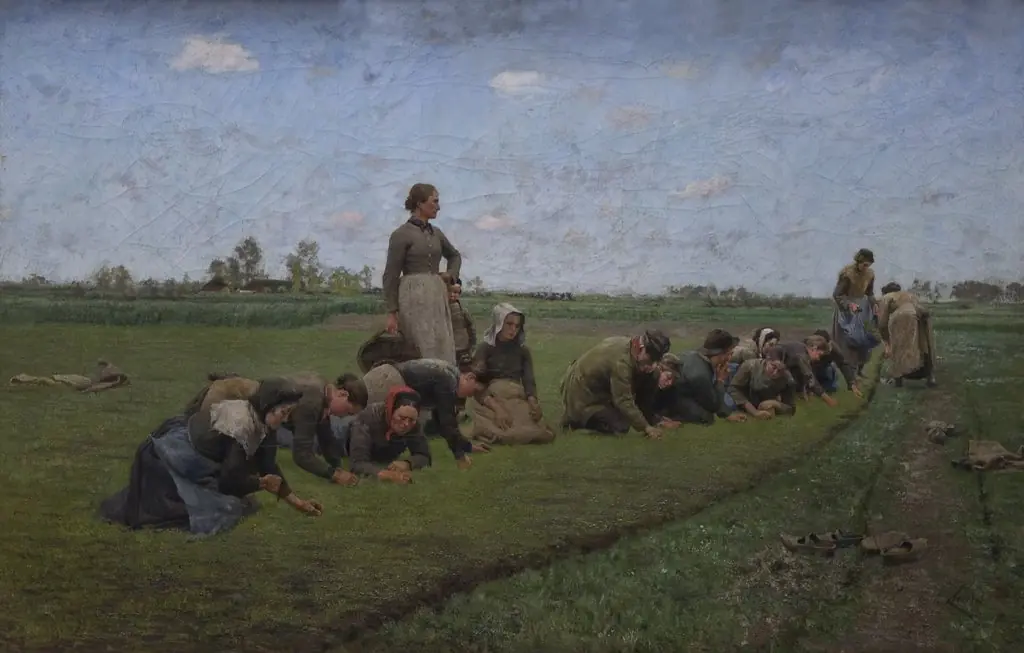 Flaxweeding in Flanders
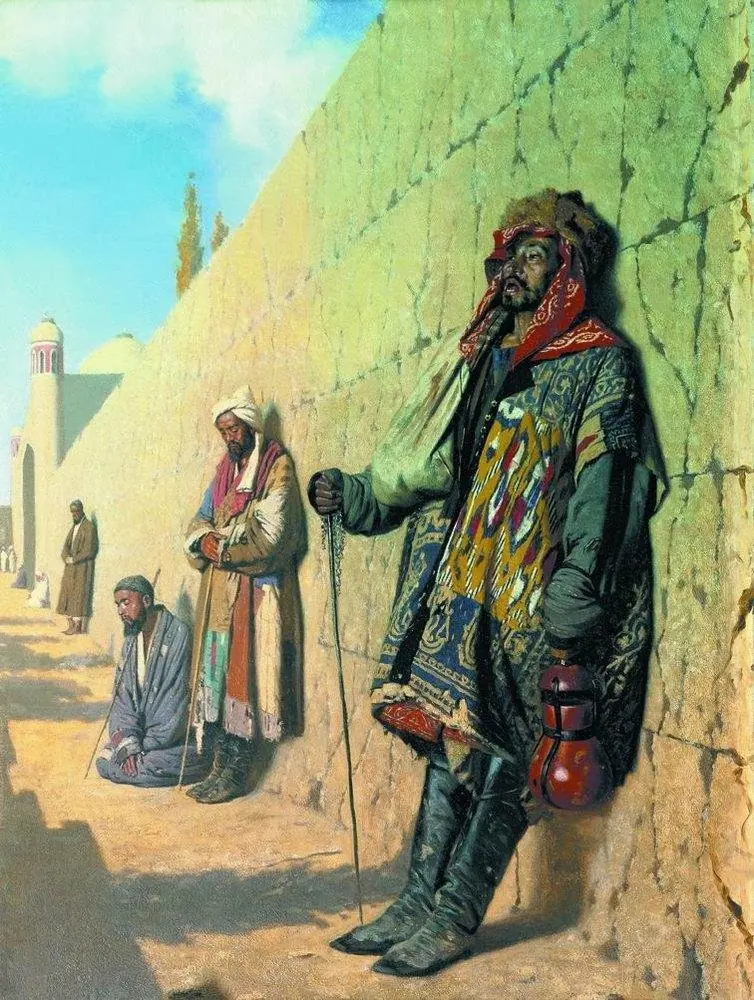 Beggars in Samarkand
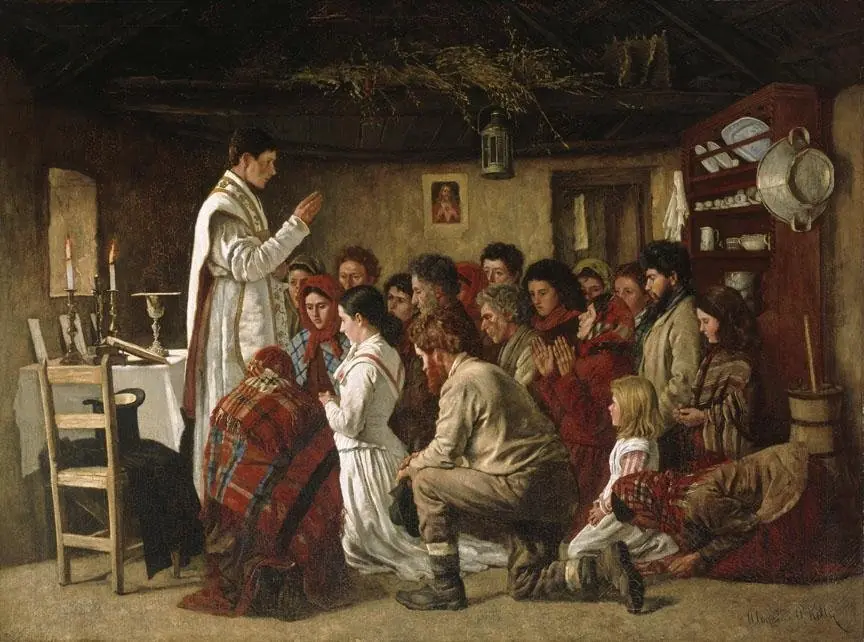 Mass in a Connemara Cabin
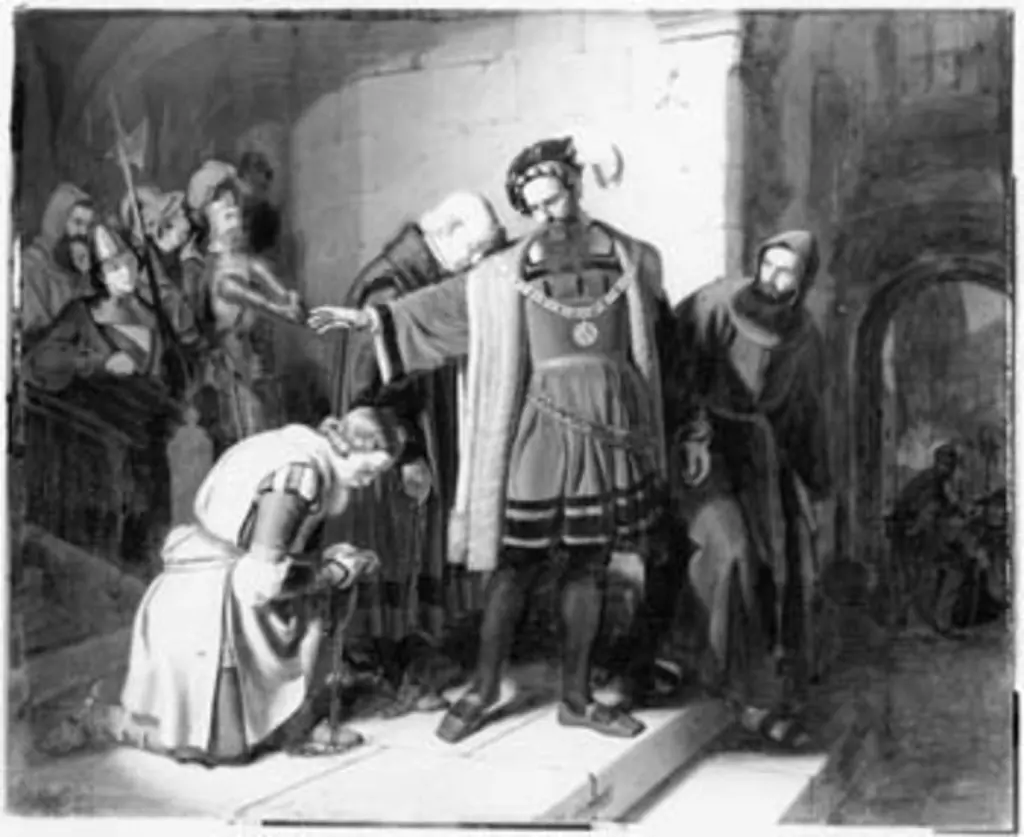 Bürgermeister Waldmanns Abschied von seinen Mitgefangenen
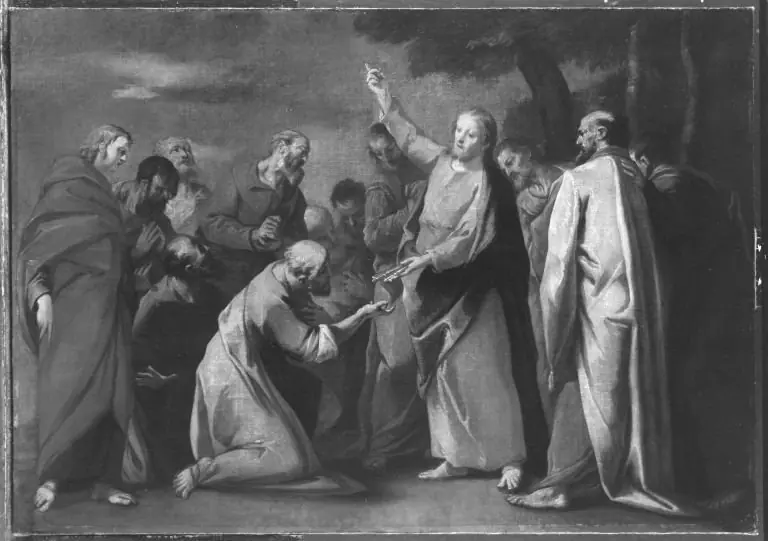 Schlüsselübergabe an Petrus
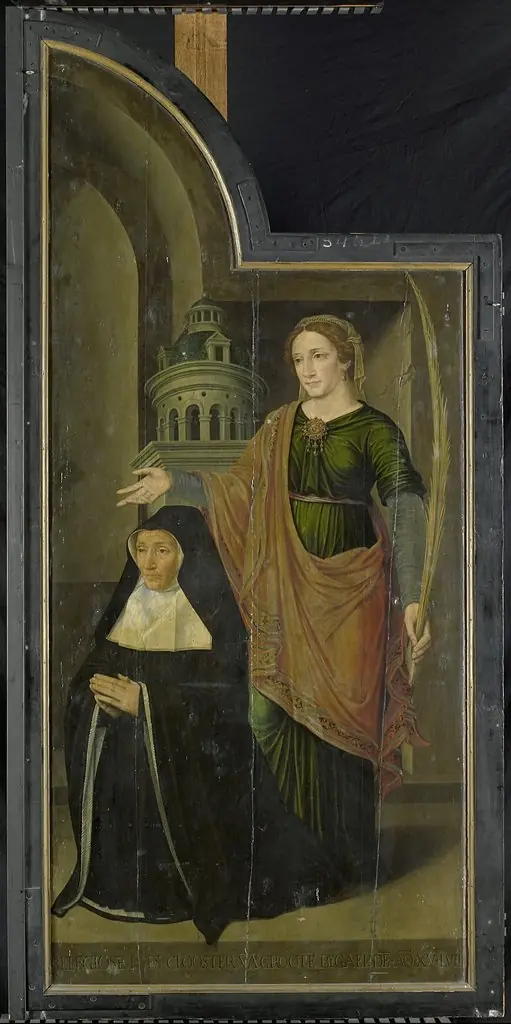 De knielende stichteres Berbel of Barbara van der Noot met de heilige Barbara, rechter paneel van een drieluik (dicht)
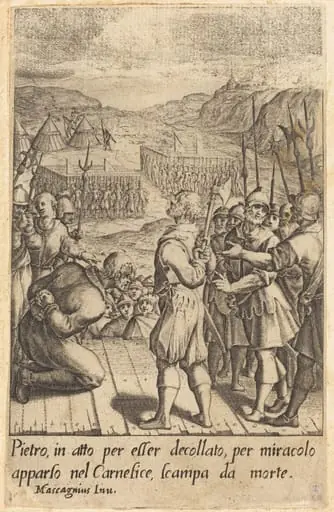 The Hangman
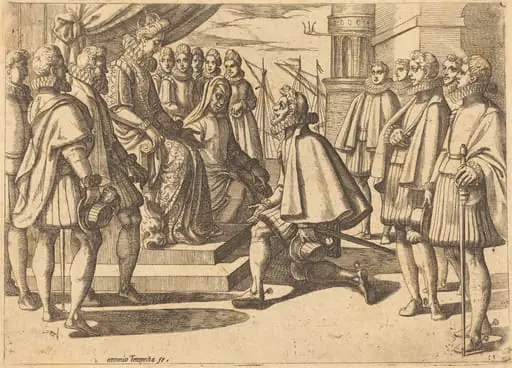 Spanish Duke before Margaret of Austria
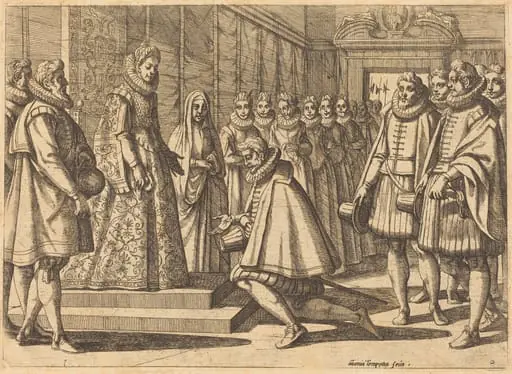 Philip of Spain before Margaret of Austria
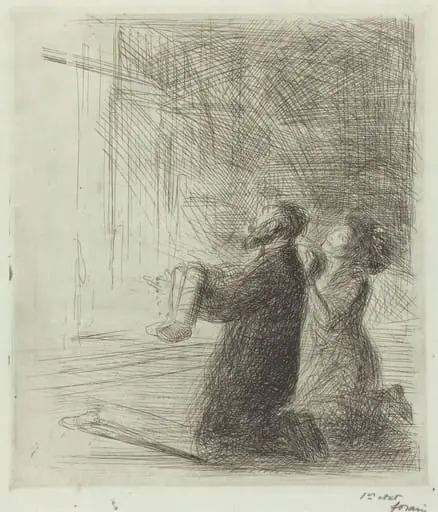 Lourdes, l'imploration devant la Grotte (4e planche) (Lourdes, Imploring before the Grotto) (fourth plate)
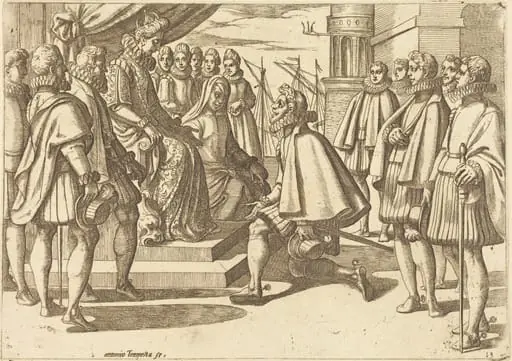 Spanish Duke before Margaret of Austria
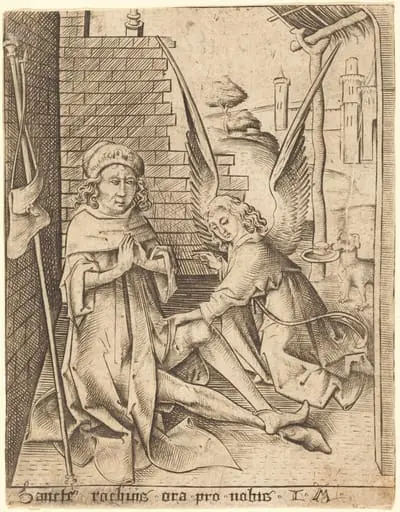 Saint Roch
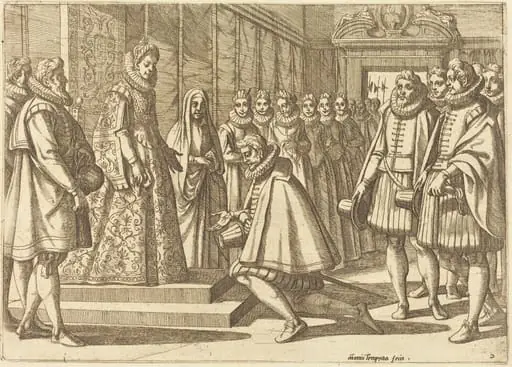 Philip of Spain Before Margaret of Austria
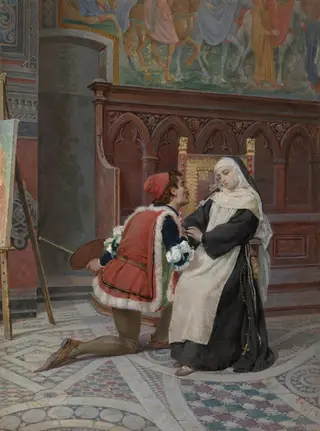 A Painter and His Model
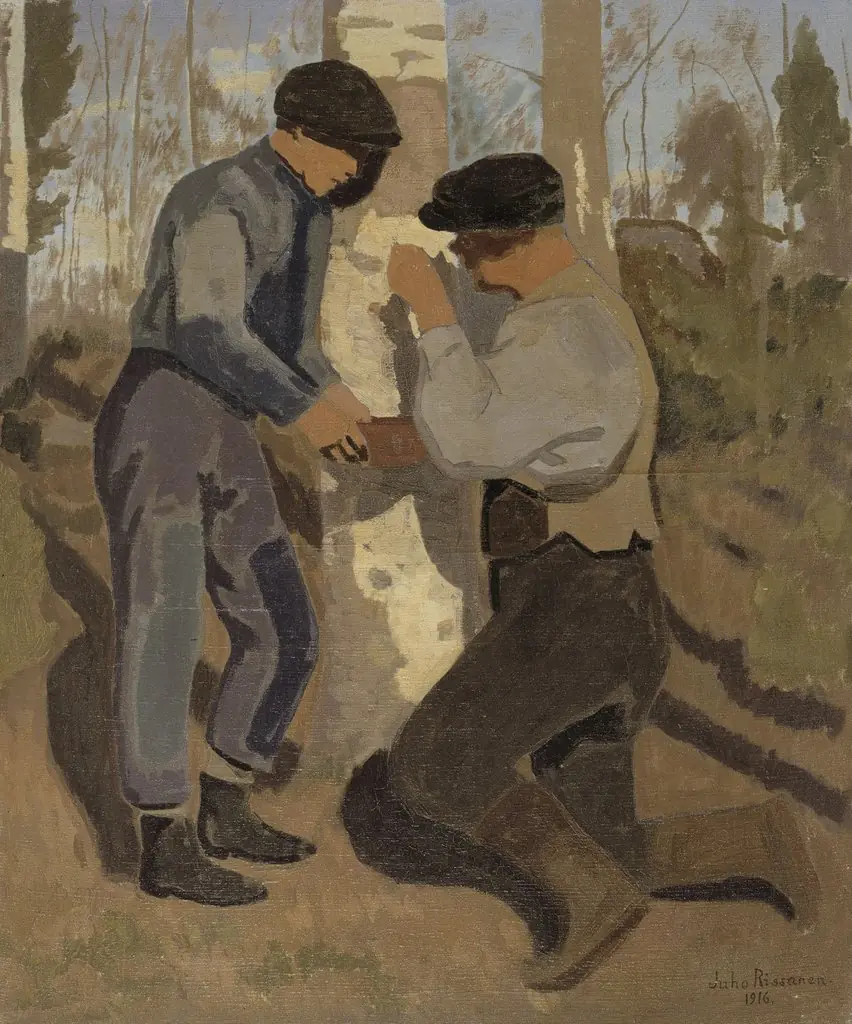 Draining the Sap
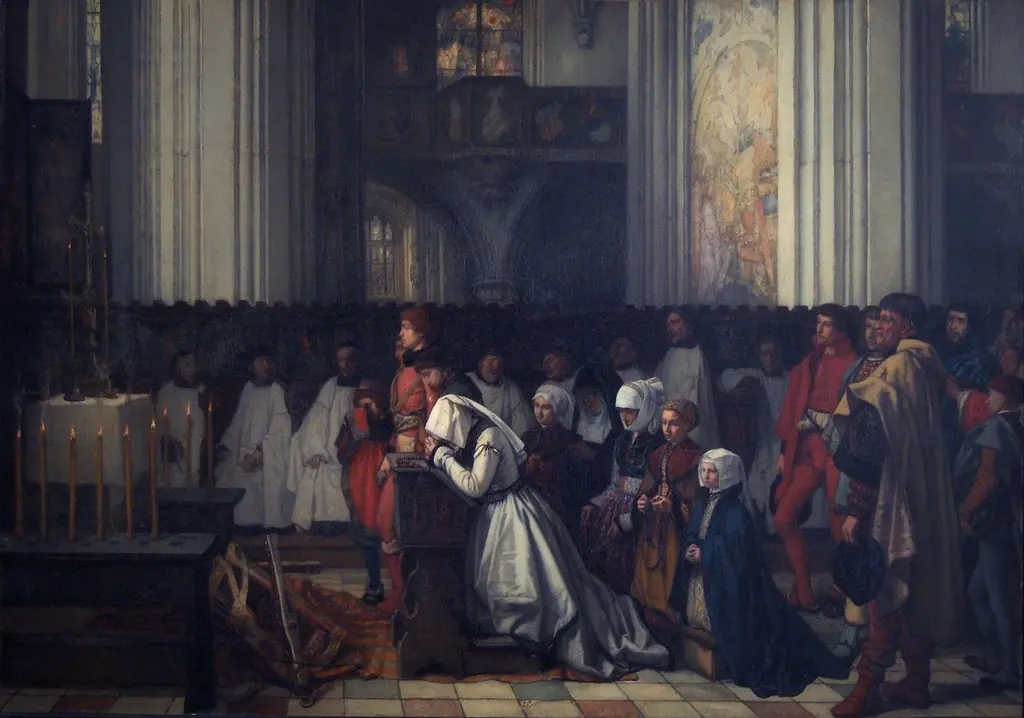 The Trental Mass for Berthal de Haze
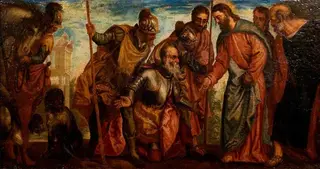 Christ and the Centurion (Matthew 8:5)
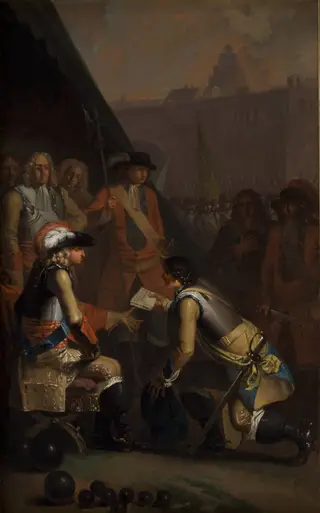 Magnus Stenbock Surrenders the Fortress of Tønningen to Frederik IV in 1714
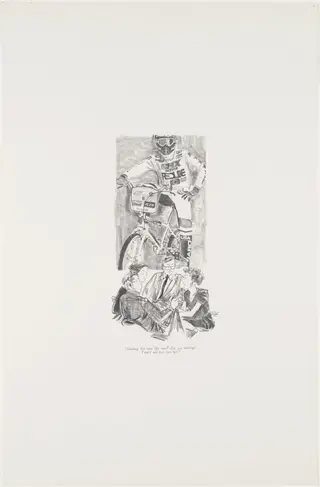 Untitled
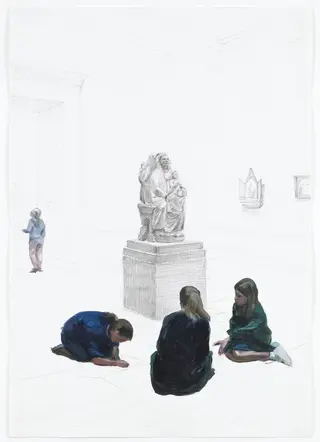 Untitled
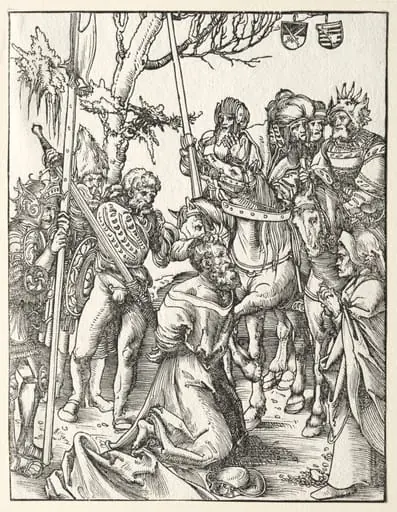 Martyrdom of St. James the Greater
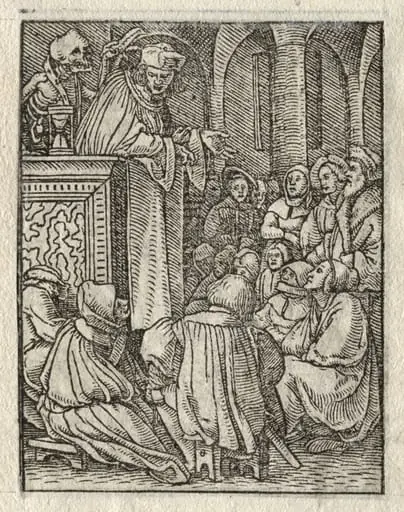 The Dance of Death: The Preacher; The Priest
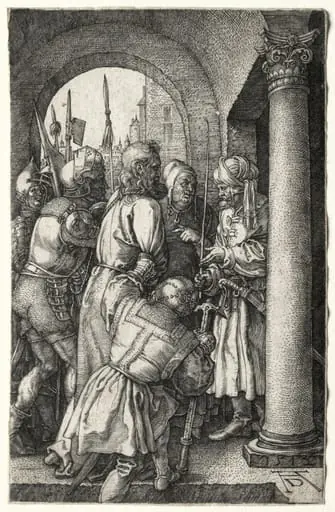 Christ Taken before Pilate
Frequently asked questions
What is Kneeling?
Kneeling is a basic human position where one or both knees touch the ground.
How many Kneeling works does Artifact World Gallery have?
Artifact World Gallery holds 61 public-domain Kneeling works, all free to view and download.
Who are the key Kneeling artists?
Key Kneeling artists in the collection include Titian, Paolo Veronese and Raphael.
Where can I see Kneeling works?
Kneeling works in the collection are held by National Gallery of Art, Museo del Prado and Rijksmuseum.