Artwork
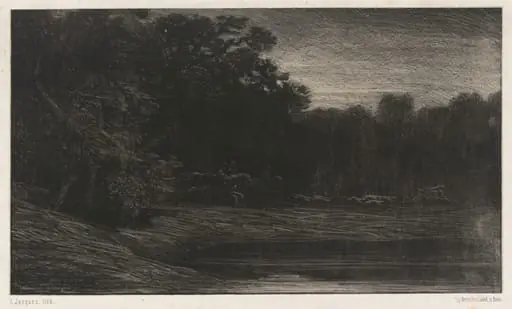
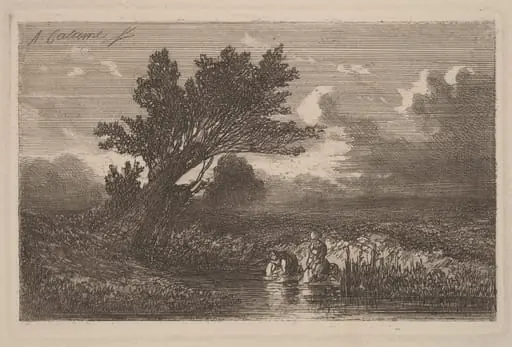
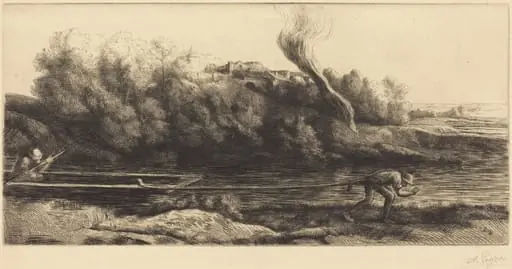
Le Paysage au Bâteau
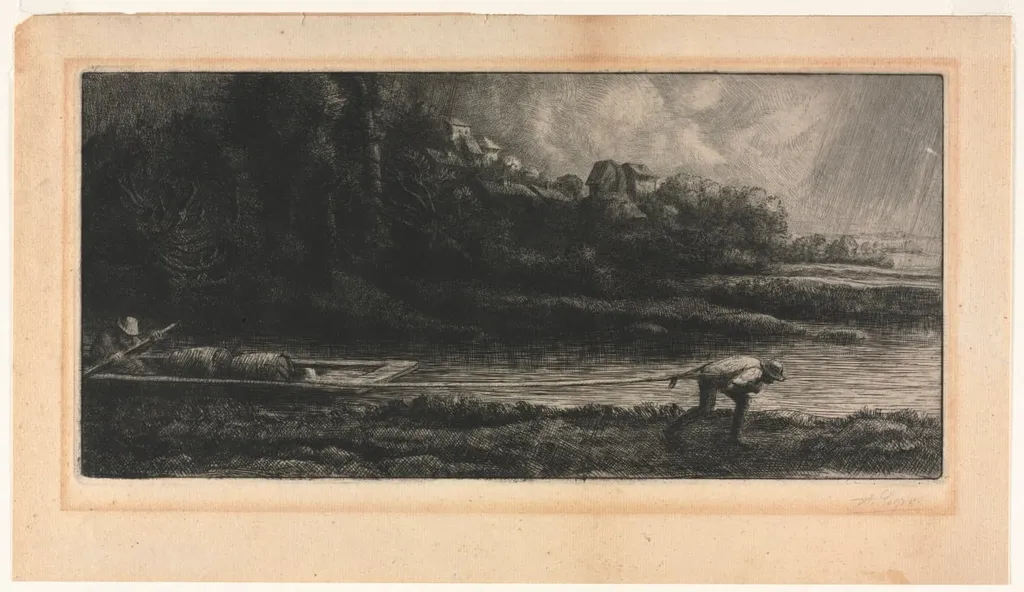
Le Paysage au Bâteau is a print by the Impressionist artist Alphonse Legros. It dates from 1884 and is held in the collection of the Cleveland Museum of Art.
- Accession no.
- 1998.367
- Credit line
- Bequest of Gordon K. Mott
About this work
Overview
Le Paysage au Bâteau, a black-and-white print by Alphonse Legros (1884), depicts a serene riverside scene. The composition features a small boat near the shore, with one figure wading in the water, securing the boat, and another reclining inside. The backdrop includes treelined banks and hills under a somber sky.
Subject & Meaning
The subject of Le Paysage au Bâteau is a tranquil, everyday riverside moment, emphasizing quiet human interaction with nature. The scene conveys a sense of calm and possibly the mundane aspects of rural life.
Technique & Style
Legros employed deep shadows and intricate line work to achieve depth and stillness in the print. This approach aligns with tendencies in 19th-century French Realist art, which often emphasized detailed, observant depictions of common life and landscapes.
History & Provenance
Created in 1884, Le Paysage au Bâteau is part of The Cleveland Museum of Art's collection.
Artist & collection

Artist
Alphonse Legros (French pronunciation:; 8 May 1837 – 8 December 1911) was a French, later British, painter, etcher, sculptor, and medallist.