Artwork
The Good Samaritan
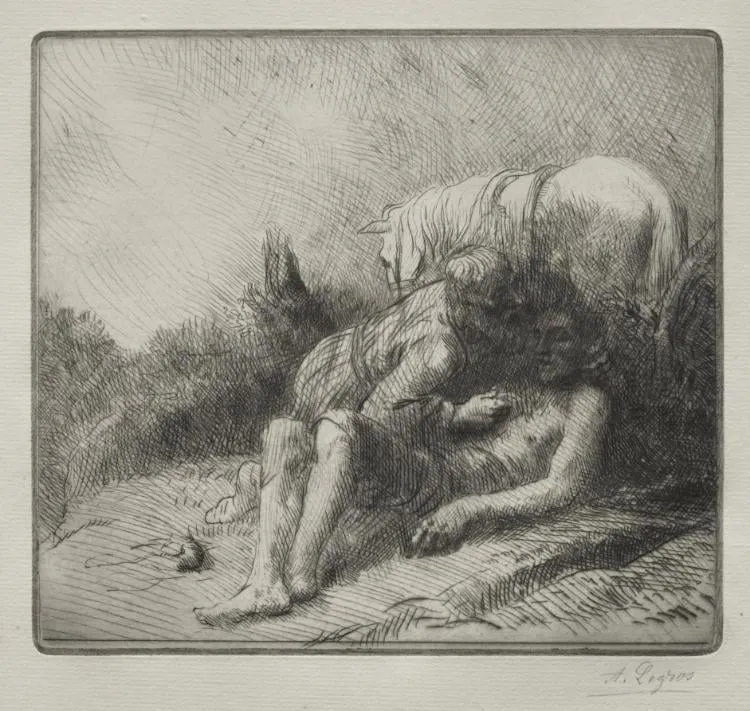
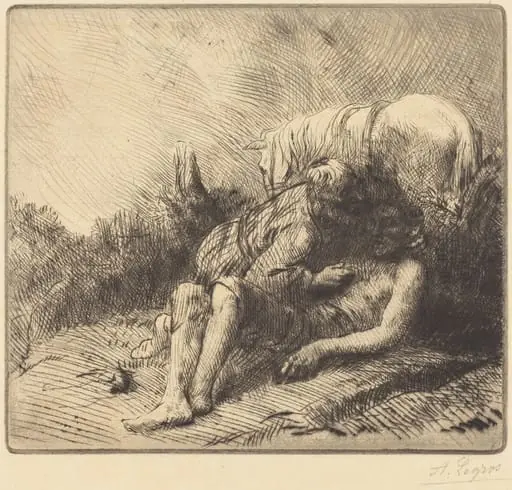
The Good Samaritan is a print by the Impressionist artist Alphonse Legros. It dates from 1884 and is held in the collection of the Cleveland Museum of Art.
- Accession no.
- 1920.604
- Credit line
- Gift of Ralph King
About this work
Overview
The Good Samaritan, a print by Alphonse Legros from 1884, is part of The Cleveland Museum of Art's collection. The work depicts a poignant scene of assistance along a pathway.
Subject & Meaning
The print illustrates a moment of aid, with a kneeling figure tending to a injured person lying on the ground, arm outstretched. The kneeling figure's averted face maintains anonymity, emphasizing the act over the individual.
Technique & Style
Characterized by quick, scratchy lines in the background and expressive shading, the work showcases Legros' Realist approach, capturing everyday humanity with textured, nuanced renderings of clothing and skin.
History & Provenance
Created in 1884, the print is now housed at The Cleveland Museum of Art, with its provenance reflecting Legros' contribution to late 19th-century European art.
Context
Aligned with the Realist movement, the piece focuses on a relatable, everyday scene of human compassion, diverging from idealized or romanticized subjects.
Artist & collection

Artist
Alphonse Legros (French pronunciation:; 8 May 1837 – 8 December 1911) was a French, later British, painter, etcher, sculptor, and medallist.

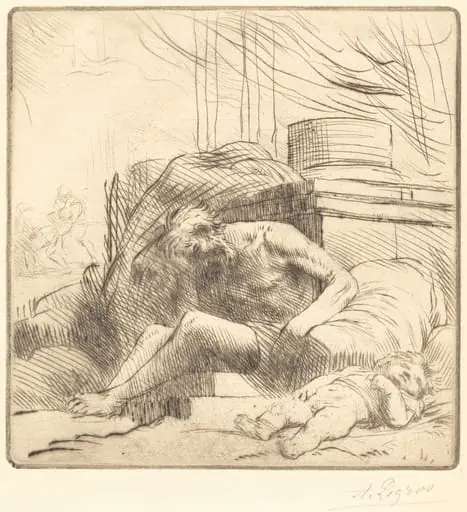 Victim of a Fire (Victime d'un incendie)
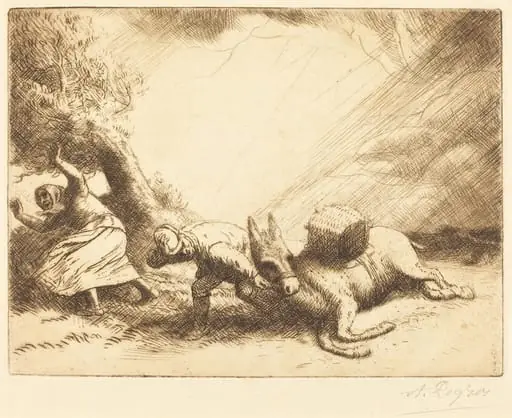 Donkey Upset by Storm (L'ane renverse par la foudre)
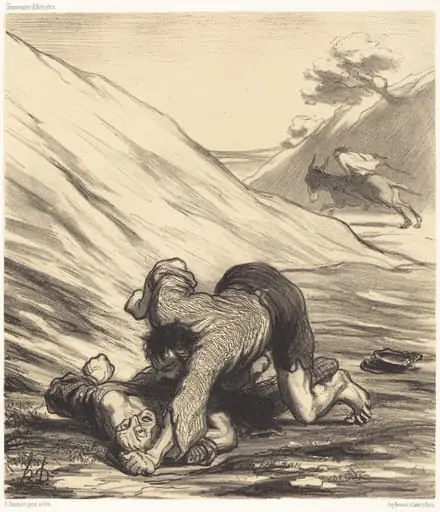 L'Ane et les deux voleurs
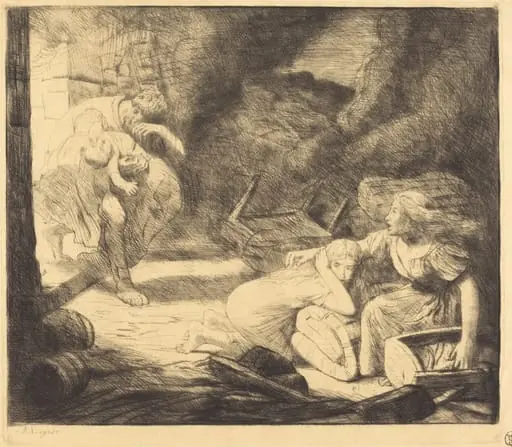 The Fire, 2nd plate (L'incendie)
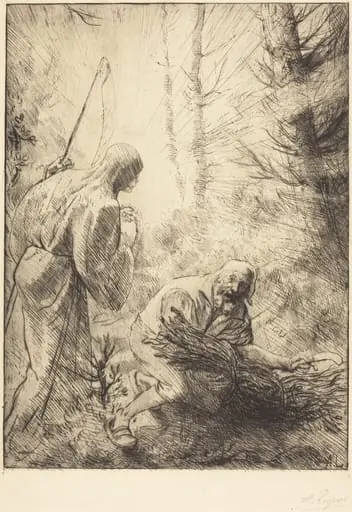 Death and the Woodcutter, 2nd plate (La mort et le bucheron)
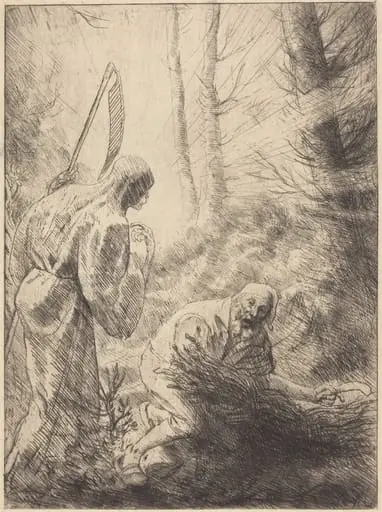 Death and the Woodcutter, 2nd plate (La Mort de le bucheron)
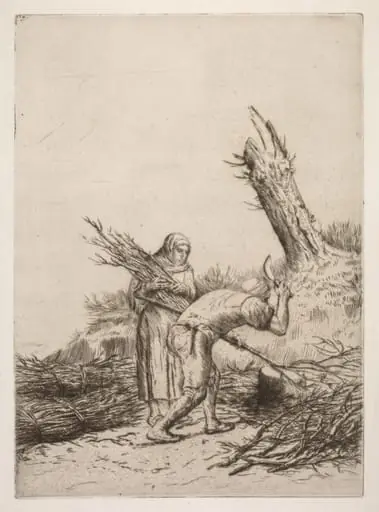 Les faiseurs de fagots
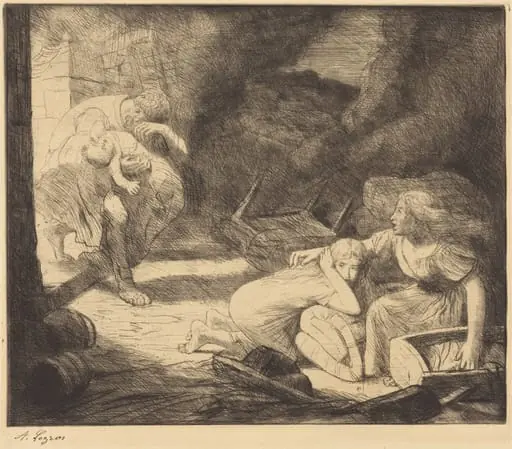 The Fire, 2nd plate (L'incendie)
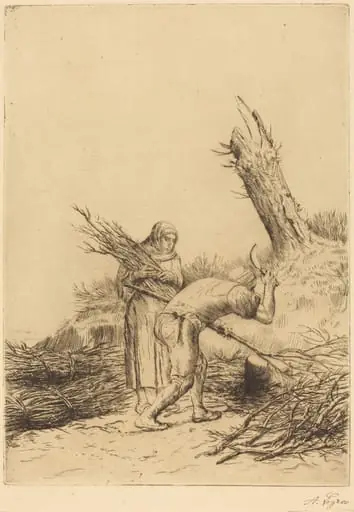 Fagot-makers (Les faiseurs de fagots)
 Nude Man Seated on the Ground with One Leg Extended