Artwork
Assumption of the Virgin
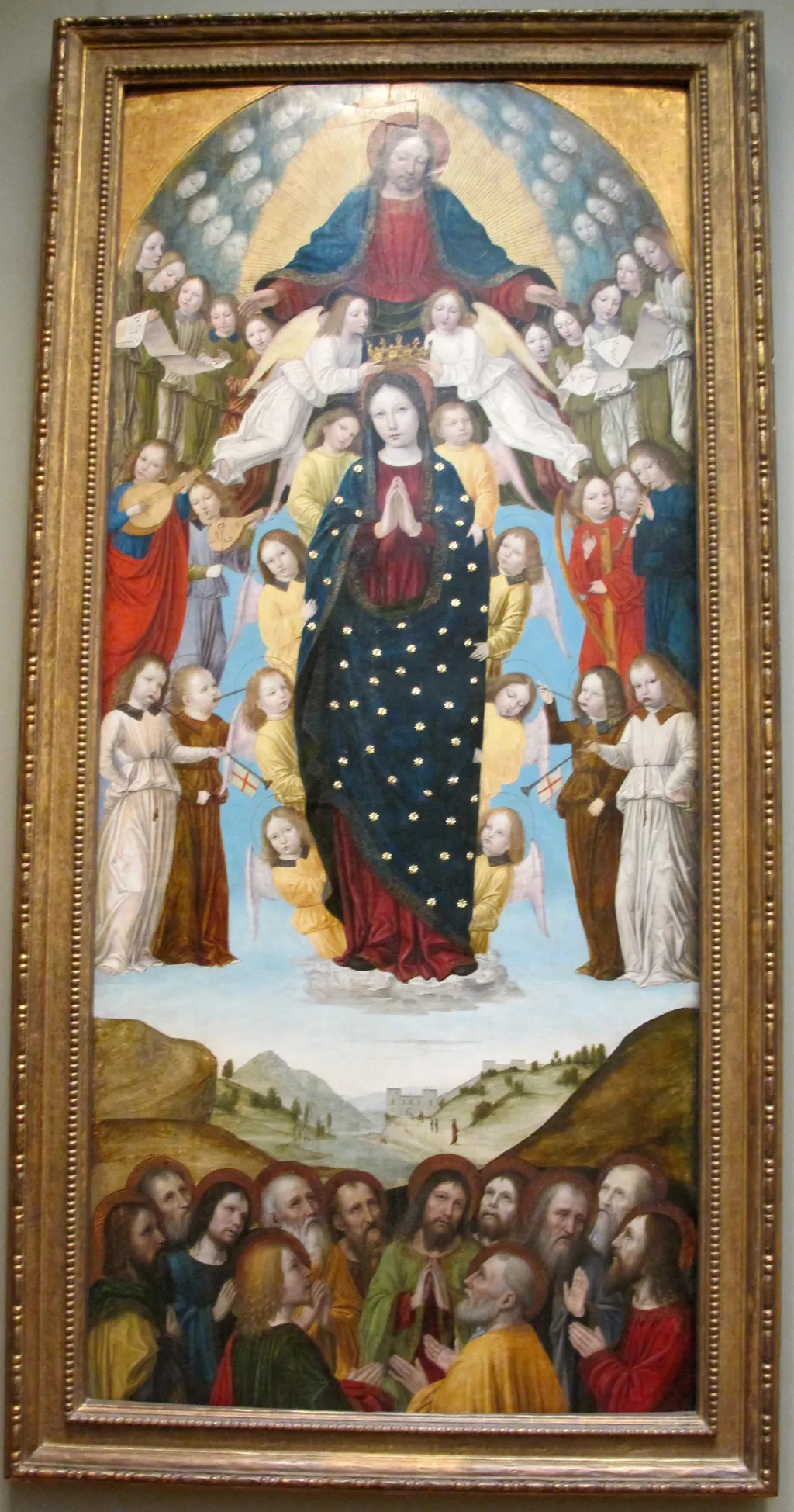
Assumption of the Virgin is an unspecified painting by the Early Baroque Italian artist Ambrogio Bergognone. It dates from 1498 and is held in the collection of the Metropolitan Museum of Art.
About this work
Subject & Meaning
Ambrogio Bergognone's painting depicts the Assumption of the Virgin, a central event in Christian iconography where the Virgin Mary is taken bodily into heaven.
Ambrogio Bergognone's painting depicts the Assumption of the Virgin, a central event in Christian iconography where the Virgin Mary is taken bodily into heaven. As a work of religious art, the composition focuses on the figure of Mary as the main subject, illustrating her ascent rather than her death or burial alone. The piece serves as a visual representation of this specific doctrinal narrative, emphasizing Mary's unique role in salvation history through her bodily assumption.
The artwork functions within the tradition of religious storytelling, capturing the moment of her elevation to the divine realm.
History & Provenance
The painting is held by the Metropolitan Museum of Art in New York, where it is recorded under accession number 1975.1.103.
It was exhibited in 1975 as part of the museum’s acquisition display, and again in the 2004 reinstallation of the Met’s European Paintings galleries.
Overview
Ambrogio Bergognone, also known as Ambrogio da Fossano, completed Assumption of the Virgin around 1498. This painting exemplifies the Lombard artistic tradition prevalent in northern Italy during the late 15th and early 16th centuries. The work, which portrays a key religious narrative involving Mary, is currently part of the collection at The Metropolitan Museum of Art. Bergognone was active in and around Milan during this period.
Technique & Style
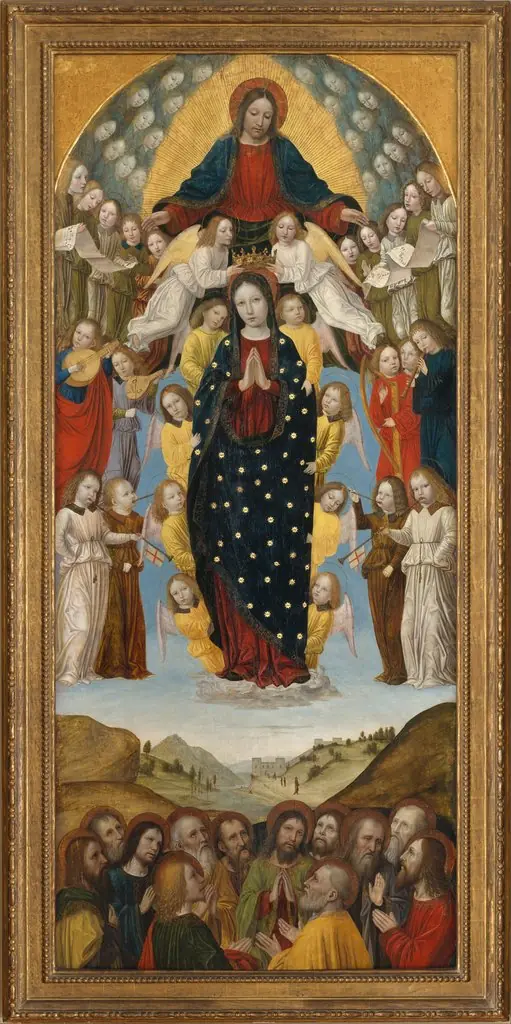
Bergognone's approach to this devotional subject reflects the artistic sensibilities of his time and region. The composition divides the canvas into earthly and celestial realms, emphasizing Mary's transition. His palette incorporates vibrant blues, reds, and yellows for the figures, contrasted with the radiant golden light of the upper register.
The artist renders the figures with distinct features, from the serene angels to the contemplative expressions of the men below, characteristic of the Lombard school's attention to detail.
Context
Active primarily in Milan and its surrounding areas, Ambrogio Bergognone was a prominent figure within the Lombard artistic landscape. His work, including Assumption of the Virgin, aligns with the late Italian Renaissance period. Artists in this tradition often focused on religious narratives, producing altarpieces and devotional works for churches and private patrons, reflecting the spiritual climate of the time.
Artist & collection
Artist
Ambrogio Bergognone (variously known as Ambrogio da Fossano, Ambrogio di Stefano da Fossano, Ambrogio Stefani da Fossano or as il Bergognone or Ambrogio Egogni, c.

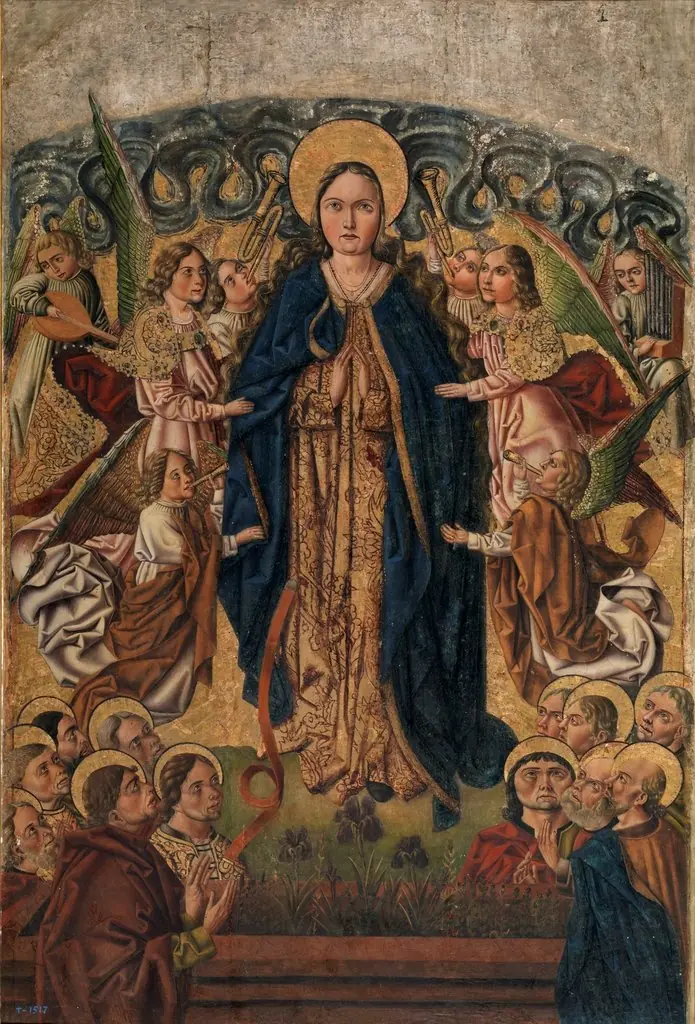 The Assumption of the Virgin
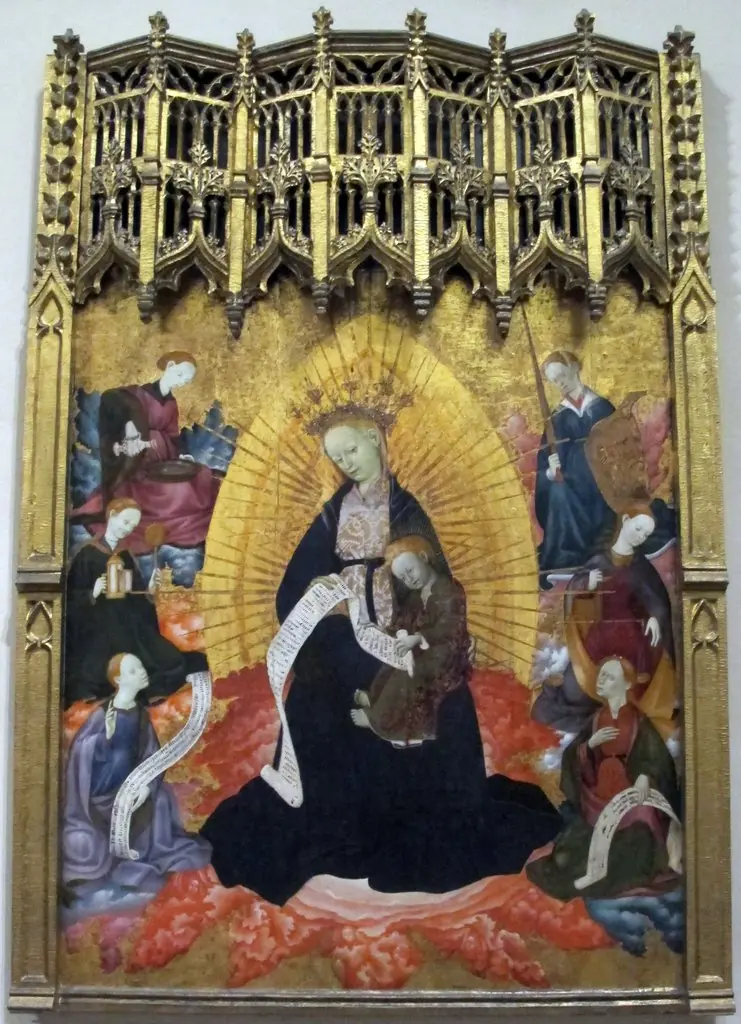 Enthroned Virgin and Child, with the Cardinal Virtues and Two Figures Holding Scrolls
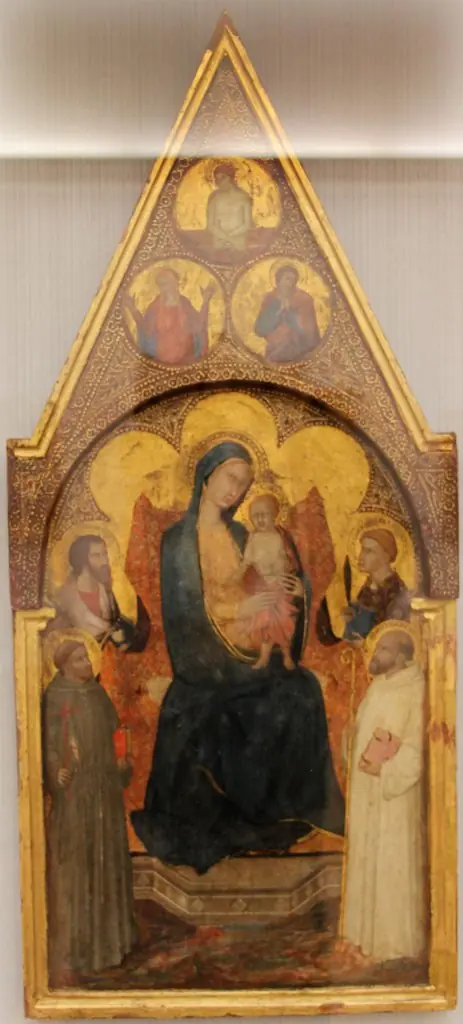 Thronende Maria mit dem Kind und vier Heiligen
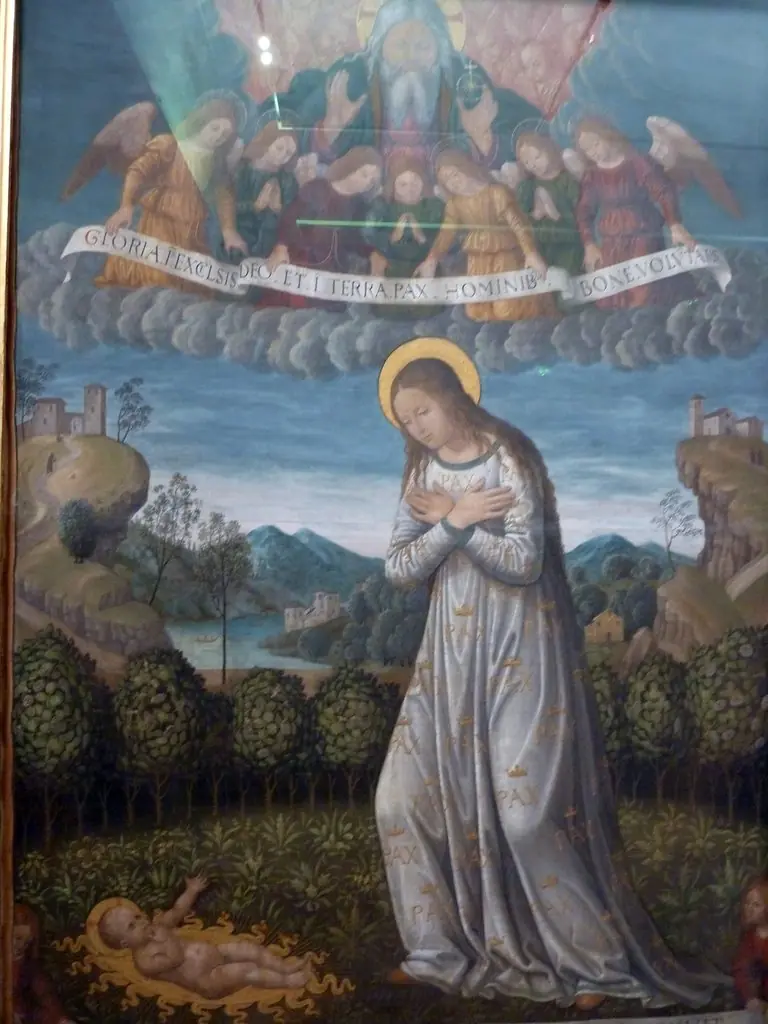 Mary adoring the child
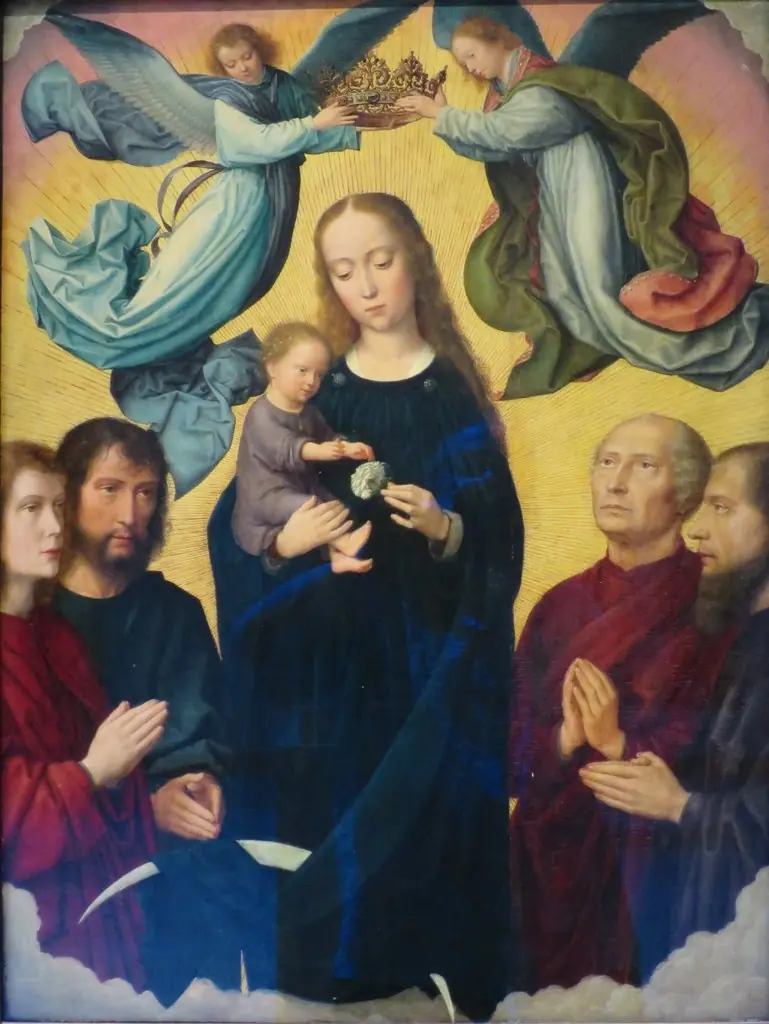 Coronation of the Virgin, Maria in Sole
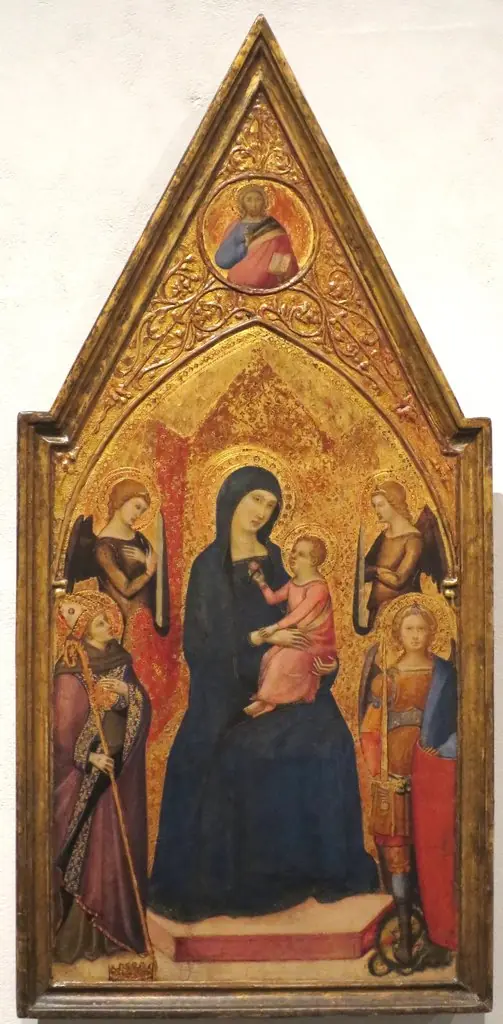 Virgin and Child with Sts. Louis of Toulouse and Michael
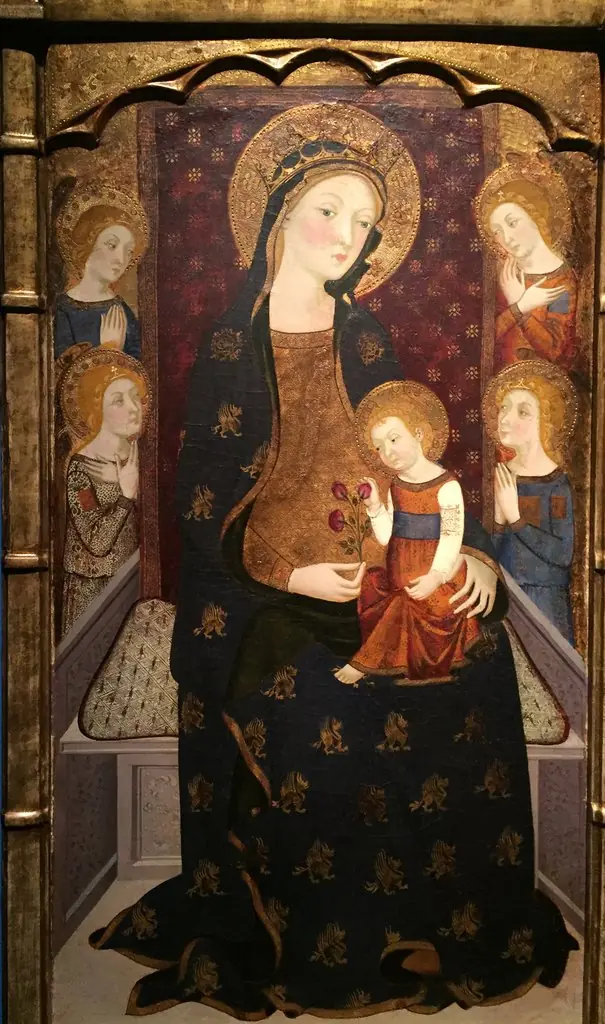 Mare de Déu amb Nen i àngels
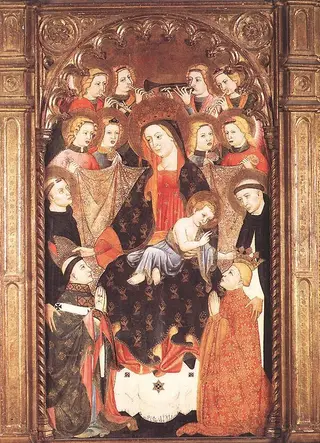 Virgin and Child with Angels and Saints
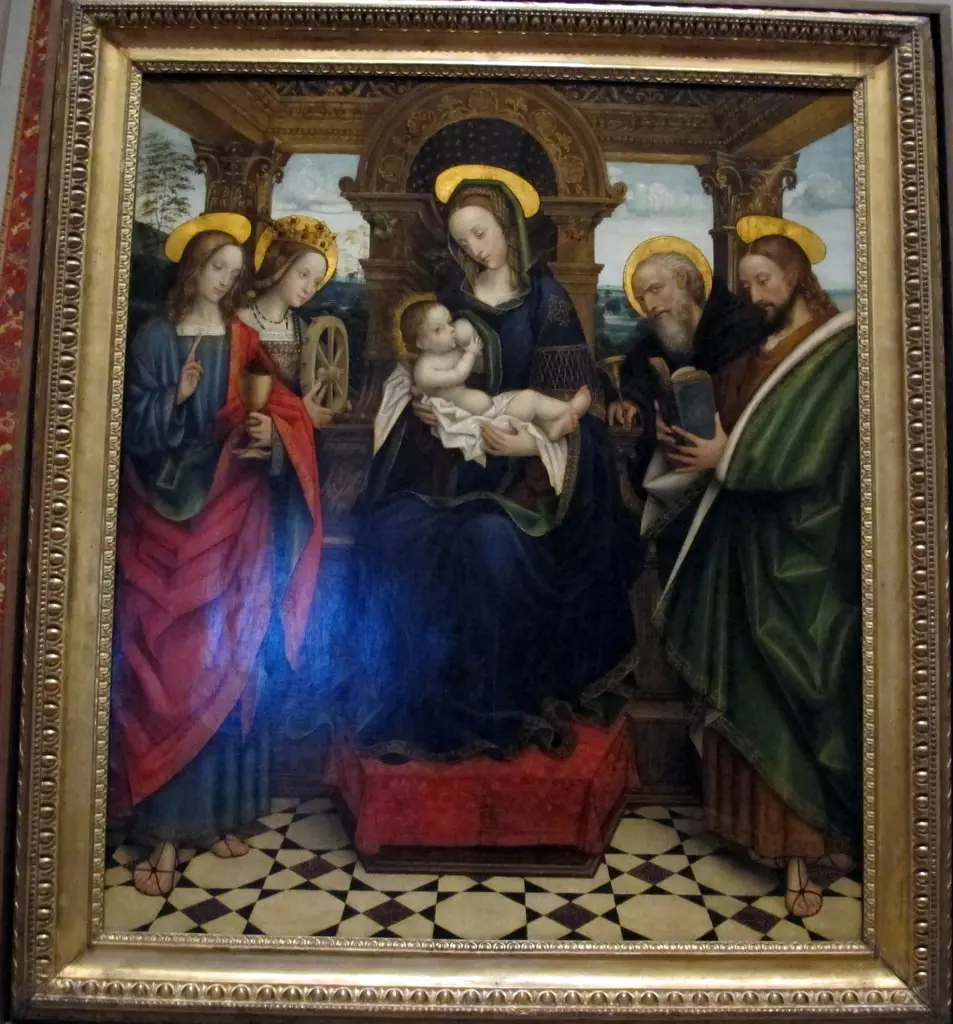 Enthroned Virgin and Child, with Saints John the Evangelist, Catherine of Alexandria, and Anthony Abbot, and a Saint Reading a Book