Artwork
Țărani din Câmpulung-Muscel
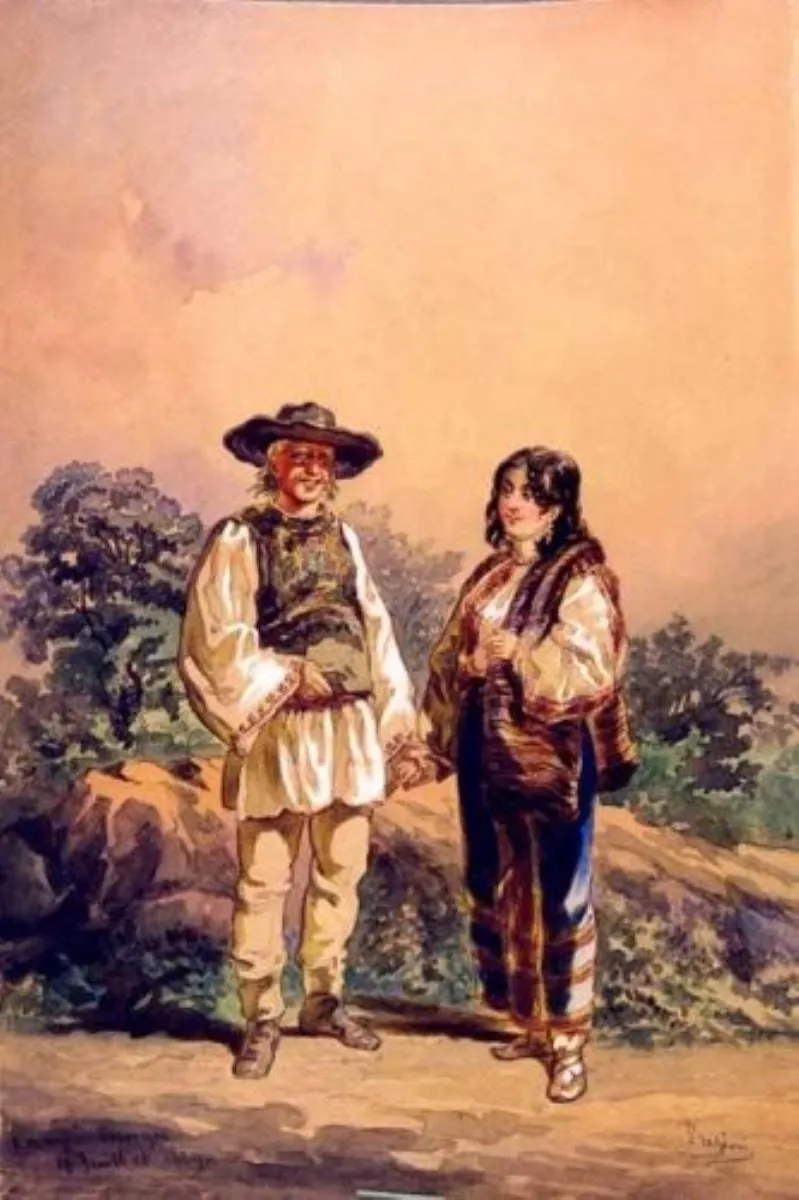
Țărani din Câmpulung-Muscel is an unspecified painting by the Biedermeier artist Amedeo Preziosi. It dates from 1869 and is held in the collection of the National Museum of Art of Romania.
About this work
Overview
Created in 1869 by Amedeo Preziosi, this oil painting captures two rural figures from Câmpulung-Muscel, a region in southern Romania.
Created in 1869 by Amedeo Preziosi, this oil painting captures two rural figures from Câmpulung-Muscel, a region in southern Romania. The composition centers on a man and woman positioned against a quiet natural setting, their forms rendered with a loose, atmospheric brushwork that emphasizes presence over detail. The palette remains restrained, favoring earth tones and soft contrasts to ground the scene in everyday reality.
Subject & Meaning
The figures represent local peasants, their clothing and posture suggesting modest labor and quiet dignity. The man’s wide-brimmed hat and vest, paired with the woman’s long skirt and blouse, reflect regional dress of the time. Their stillness and direct engagement with the viewer imply a deliberate act of observation, not idealization. The painting avoids narrative drama, instead offering a contemplative portrait of rural life in 19th-century Romania.
Technique & Style
Preziosi employs a fluid, impressionistic brushwork that conveys movement and texture without precise definition. Light falls unevenly across the figures, modeling their forms through subtle shifts in tone rather than sharp outlines. The background merges into hazy foliage, allowing the subjects to emerge organically from the landscape. This technique prioritizes mood and atmosphere over topographical accuracy.
History & Provenance
Painted during Preziosi’s extended stay in the Balkans and Romania, the work stems from his interest in documenting regional cultures. Though not widely exhibited in his lifetime, it was likely acquired by private collectors familiar with his ethnographic studies. Its current location and ownership history remain undocumented in public records, reflecting its status as a lesser-known work within his broader oeuvre.
Context
In the late 1860s, European artists increasingly turned to rural life as a subject, often as part of nationalist or anthropological projects. Preziosi, an Italian painter working across the Ottoman territories, approached Romanian peasants not as exotic types but as individuals within a specific cultural landscape. His work aligns with broader 19th-century efforts to record vernacular traditions amid rapid modernization.
Legacy
Though not central to Preziosi’s public reputation, this painting contributes to a body of work that preserves visual records of Eastern European rural communities during a period of transition. It stands as a quiet example of cross-cultural observation, reflecting the artist’s sensitivity to local detail without romanticizing or simplifying his subjects. Its significance lies in its understated authenticity.

Artist & collection

Artist
Amedeo Preziosi (2 December 1816 – 27 September 1882) was a Maltese painter and traveler known for his watercolours and prints of Constantinople, the Balkans, Ottoman Empire, and Romania.




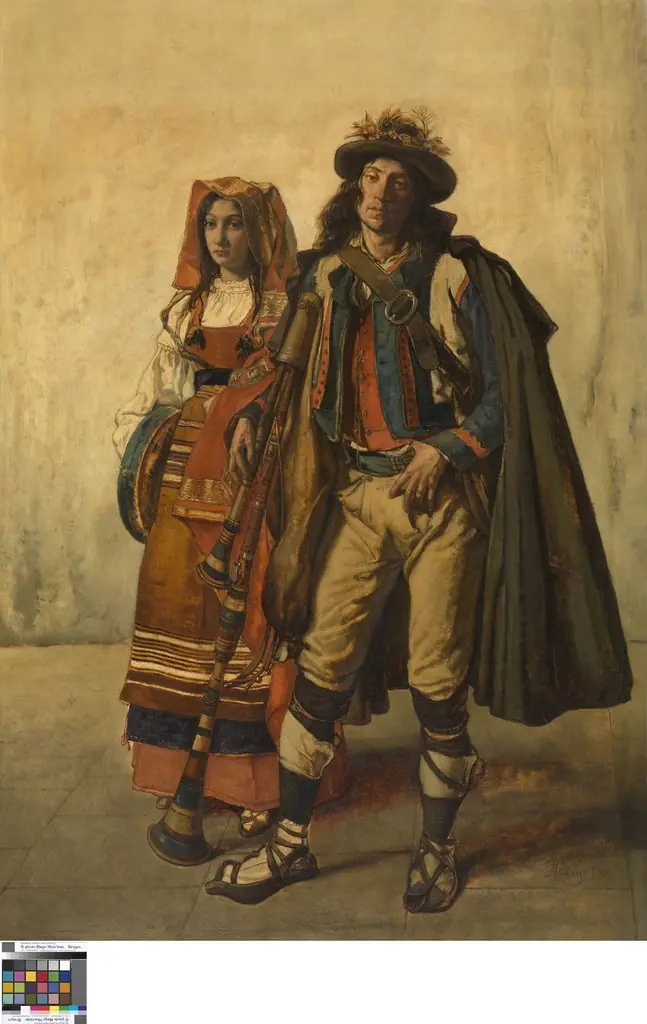 Zampogna player and his wife
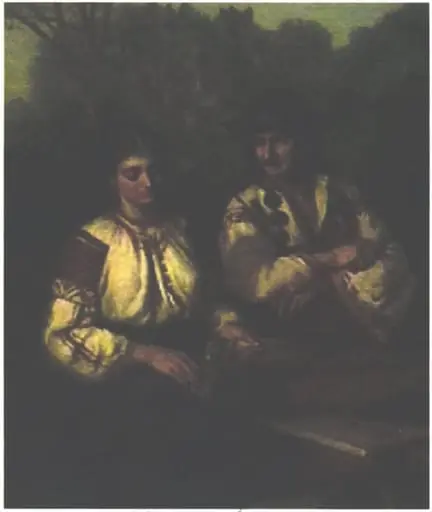 La pârleaz
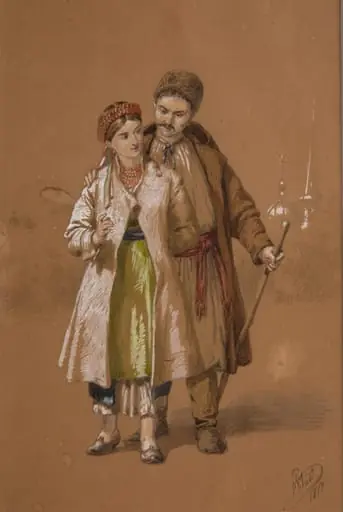 Venäläisiä kansallispukuja, (Mies ja nainen), luonnos
 Peasant woman
 Kæresten præsenteres
 Der blinde Bettler und sein Kind bei St. Peter in Rom
 A Betrothal Scene. Interior with Dutch peasants
 Bottyan cel orb cu fiica sa
 The Bride of Lammermoor (from Sir Walter Scott's novel)