Artwork
Lady Wearing Pearls
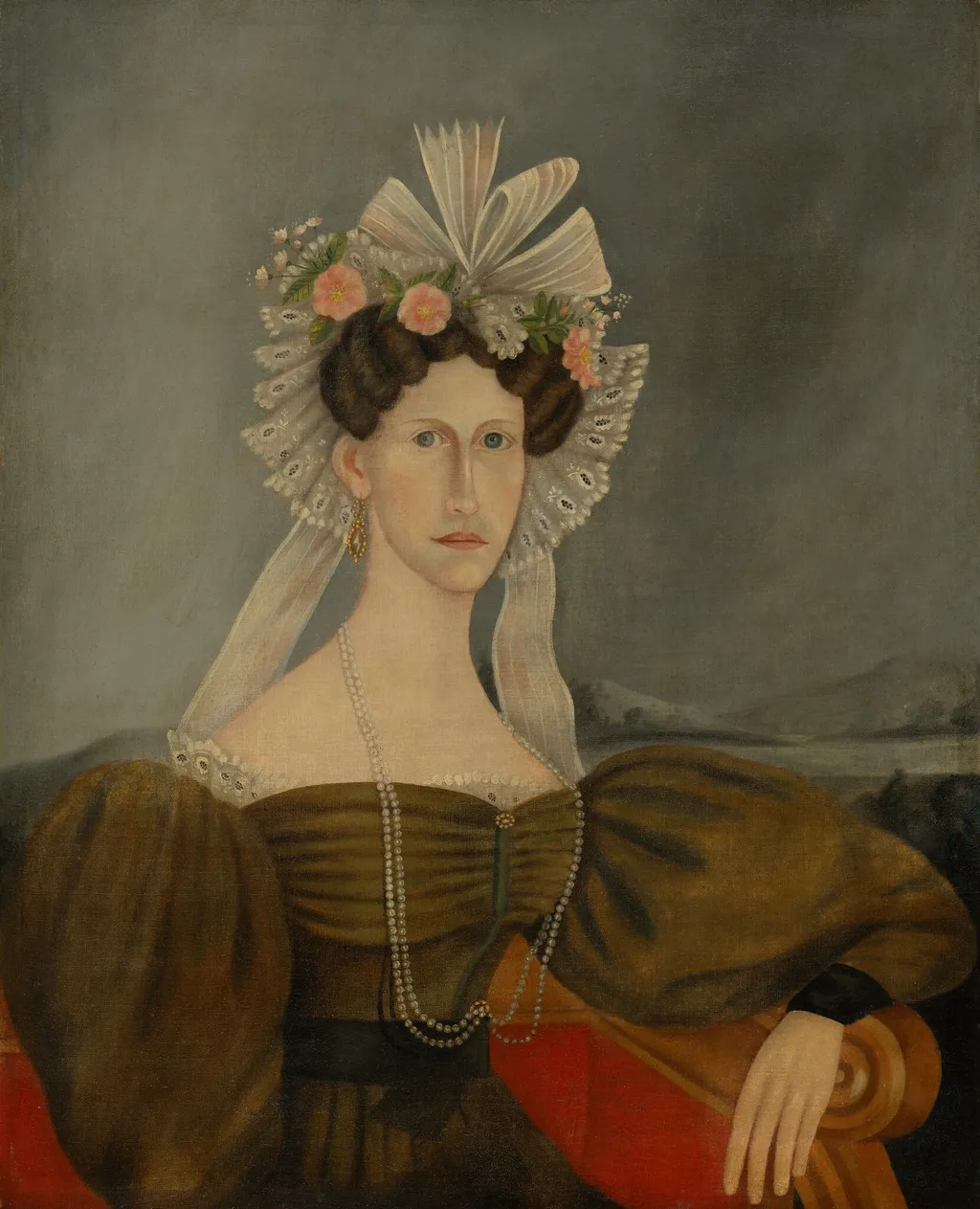
Lady Wearing Pearls is an oil painting. It dates from 1830 and is held in the collection of the National Gallery of Art. The canvas presents a seated woman dressed in a dark brown gown with voluminous sleeves, a black sash, and a pearl necklace.
About this work
Technique & Style
The sources do not specify handling, surface condition, or further formal qualities such as palette, brushwork, or compositional details.
Lady Wearing Pearls is executed in oil on canvas, a standard medium for American portraiture in the early nineteenth century. The work is unframed canvas support measuring 88.9 cm in height by 71.1 cm in width, an upright portrait format suited to a half-length or three-quarter-length depiction of a single sitter. Painted in 1830, it belongs to the tradition of American folk or "primitive" portraiture, a stylistic category under which it was exhibited in the 1945 Harry Stone Collection of American Primitive Paintings at the New Art Circle gallery in New York.
The sources do not specify handling, surface condition, or further formal qualities such as palette, brushwork, or compositional details.
History & Provenance
Created in 1830 by an unidentified American artist of the nineteenth century, this oil on canvas portrait was reportedly discovered in upstate New York. The work entered the documented market by 1942 as part of the collection of Harry Stone in New York. It was featured in a 1945 exhibition of American primitive paintings at the New Art Circle, J.B. Neumann Gallery, which showcased Stone's holdings.
In 1946, Stone sold the painting to Edgar William and Bernice Chrysler Garbisch. The Garbisches subsequently donated the piece to the National Gallery of Art in Washington, D.C., in 1953.
The painting is held in the collection of the National Gallery of Art in Washington, D.C., having been gifted to the institution in 1953 by Edgar William and Bernice Chrysler Garbisch. Prior to this acquisition, the work was owned by Harry Stone of New York by 1942 and was reportedly discovered in upstate New York. It was featured in the 1945 exhibition "Harry Stone Collection of American Primitive Paintings" at the New Art Circle, J.B. Neumann Gallery in New York, and appeared in another show at Stone's gallery the following year, though the title of the 1946 event remains unknown.
Overview
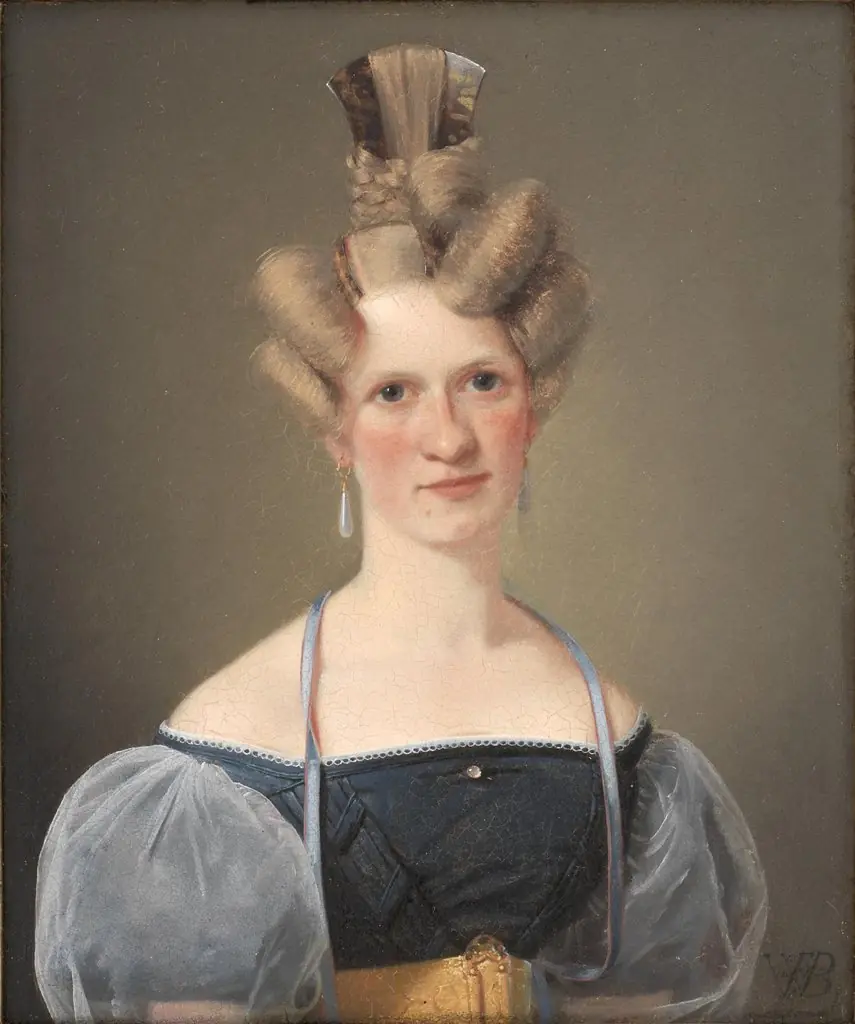
The canvas presents a seated woman dressed in a dark brown gown with voluminous sleeves, a black sash, and a pearl necklace. Her hair is gathered in an updo beneath a white lace bonnet embellished with floral motifs and a prominent bow. She looks directly forward, her right arm resting on a red chair, set against a muted gray‑brown backdrop that conveys a restrained, contemplative tone.
Subject & Meaning
The figure’s attire and accessories, particularly the pearl necklace and elaborate bonnet, signal a portrayal of genteel femininity in a private setting. The steady gaze and relaxed posture suggest introspection rather than narrative action, inviting viewers to consider the inner life or social status of the sitter within an intimate domestic sphere.
Context
Created within the Romantic era, the painting reflects the movement’s interest in personal emotion and the quiet dignity of everyday subjects. Its focus on a solitary figure, the emphasis on atmospheric background, and the delicate treatment of fabric and ornamentation align it with contemporary works that explored the interior lives of individuals rather than grand historical scenes.
Artist & collection

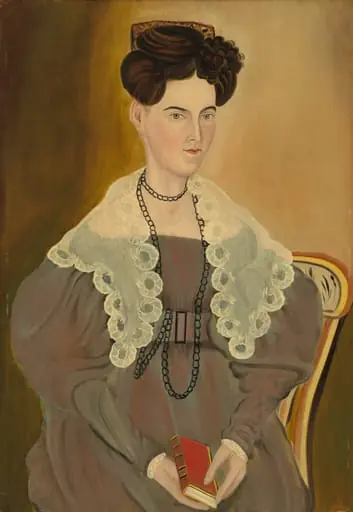 Hannah Fisher Stedman
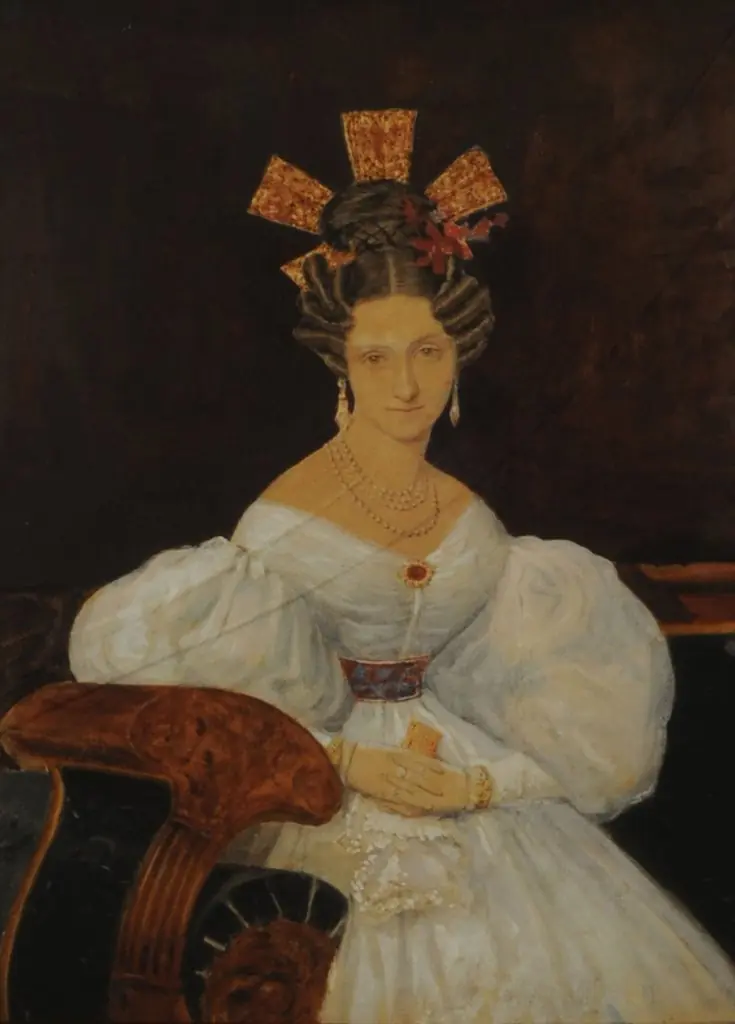 Mrs. Manuela Suárez Lastra de Garmendia
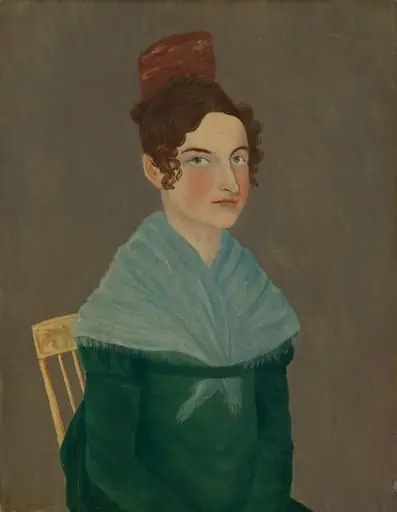 The Blue Shawl
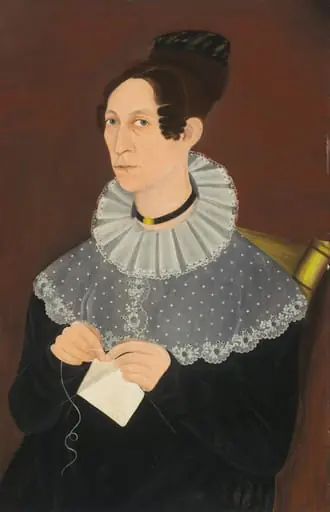 Probably Sarah Cook Arnold Knitting
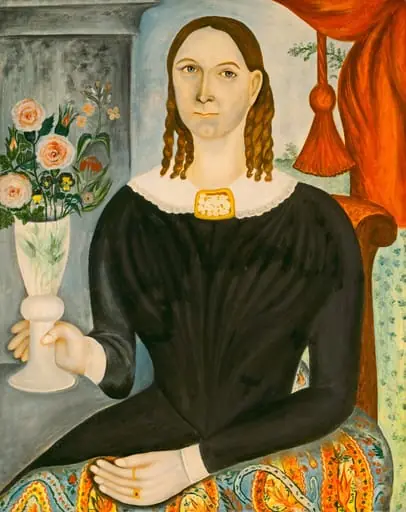 Eliza Welch Stone
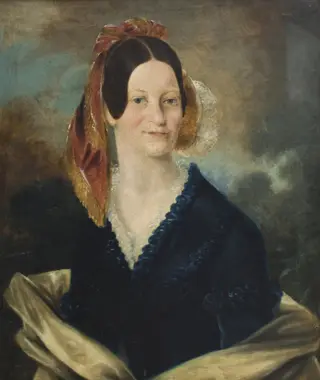 Portrait of Pristella Krasuska née Abraniecka
 Possibly Mrs. William Sheldon
 Anonymous Woman
 Portrait of Doña Macedonia Escardo
 Portrait of Eleonora Gomólińska née Pelletier
 Marie Raffenberg, the Artist's Betrothed
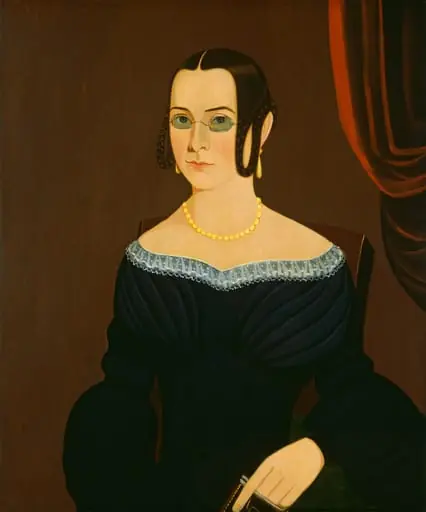
- Lady Wearing Spectacles