Artwork
Lady Wearing Spectacles
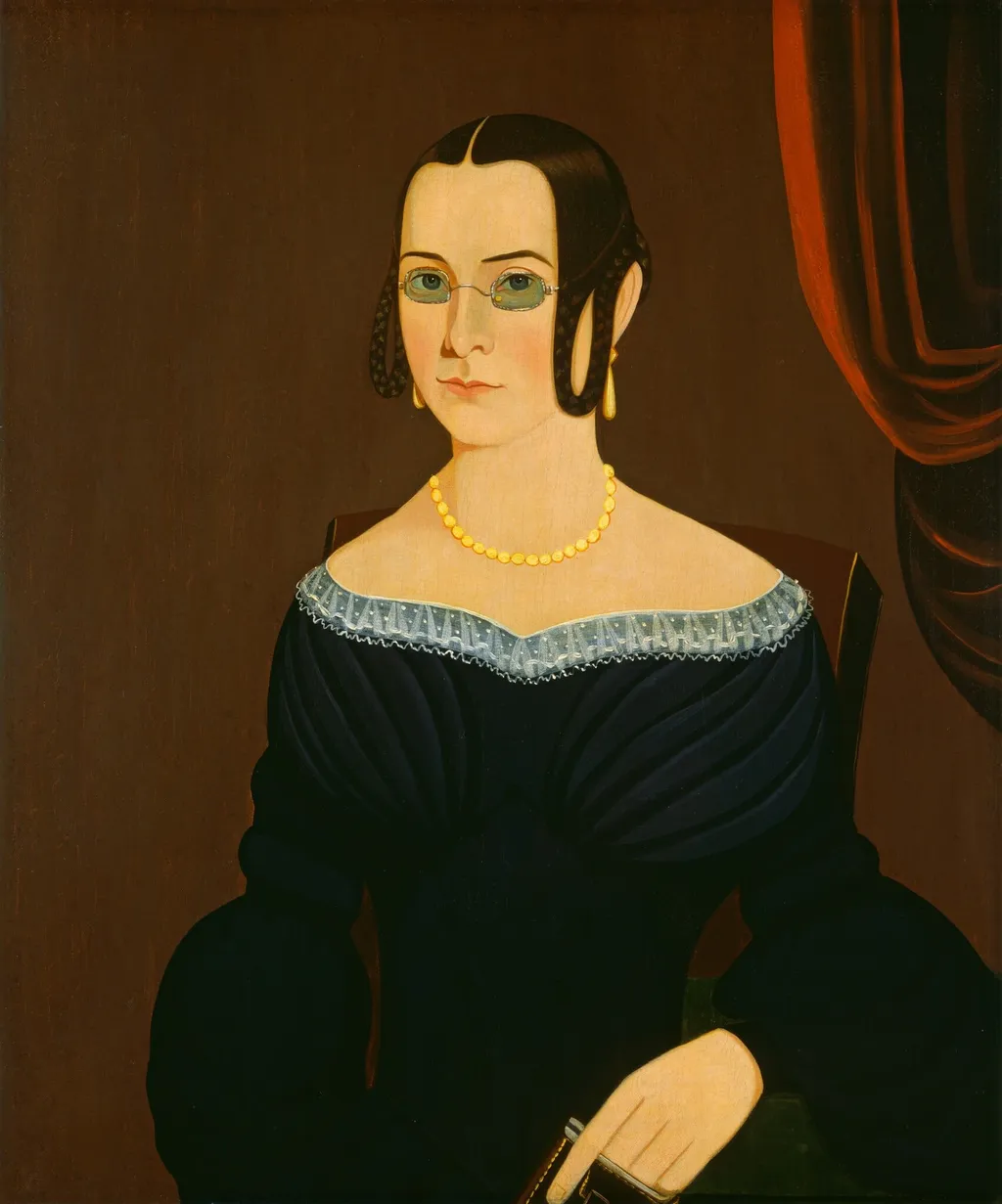
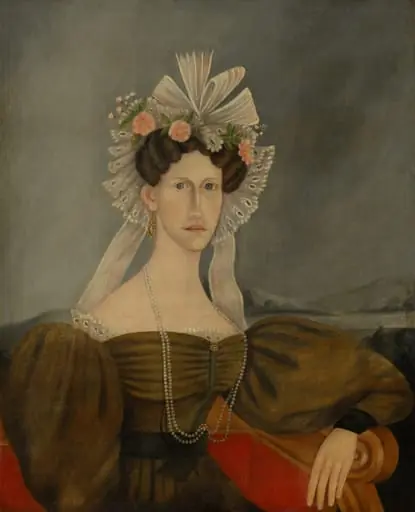
Lady Wearing Spectacles is an oil painting. It dates from 1840 and is held in the collection of the National Gallery of Art. The work is an oil painting on canvas depicting a seated woman in a dimly lit interior.
About this work
Technique & Style
Classified as a portrait, the painting depicts its female sitter with spectacles, a detail that shapes the composition's focus on the face and gaze.
Lady Wearing Spectacles is an oil painting executed on canvas, a medium consistent with mid-nineteenth-century American portrait practice. The work measures 76.9 cm in height by 64 cm in width. Classified as a portrait, the painting depicts its female sitter with spectacles, a detail that shapes the composition's focus on the face and gaze.
The canvas support and oil medium place the work firmly within the traditional handling of small-scale American portraits of the 1840s, with the relatively modest dimensions supporting the intimate, closely observed character of the likeness.
History & Provenance
The painting was documented in western Connecticut before entering a private collection in Stamford, where it remained until 1955. That year, Avis and Rockwell Gardiner sold it to collectors Edgar William and Bernice Chrysler Garbisch. The Garbischs later donated the work to the National Gallery of Art in Washington, D.C., where it entered the collection in 1978.
Earlier provenance notes describe the painting’s location as “western Connecticut,” a reference the donors clarified as likely referring to Stamford, which lies in that region.
Overview
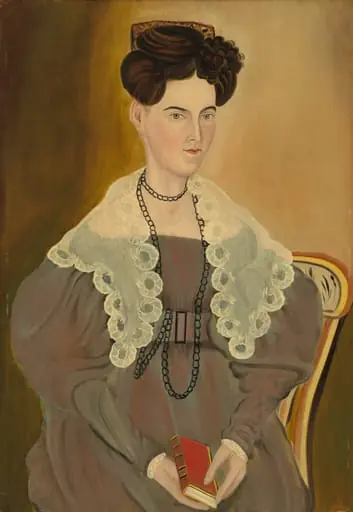
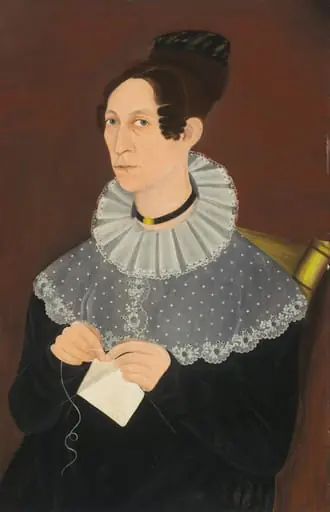
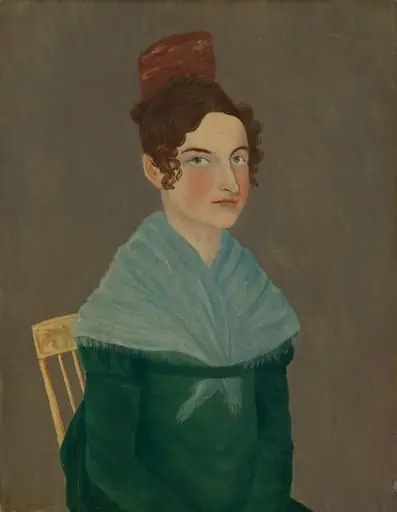
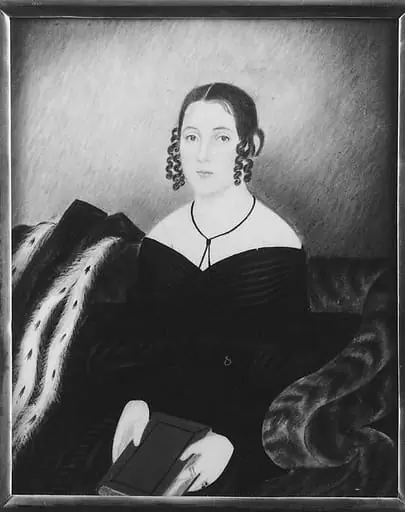
The work is an oil painting on canvas depicting a seated woman in a dimly lit interior. She is presented in a three‑quarter view, her face illuminated just enough to reveal a pair of spectacles and a composed expression. The composition is restrained, with a plain background that emphasizes the figure’s quiet presence.
Subject & Meaning
The sitter wears a dark blue dress trimmed with a white lace collar and a modest gold necklace, suggesting modest refinement. A fan rests in one hand, while the other rests calmly on her lap, conveying a sense of poise and introspection. The inclusion of glasses, an uncommon attribute in portraiture of the period, may hint at intellectual pursuits or personal identity.
Context
Portraits of this era typically omitted accessories such as spectacles, making this detail a notable deviation from contemporary conventions. The painting’s focus on interior stillness and the quiet dignity of the sitter aligns with broader trends toward intimate, psychologically nuanced portraiture in the late 17th to early 18th centuries.
Artist & collection