Artwork
William Penn's History
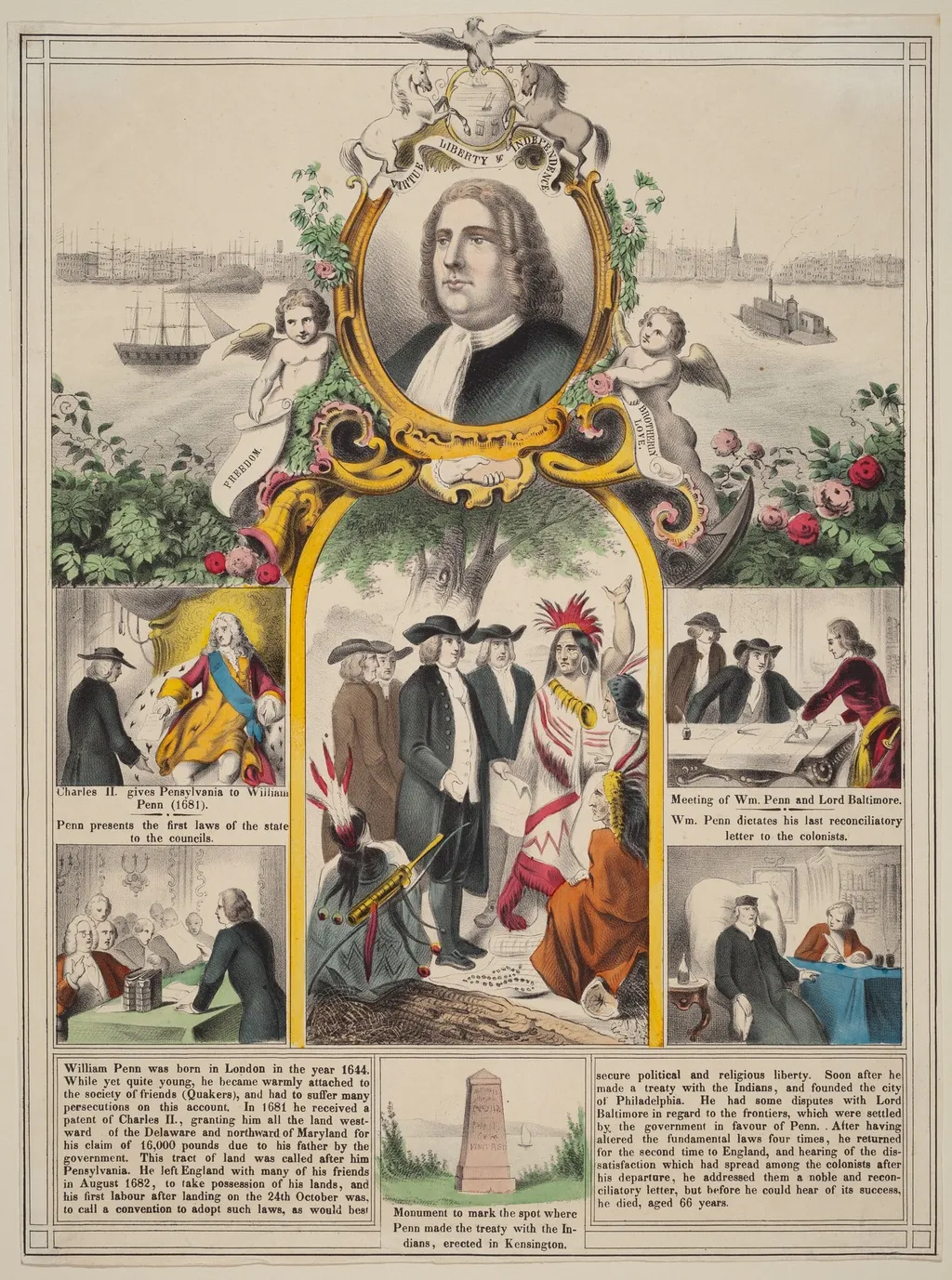
William Penn's History is an ink print by the Romanticist artist American 19th Century. It dates from 1850 and is held in the collection of the National Gallery of Art. This hand-colored lithograph depicts William Penn in a contemplative pose beside an oak tree, surrounded by a small group of figures.
About this work
Overview
Created as one of the earliest colored prints derived from a drawn original, it was produced by printing a monochrome image and then applying pigments manually.
This hand-colored lithograph depicts William Penn in a contemplative pose beside an oak tree, surrounded by a small group of figures. Created as one of the earliest colored prints derived from a drawn original, it was produced by printing a monochrome image and then applying pigments manually. Only a limited number of copies remain, reflecting both the labor-intensive process and the rarity of early color lithography in American printmaking.
Subject & Meaning
The image portrays Penn as a serene, authoritative figure, positioned beneath a large oak tree, a symbol often associated with peace and enduring agreements. The surrounding figures suggest a moment of negotiation or community gathering, reinforcing themes of diplomacy and settlement. His calm expression and the tranquil landscape convey an idealized vision of Quaker leadership and harmonious relations with Indigenous peoples.
Technique & Style
The work was made using lithography, a method that transfers a drawn image onto a stone surface for printing. After the black-and-white impression was pulled, artists applied color by hand using water-based pigments, a time-consuming process that varied slightly between copies. The style is restrained and detailed, with soft modeling of forms and a naturalistic landscape background that emphasizes atmosphere over dramatic action.
History & Provenance
Produced in the early 19th century, this print likely originated as part of a broader effort to visually document Pennsylvania’s founding. Its survival is uncommon due to the fragility of hand-colored prints and limited initial print runs. Most known examples reside in institutional collections, with few in private hands, suggesting it was never widely distributed and was valued more as a commemorative object than a commercial product.
Context
In the decades following Penn’s death, his legacy was increasingly mythologized in American visual culture. This lithograph emerged during a period when historical figures were being memorialized through prints for public education and civic pride. The choice of the oak tree and peaceful setting aligns with contemporary narratives that emphasized Pennsylvania’s founding as a model of tolerance and orderly settlement.
Legacy
As one of the first hand-colored lithographs to depict a colonial founder, it represents an early step in the mechanization of historical imagery in the United States. Though not widely circulated, it influenced later visual representations of Penn and contributed to the standardization of his iconography, calm, dignified, and surrounded by symbols of peace, within American historical memory.
Artist & collection

Artist
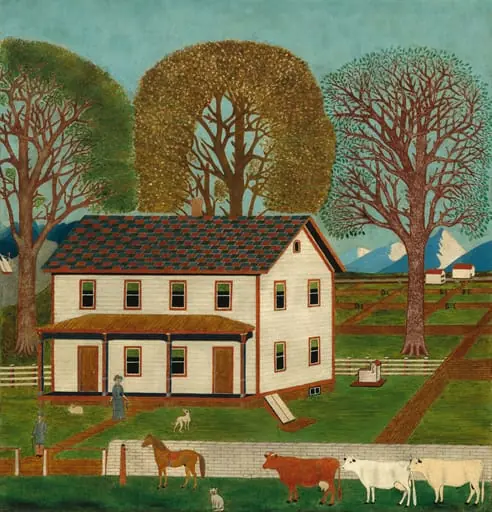
Scenes of everyday American life in the 1800s. Farmhouse in Mahantango Valley is a quiet, sunlit view of rural Pennsylvania; Boy and Girl shows two children standing close, faces turned outward. A small woodcut, The…

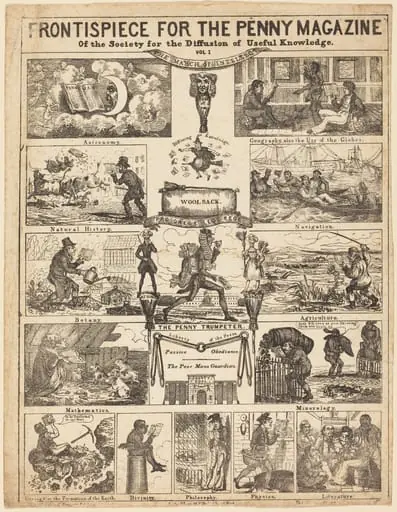 Frontispiece for the Penny Magazine of the Society for the Diffusion of Knowledge: Vo
 H Beard Print Collection
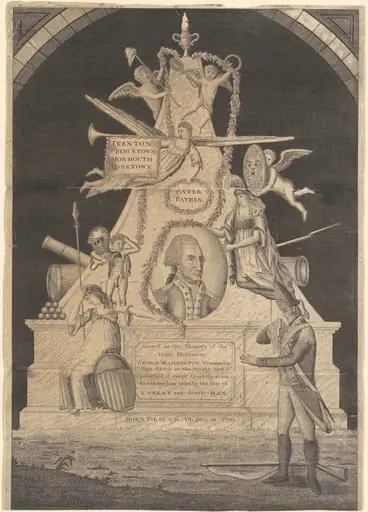 Memorial for George Washington
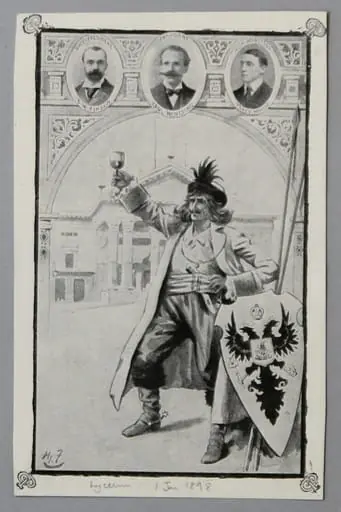 Peter the Great
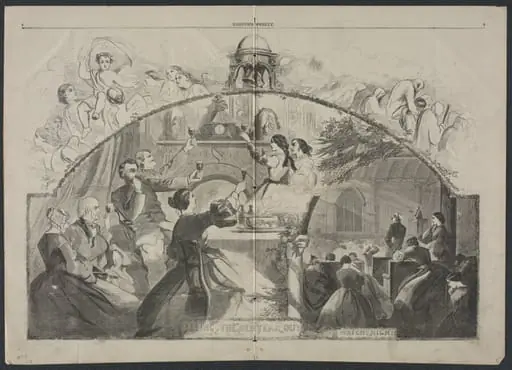 Seeing the Old Year Out
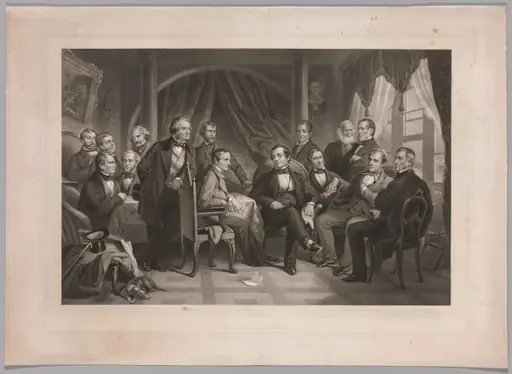 Washington Irving and his Literary Friends at Sunnyside
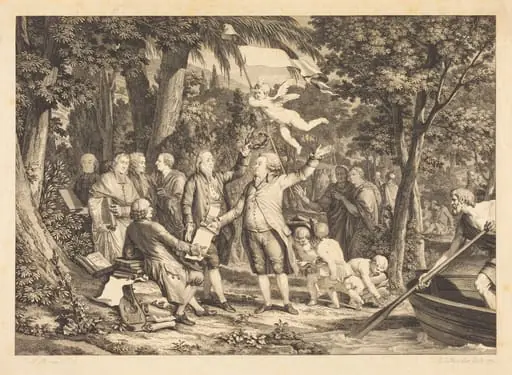 Mirabeau arrive aux Champs-Élisées
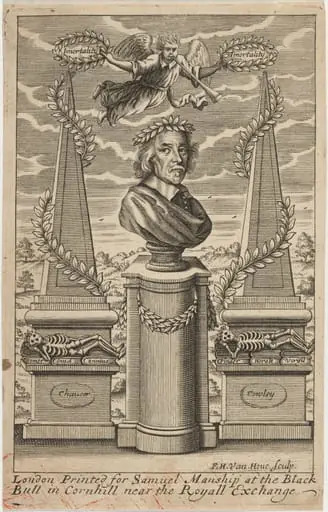 William Winstanley, Poet and Compiler
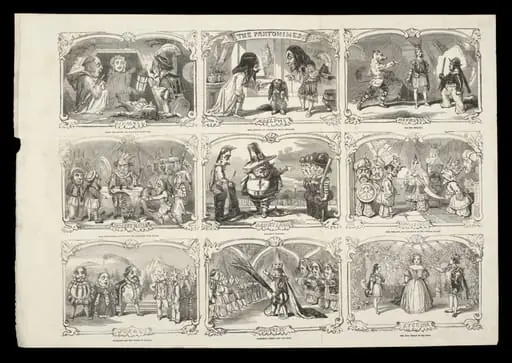 H Beard Print Collection