Artwork
Leaving the Manor House
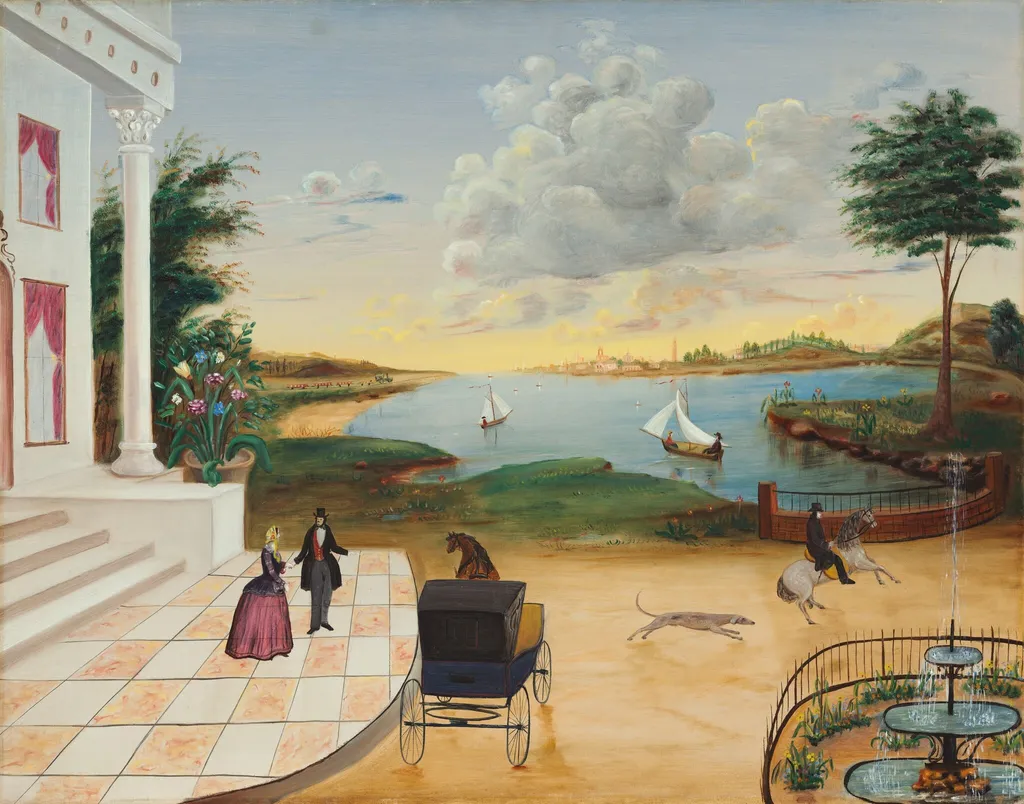
Leaving the Manor House is an oil painting. It dates from 1852 and is held in the collection of the National Gallery of Art.
About this work
Technique & Style
Leaving the Manor House is executed in oil paint on canvas, a standard medium for mid-nineteenth-century American landscape painting.
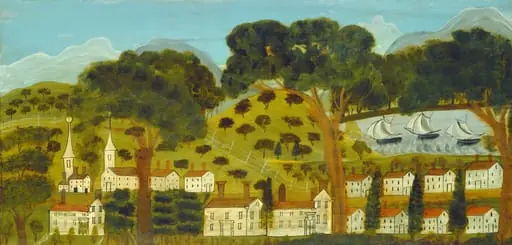
Leaving the Manor House is executed in oil paint on canvas, a standard medium for mid-nineteenth-century American landscape painting. The support measures 68.6 cm in height by 86.5 cm in width, giving the work a horizontal orientation suited to its landscape subject. The painting depicts a boat and trees, rendered in a manner consistent with American nineteenth-century landscape practice.
The canvas is held in the collection of the National Gallery of Art in Washington, D.C., where it has been preserved since its 1959 gift by Edgar William and Bernice Chrysler Garbisch.
History & Provenance
Created in 1852, the oil-on-canvas painting Leaving the Manor House is attributed to an American artist of the nineteenth century. The work's early history is recorded as originating in Connecticut. In 1954, the piece entered the collection of Edgar William and Bernice Chrysler Garbisch, who donated the painting to the National Gallery of Art in Washington, D.C., in 1959, where it remains part of the permanent collection. No specific commission details or individual artist attribution are provided in the available records.
Overview
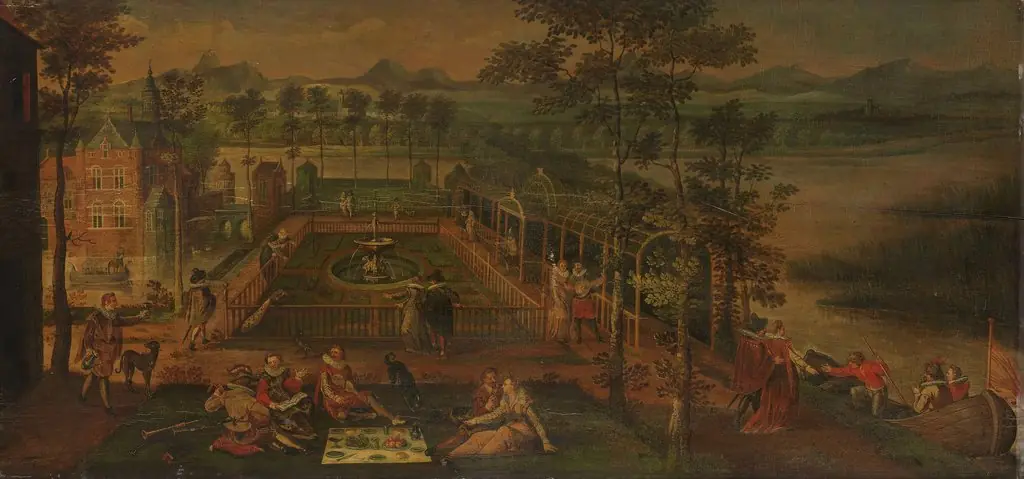
Titled "Leaving the Manor House," this oil on canvas painting depicts a woman embarking on a boat trip. The artist captures the subtle drama of departure, highlighting the interplay of light and movement. This work offers a glimpse into historical travel practices, where waterways often served as primary routes. It is housed in the National Gallery of Art, Washington.
Subject & Meaning
The painting portrays a woman in the act of stepping into a small boat, positioned beside a prominent tree. The artist emphasizes the delicate moment of transition, with light illuminating her attire and the boat's edge. Her fluttering shawl conveys a sense of immediacy, suggesting a spontaneous or recently decided departure, capturing the quiet anticipation preceding a journey.
Context
This artwork reflects a historical reality where water travel was a prevalent mode of transportation, often more practical than navigating rudimentary roads. The scene of a departure by boat would have been a familiar sight, underscoring the everyday nature of such journeys. The painting thus provides insight into the logistical aspects of life and travel during the period it represents.
Artist & collection

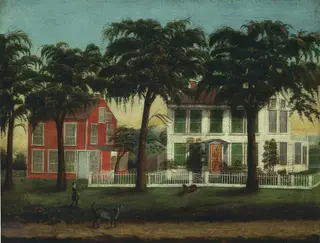
 Lake Lucerne
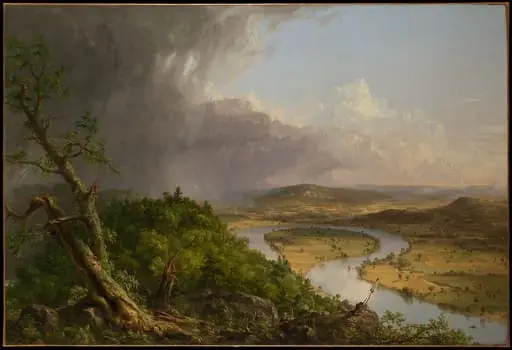 View from Mount Holyoke, Northampton, Massachusetts, after a Thunderstorm—The Oxbow
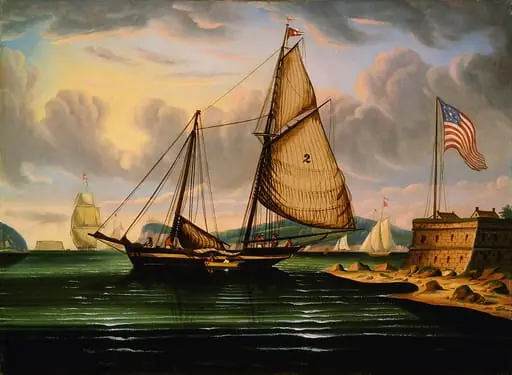 New York Harbor with Pilot Boat "George Washington"
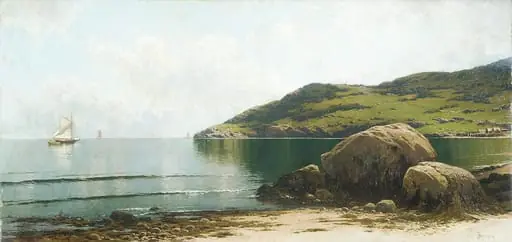 Marine Landscape
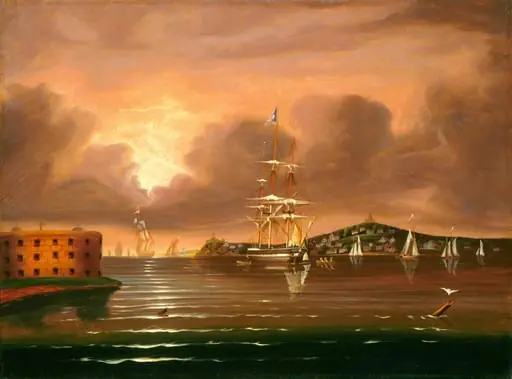 Threatening Sky, Bay of New York
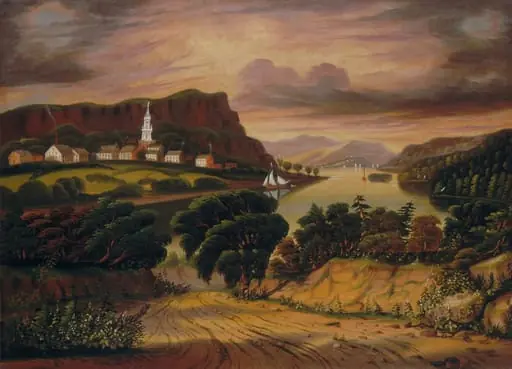 Lake George and the Village of Caldwell
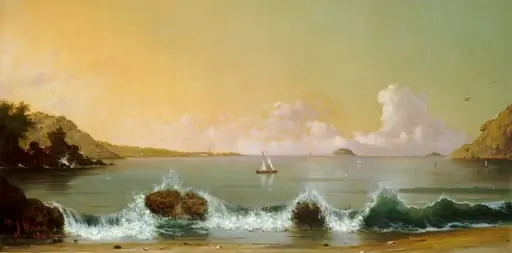 Rio de Janeiro Bay
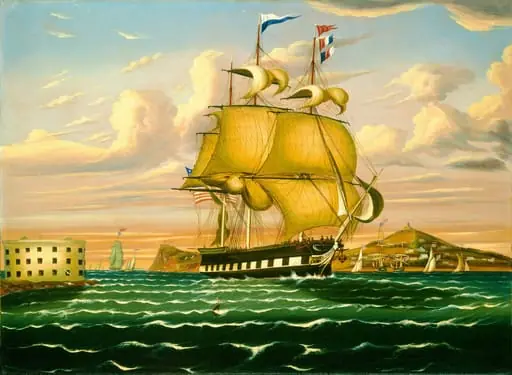 Packet Ship Passing Castle Williams, New York Harbor