Artwork
Farmhouse in Mahantango Valley
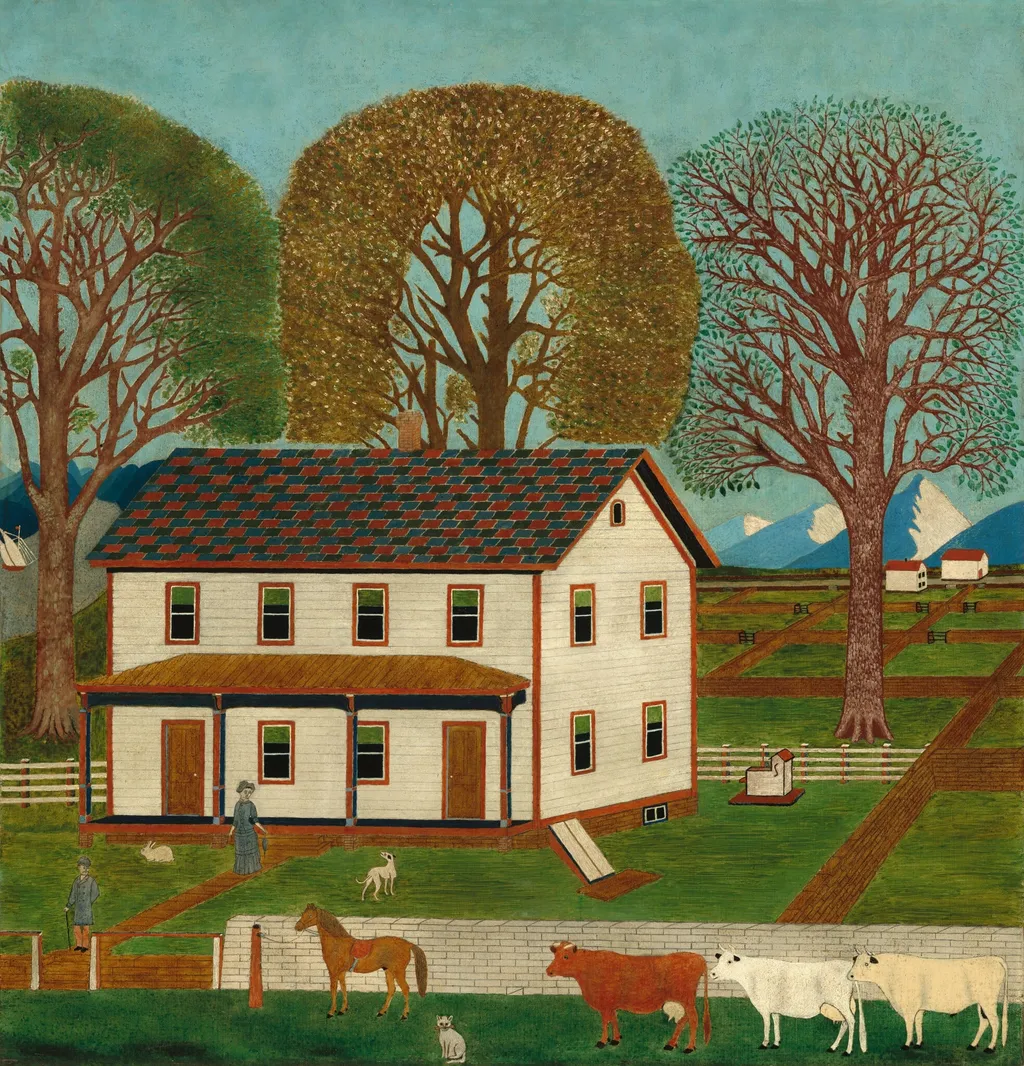
Farmhouse in Mahantango Valley is an oil painting. It dates from 1850 and is held in the collection of the National Gallery of Art.
About this work
A simple old farmhouse sits in a valley beside one tall tree. The house and tree are worked in fine detail, building a quiet, everyday scene with little fuss. An American hand painted it in oil around 1850.
Subject & Meaning
Farmhouse in Mahantango Valley is a landscape painting that depicts a rural homestead set within the Pennsylvania countryside of the Mahantango Valley.
Farmhouse in Mahantango Valley is a landscape painting that depicts a rural homestead set within the Pennsylvania countryside of the Mahantango Valley. The composition portrays a house and trees, situating the structure within its natural setting rather than as an architectural study alone. The work belongs to a tradition of mid-nineteenth-century American landscape painting that emphasized vernacular rural dwellings as emblems of settled agricultural life and regional identity.
By centering a modest farmhouse amid the wooded valley, the painting evokes the everyday domestic and farming life of nineteenth-century Pennsylvania, presenting the homestead as both a literal dwelling and a symbol of rootedness in the land.
Technique & Style
Created in 1850, Farmhouse in Mahantango Valley is an oil painting executed on a canvas support measuring 75 cm in height and 72.1 cm in width. Classified as a landscape, the composition features a house and trees, characteristic of the American 19th-century genre. No specific details regarding the artist's brushwork or handling techniques are provided in the available records, though the work is attributed to an American artist active during the nineteenth century. It is held in the collection of the National Gallery of Art in Washington, D.C.
History & Provenance
Farmhouse in Mahantango Valley is an oil on canvas landscape painted circa 1850 by an American artist of the 19th century. It originally came from a farmhouse in the Mahantango Valley of Pennsylvania and was later in the possession of John H. Chamberlain of Delaware Water Gap, Pennsylvania. In 1947 Chamberlain sold the painting to Edgar William and Bernice Chrysler Garbisch, who subsequently donated it to the National Gallery of Art in 1953, where it remains in the collection.
Context
Executed in 1850, the oil on canvas landscape titled Farmhouse in Mahantango Valley portrays a rural dwelling amid trees, reflecting the pastoral interests of ante-bellum American art. Classified as a 19th-century American landscape, the work exemplifies the period's emphasis on agrarian scenery and domestic architecture. Its provenance traces to a farmhouse in the Mahantango Valley of Pennsylvania, where it remained until 1947, when it entered the collection of Edgar William and Bernice Chrysler Garbisch; the couple gifted the painting to the National Gallery of Art in 1953.
Overview
Farmhouse in Mahantango Valley is an oil on canvas painting that depicts a modest, aged dwelling nestled within a valley landscape. A prominent, tall tree stands nearby, contributing to the composition. The artist rendered the scene with considerable detail, evoking a sense of everyday tranquility and quiet observation of rural life.
Artist & collection

 The Barnyard
 The Cornell Farm
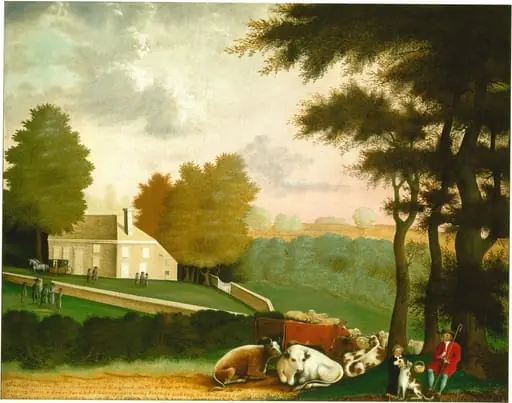 The Grave of William Penn
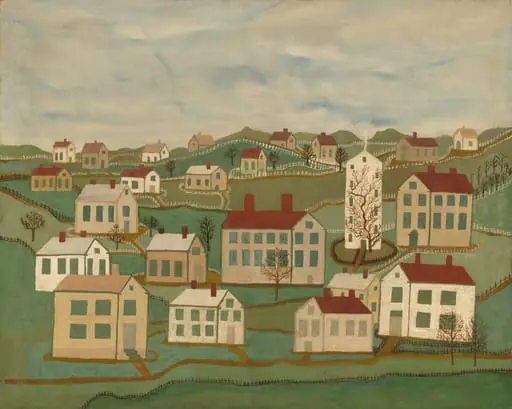 Twenty-two Houses and a Church
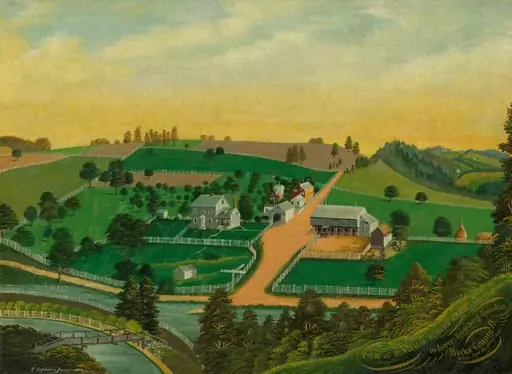 View of Benjamin Reber's Farm
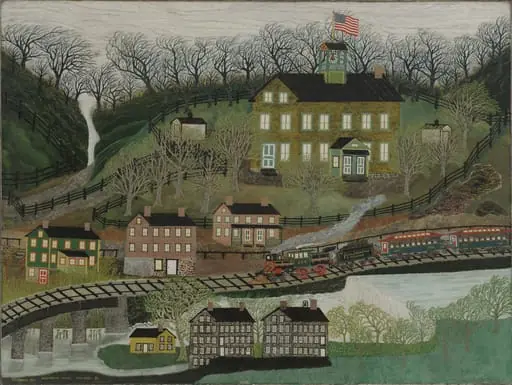 Untitled
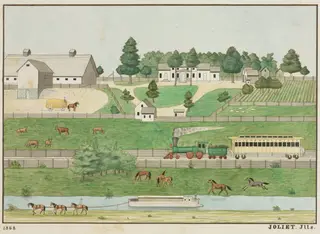 Landscape, Joliet, Illinois
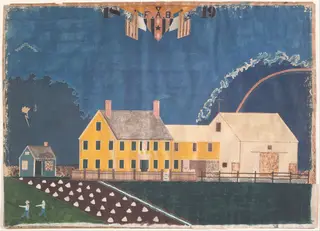 Farmstead in Passing Storm
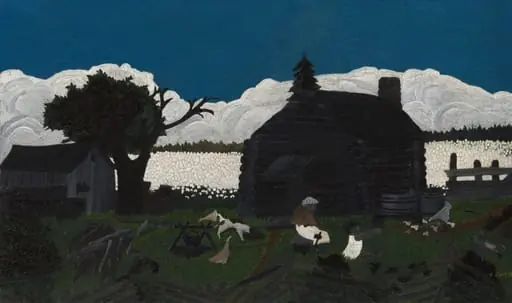 Cabin in the Cotton
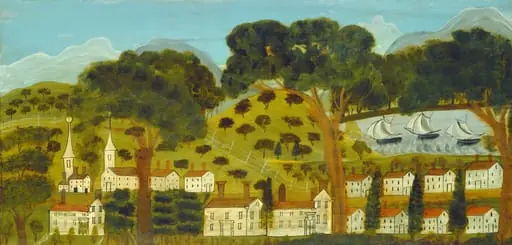 New England Village
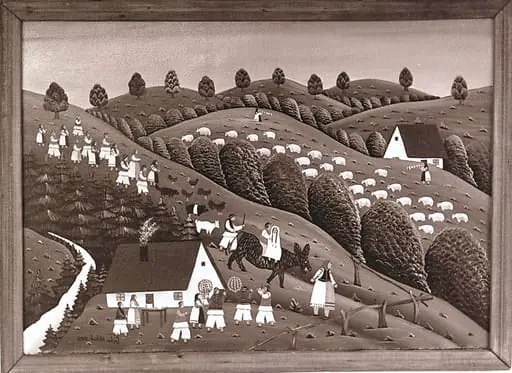 Sequences from the Village Museum, naive painting by Petru Mihuțe - The wedding of the poor boy (1988)
- Mahantango Valley Farm