Artwork
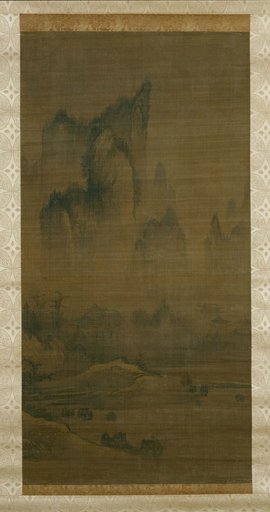
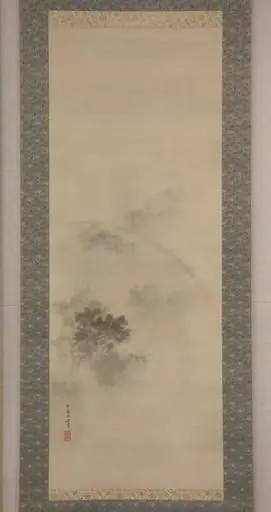
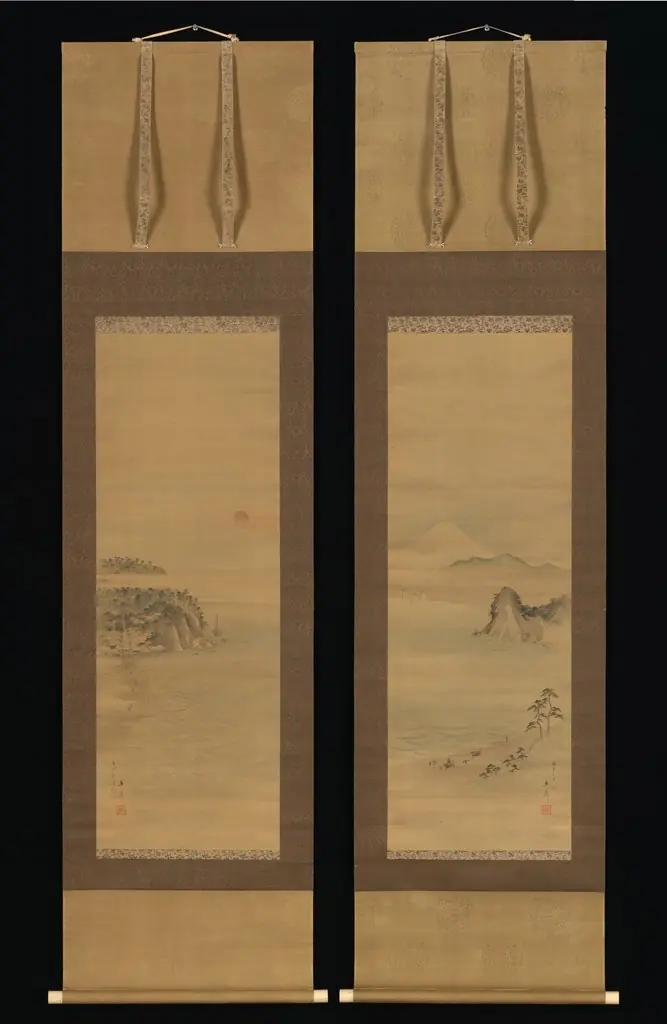
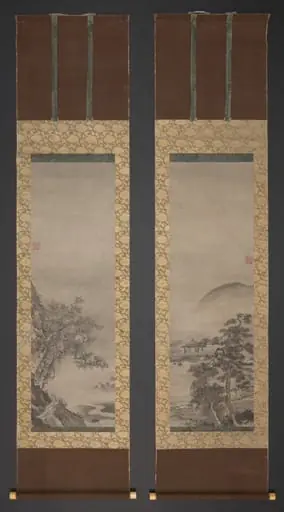
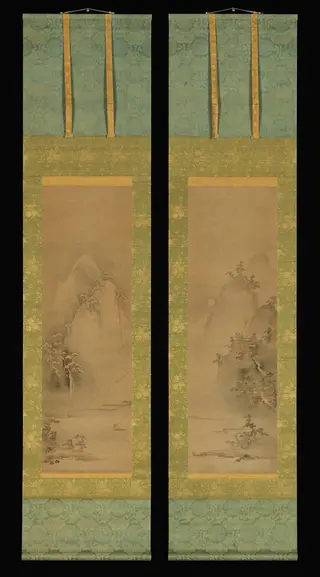
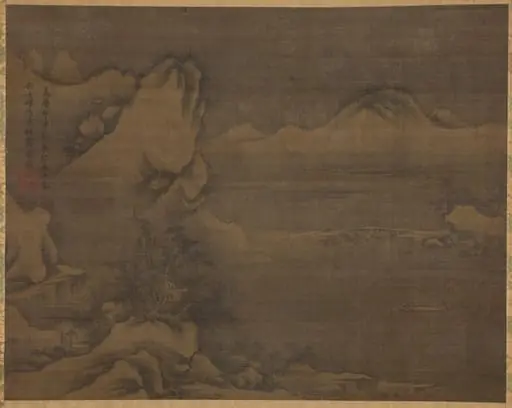
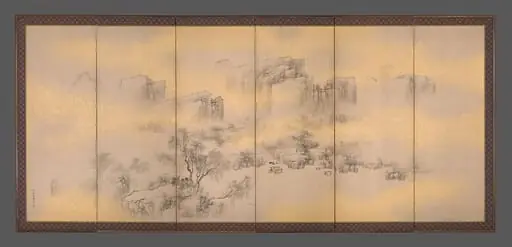
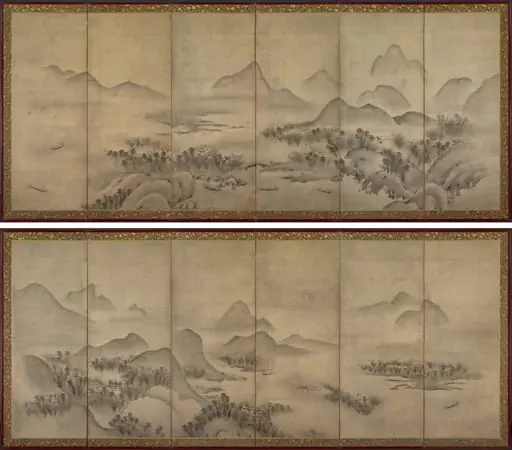
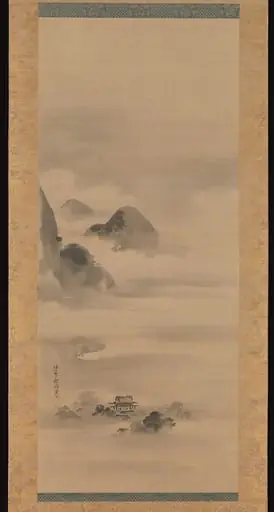
해질녘 산사의 종소리 조선|煙寺暮鍾圖 朝鮮|Evening bell from mist-shrouded temple (left); Autumn moon over Lake Dongting (right)
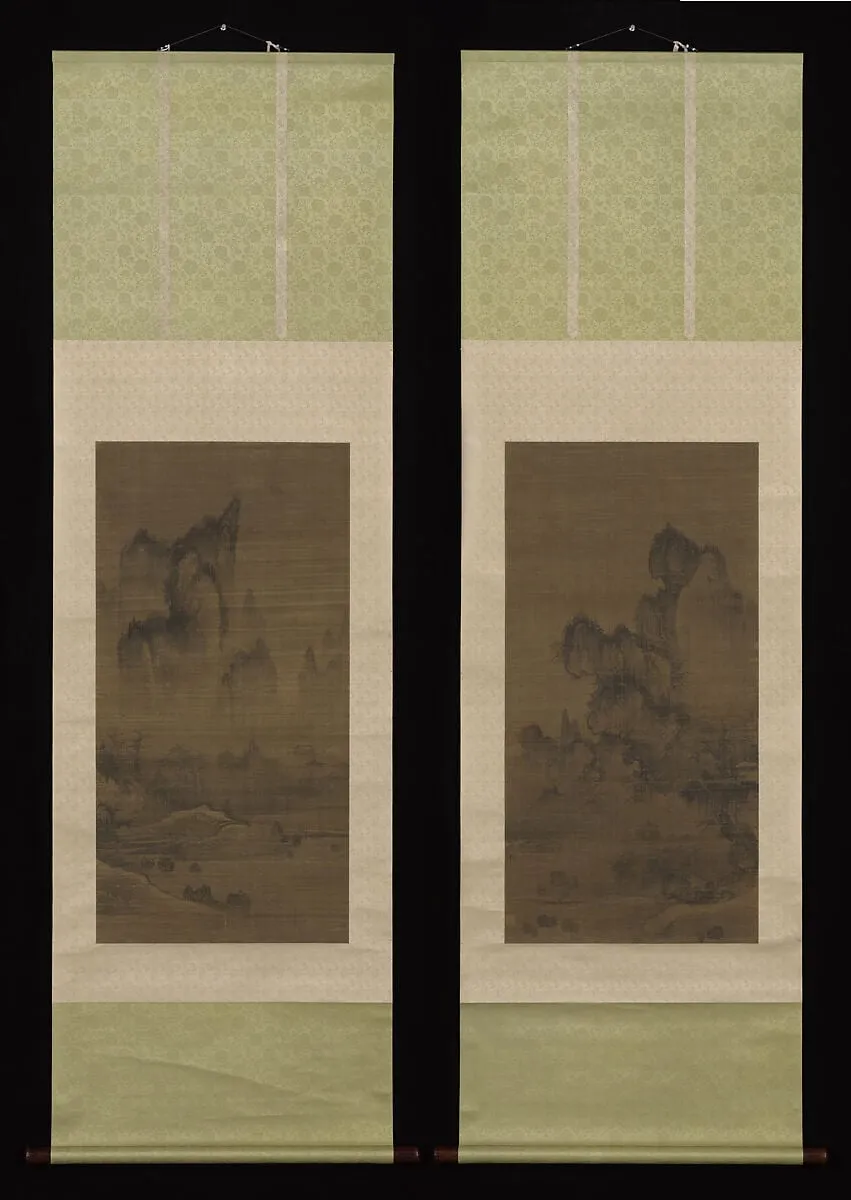
해질녘 산사의 종소리 조선|煙寺暮鍾圖 朝鮮|Evening bell from mist-shrouded temple (left); Autumn moon over Lake Dongting (right) is an ink painting by the Korean Minhwa artist An Gyeon. It dates from 1450 and is held in the collection of the Metropolitan Museum of Art.
About this work
Technique & Style
As landscape paintings, they emphasize compositional balance and the lyrical treatment of natural forms characteristic of Korean court art of the period.
The work is rendered as a pair of hanging scrolls, each painted in ink on silk, a medium documented for An Gyeon's landscape series. The support consists of traditional Korean scroll formats, allowing the pieces to be unrolled and displayed vertically. Executed in the mid-15th century, the paintings employ fine brushwork and subtle tonal gradations to convey atmospheric depth in the depicted mountains.
As landscape paintings, they emphasize compositional balance and the lyrical treatment of natural forms characteristic of Korean court art of the period. The formal qualities include restrained color, emphasis on line, and a contemplative mood reflected in the mist-shrouded temple and autumn moon scenes.
History & Provenance
The pair of hanging scrolls, titled Evening Bell from a Mist-Shrouded Temple and Autumn Moon over Lake Dongting, was created by the Korean painter An Gyeon around 1450 as ink-on-silk landscape works. The scrolls were produced as a matched pair and entered the collection of the Metropolitan Museum of Art, where they are catalogued under accession numbers 1987.278a and 1987.278b. The works are dated to the mid-15th century and were acquired by the museum in 1987. No further provenance details are provided in the available documentation.
Overview
This pair of ink on silk hanging scrolls, created by An Gyeon around 1450, portrays two distinct yet complementary landscape scenes. Titled Evening bell from mist-shrouded temple and Autumn moon over Lake Dongting, these works exemplify the artist's skill in capturing atmospheric effects. They represent a significant contribution to Korean landscape painting during the Joseon dynasty.
Subject & Meaning
The left scroll depicts a serene mountain temple enveloped in mist at dusk, with soft, ethereal ink washes suggesting clouds and the faint outline of a bell. Its counterpart on the right presents a tranquil lake under an autumn moon, which casts a soft glow over the calm waters. Together, these scenes evoke a sense of quiet contemplation and natural beauty.
Artist & collection