Artwork
狩野探幽筆 月夜山水図|Landscape in Moonlight
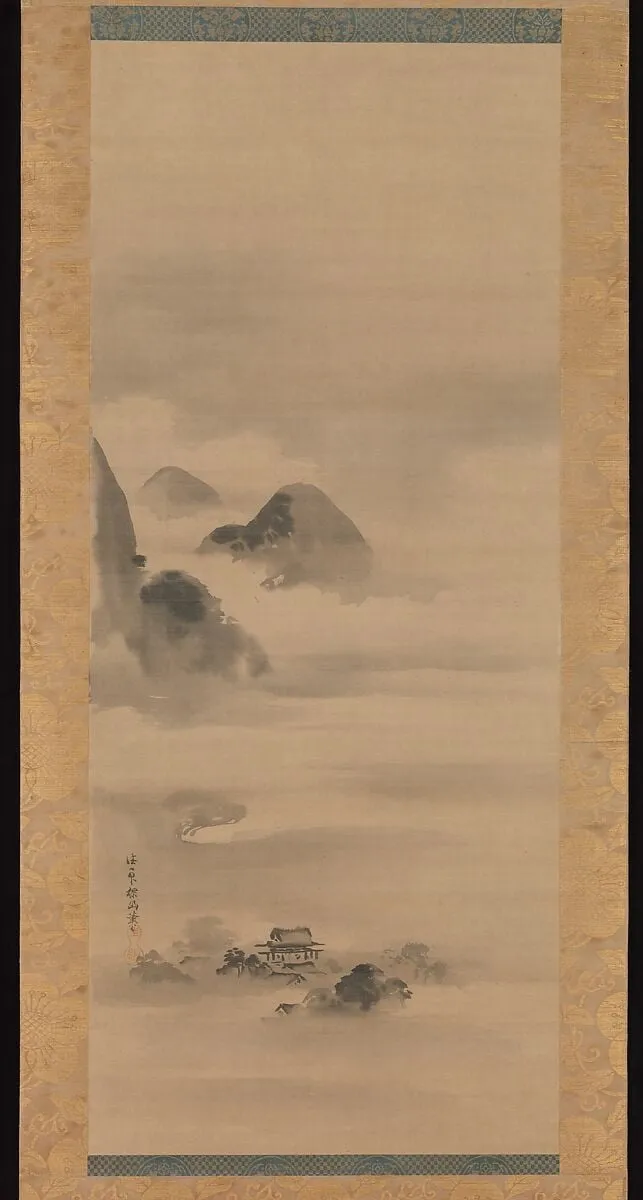
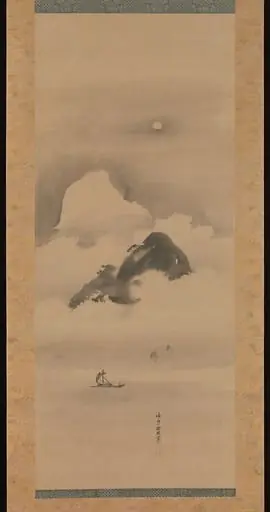
狩野探幽筆 月夜山水図|Landscape in Moonlight is an ink painting by the Baroque artist Kano Tan'yū. It dates from 1662 and is held in the collection of the Metropolitan Museum of Art.
About this work
Kano Tan’yū painted this after 1662, when Japanese artists were blending Chinese ink traditions with their own quiet style.
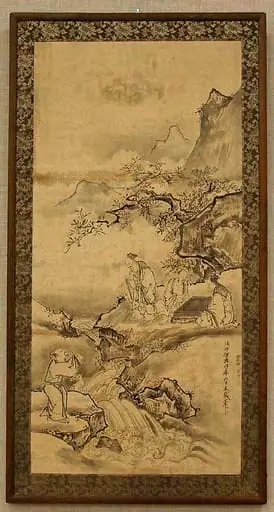
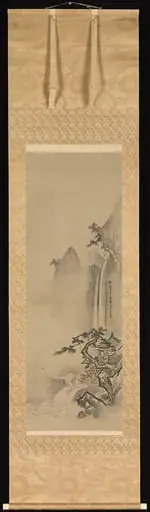
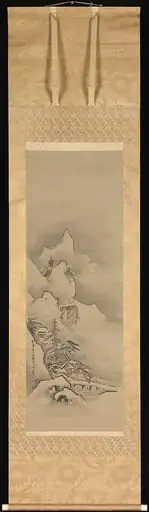
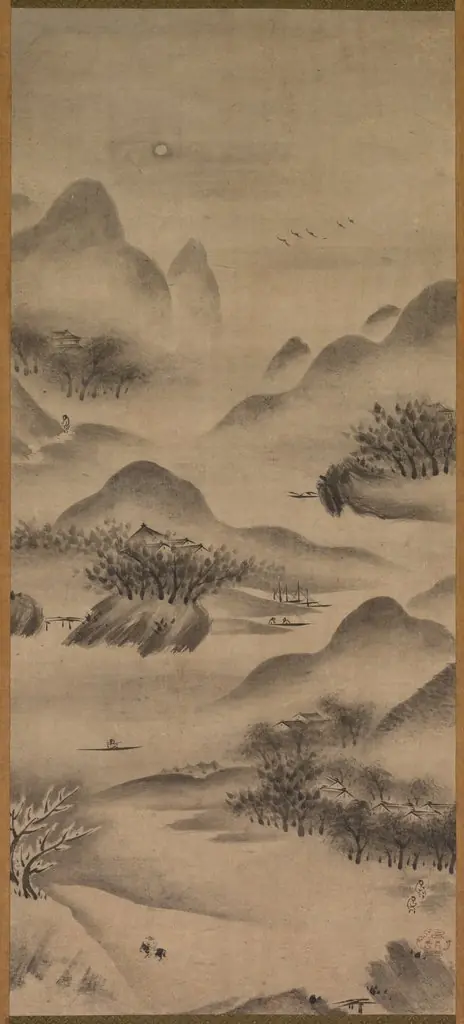
You see a dark mountain rising behind a few bare trees, all painted in soft black ink on silk. The moon glows faintly through the clouds, lighting the scene just enough to make the rocks and branches stand out.
Kano Tan’yū painted this after 1662, when Japanese artists were blending Chinese ink traditions with their own quiet style. The way he layers thin strokes to build depth, almost like shading with a pencil, feels simple but careful.
If you like this quiet night scene, look up landscapes, japan, landscape painting for more.
Subject & Meaning
This 1668 ink-on-silk hanging scroll by Kano Tan'yu depicts a moonlit landscape, a classic subject in East Asian painting tradition. As one panel of a triptych, the work presents a nocturnal mountain-and-water (山水, sansui) scene illuminated by moonlight. The moonlit landscape genre carries rich symbolic resonance: the moon represents enlightenment, cyclical time, and the permeable boundary between the earthly and the transcendent, while the mountains and water evoke the Buddhist concept of the world as constant flux.
In the context of the Kano school, such imagery also served to demonstrate mastery of ink-wash techniques and engagement with Chinese literati painting traditions, asserting cultural prestige and scholarly refinement.
Technique & Style
The work is a hanging scroll executed in ink on silk, forming one panel of a triptych. As a landscape painting, it depicts a moonlit scene within the Kano school tradition. The silk support allows for fine ink washes and controlled brush handling typical of 17th‑century Japanese scroll paintings.
History & Provenance
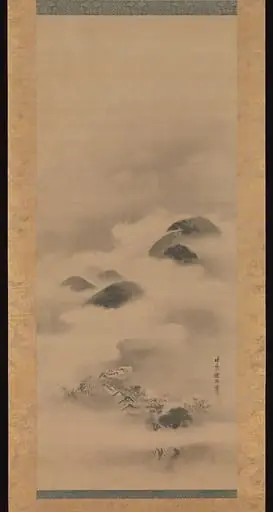
Landscape in Moonlight is one of three hanging scrolls forming a triptych painted by Kanō Tan’yū in 1668, executed in ink on silk. The work entered the collection of the Metropolitan Museum of Art, where it is currently housed under accession number 1975.268.49. No earlier ownership records or commission details are documented in the available sources. It is classified as a landscape painting depicting a moonlit scene, and was made in Japan.
Overview
Kano Tan'yū's Landscape in Moonlight is a hanging scroll, part of a triptych, executed in ink on silk. Created after 1662, this painting exemplifies the artist's approach to landscape subjects. It presents a serene nocturnal scene, characterized by a subdued palette and a focus on natural forms. The work reflects the refined aesthetic prevalent in Japanese painting during the Edo period.
Context
This work was created during a period when Japanese artists, including Tan'yū, were actively integrating elements of traditional Chinese ink painting with indigenous aesthetic sensibilities. The resulting style often emphasized quiet contemplation and a refined simplicity. Landscape in Moonlight reflects this artistic synthesis, showcasing a harmonious blend of historical influences and a distinctively Japanese approach to landscape representation.
Artist & collection