Artwork
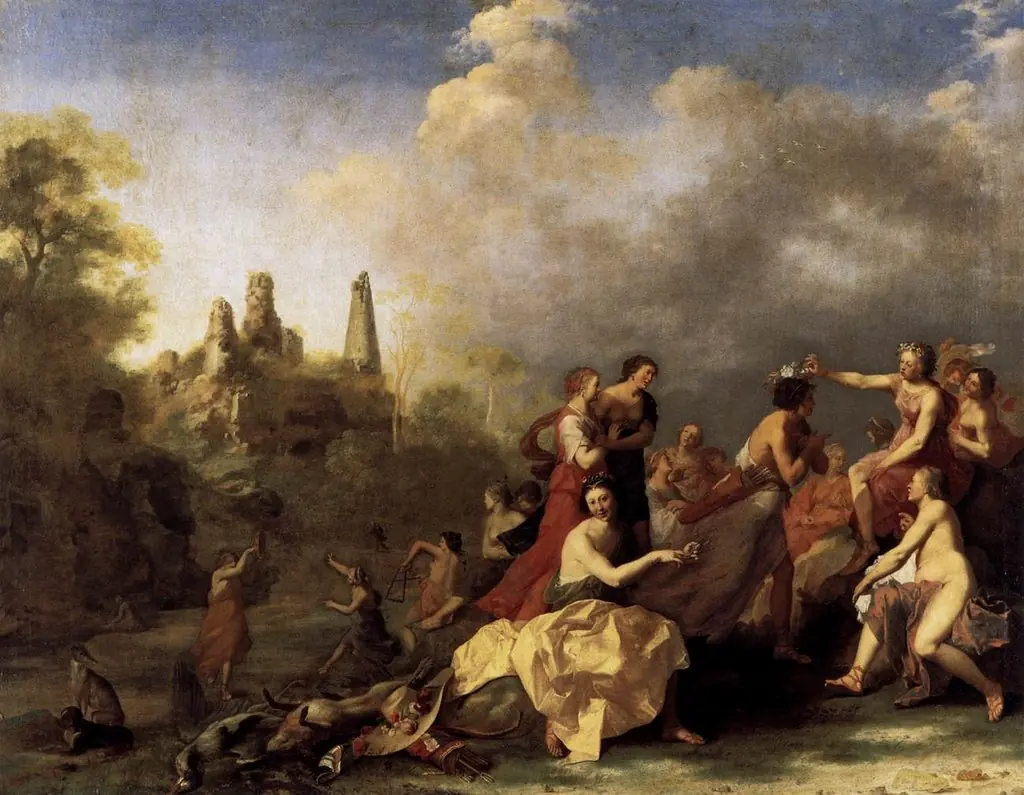
Fiestas Lupercales
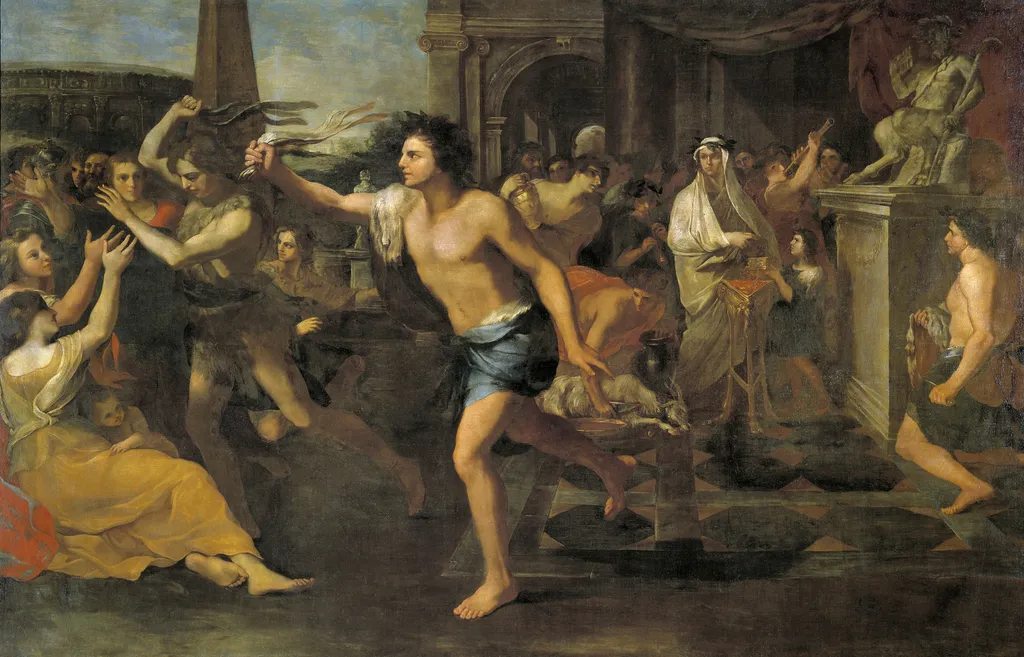
Fiestas Lupercales is an oil painting by the Early Baroque Italian artist Andrea Camassei. It dates from 1635 and is held in the collection of the Museo del Prado.
About this work
Subject & Meaning
By focusing on these specific objects alongside the event's name, the work represents the ceremonial and festive aspects of this archaic rite.
Andrea Camassei's 1635 oil painting, Fiestas Lupercales, visually interprets the ancient Roman festival of Lupercalia. The composition explicitly depicts ritual instruments associated with the celebration, including a pan flute and a trumpet. By focusing on these specific objects alongside the event's name, the work represents the ceremonial and festive aspects of this archaic rite.
The painting serves as a historical record of the Lupercalia, capturing the atmosphere of the festivities through its detailed rendering of the musical elements central to the proceedings.
Technique & Style
Executed in 1635, Fiestas Lupercales is an oil painting on canvas by Andrea Camassei. The work presents a large-scale composition measuring 238 cm in height and 366 cm in width. Stylistically, the piece depicts scenes associated with the Lupercalia festival, featuring specific iconographic elements such as a pan flute and a trumpet within the narrative.
The painting currently resides in the collection of the Museo del Prado, having previously been owned by Ferdinand VII of Spain.
History & Provenance
The painting Fiestas Lupercales is dated 1635 and attributed to Andrea Camassei. It entered the Museo del Prado collection as part of the holdings of Ferdinand VII of Spain, whose ownership is recorded in the Prado’s records. The work has remained in the Museo del Prado’s holdings since that acquisition.
The painting Fiestas Lupercales by Andrea Camassei is held in the collection of the Museo del Prado in Madrid. The work, executed in oil on canvas in 1635, measures 238 cm in height and 366 cm in width. Historical records indicate that the piece was formerly owned by Ferdinand VII of Spain.
The provided sources do not contain specific inventory or accession numbers, nor do they list any exhibition history for the work.
Context
Critical reception of Fiestas Lupercales remains sparse, with no documented contemporary commentary identified in available records. Scholarly attention focuses on its role within Andrea Camassei’s oeuvre as a Baroque painter active in mid-17th century Rome, situating the work within the broader context of religious and antiquarian interests in antiquities. The painting’s subject matter, celebrating the ancient Lupercalia festival, reflects the era’s fascination with classical antiquity, even as depicted through a Christianized ritual.
Its inclusion in the collection of Ferdinand VII of Spain and residence at the Museo del Prado underscore its historical journey from European elite patronage to institutional preservation. The work’s dimensions, rendered in oil on canvas measuring 238 cm by 366 cm, highlight the grandeur typical of Baroque ceremonial scenes, reinforcing its significance as a visual narrative bridging mythological tradition and ecclesiastical celebration.
Overview
Created in 1635 by the Roman Baroque artist Andrea Camassei, this oil painting portrays the ancient Roman celebration known as Lupercalia. Executed during Camassei’s period of patronage by the Barberini family, the work is part of the early Italian Baroque repertoire and is presently housed in the Museo del Prado.
Own this work as a print
Artist & collection
Artist
Andrea Camassei (November 1602 – 18 August 1649) was an Italian Baroque painter and engraver mainly active in Rome under the patronage of the Barberini.

 Rape of the Sabines
 Rape of the Sabine Women
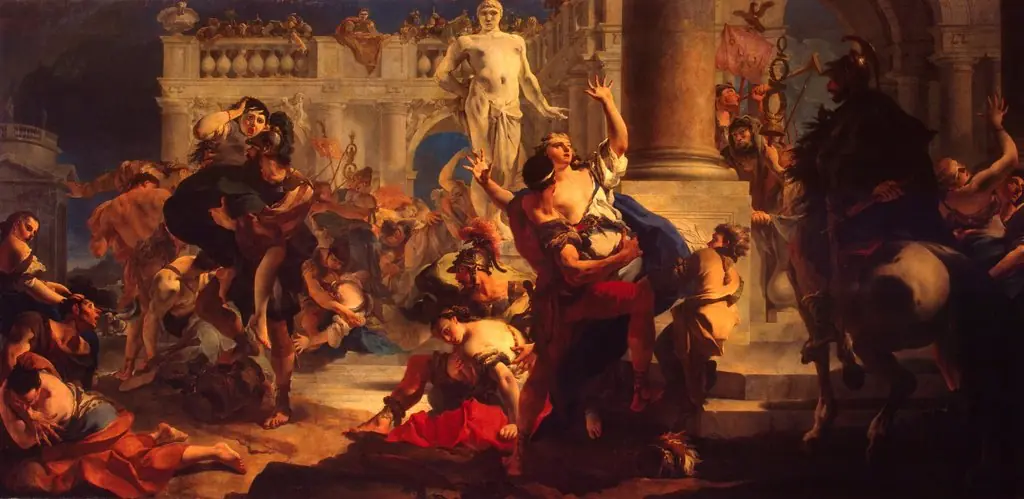 Rape of the Sabine Women
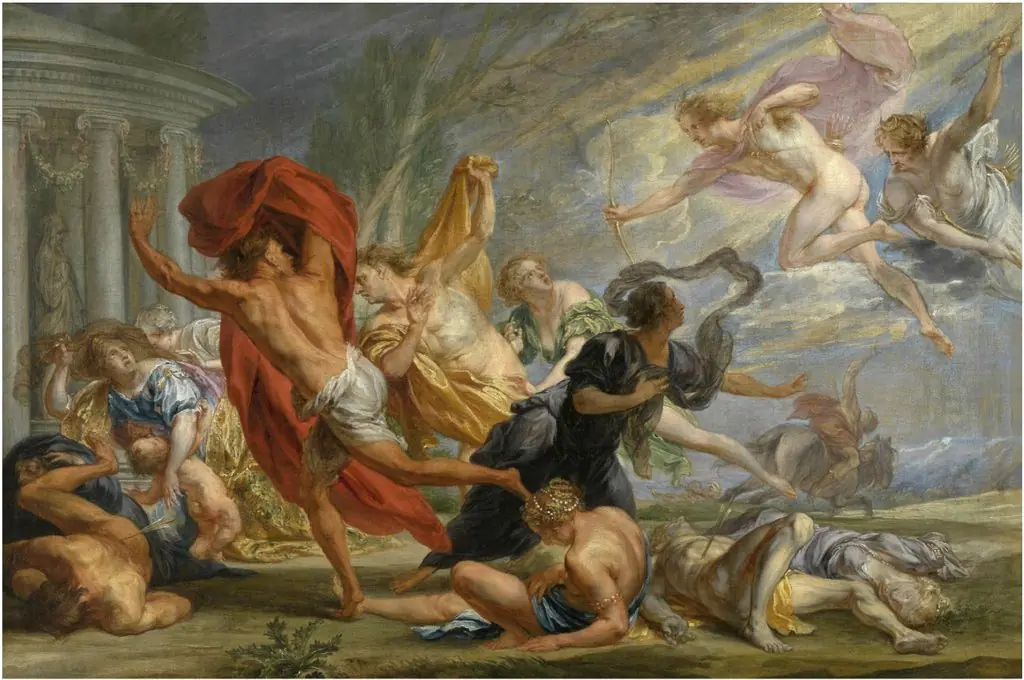 Apollo and Diana Kill Niobe's Children
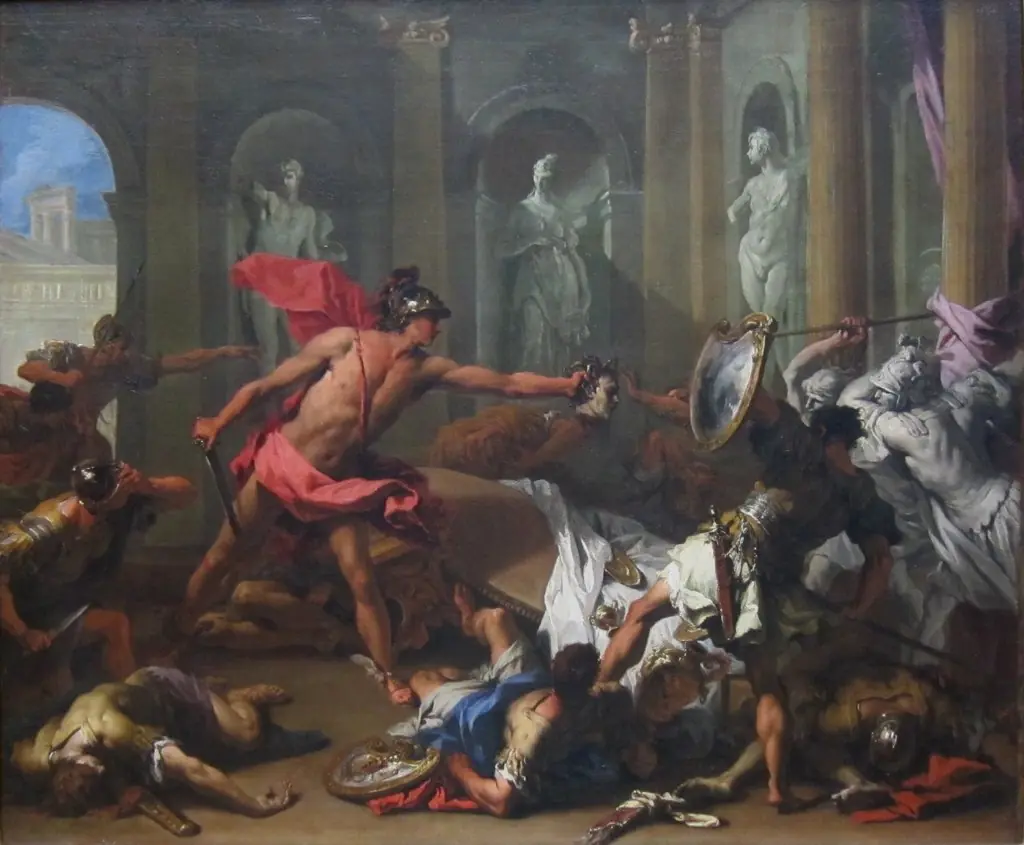 Perseo affronta Fineo con la testa di Medusa
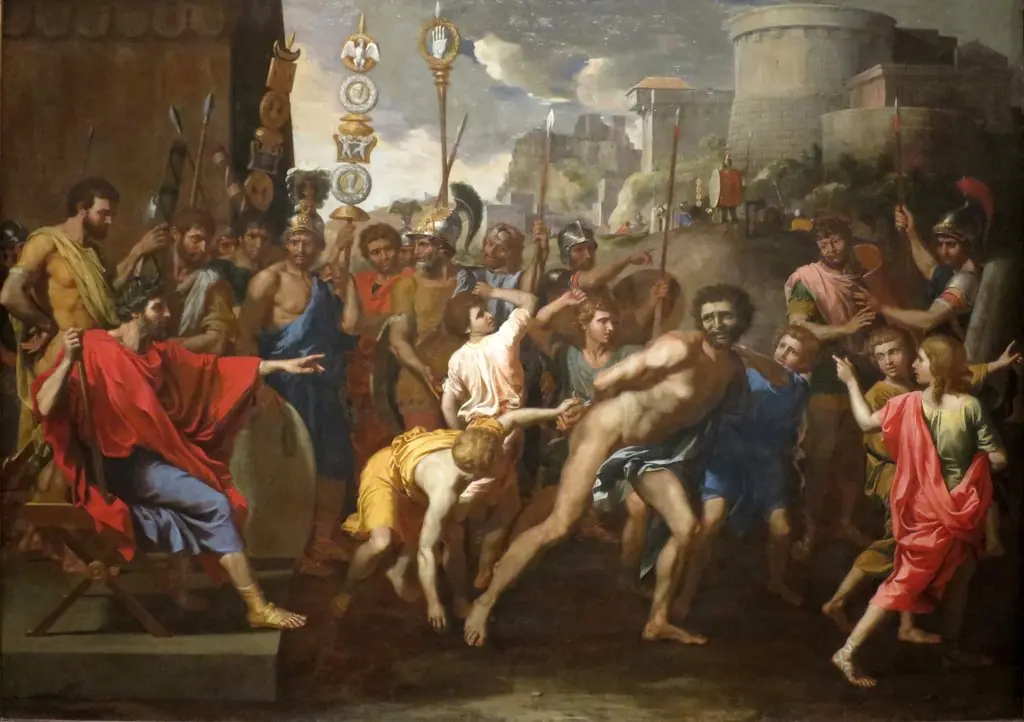 Camillus and the Schoolmaster of Falerii
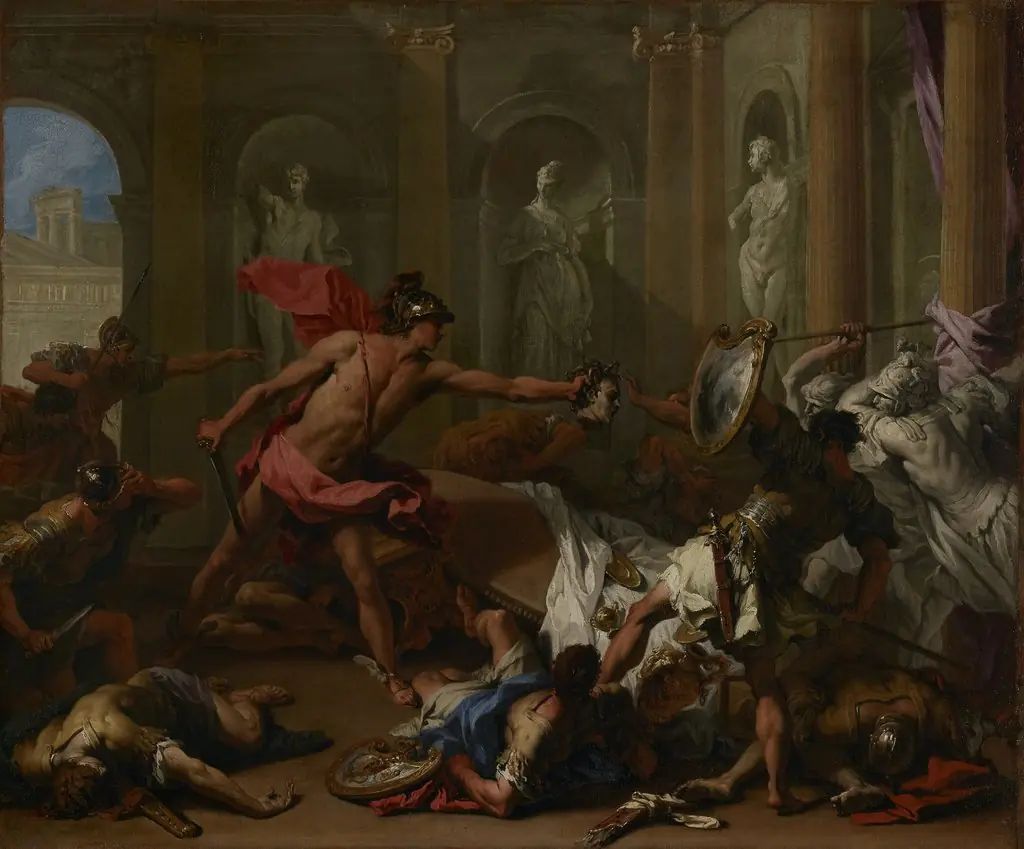 Perseus Confronting Phineus with the Head of Medusa
 Atelierul lui Vulcan
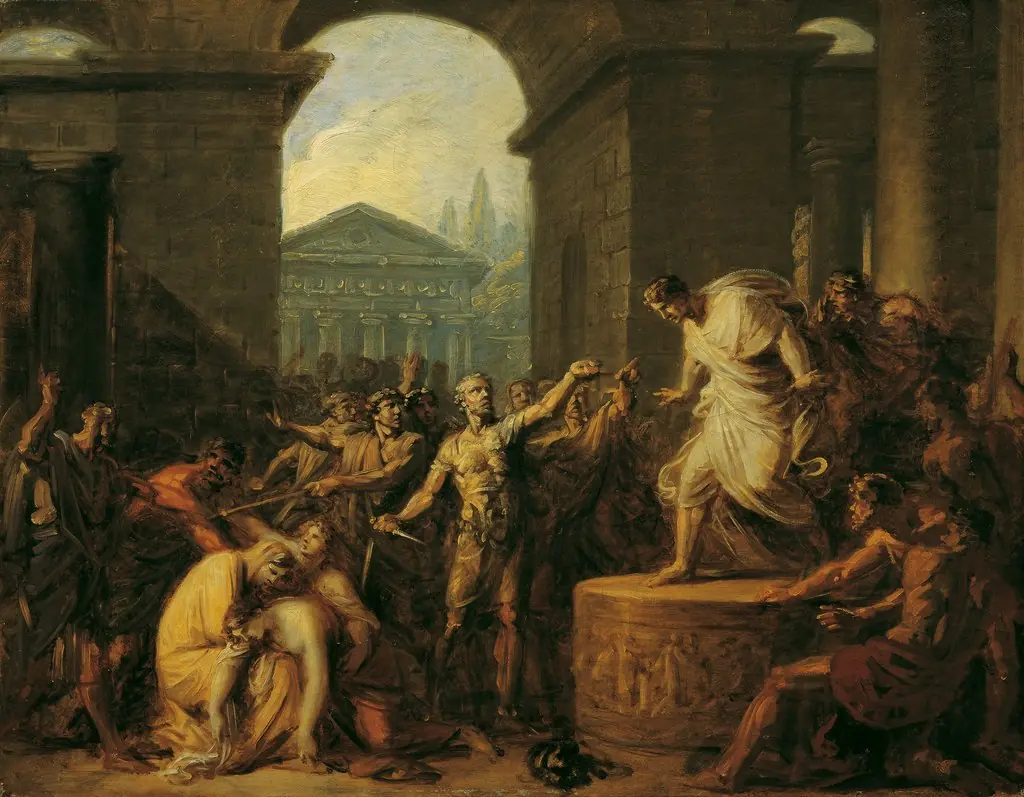 The Death of Virginia
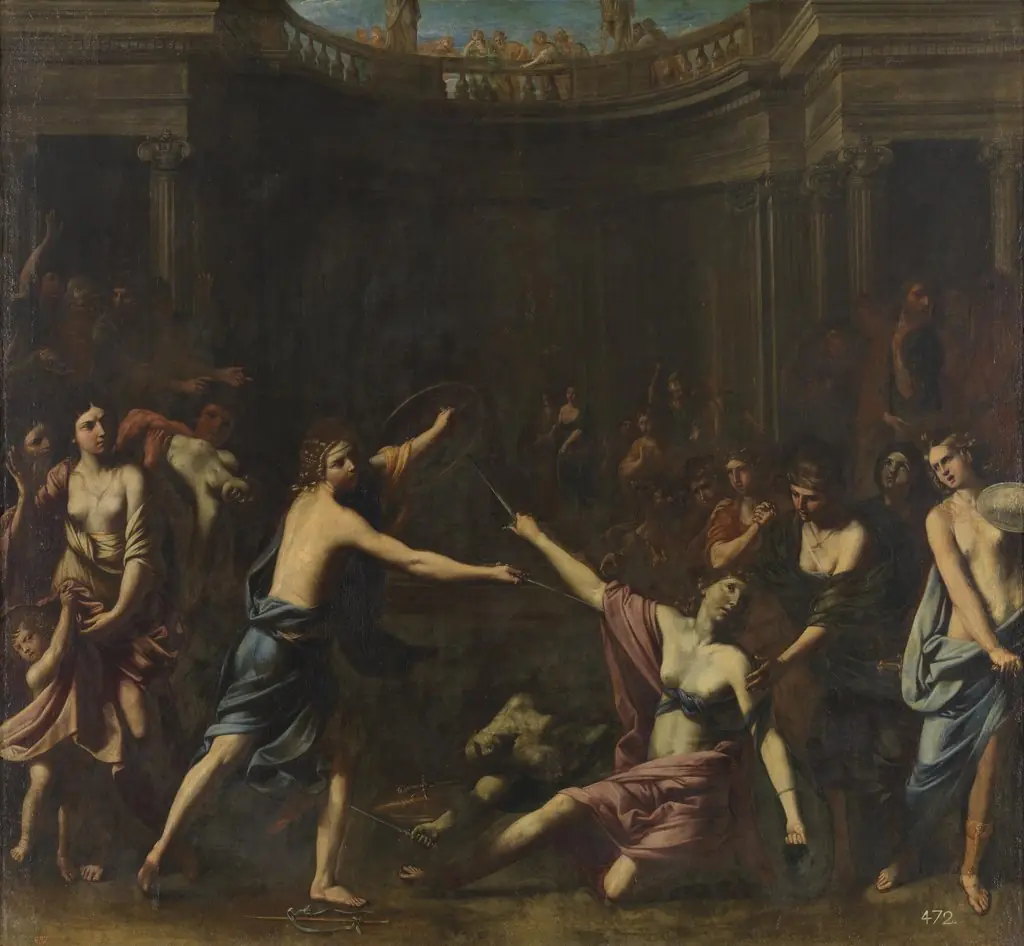 Women Gladiators
 The coronation of Mirtillo after the kissing contest (Guarini, Il Pastor Fido)
- Jephta erblickt seine Tochter