Artwork
Ascension
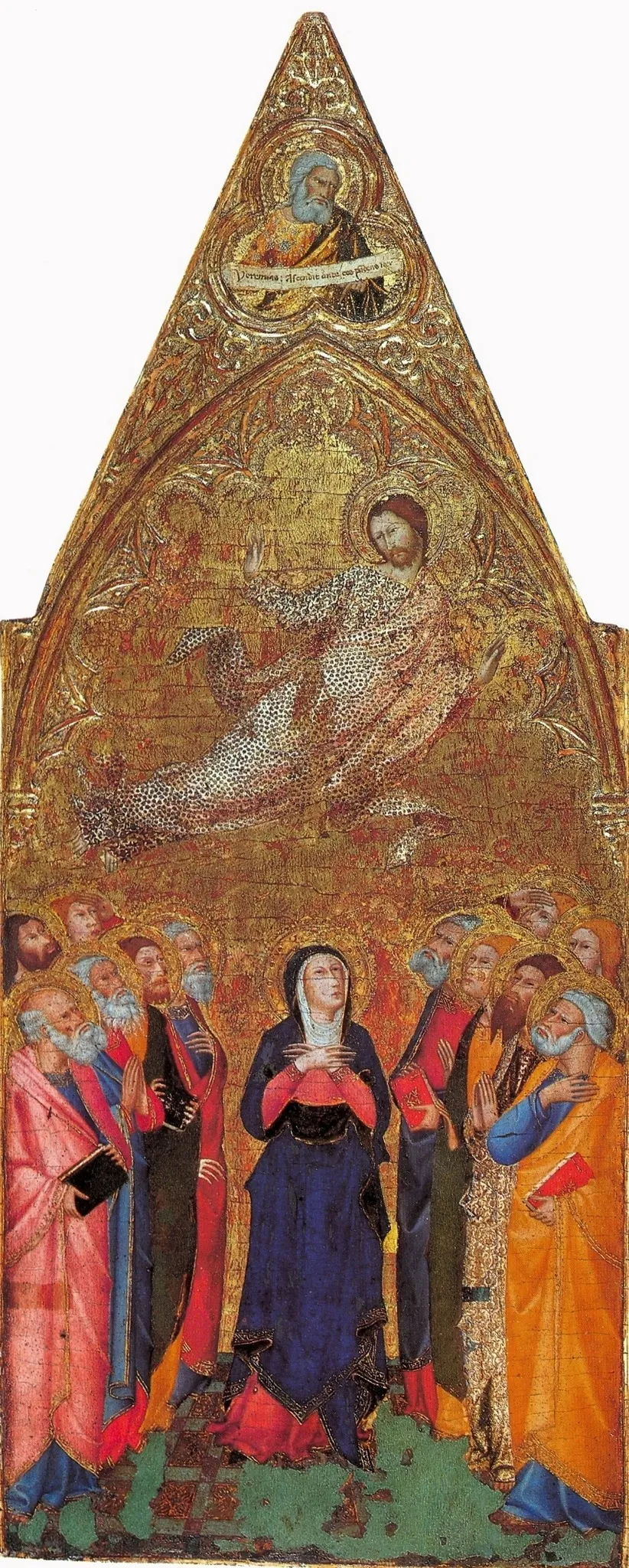
Ascension is a tempera painting by the Sienese School artist Andrea Vanni. It dates from 1357 and is held in the collection of the Hermitage Museum.
About this work
Overview
The use of egg-based pigment gives the surface a luminous, matte finish typical of 14th-century Italian devotional art.
Painted in 1357 by Andrea Vanni, this tempera work depicts the Ascension of Christ. Executed on a wooden panel, it is part of the collection at the State Hermitage Museum in Saint Petersburg. The composition centers on a hierarchical arrangement of figures beneath a golden arch, with celestial elements above.
The use of egg-based pigment gives the surface a luminous, matte finish typical of 14th-century Italian devotional art.
Subject & Meaning
The scene illustrates Christ’s ascent into heaven, marked by his presence in a radiant circle above the earthbound disciples. Below, the Virgin Mary, dressed in blue, stands in prayer at the center, flanked by apostles who gesture in awe or reverence. The arrangement reflects theological themes of divine transition and earthly witness, emphasizing spiritual contemplation over dramatic movement. The calm expressions reinforce the solemnity of the moment.
Technique & Style
Tempera paint, made from pigment mixed with egg yolk, was applied in thin layers to achieve vivid, enduring color. Figures are outlined boldly, with flat planes of red, blue, and gold contrasting against a green-and-gold background. Facial features are simplified, lacking naturalistic depth, while drapery folds are stylized into rhythmic patterns. This approach aligns with the Italo-Byzantine tradition, prioritizing symbolic clarity over spatial realism.
History & Provenance
Created for a religious context, likely an altar or chapel in Siena, the painting entered the Hermitage collection in the 19th century. Its journey from a local devotional object to a museum piece reflects broader patterns of European art acquisition during the Enlightenment and Romantic periods. No documentation survives of its original commission, but its style suggests ties to Sienese workshops active in the mid-14th century.
Context
In mid-14th-century Tuscany, religious imagery served both liturgical and didactic functions. Artists like Vanni worked within established iconographic conventions, adapting them for local patrons. The emphasis on gold backgrounds and hierarchical scale echoed Byzantine models, while the use of tempera reflected the region’s technical preferences before oil painting became widespread. This work exemplifies the transition from medieval to early Renaissance sensibilities.
Legacy
Though not widely known outside specialist circles, the painting remains a representative example of Sienese tempera work from the late Gothic period. It contributes to understanding how religious narratives were visually codified before the advent of linear perspective. Its preservation in a major museum ensures continued study of regional artistic practices and devotional culture in pre-Renaissance Italy.
Artist & collection

![Scenes from the Passion of Christ: The Agony in the Garden, the Crucifixion, and the Descent into Limbo [entire triptych], by Andrea Vanni](https://artifactworldgallery.com/img/andrea-vanni--scenes-from-the-passion-of-christ-the-agony-in-the-garden-th--1ebebae2d86a2ec2-w320.webp) Scenes from the Passion of Christ: The Agony in the Garden, the Crucifixion, and the Descent into Limbo [entire triptych]
Scenes from the Passion of Christ: The Agony in the Garden, the Crucifixion, and the Descent into Limbo [entire triptych]![Scenes from the Passion of Christ: The Descent into Limbo [right panel], by Andrea Vanni](https://artifactworldgallery.com/img/andrea-vanni--scenes-from-the-passion-of-christ-the-descent-into-limbo-rig--9eb5d32175c31b6f-w320.webp) Scenes from the Passion of Christ: The Descent into Limbo [right panel]
Scenes from the Passion of Christ: The Descent into Limbo [right panel]![Scenes from the Passion of Christ: The Crucifixion [middle panel], by Andrea Vanni](https://artifactworldgallery.com/img/andrea-vanni--scenes-from-the-passion-of-christ-the-crucifixion-middle-pan--abe5469a28e77ac7-w320.webp) Scenes from the Passion of Christ: The Crucifixion [middle panel]
Scenes from the Passion of Christ: The Crucifixion [middle panel]![Scenes from the Passion of Christ: The Agony in the Garden [left panel], by Andrea Vanni](https://artifactworldgallery.com/img/andrea-vanni--scenes-from-the-passion-of-christ-the-agony-in-the-garden-le--2bad16de75eee8eb-w320.webp) Scenes from the Passion of Christ: The Agony in the Garden [left panel]
Scenes from the Passion of Christ: The Agony in the Garden [left panel] The Virgin and Child
 Saint Peter
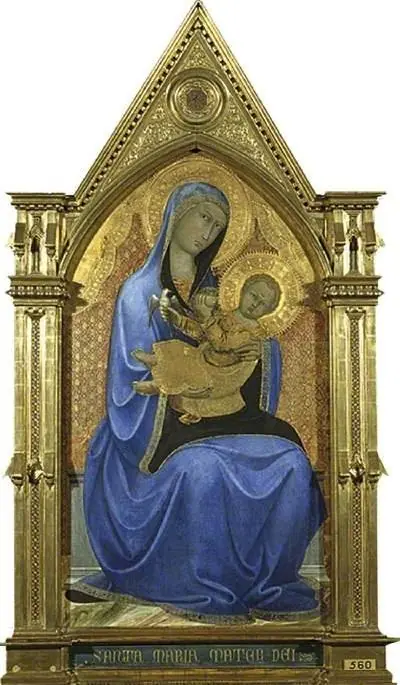 Virgin and Child
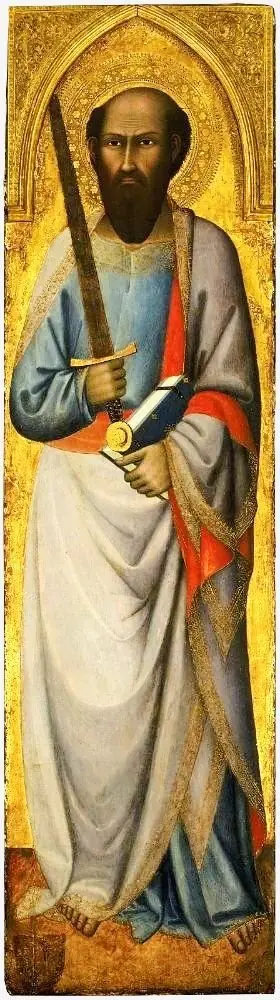 St Paul
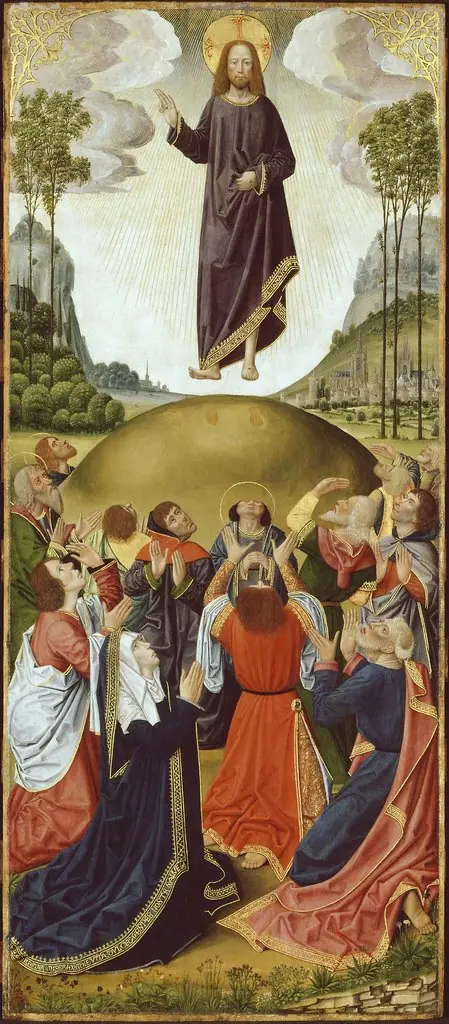 Altarpiece from Thuison-les-Abbeville: The Ascension
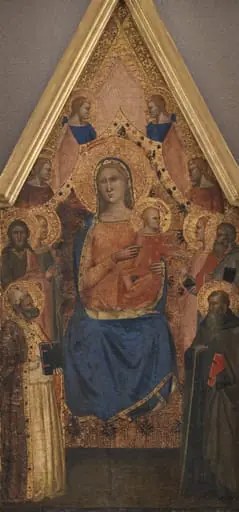 The Virgin and Child with Saints and Angels
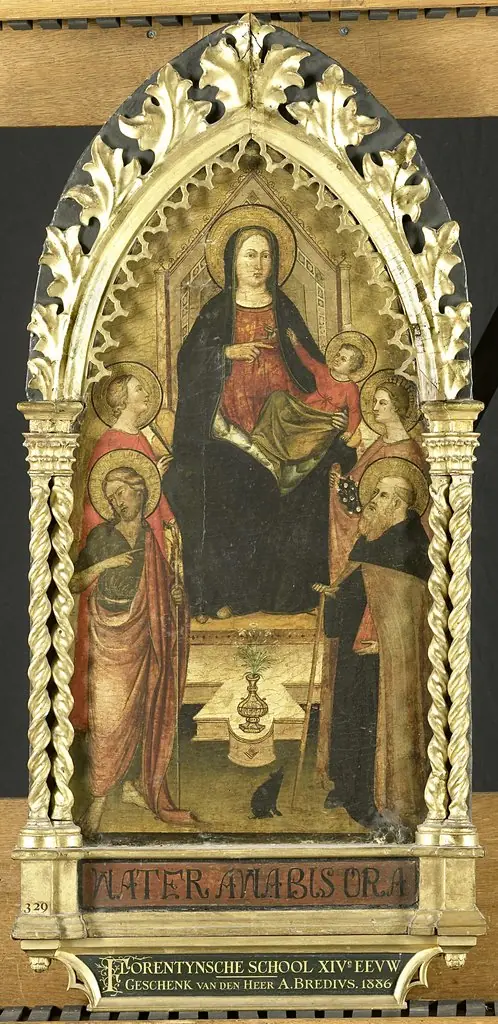 Virgin and Child Enthroned with Four Saints, Saints John the Baptist, Antony Abbot, Elizabeth of Hungary, a female saint
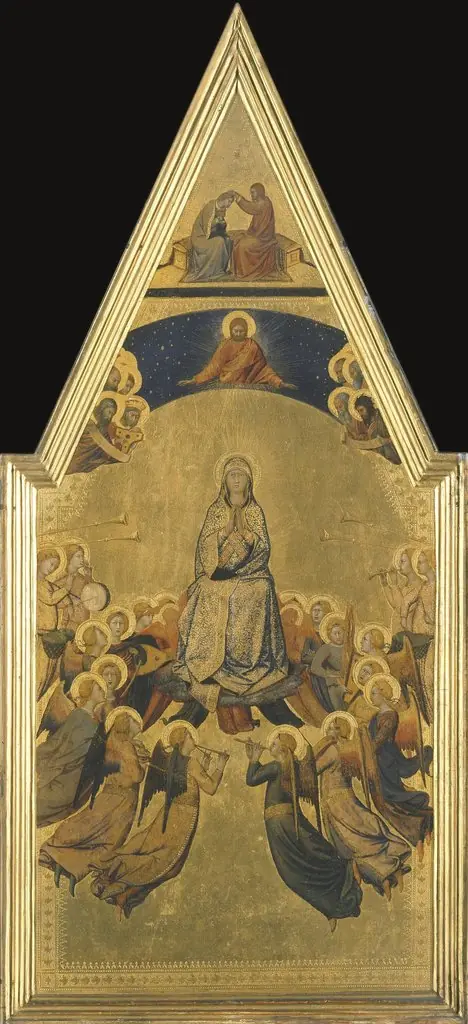 Die Himmelfahrt Mariae
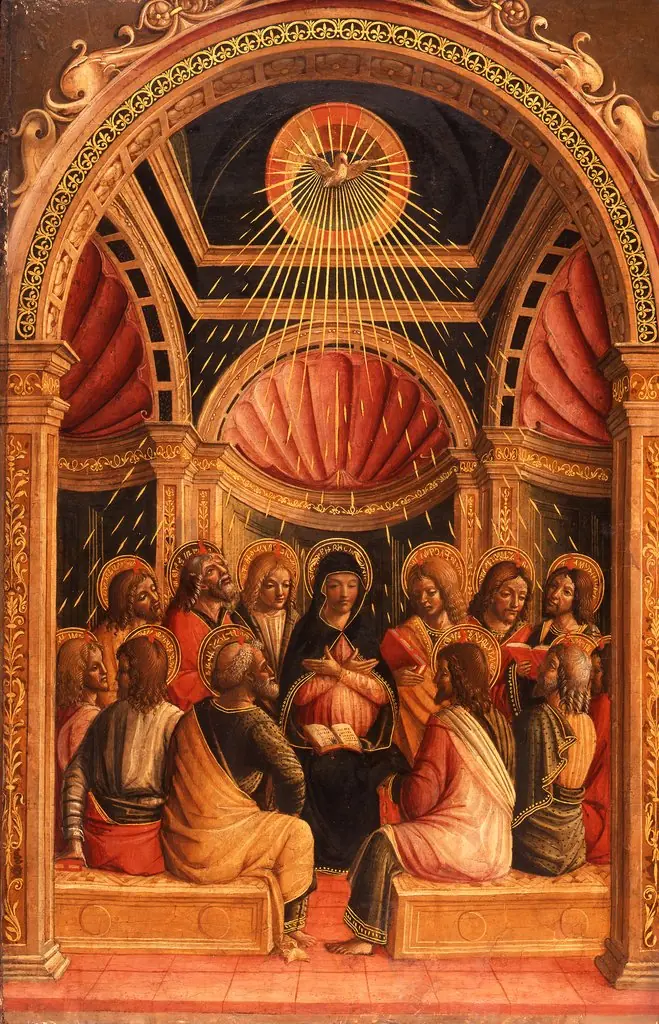 The Outpouring of the Holy Spirit (Pentecost)
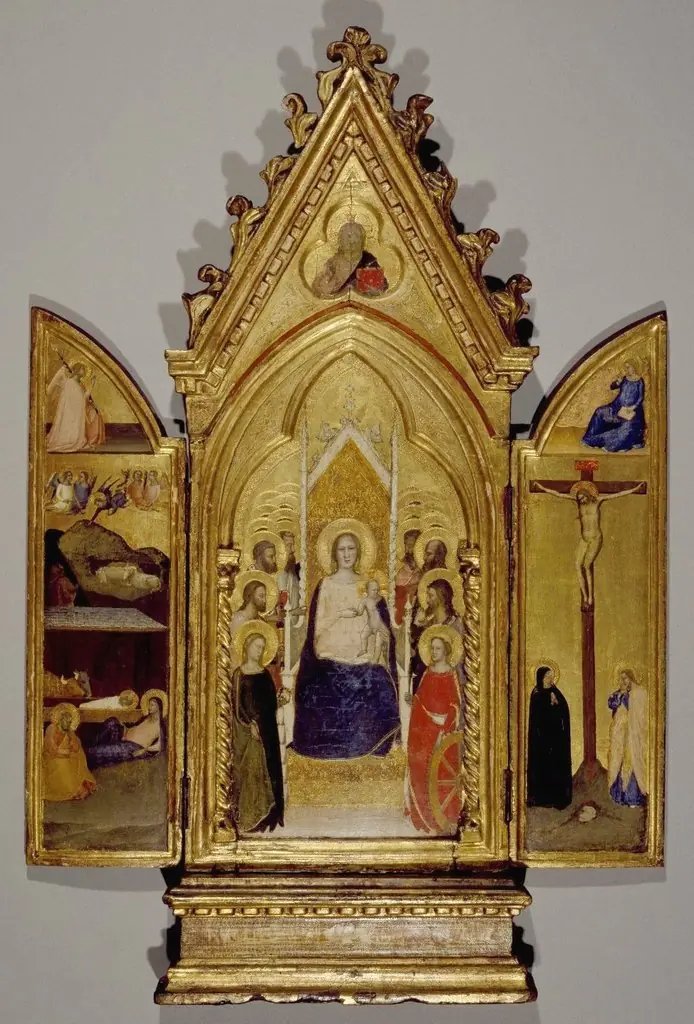 Triptych: Madonna with Saints and Christ Blessing (Center); The Nativity and the Annunciate Angel (Left Wing); Crucifixion and the Virgin Annunciate (Right Wing)
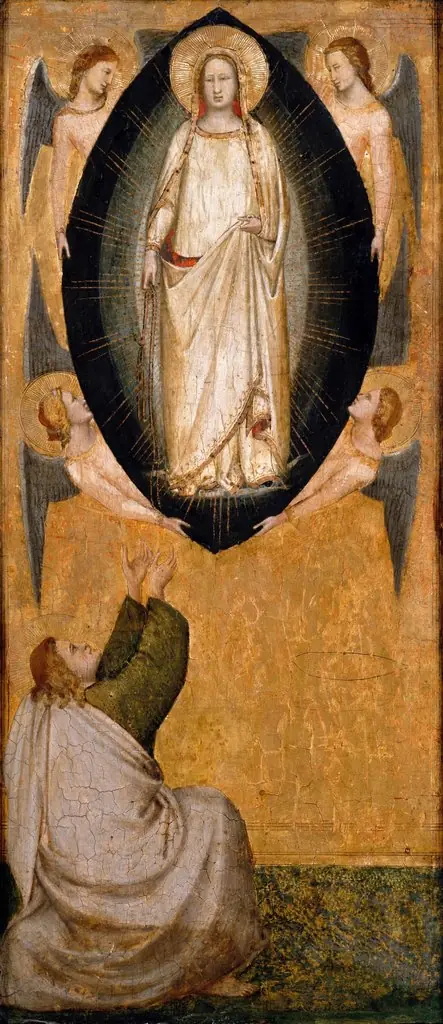 Descent of Mary's Girdle to the Apostle Thomas
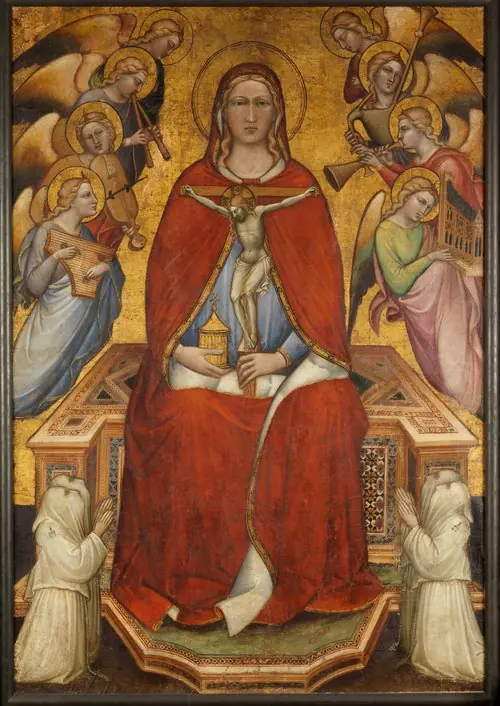 Processional Banner
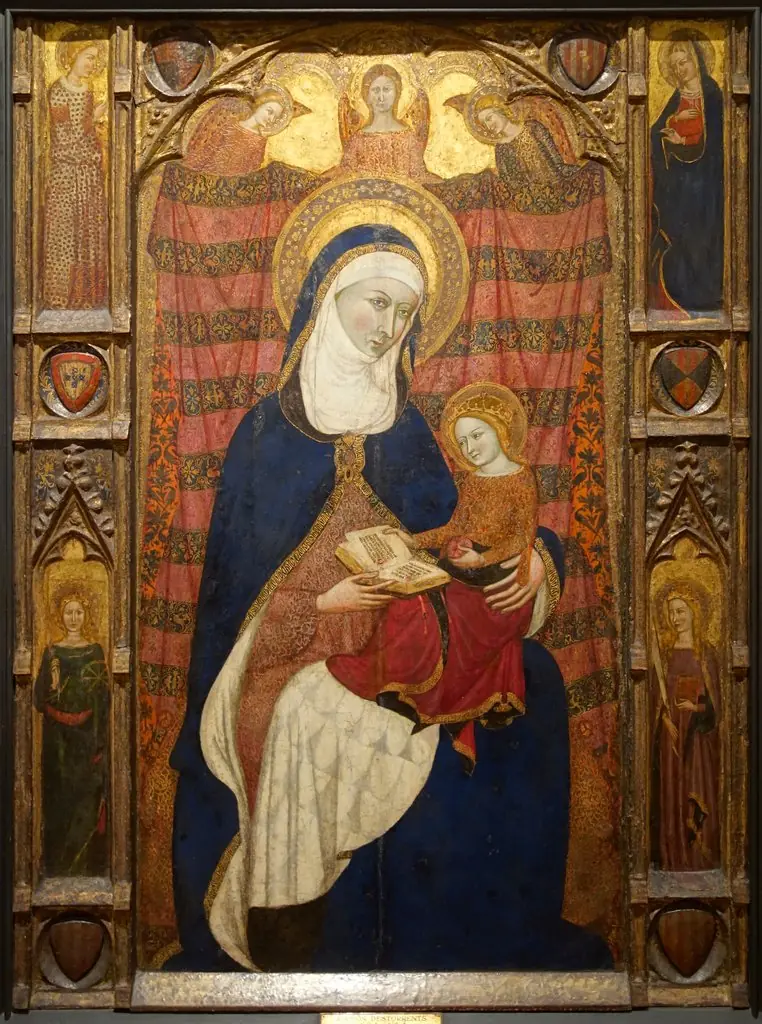 Retaule de Santa Anna i la Mare de Déu
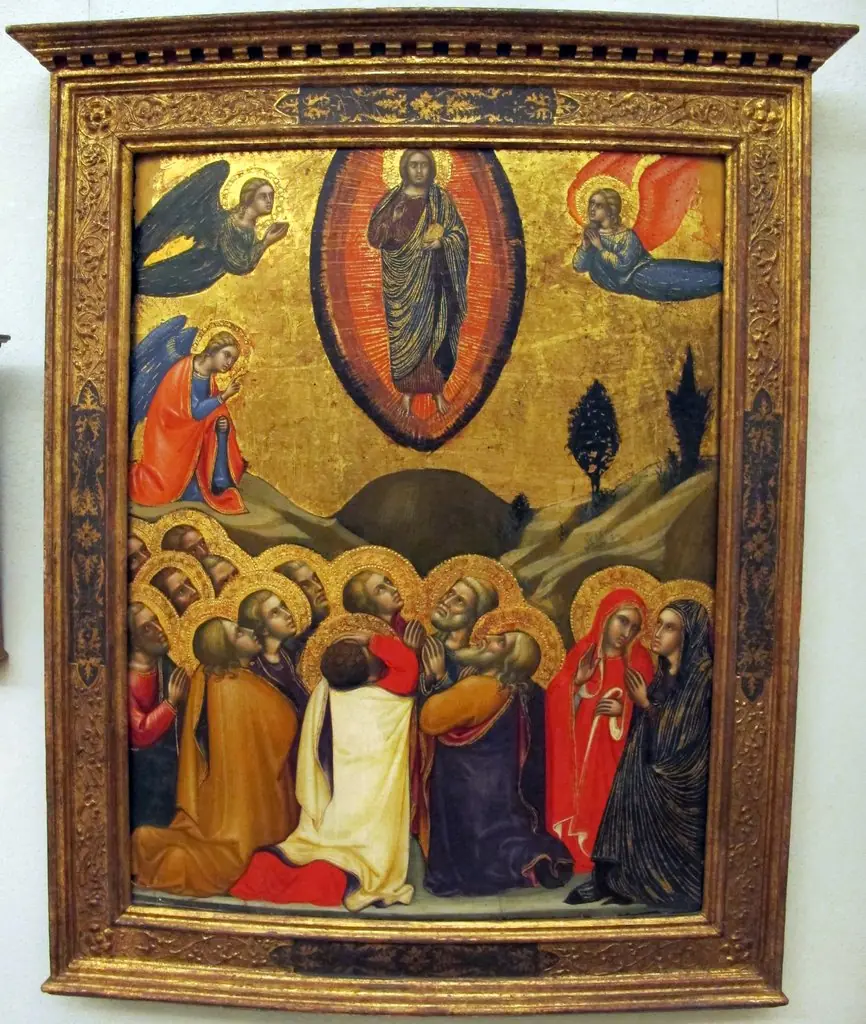 ascensione
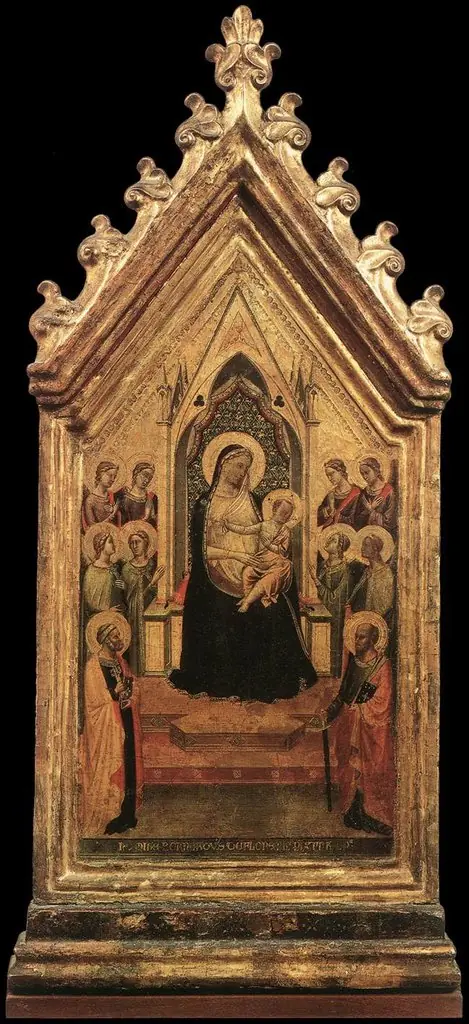 Madonna and Child Enthroned with Angels and Saints
- The ascension of Mary