Artwork
Scenes from the Passion of Christ: The Agony in the Garden, the Crucifixion, and the Descent into Limbo [entire triptych]
![Scenes from the Passion of Christ: The Agony in the Garden, the Crucifixion, and the Descent into Limbo [entire triptych], by Andrea Vanni, tempera, 1384](https://artifactworldgallery.com/img/andrea-vanni--scenes-from-the-passion-of-christ-the-agony-in-the-garden-th--1ebebae2d86a2ec2-w1024.webp)
Scenes from the Passion of Christ: The Agony in the Garden, the Crucifixion, and the Descent into Limbo [entire triptych] is a tempera painting by the Byzantine icon painting artist Andrea Vanni. It dates from 1384 and is held in the collection of the National Gallery of Art. This tempera painting on panel, titled Scenes from the Passion of Christ, was created by Andrea di Vanni around 1384.
- Inscription
- Inscribed:middle panel, lower center on original frame, some of the letters restored: ANDREAS UANNIS / DE SENIS / ME PINXIT (Andreas di Vanni of Siena painted me); middle panel, above the cross, in gold bordered by red rectangle: INRI; middle panel, on red flag, in gold: SPQR; right panel, in black paint on the scroll held by God the Father: Destruxit quidam mortes inferni / et subvertit potentias diaboli; right panel, in black paint on the scroll held by Saint John the Baptist: ECCE.ANGIUS[AGNUS]. (Behold the Lamb)
About this work
Subject & Meaning
These scenes convey the theological narrative of Christ's redemptive sacrifice and victory over death, emphasizing the promise of salvation for humanity.
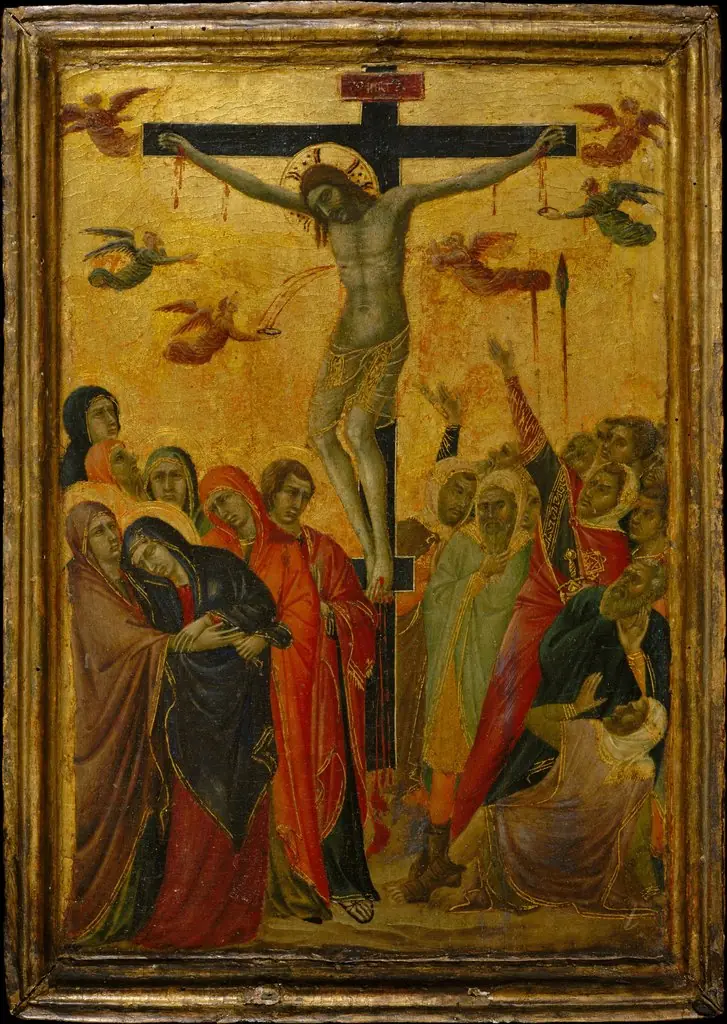
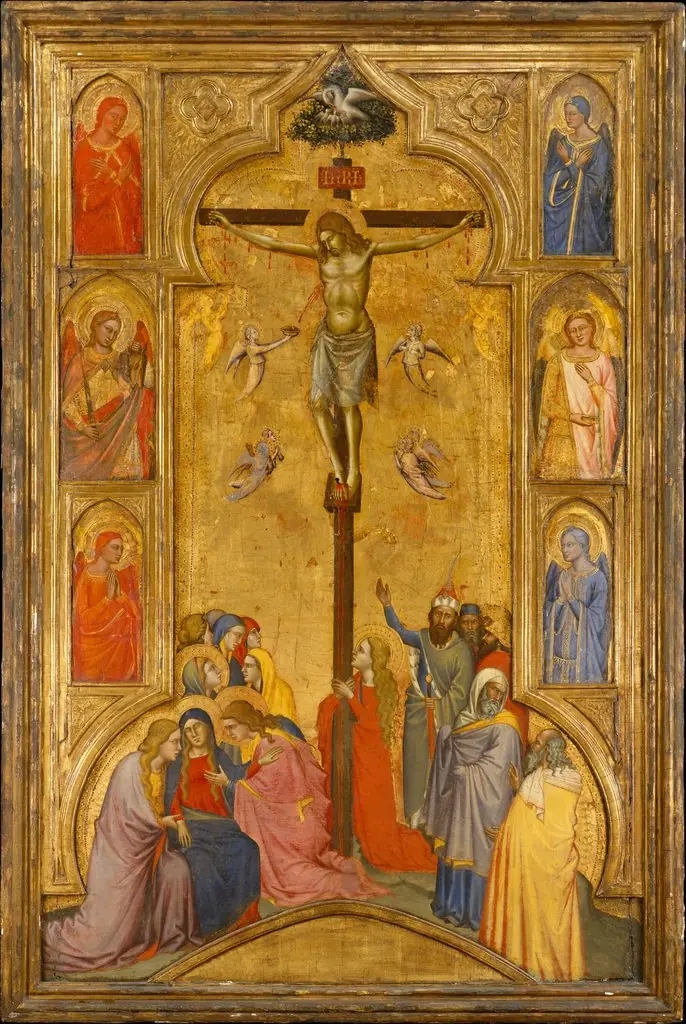
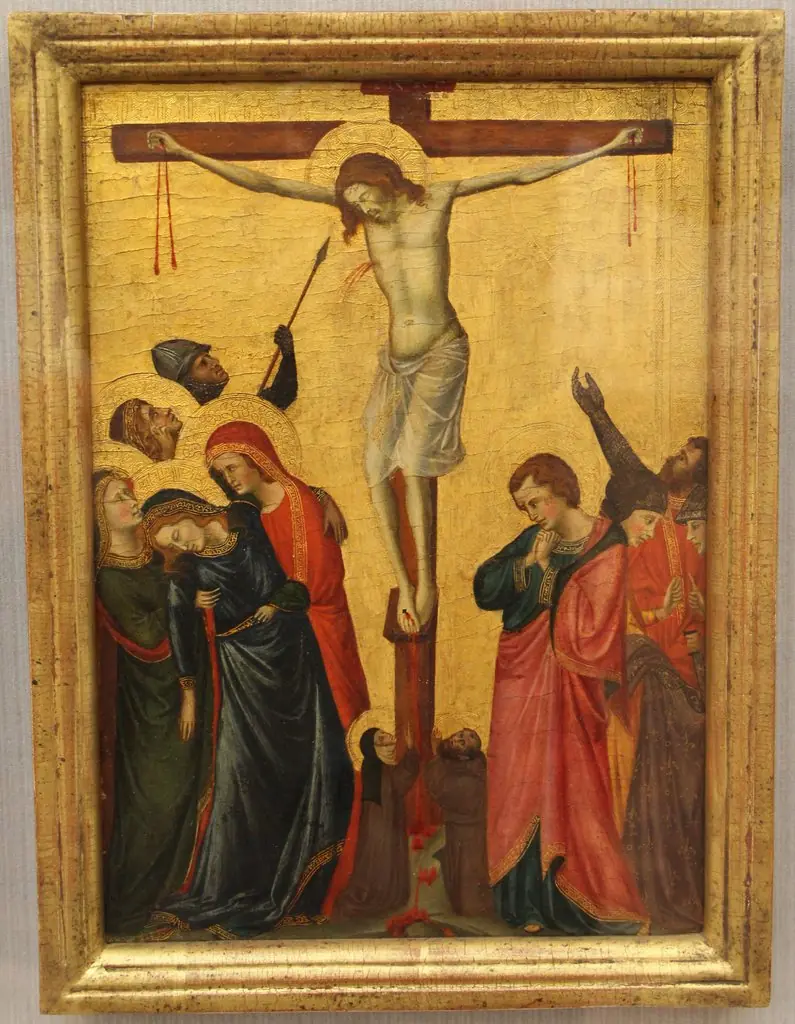
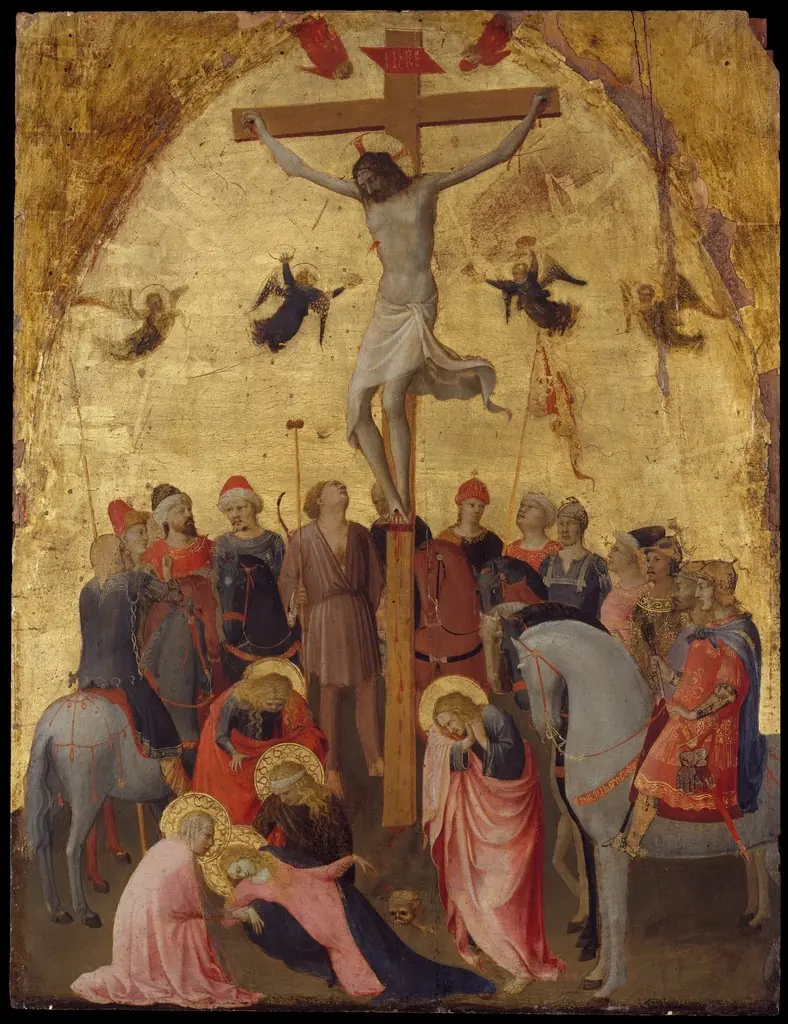
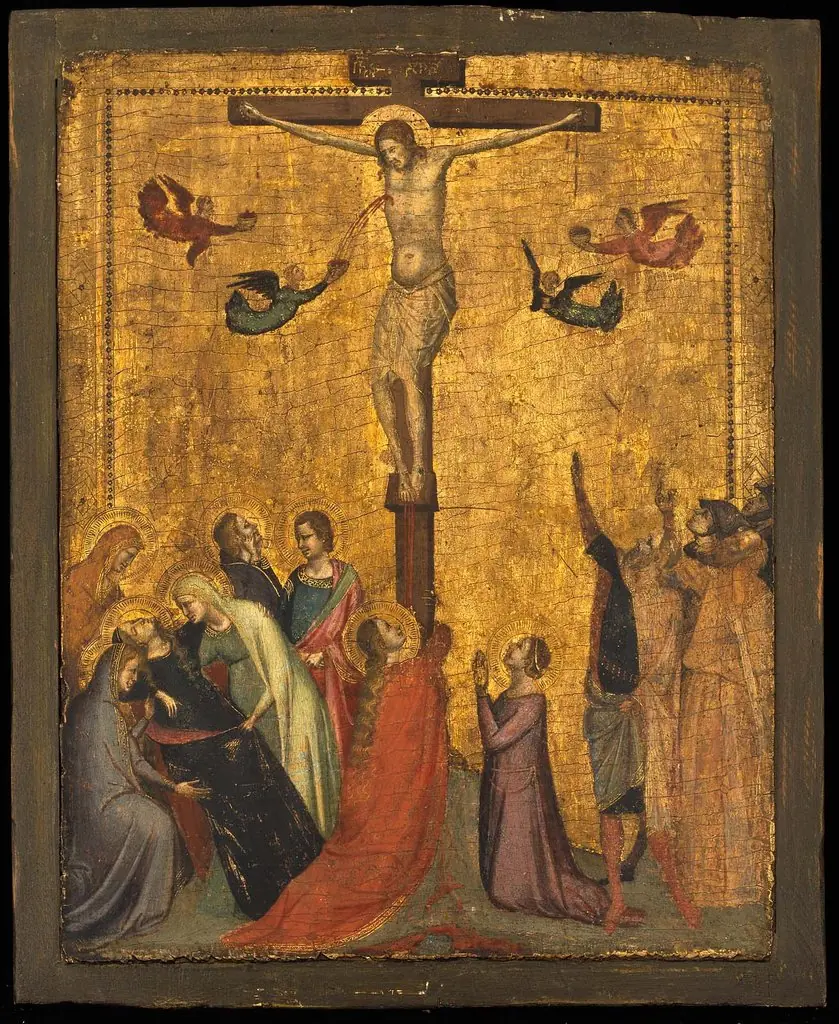
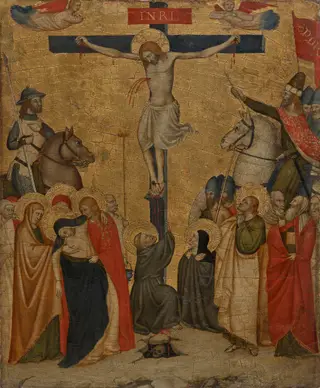
The triptych presents three sequential episodes from the Passion of Christ: the Agony in the Garden, the Crucifixion, and the Descent into Limbo. In the left panel, Christ kneels in prayer at Gethsemane while the apostles sleep, illuminated by an angel who offers the cup of suffering. The central panel shows the Crucifixion, with Christ on the cross flanked by the Virgin Mary and Saint John, the sun and moon darkened above.
The right panel depicts the Descent into Limbo, where Christ breaks open the gates of Hell to rescue the righteous souls of the Old Testament, trampling a bound Satan beneath his feet.
These scenes convey the theological narrative of Christ's redemptive sacrifice and victory over death, emphasizing the promise of salvation for humanity. The iconography follows traditional late medieval conventions, underscoring the continuity between Christ's earthly suffering and the deliverance of souls from Limbo.
Technique & Style
Created around 1384, the triptych Scenes from the Passion of Christ by Andrea di Vanni is executed in tempera on a panel support. The work measures 56.9 cm in height and 116.4 cm in width, presenting a unified religious composition across its three distinct narrative sections. As a product of late fourteenth-century Italian painting, the piece adheres to the technical conventions of its era, utilizing pigments bound in egg emulsion applied to a rigid wooden ground.
History & Provenance
The triptych was created by Andrea di Vanni around 1384. It was in the collection of William Andrews Clark by 1919 and entered the Corcoran Gallery of Art, Washington, through his bequest in 1926. Following the Corcoran's closure in 2014, the work was transferred to the National Gallery of Art in Washington, D.C. Its dimensions are 56.9 cm in height and 116.4 cm in width.
Overview
This tempera painting on panel, titled Scenes from the Passion of Christ, was created by Andrea di Vanni around 1384. The artwork is presented as a triptych, depicting three distinct moments from the biblical narrative of Christ's suffering and redemption. It serves as a devotional piece, characteristic of religious art from the late medieval period.
![Scenes from the Passion of Christ: The Crucifixion [middle panel]](https://artifactworldgallery.com/img/andrea-vanni--scenes-from-the-passion-of-christ-the-crucifixion-middle-pan--abe5469a28e77ac7-w320.webp)
Artist & collection

![Scenes from the Passion of Christ: The Descent into Limbo [right panel], by Andrea Vanni](https://artifactworldgallery.com/img/andrea-vanni--scenes-from-the-passion-of-christ-the-descent-into-limbo-rig--9eb5d32175c31b6f-w320.webp)
![Scenes from the Passion of Christ: The Agony in the Garden [left panel], by Andrea Vanni](https://artifactworldgallery.com/img/andrea-vanni--scenes-from-the-passion-of-christ-the-agony-in-the-garden-le--2bad16de75eee8eb-w320.webp)