Artwork
Icon of the Mother of God and Infant Christ (Virgin Eleousa)
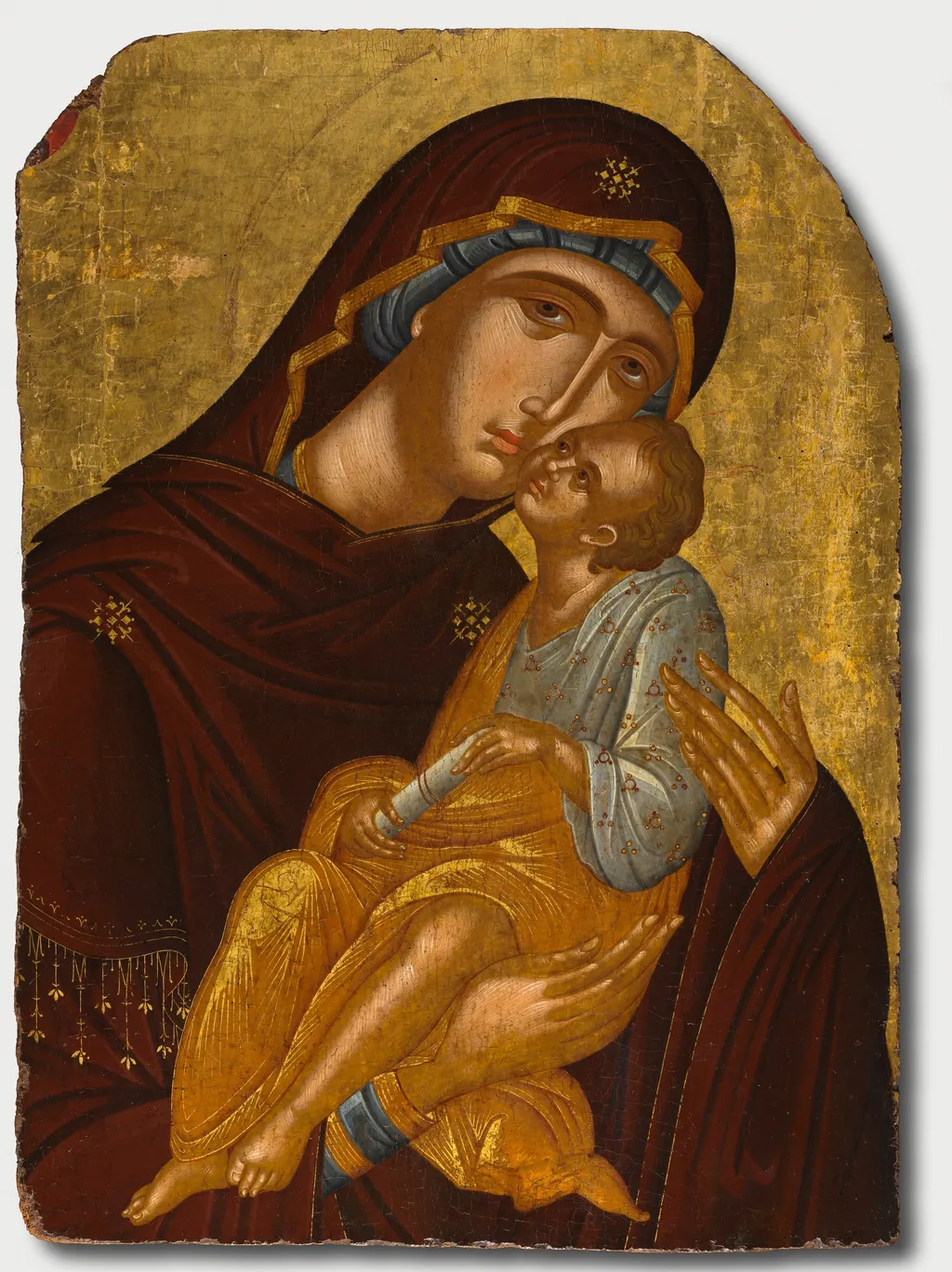
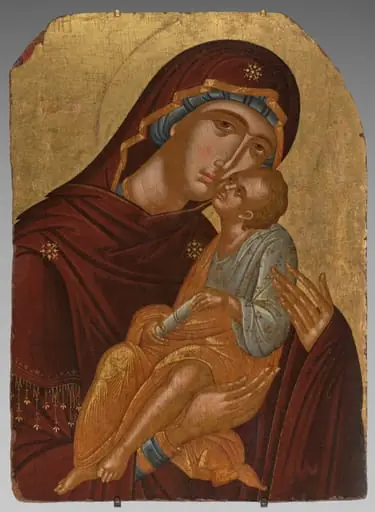
Icon of the Mother of God and Infant Christ (Virgin Eleousa) is a tempera painting by the Byzantine icon painting artist Angelos Akotantos. It dates from 1420 and is held in the collection of the Cleveland Museum of Art.
About this work
An icon of Mary and the Christ Child, painted on wood in the tradition of fifteenth-century Crete. Angelos Akotantos made many versions of this scene, and his work set the style for Greek icons for centuries. He was wealthy enough to leave records in a will from 1436.
Subject & Meaning
The gilded background, a hallmark of Byzantine iconography, conveys spiritual radiance and sacred authority.
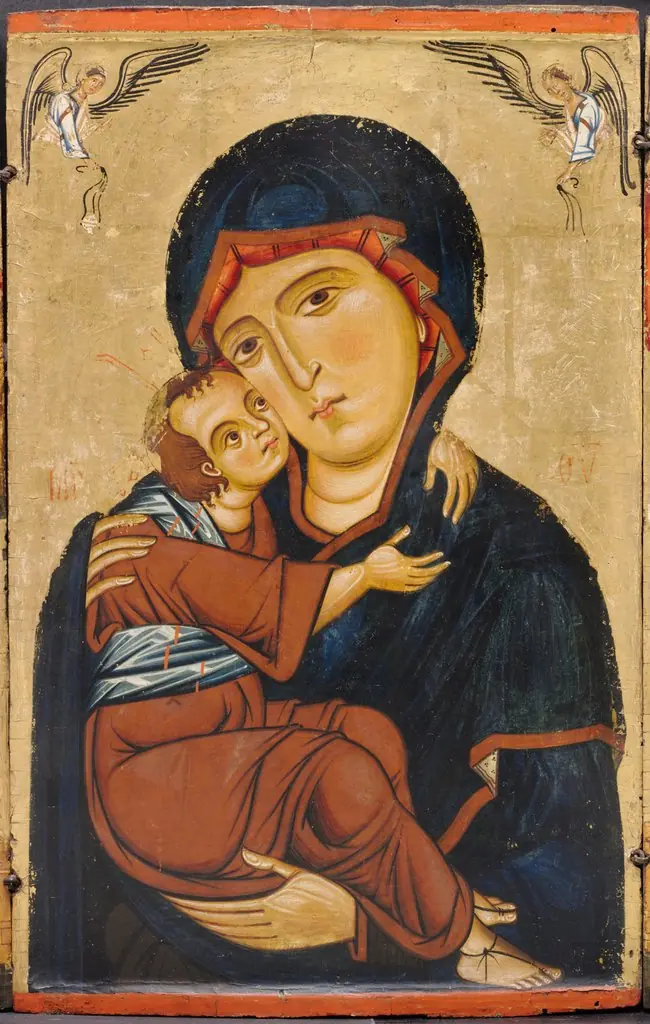
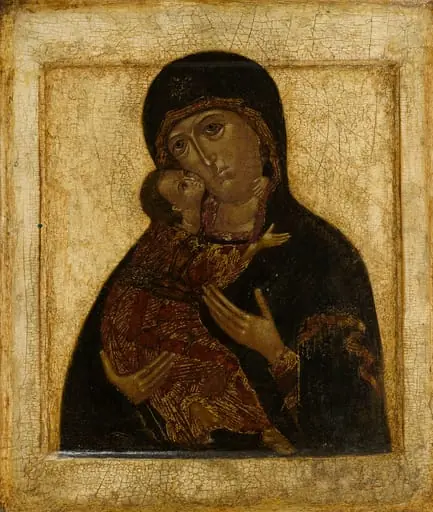
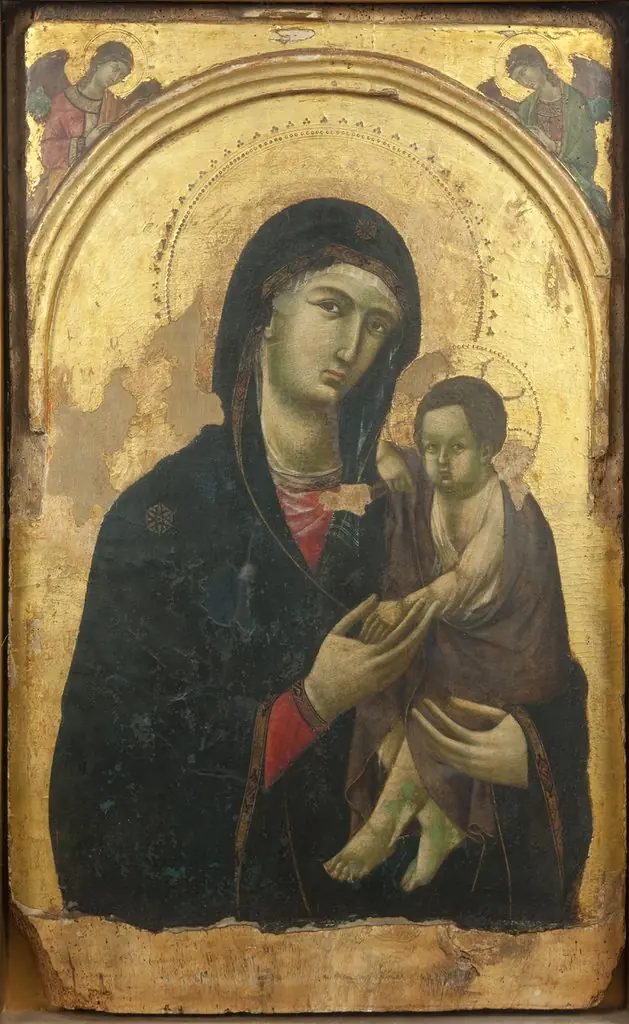
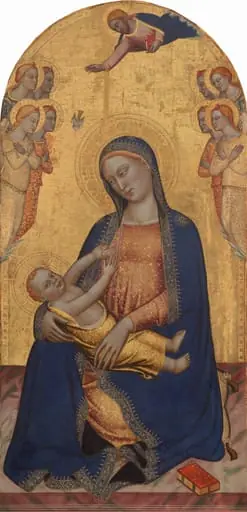
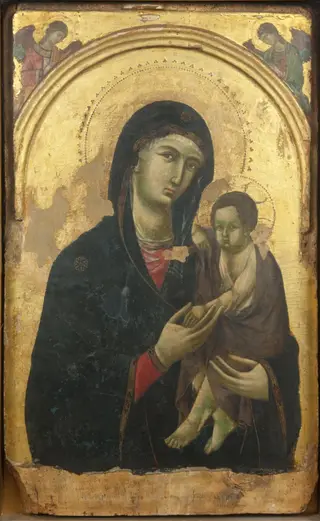
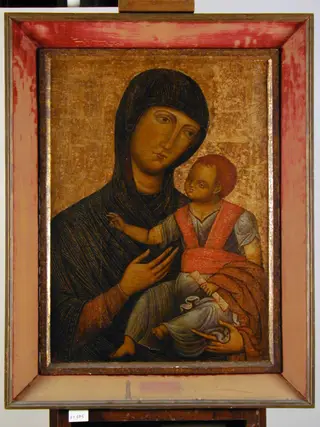
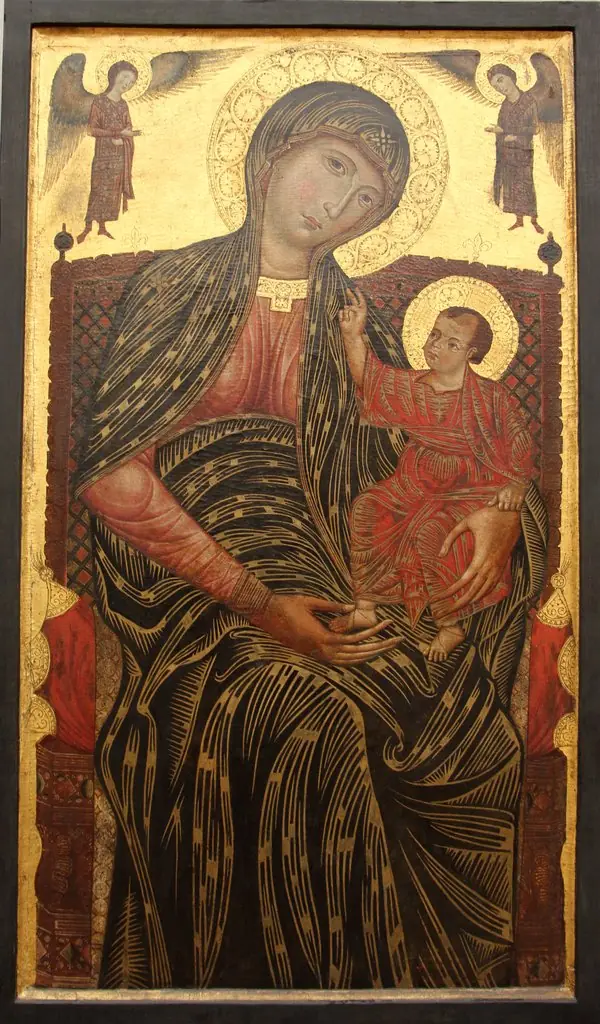
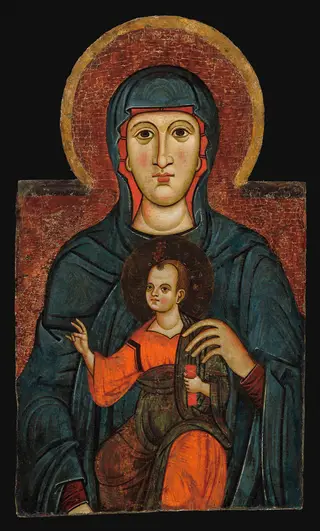
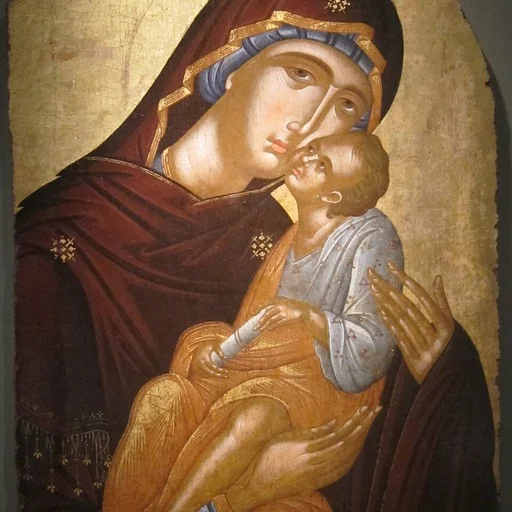
The Icon of the Mother of God and Infant Christ (Virgin Eleousa) depicts the Virgin Mary in the Eleousa (tender mercy) type, where she leans tenderly toward the Christ Child, cradling him with her right arm while he reciprocates by touching her face. The Virgin’s elongated features and serious gaze, paired with the Child’s small scroll, symbolizing the New Testament, derive from Byzantine prototypes that emphasized divine tenderness and maternal affection. Three stars on her robe reference Byzantine and Italian traditions, signifying her perpetual virginity.
The gilded background, a hallmark of Byzantine iconography, conveys spiritual radiance and sacred authority. The work exemplifies the maniera greca, a style rooted in Byzantine tradition that Angelos Akotantos and his contemporaries perpetuated, shaping Greek and Italian religious art before the Renaissance.
Technique & Style
The icon was executed in egg tempera and gold leaf on a wooden panel. Its surface bears the characteristic linearism of the Cretan school, with an elongated Virgin whose neck and hands are stylized, and a Christ Child whose head is slightly tilted back, both rendered in the Eleousa pose. The composition follows Byzantine prototypes, employing a gilded background that emphasizes the sacred presence, while delicate striations model the infant’s orange robe and the Virgin’s richly patterned cloak.
Formal elements include a rose‑colored mouth, serious gaze, and three stars on the Virgin’s robe, all executed with precise brushwork on the panel support.
History & Provenance
The icon of the Mother of God and Infant Christ (Virgin Eleousa) was painted by Angelos Akotantos in 1420 on panel using egg tempera and gold leaf. It originates from Crete, reflecting the Cretan school tradition. The work entered the collection of the Cleveland Museum of Art, where it remains on display.
As a devotional image, it exemplifies the Eleousa composition, a Byzantine prototype that Akotantos adapted, and it is one of over fifty icons attributed to him. Its dimensions measure 96 cm × 70 cm, and the painting was created during the early 15th century, placing it among the earliest examples of the manner‑greca style.
Context
The Virgin Eleousa by Angelos Akotantos, painted circa 1420 in egg tempera and gold leaf, exemplifies the Cretan school’s synthesis of Byzantine iconography and emerging Renaissance techniques. Art historians view it as a prototype that shaped Greek ecclesiastical art for centuries, noted for its elongated figures, distinctive headdress, and three stars on the Virgin’s robe. Scholarship highlights Akotantos’s wealth, his will of 1436, and his role among founding members of the Cretan School alongside Pavias and Ritzos.
Giorgio Vasari’s concept of maniera greca situates the work within a broader dialogue between Greek and Italian artistic practices.
Legacy
Angelos Akotantos’s Virgin Eleousa became a foundational model within the Cretan School and beyond, shaping religious imagery for centuries. By the mid-fifteenth century, his compositions were repeatedly copied and adapted by both Greek and Italian artists, demonstrating the enduring appeal of the Eleousa type and the maniera greca style. Giorgio Vasari later referenced this tradition in Lives of the Most Excellent Painters, Sculptors, and Architects, noting the influence of Greek painters such as Akotantos on early Renaissance practices.
The icon’s iconography, elongated figures, gold-leaf backgrounds, and the tender embrace of Mother and Child, spread through Crete and into Italy, where it informed devotional painting before the full emergence of oil techniques. Over five hundred years, Akotantos’s Virgin Eleousa remained a touchstone for icon painters, exemplifying the synthesis of Byzantine tradition with evolving Renaissance aesthetics.
Overview
This tempera painting on panel, titled Icon of the Mother of God and Infant Christ (Virgin Eleousa), is attributed to the 15th-century Greek artist Angelos Akotantos. Active on the island of Crete, Akotantos was a prominent figure whose works, including numerous depictions of the Virgin and Child, established a significant stylistic precedent for Greek icon painting that endured for centuries.
Own this work as a print
Artist & collection
Artist
Angelos Akotantos (Greek: Άγγελος Ακοτάντος; 1390–1457) was a Greek painter, educator, and protopsaltis.