Artwork
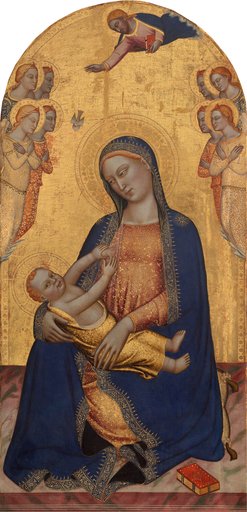
Madonna and Child with God the Father Blessing and Angels
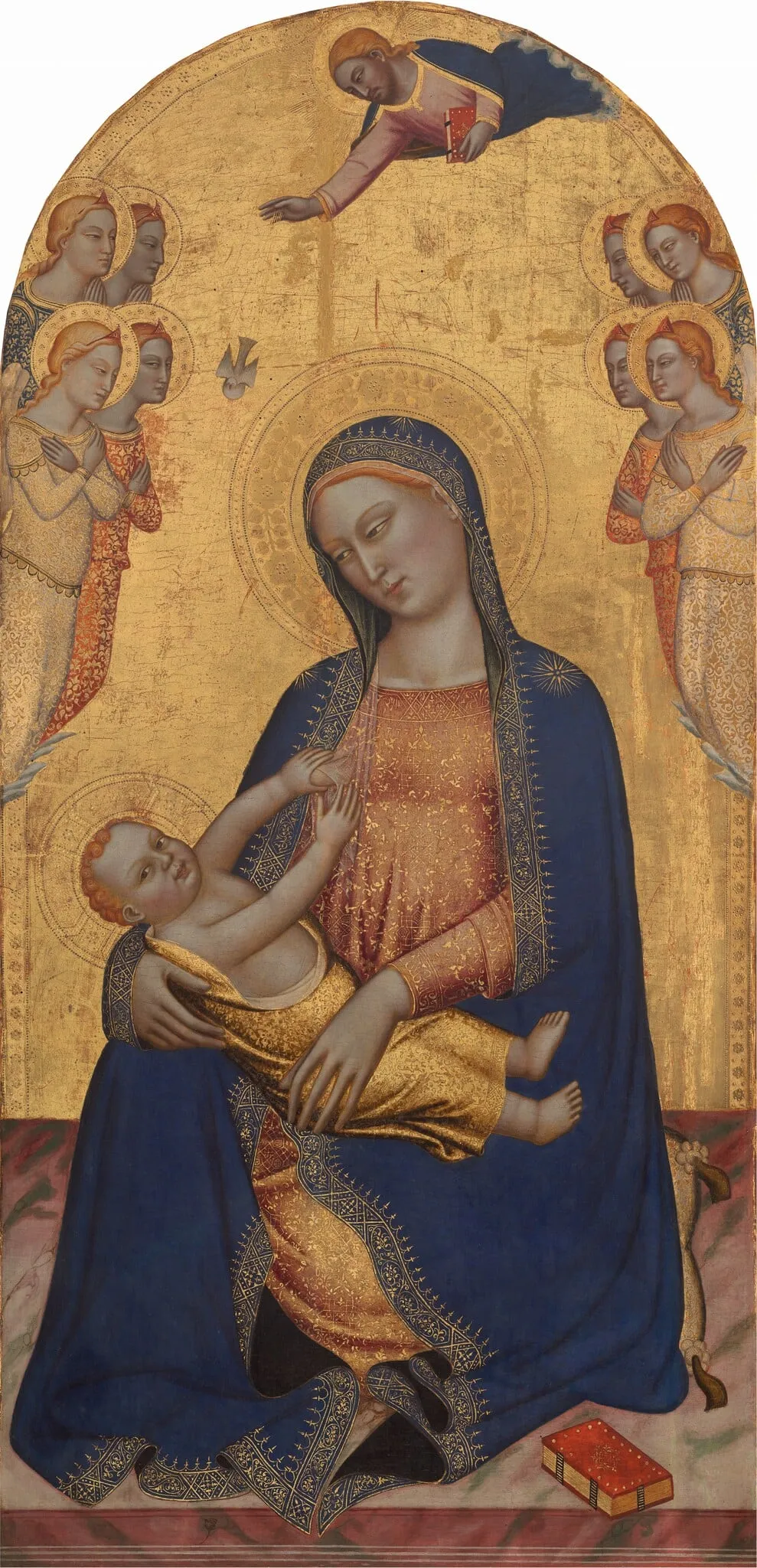
Madonna and Child with God the Father Blessing and Angels is a tempera painting by the Italo Byzantine artist Jacopo di Cione. It dates from 1372 and is held in the collection of the National Gallery of Art.
About this work
Subject & Meaning
The imagery aligns with traditional representations of the Mother and Son, forming the main subject matter of the artwork housed in the National Gallery of Art.
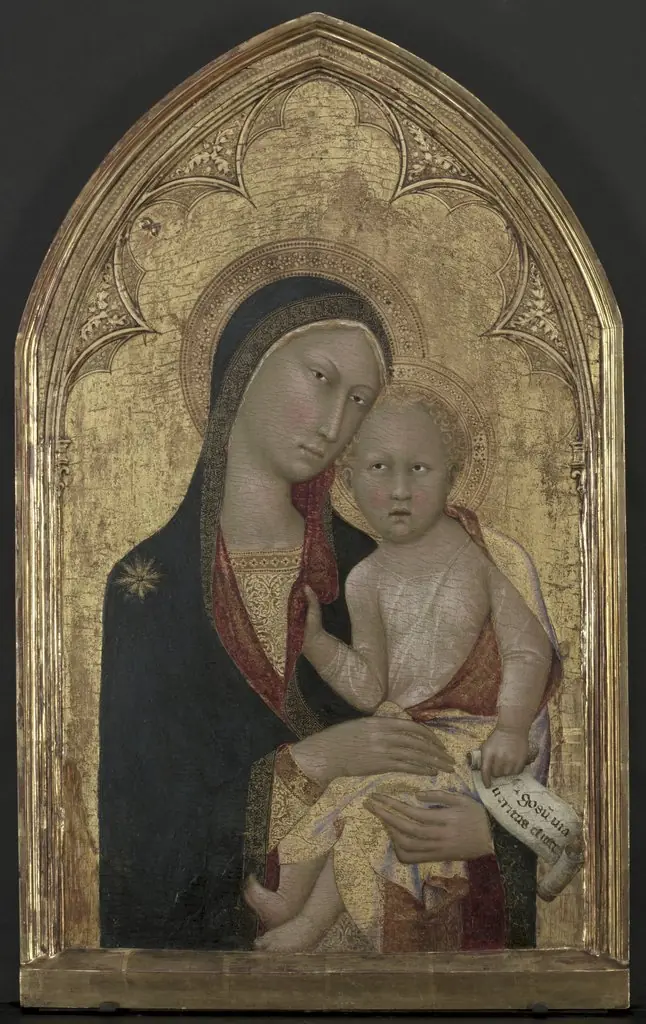
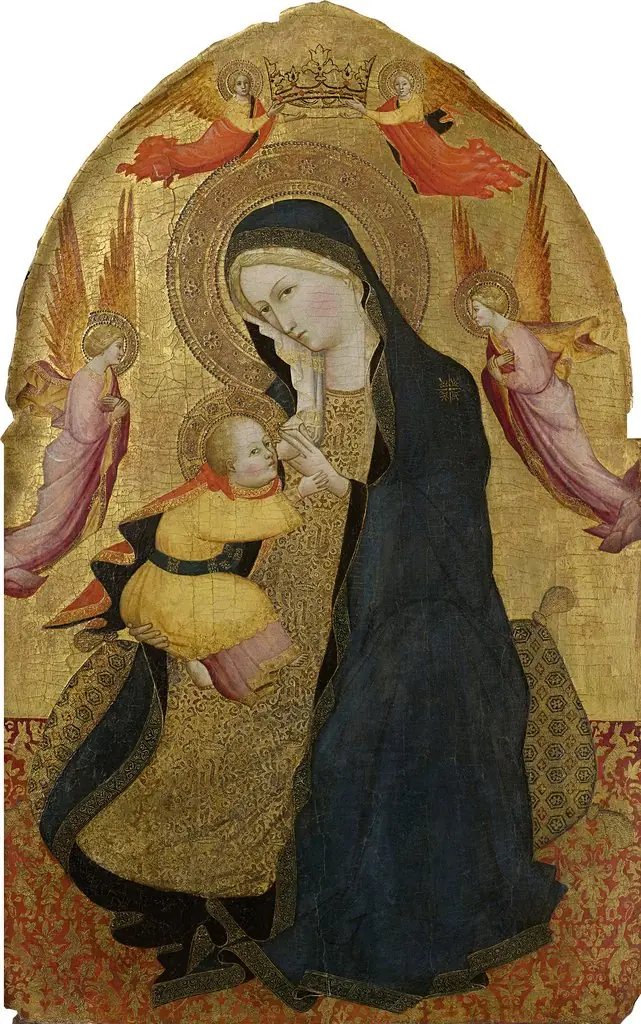
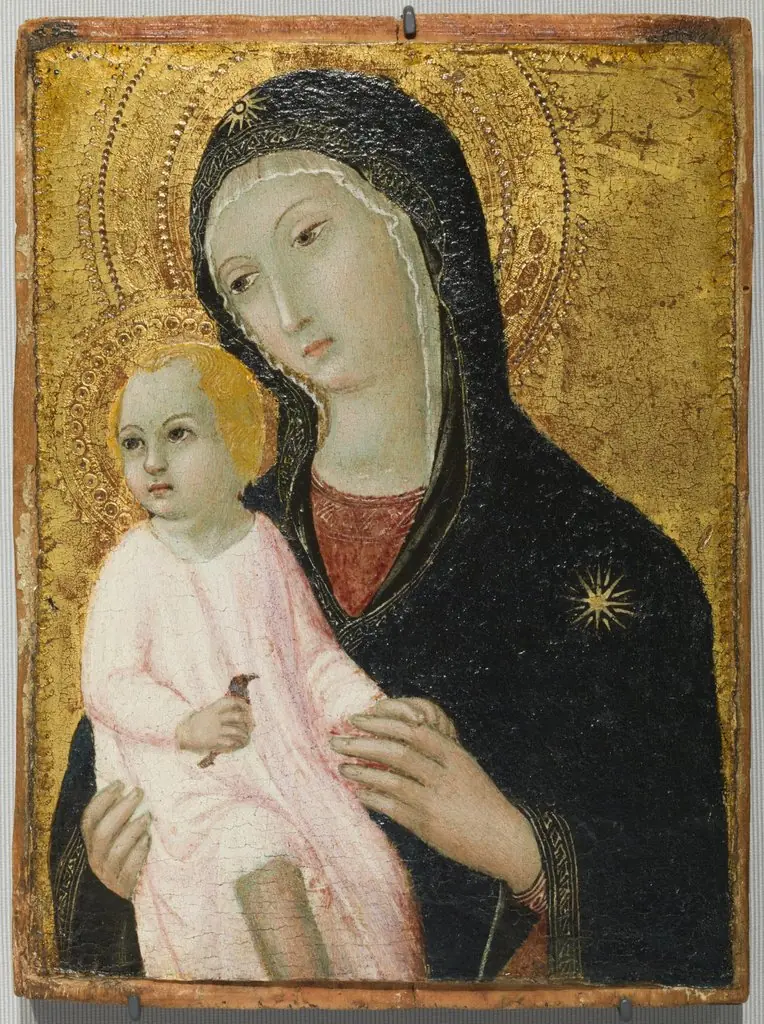
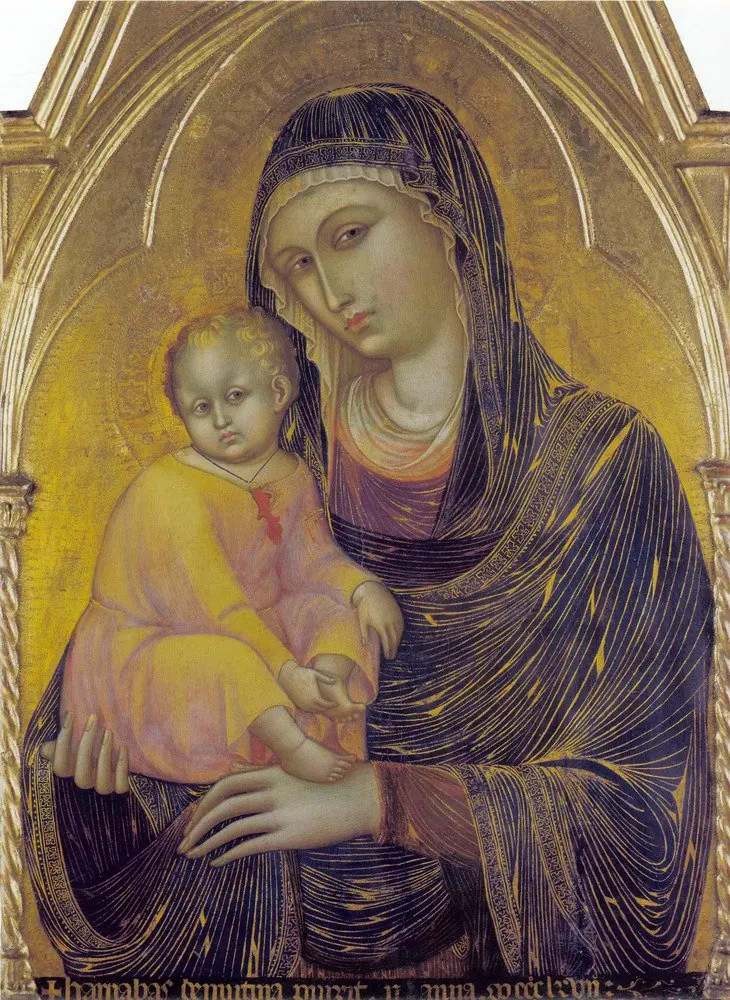
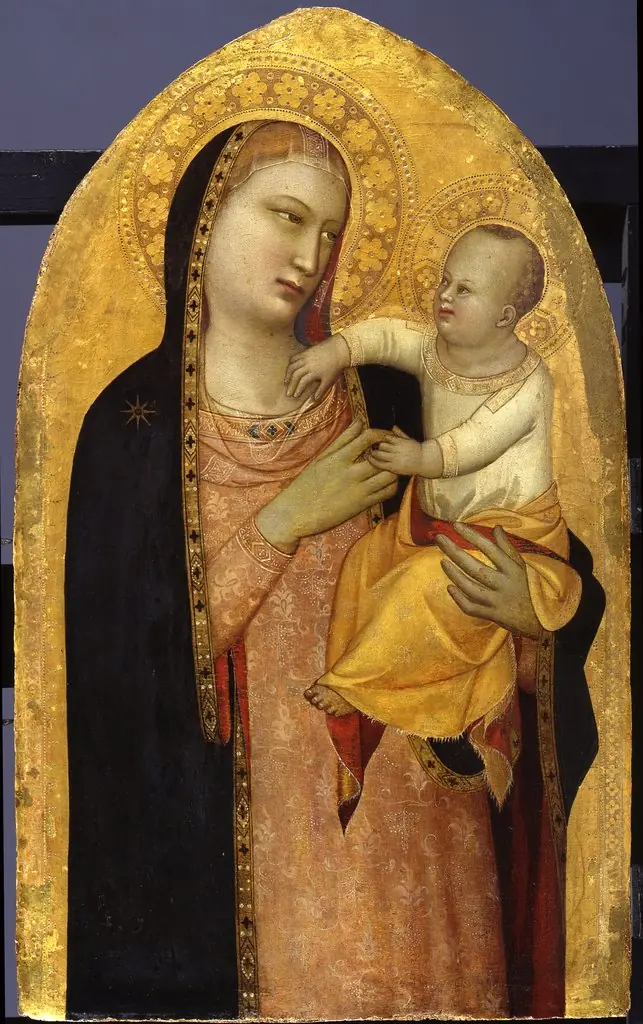
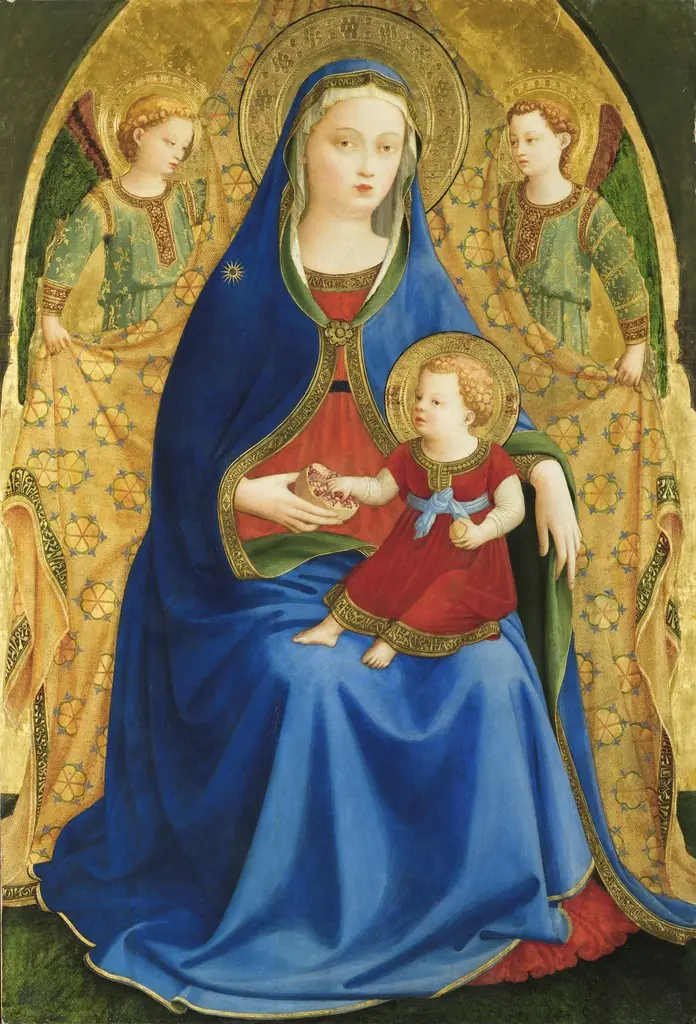
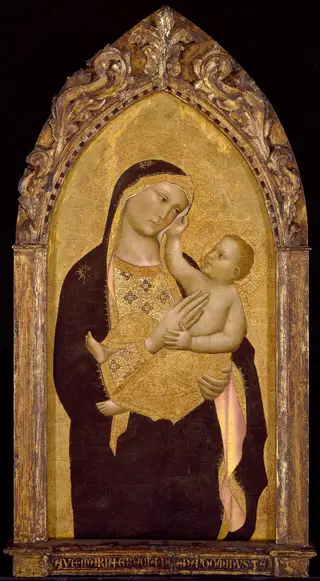
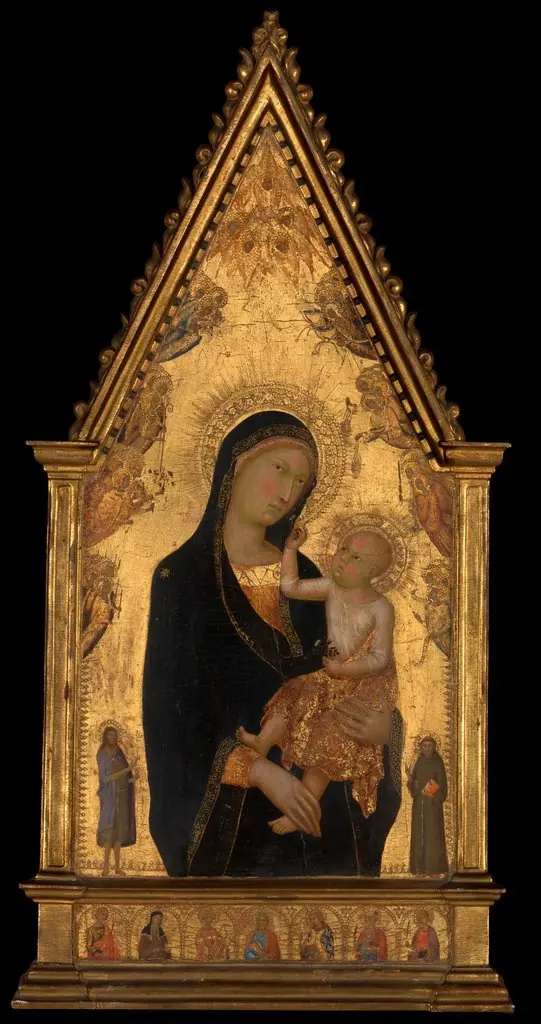
Created in 1370 by Jacopo di Cione, this tempera panel painting functions as a work of religious art centered on the Madonna and Child. The composition explicitly depicts the Virgin Mary holding the Christ Child, figures who serve as the primary subjects of the piece. While the title indicates the presence of God the Father bestowing a blessing and the inclusion of angels, the available records specifically confirm the representation of Mary and Jesus as the core iconographic elements.
The work belongs to the genre of religious painting, intended to visualize sacred figures for devotional purposes. The imagery aligns with traditional representations of the Mother and Son, forming the main subject matter of the artwork housed in the National Gallery of Art.
Technique & Style
The work is executed in tempera on panel, a standard technique for Florentine devotional painting of the Trecento. Tempera, bound in egg yolk, was applied in thin, translucent layers over a gesso ground prepared on a wooden support, allowing the artist to build up luminous flesh tones and richly saturated drapery colors through successive glazes. Jacopo di Cione's handling reflects the late Giottesque tradition, with firm, calligraphic contours defining the figures and gold leaf employed for halos and decorative accents.
The hierarchical composition centers on the Madonna and Child, flanked by attendant angels and crowned by the blessing figure of God the Father above, with the figures arranged in a balanced, symmetrical grouping typical of Orcagna's circle. Stylistic qualities include elongated proportions, solemn facial types, and the use of punched or tooled gold in the halos, all consistent with Florentine workshop practice of the 1370s.
History & Provenance
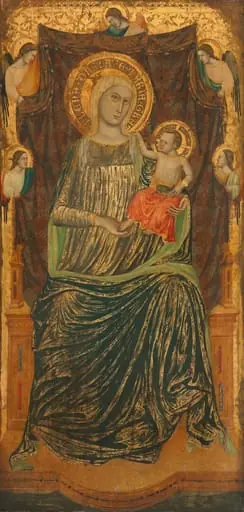
The double-sided altarpiece Madonna and Child with God the Father Blessing and Angels by Jacopo di Cione is dated to circa 1370 based on stylistic and technical analysis. It entered the art market in Florence before 1917, when Osvald Sirén documented its ownership by a Florentine dealer. By 1917 it was in the collection of Philip Lehman in New York, where it remained in the family until at least 1928.
The painting was sold by Robert Lehman, the son of Philip Lehman, in September 1943 to the Samuel H. Kress Foundation, which subsequently donated it to the National Gallery of Art, Washington, D.C., in 1952.
The painting is held by the National Gallery of Art in Washington, D.C., as part of the Samuel H. Kress Collection. Its provenance indicates the work entered the Philip Lehman collection in New York by 1917, having previously been associated with a Florentine art dealer. In September 1943, the piece was sold to the Samuel H. Kress Foundation, with documentation noting Robert Lehman's involvement in the transaction.
The National Gallery of Art received the work as a gift from the Kress Foundation in 1952. While the sources detail this acquisition history and current location, they do not provide specific records of past exhibitions or a distinct museum inventory number beyond the collection attribution.
Overview
Created in 1372, Jacopo di Cione's 'Madonna and Child with God the Father Blessing and Angels' is a tempera-on-panel work characteristic of the late Trecento Gothic style in Florence. The composition centers on the Virgin Mary enthroned, holding the Christ Child, who is often depicted blessing or interacting with the viewer. Above them, God the Father appears in a celestial mandorla, offering a blessing, while a choir of angels surrounds the divine figures, filling the upper register with rhythmic movement.
The artist employs extensive gold leaf for the background and halos, a traditional technique intended to signify the heavenly realm and elevate the spiritual status of the subjects. This work reflects the devotional needs of 14th-century Italy, where such images served as focal points for private and public worship. As a member of the Cione family workshop, Jacopo di Cione produced numerous altarpieces that adhered to the established iconography of his time while maintaining a distinct decorative elegance.
The painting exemplifies the transition period in Italian art where the rigid Byzantine forms began to soften, though the emphasis remained on hierarchical scale and symbolic richness rather than naturalistic depth.
Context
This painting emerged during a historical period when visual art played a crucial role in communicating religious narratives and fostering devotion. Works like Jacopo di Cione's Madonna and Child served as accessible visual texts, enabling the faithful to engage with sacred stories and figures. The artist's approach aligns with the broader artistic trends of his time, reflecting established conventions for sacred imagery.
Artist & collection