Artwork
Virgin and Child
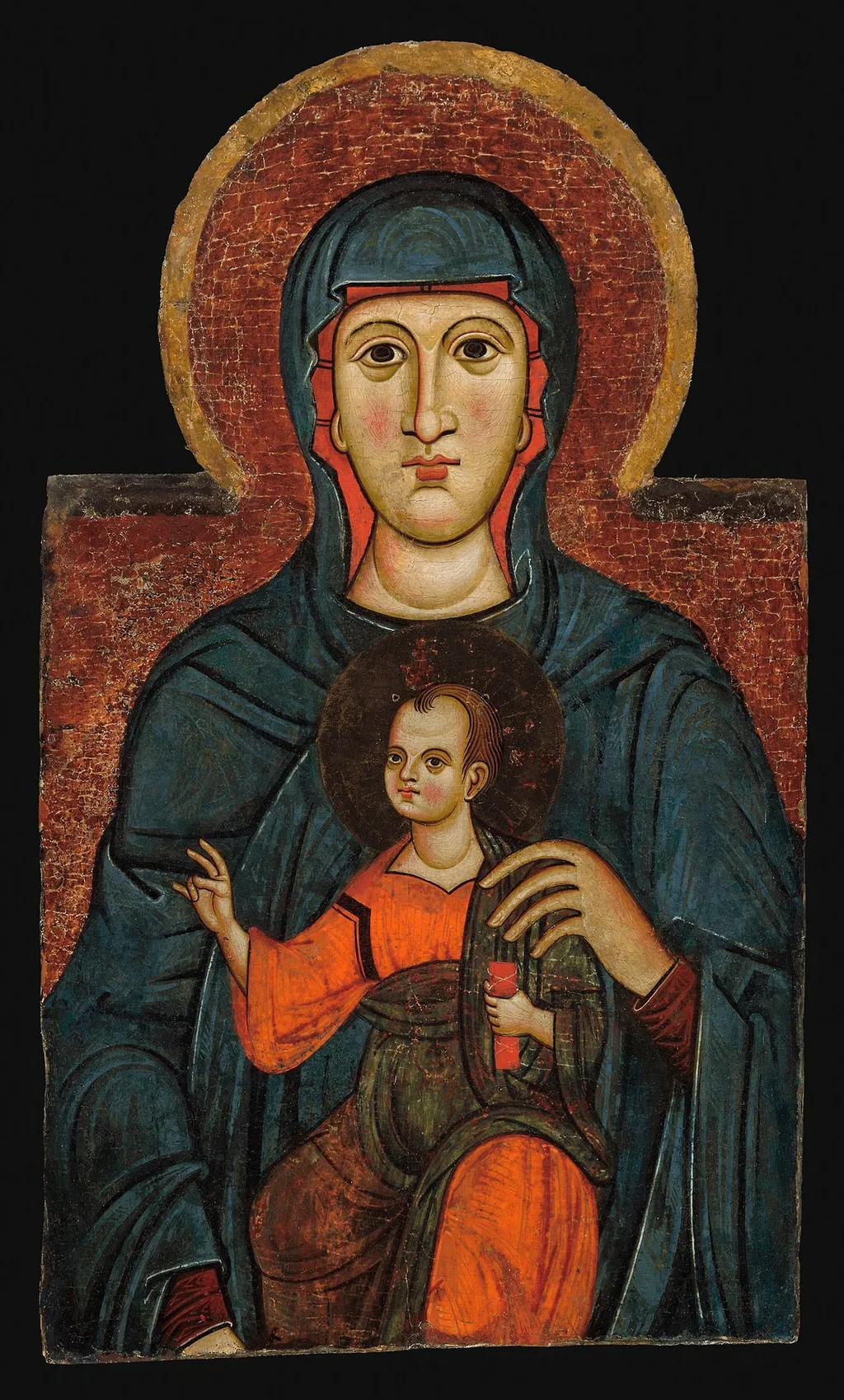
Virgin and Child is an unspecified painting by the Byzantine icon painting artist Unknown. It dates from 1270 and is held in the collection of the Art Institute of Chicago. The work presents the Virgin Mary seated with the infant Christ on her lap.
About this work
Subject & Meaning
Created in 1270, this painting belongs to the religious genre and focuses on the intimate bond between the mother and her divine son.
The work depicts the Madonna and Child, a central subject in religious art featuring the Virgin Mary and the Christ Child. Created in 1270, this painting belongs to the religious genre and focuses on the intimate bond between the mother and her divine son. The composition serves as a traditional representation of Marian devotion, highlighting the theological significance of the Incarnation through the visual pairing of Mary and Jesus.
History & Provenance
The painting titled Virgin and Child is dated to 1270. It is classified as a religious work depicting the Madonna and Child. The Art Institute of Chicago currently holds the piece, cataloged under the accession number 1933.1034.
The artist is listed as Anonymous in the collection records. The work measures 81.7 cm in height and 47.8 cm in width.
The painting Virgin and Child, created in 1270, is held in the collection of the Art Institute of Chicago. Within the museum's records, the work is identified by the accession number 1933.1034 and is attributed to an anonymous artist. The piece is classified as a religious painting depicting the Madonna and Child.
The available documentation confirms the work's location and inventory details but does not provide specific information regarding its exhibition history.
Context
The work demonstrates how 13th-century devotional practices shaped visual representation, as scholars note its role in mediating mystical experience through intimate maternal imagery. Art historical analysis positions this anonymous painting within the broader trajectory of Gothic religious art, where compositional focus on the Virgin's tenderness influenced later interpretations of sacred femininity. Its formal qualities, including precise spatial relationships and naturalistic detail, reflect evolving workshop techniques in Italian painting circa 1270, as documented in contemporary stylistic studies. The piece remains significant for understanding how anonymous artists contributed to the visual language of medieval piety.
Overview
The work presents the Virgin Mary seated with the infant Christ on her lap. Mary is clothed in a blue mantle and a red veil, both framed by a golden halo. The child wears an orange tunic and gazes outward, while the backdrop is rendered in a saturated red hue. The composition reflects the conventions of medieval devotional imagery.
Technique & Style
Executed with the flat, linear qualities characteristic of Byzantine-inspired art, the painting employs gold leaf to highlight the halos and ornamental details. The figures are delineated with precise outlines and lack naturalistic shading, creating an iconic, timeless presence. Intricate patterning on the garments and the vivid background demonstrate the meticulous craftsmanship of medieval workshops.
Artist & collection









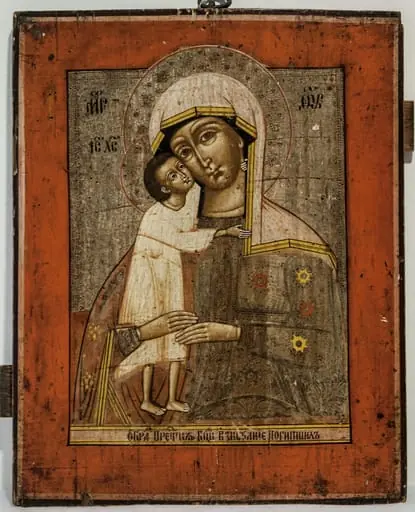
- Maica Domnului, tipul Eleusa(dulcea sărutare, Mângâietoarea) îl ține strâns în brațe pe Iisus prunc, în picioare, cu obrazul lipit de cel al Maicii și o mână petrecută pe după gâtul ei. Iisus are nimbul cruciger, marcat cu motive florale punctate, Este înveșmântat într-o tunică 3/4 alb-gălbuie, care lasă să i se vadă picioarele. Maica poartă un maforion alb, bordat cu galben, partea din stânga a veșmântului din foiță metalică, decorată cu motive florale pictate cu roșu și galben, motive fitomorfe și geometrice incizate. În partea dreaptă veșmântul este roșu, decorat cu motive florale de culoare galbenă, foița fiind prezentă doar la mânecă. Nimbul decorat cu motive florale punctate în stratul de foiță metalică, Figurile modelate din culoare (alb, ocru) cu accente grafice fine, albe, sunt specifice icoanei rusești. Cromatica: alb, galben, roșu, auriu, brun, negru, foiță metalică, chenar roșu deschis, mărginit de două linii în nuanțe de roșu deschis și brun.Chenarul interior dublat de două șiruri de cercuri ștanțate în foiță. Inscripția dispusă pe o bandă dreptunghiulară în partea de jops a icoanei : Icoana Preacuratei Fecioare Prevăzând Jertfa (lui Iisus).
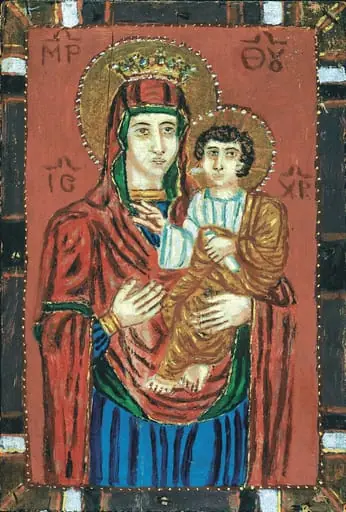 Παναγία με βρέφος
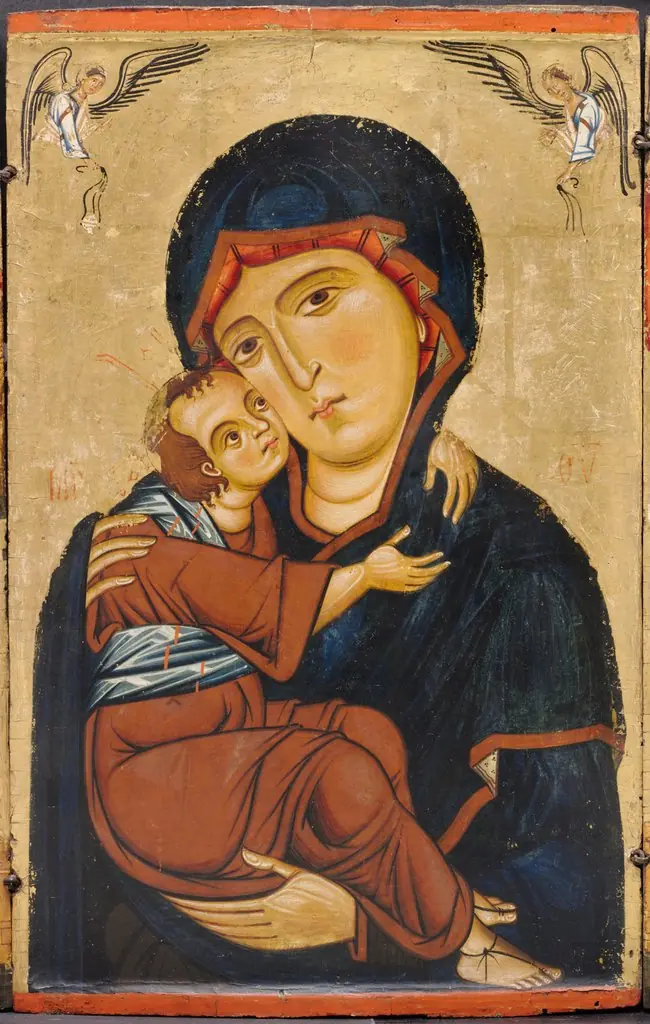 Virgin and Child with Saints
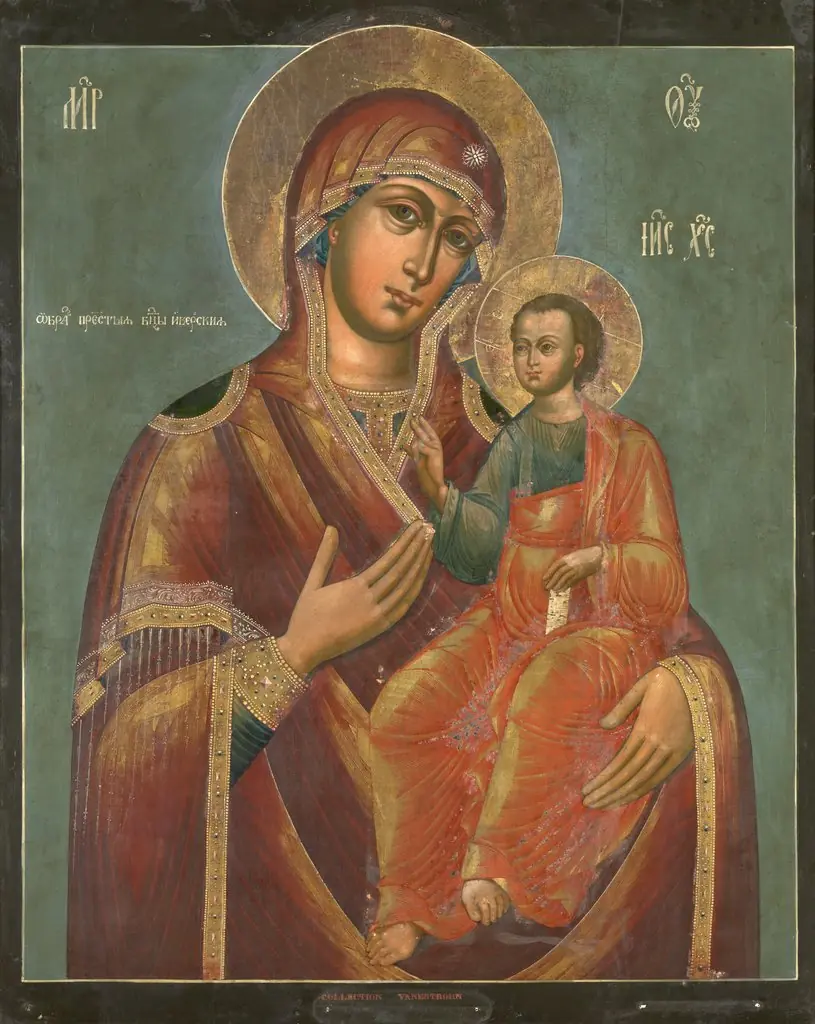 Mother of God from Iviron
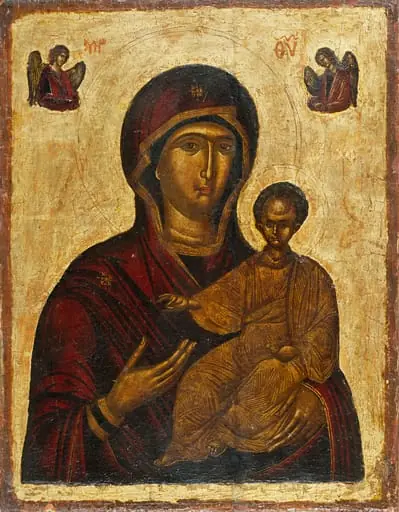 Jumalanäiti, Hodigitria - Tiennäyttäjä, bysanttilainen ikoni
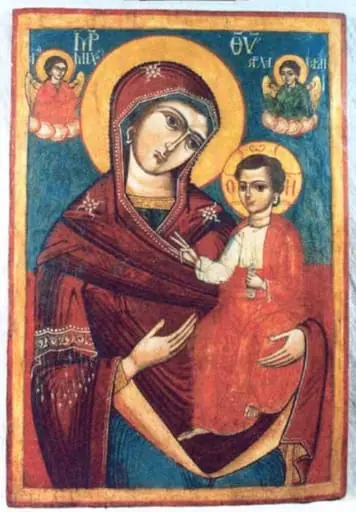 Maica cu Pruncul-Axionița
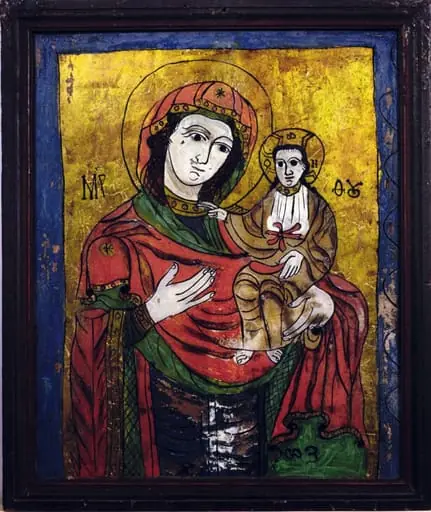 Maica Domnului cu Pruncul
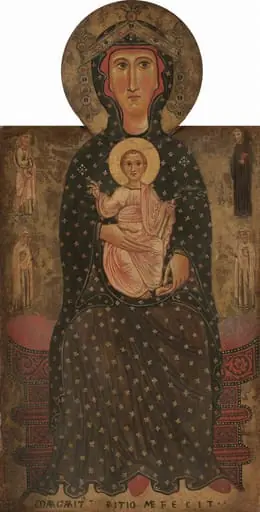 Madonna and Child Enthroned with Four Saints
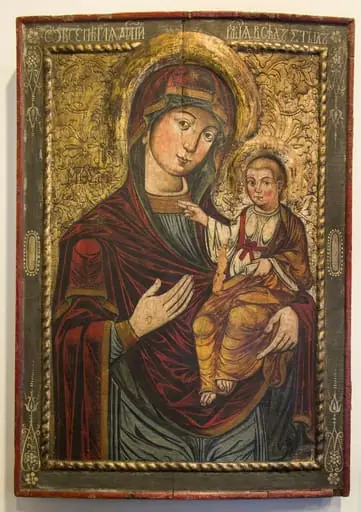 Maica Domnului cu pruncul; Icoană de catapeteasmă; Icoană împărătească
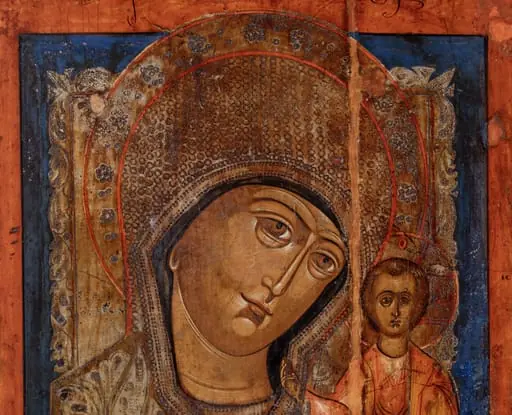 Fecioara cu Iisus
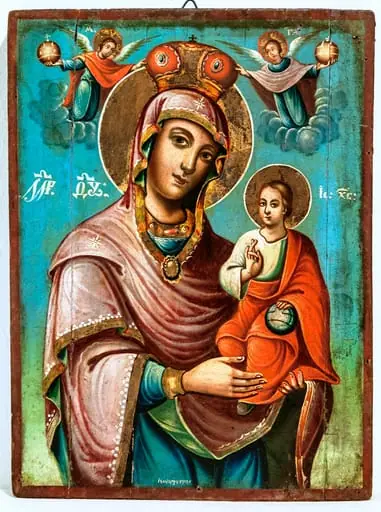 Tema
Tema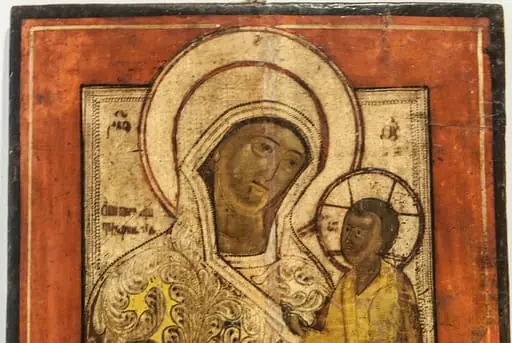 Icoan in