Artwork
Bon Bock Café
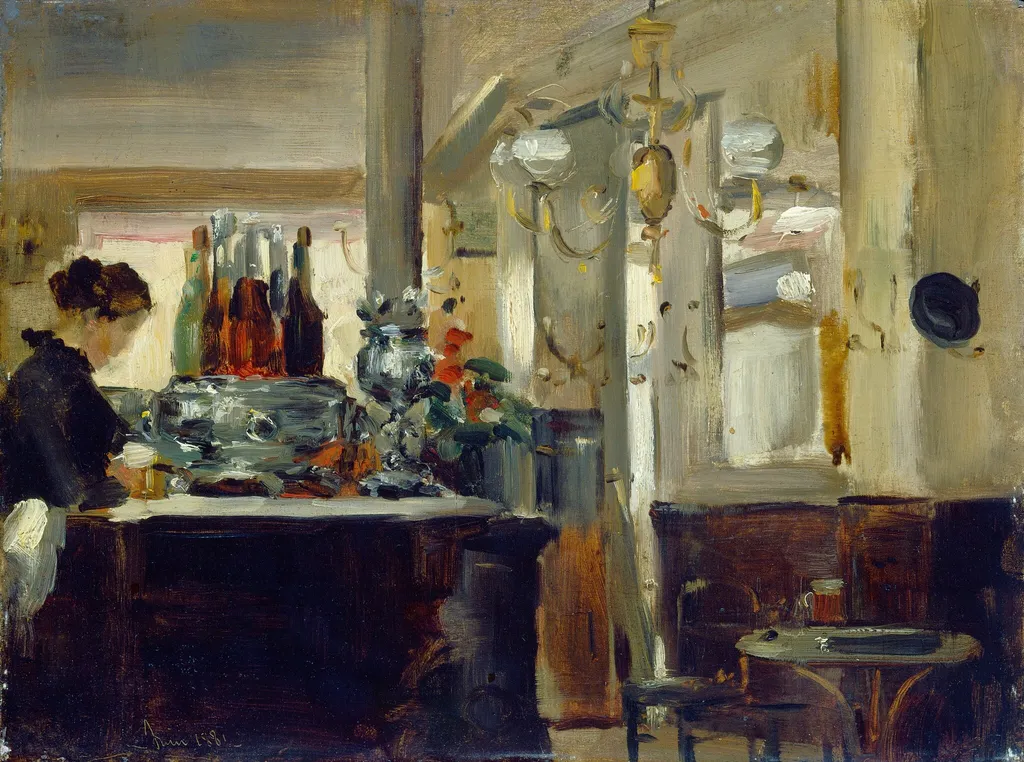
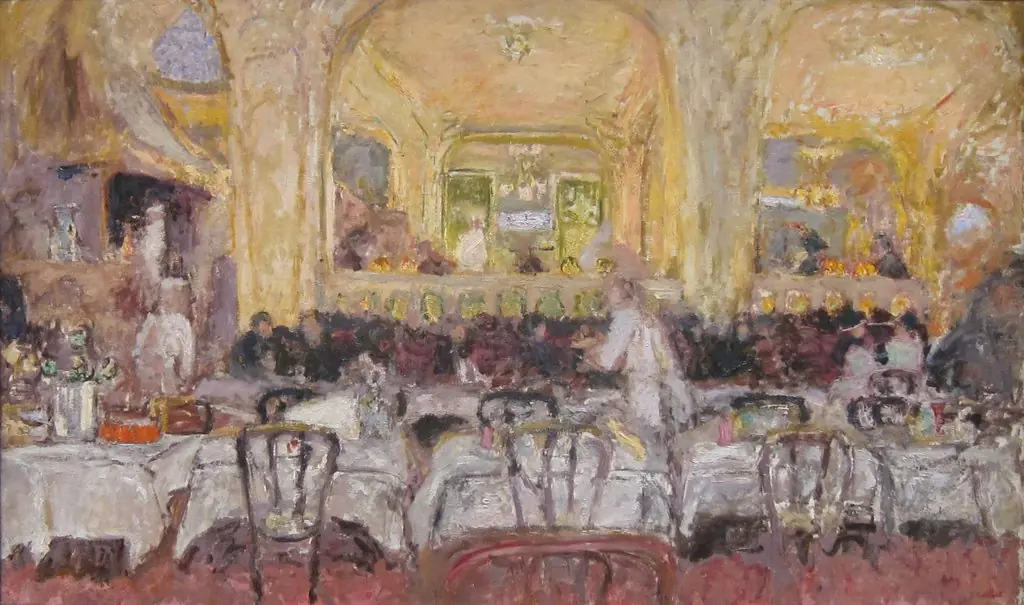
Bon Bock Café is an oil painting by the Impressionist artist Style of Edouard Manet. It dates from 1881 and is held in the collection of the National Gallery of Art.
- Inscription
- Inscribed:lower left: Juin 1881
About this work
Subject & Meaning
It portrays patrons seated at small round tables beneath striped awnings, engaged in conversation and drinking coffee, reflecting the social rituals of the era.
The painting depicts a lively outdoor café scene set in Paris, capturing everyday bourgeois leisure in the late 19th century. It portrays patrons seated at small round tables beneath striped awnings, engaged in conversation and drinking coffee, reflecting the social rituals of the era. The work symbolizes the rise of urban middle-class culture and the democratization of leisure spaces, themes central to Impressionist and post-Impressionist art.
The café setting functions as a social microcosm, emphasizing conviviality and modernity. The subject is drawn from contemporary Parisian life, rendered in loose brushwork and naturalistic detail to convey atmosphere over narrative.
The work is an oil painting on wood panel, measuring 26.6 cm in height by 34.9 cm in width, created in 1881. It belongs to the genre of everyday scenes and was painted by an anonymous artist associated with the circle of Édouard Manet. The painting entered the collection of Sir Victor Schuster, who lent it to the 1942 London exhibition _Nineteenth Century French Paintings_, and later passed through the ownership of Capt. Edward H. Molyneux before being acquired by Ailsa Mellon Bruce and bequeathed to the National Gallery of Art in 1970.
Technique & Style
The work is painted in oil on a wooden panel, a support typical of mid- to late-nineteenth-century French genre scenes. The handling shows fluid brushwork and a relatively open composition, with figures and still-life elements loosely described rather than meticulously finished. The palette is subdued, relying on earth tones and muted greens and browns, with a single bright accent on the seated figure’s red jacket.
The condition is described as stable, without major losses or structural issues in the source records. The small scale and intimate setting emphasize the everyday subject, rendered with an immediacy that aligns with the Bon Bock circle’s preference for lively, unposed scenes.
History & Provenance
Bon Bock Café was painted in 1881 by Édouard Manet in oil on wood, measuring 26.6 by 34.9 cm. By 1942 the painting was in the London collection of Sir Victor Schuster, who lent it that year to the National Gallery exhibition Nineteenth Century French Paintings. It subsequently passed to Captain Edward H. Molyneux in Paris by 1952. On 15 August 1955 the work was sold to Ailsa Mellon Bruce in New York, and in 1970 she bequeathed it to the National Gallery of Art in Washington, D.C., where it remains.
The painting is held by the National Gallery of Art, Washington, D.C., where it is recorded with dimensions of 26.6 × 34.9 cm.
Its provenance begins with Sir Victor Schuster in London by 1942, when it was lent to the National Gallery, London’s exhibition _Nineteenth Century French Paintings_ (no. 25). It later passed to Capt. Edward H. Molyneux in Paris by 1952, was sold on 15 August 1955 to Ailsa Mellon Bruce, New York, and entered the Gallery’s collection in 1970 as part of her bequest.
Overview
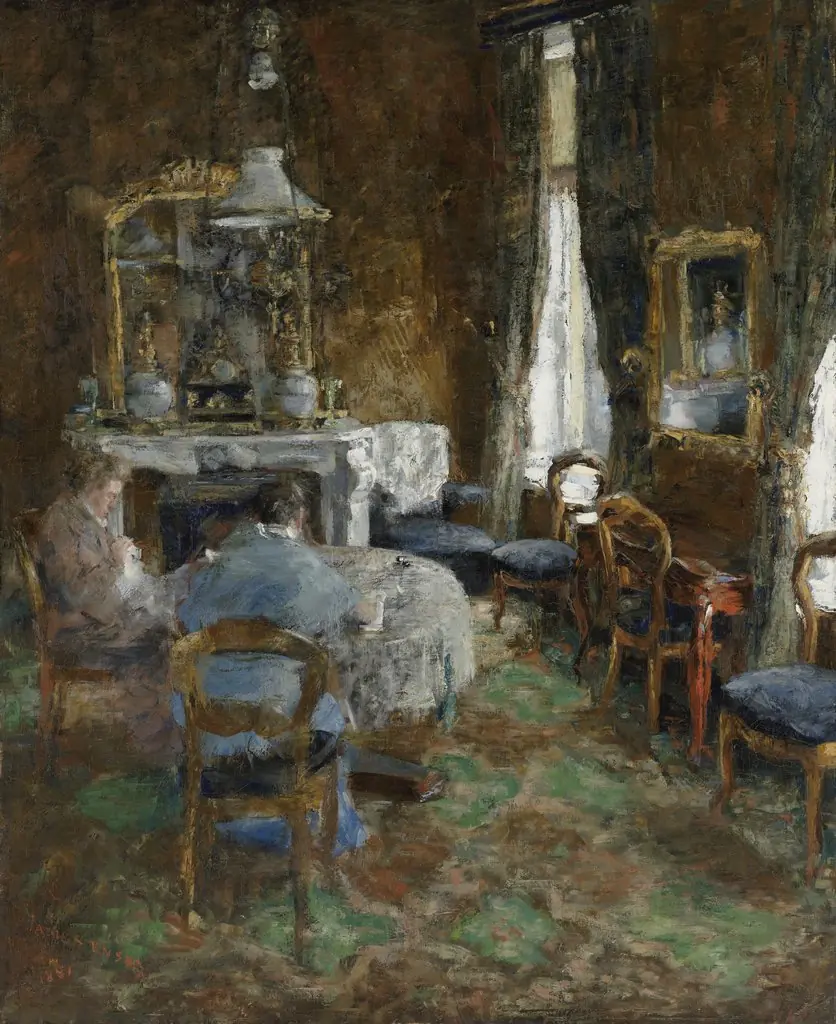
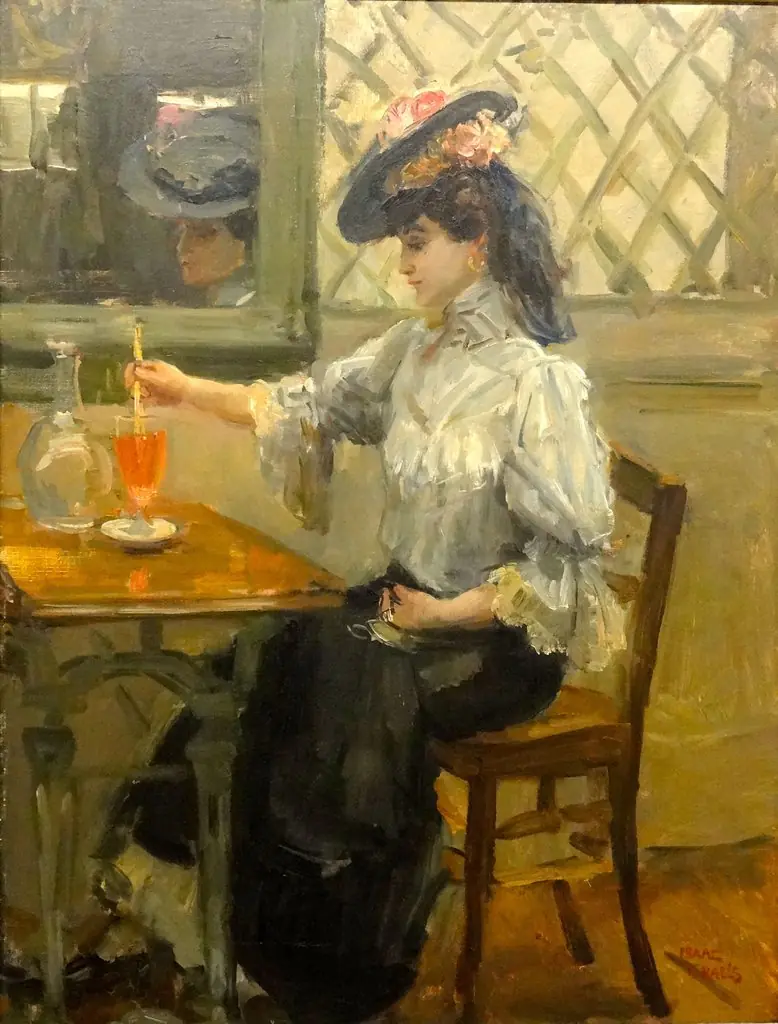
Bon Bock Café, executed in oil on wood, depicts a modest interior scene illuminated by muted light. A woman dressed in dark attire occupies a small table, accompanied by a teapot, cups and a bottle, while a chandelier hangs overhead. A window on the right admits a gentle glow, creating soft shadows across the plain walls and lending the composition a quiet, intimate atmosphere.
Context
Created during a period when artists began to foreground contemporary scenes over historical or mythological subjects, this piece aligns with broader shifts toward realism and the portrayal of modern urban experiences. Its focus on a simple café interior reflects the growing interest in everyday environments as worthy artistic material, a concern shared by many painters of the late nineteenth century.
Artist & collection
Artist