Artwork
The Smiling Girl
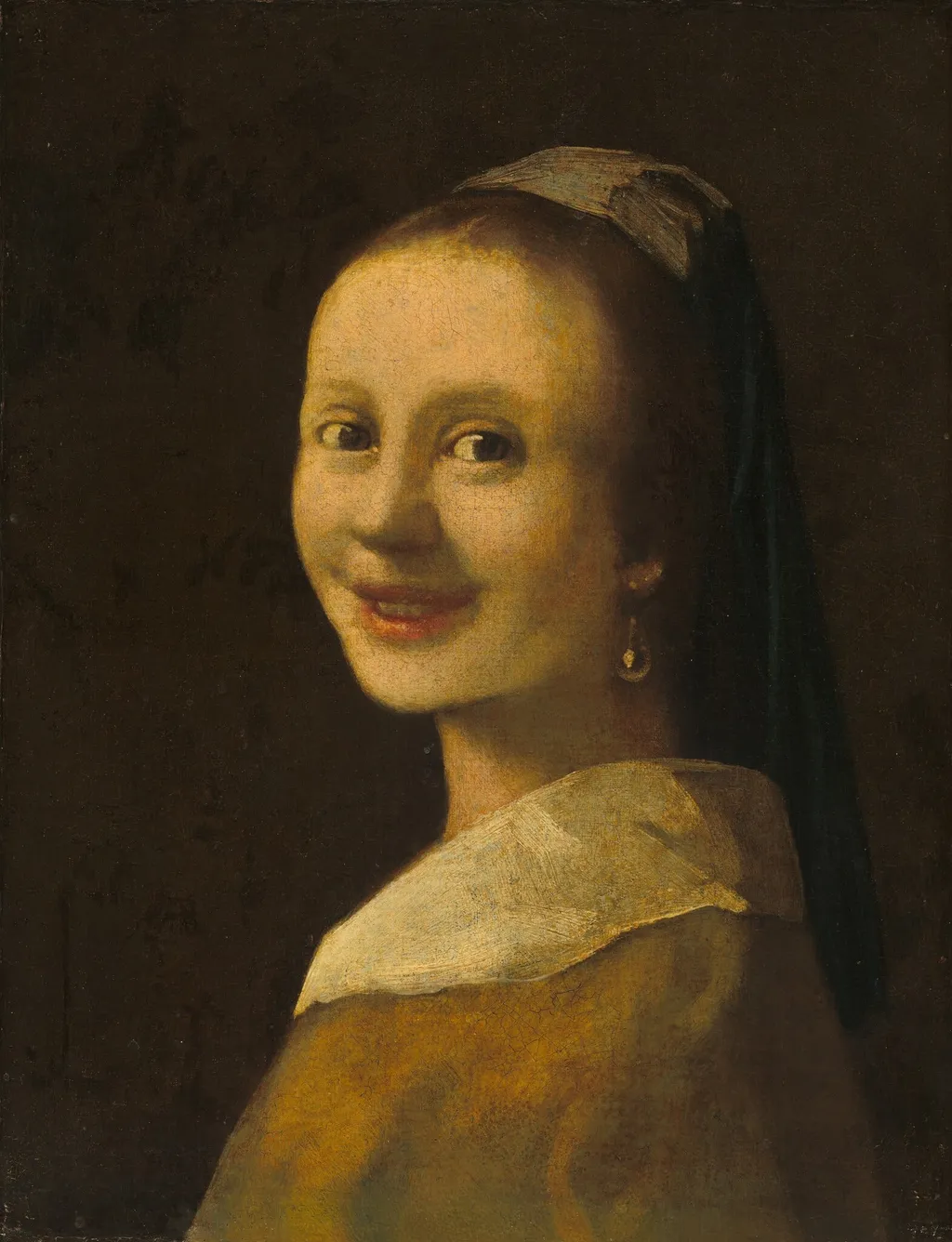
The Smiling Girl is an oil painting by Imitator of Johannes Vermeer. It dates from 1925 and is held in the collection of the National Gallery of Art.
About this work
Overview
The work is now attributed to the Dutch forger Theodorus van Wijngaarden, a friend and associate of the more notorious forger Han van Meegeren.
The Smiling Girl is a bust-length oil painting on canvas, measuring 41 by 31.8 centimeters, created around 1925 by an imitator of Johannes Vermeer. The work is now attributed to the Dutch forger Theodorus van Wijngaarden, a friend and associate of the more notorious forger Han van Meegeren. Formerly believed to be an authentic Vermeer, the painting was donated to the National Gallery of Art in Washington, D.C. in 1937 by Andrew W. Mellon, where it remains today under accession number 1937.1.55. The painting occupies a significant place in art history as one of the most prominent examples of the wave of Vermeer forgeries that emerged during the 1920s and 1930s, a period of intense 'Vermeer fever' that saw collectors and scholars eager to discover lost works by the Dutch master.
Subject & Meaning
The painting depicts a young woman turned three-quarters toward the viewer against a dark, undefined background, a composition that directly echoes Vermeer's celebrated Girl with a Pearl Earring. The subject wears a pale, flat collar over a warm golden-brown garment, with a translucent veil or head covering secured by a blue-gray cloth. A pearl drop earring hangs from her visible left ear, and her lips are parted in a slight smile that gives the work its modern title. The iconography deliberately invokes the tronie tradition of Dutch Golden Age painting, a type of study head that was not intended as a portrait of a specific individual but rather as an exploration of facial expression, costume, and character. The forger's choice of subject was strategically calculated to appeal to collectors seeking the exoticism and intimacy that Vermeer's genuine tronies, particularly Girl with a Pearl Earring, had come to represent in the popular imagination. The restrained palette of browns, warm ochres, creamy whites, and subtle blues further mimics the tonal qualities associated with Vermeer's authentic works.
Technique & Style
The painting is executed in oil on canvas, with a surface that shows fine craquelure throughout, a deliberate aging effect intended to simulate the passage of centuries. The brushwork is smooth and blended in the flesh tones, with more visible texture in the collar and clothing. This handling differs markedly from Vermeer's own technique, which, as technical analysis has revealed, involved building up colors in mixtures, layers, and careful contrasts, sometimes using several pigments of the same color to achieve complex optical effects. Scientific examination of The Smiling Girl has proven decisive in establishing its inauthenticity. Pigment analysis conducted by the National Gallery of Art revealed the presence of synthetic ultramarine, a pigment that became available only in the nineteenth century, and lead chromate, a yellow pigment first produced in 1811. These anachronistic materials definitively exclude the possibility of seventeenth-century authorship. The stiff, awkward figure, clumsy brushwork, and lack of attention to anatomical proportions noted by early critics are consistent with the work of a forger who understood Vermeer's visual vocabulary but could not achieve his level of technical mastery.
History & Provenance
The painting's documented history begins in a private collection in the Lower Rhine region in 1926. That year it was sold to Walter Kurt Rohde in Berlin, then passed in May 1926 to the Duveen Brothers, the prominent art dealers operating in London, New York, and Paris. By December 1926, Andrew W. Mellon had acquired the work; it was subsequently deeded on 30 March 1932 to The A.W. Mellon Educational and Charitable Trust in Pittsburgh, and finally gifted to the National Gallery of Art in 1937. The painting was exhibited at the Royal Academy of Arts in London in 1929 as part of the Exhibition of Dutch Art 1450-1900, where it was catalogued as Head of a Young Girl by Johannes Vermeer. More recently, it appeared in The Art of Sleuthing at the Bob Jones University Museum and Gallery in Greenville, South Carolina from 2015 to 2017, and in Vermeer's Secrets at the National Gallery of Art from 2022 to 2023, both without catalogues. The work was initially accepted by prominent scholars including Wilhelm von Bode and Abraham Bredius, though doubts emerged almost immediately after its arrival at the National Gallery.
Context
The Smiling Girl emerged during a period of intense speculation in Vermeer attributions, when the artist's small authenticated corpus created both scarcity and desire among major collectors. The climate of 'Vermeer fever' in the 1920s and 1930s made the market ripe for forgeries, and the association with Han van Meegeren's circle places this work within the most notorious network of art fraud in twentieth-century history. While Jonathan Lopez and other scholars have at times attributed the work to van Meegeren himself, the consensus attribution to Theo van Wijngaarden, established by Vermeer expert Arthur K. Wheelock Jr. in a 1995 study, reflects the collaborative and overlapping nature of this forgery enterprise. The painting's history of scholarly publication traces the evolution of connoisseurship: from acceptance in the 1920s and 1930s by authorities such as Hofstede de Groot, through growing suspicion in the mid-century, to definitive exclusion from the Vermeer corpus following technical analysis. The work's companion piece in the National Gallery's collection, The Lacemaker, shares a similar trajectory of attribution and debunking, together illustrating how even major institutions and expert opinion could be deceived by sophisticated forgeries that appealed to established aesthetic expectations.
Legacy
The Smiling Girl now serves as a cautionary object lesson in the history of art forgery and the evolution of connoisseurship. Its presence in the National Gallery of Art, one of the world's premier museums, ensures its continued role in public education about authenticity and deception. The painting has become a standard reference in discussions of Vermeer forgeries, appearing in major studies by Jonathan Lopez and Edward Dolnick that examine the van Meegeren phenomenon and its cultural context. The work's debunking through scientific analysis rather than stylistic argument alone represents a turning point in how museums approach attribution questions, demonstrating the essential role of technical examination. In the broader cultural imagination, The Smiling Girl and its companion forgery The Lacemaker have come to symbolize the vulnerabilities of the art market and the psychological dynamics of wishful seeing, wherein desire for discovery can override critical judgment. The painting's afterlife in museum exhibitions, including its recent display in Vermeer's Secrets, reflects a shift toward transparency about institutional histories of misattribution, transforming a once-embarrassing error into an opportunity for public engagement with the complexities of art historical knowledge.

Artist & collection
Artist

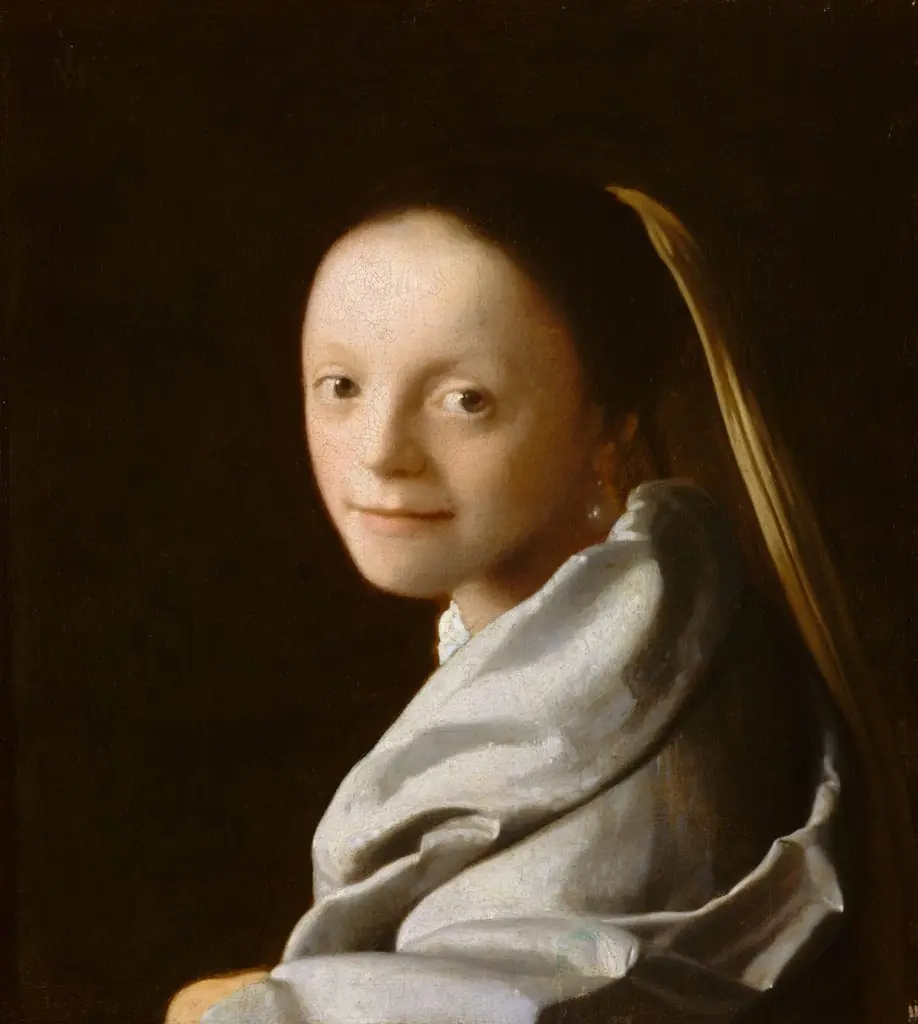 Portrait of a Young Woman
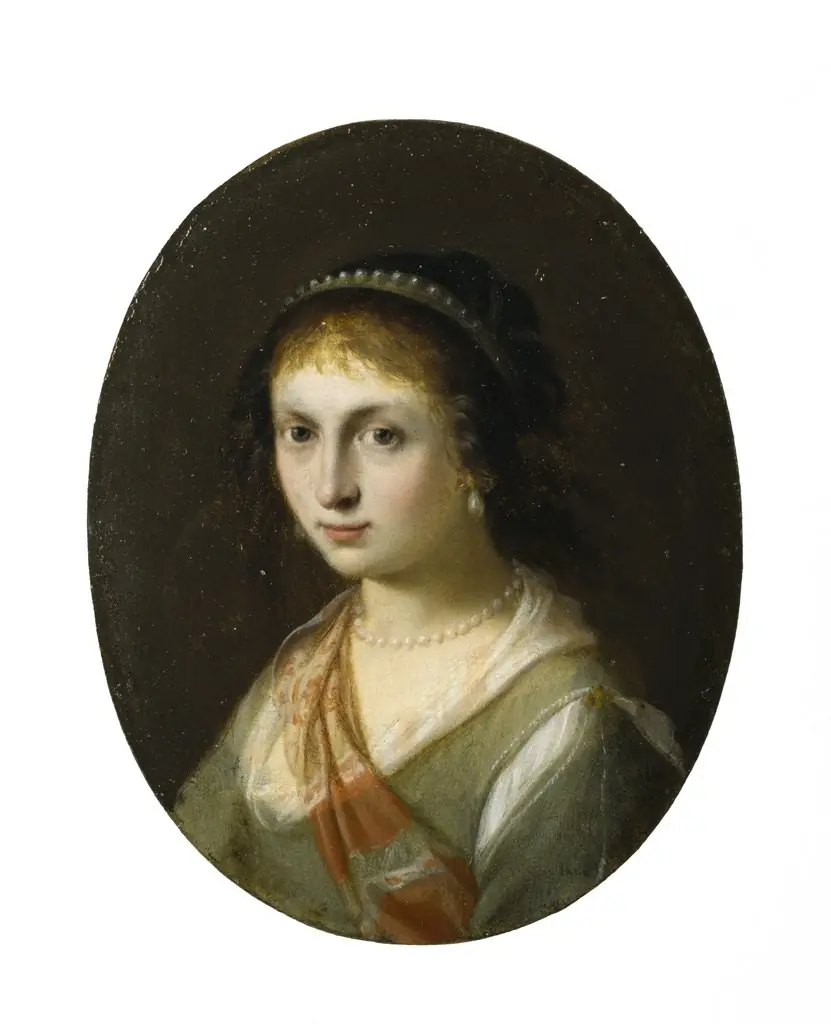 Portrait of Susanna van Collen
 Bust of a Young Woman Smiling, possibly Saskia van Uylenburgh
 The Lacemaker
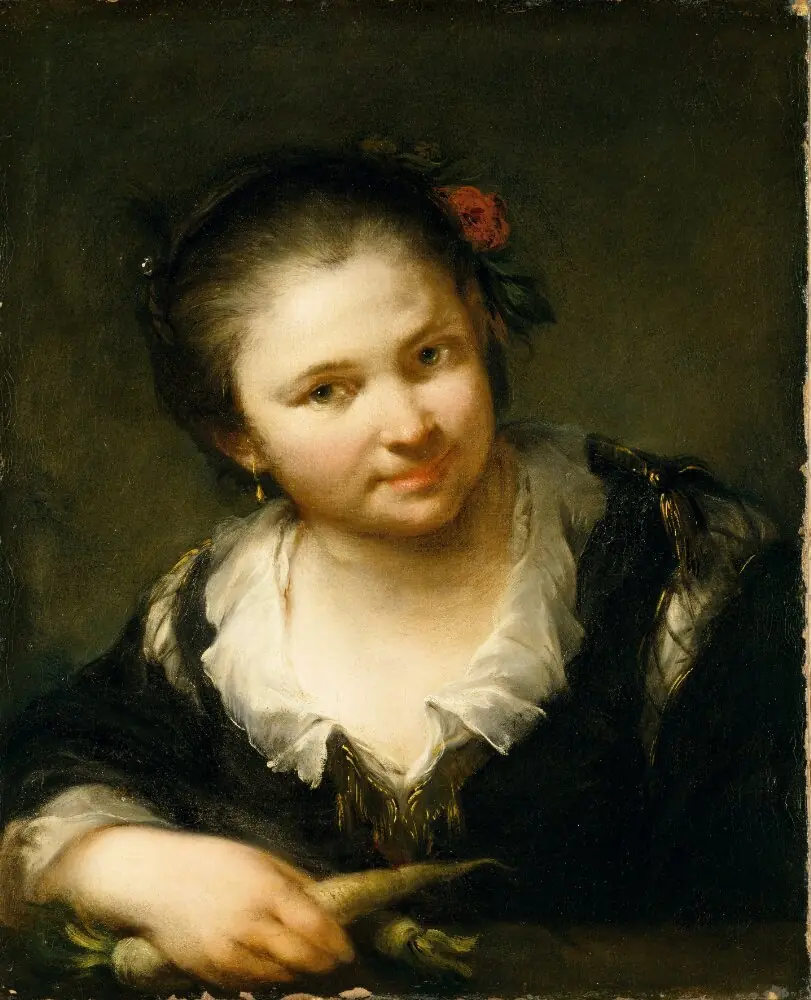 Girl with Vegetables
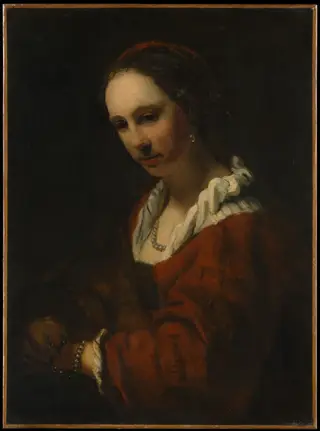 Young Woman with a Pearl Necklace
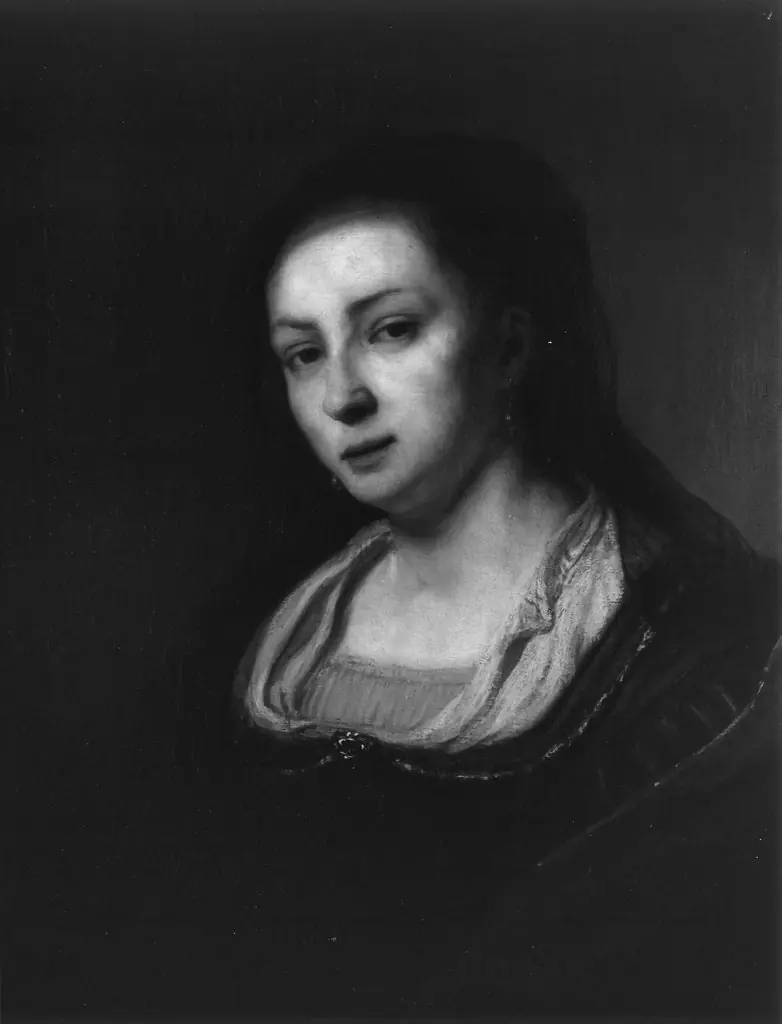 Portrait of a woman
![Ginevra de' Benci [obverse], by Leonardo da Vinci](https://artifactworldgallery.com/img/leonardo-da-vinci--ginevra-de-benci-obverse--afb6ec3a3e65f392-w320.webp) Ginevra de' Benci [obverse]
Ginevra de' Benci [obverse]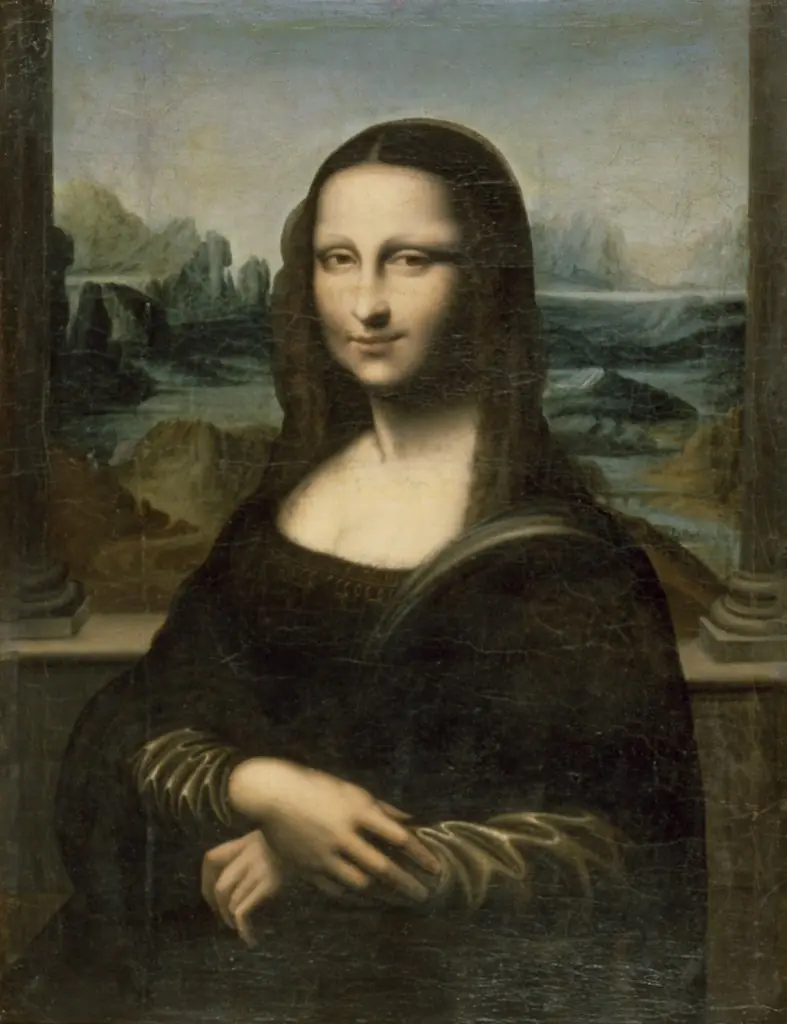 Copy of the ''Mona Lisa"
 Head of an Old Woman Looking to Lower Right (Saint Elizabeth)
 Salomeea
- Portrait of a Young Woman