Artwork
The Lacemaker
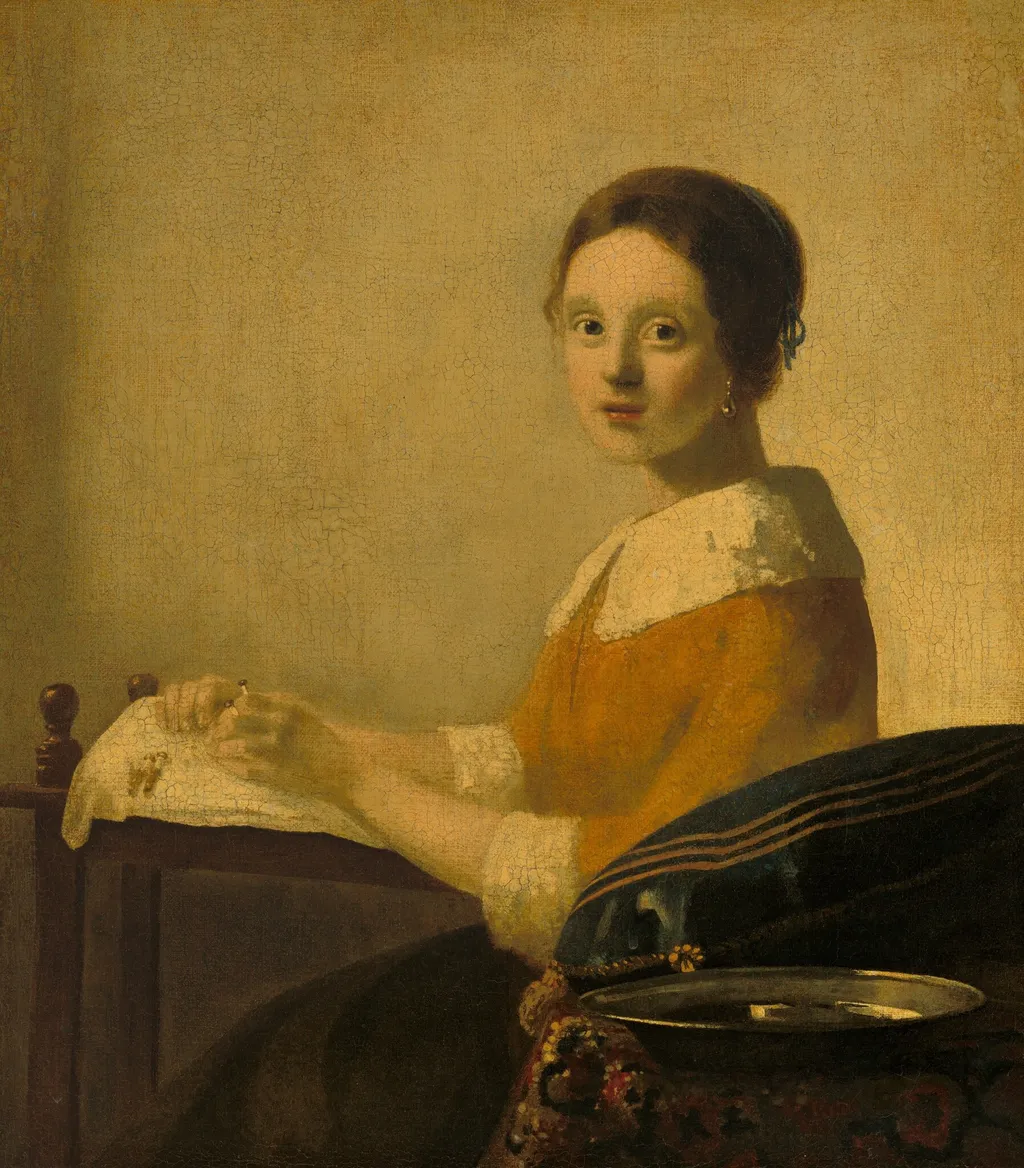
The Lacemaker is an oil painting by the Realist artist Imitator of Johannes Vermeer. It dates from 1925 and is held in the collection of the National Gallery of Art. The work is an oil painting on canvas portraying a young woman seated at a table, absorbed in lace‑making.
About this work
History & Provenance
The dating of the work to 1925 is supported by internal records, including the Duveen Brothers archive and Mellon’s provenance documents.
The painting was first recorded in the collection of Captain Harold R. Wright in London and Bremen. It was sold at auction in August 1927 to Duveen Brothers, Inc., which then transferred it to Andrew W. Mellon in November 1927. Mellon later deeded the work to The A.W. Mellon Educational and Charitable Trust on 30 March 1932, and it entered the National Gallery of Art, Washington, D.C., as a gift from the Trust in 1937.
The dating of the work to 1925 is supported by internal records, including the Duveen Brothers archive and Mellon’s provenance documents.
The painting is held by the National Gallery of Art, Washington, D.C., where it entered the Andrew W. Mellon collection in 1927 before being deeded to the A.W. Mellon Educational and Charitable Trust in 1932 and gifted to the gallery in 1937. Its accession number is 1937.1.44.
It has appeared in several exhibitions: _Dutch Paintings from the Collection of Andrew W. Mellon_ at the National Gallery of Art in 1942 (cat. 52), _The Age of Rembrandt and Vermeer_ at the National Gallery of Art in 1969–1970, and _Vermeer and the Delft School_ at the Metropolitan Museum of Art, New York, in 2001 (cat. 32).
Context
The National Gallery of Art's The Lacemaker, dated 1925, is now recognized as a forgery created by Han van Meegeren rather than an authentic work by Johannes Vermeer. This painting was historically associated with the notorious forger Han van Meegeren, who deceived the art market by attributing his own creations to the Dutch master. The work entered the collection of Andrew W. Mellon in November 1927 after passing through the hands of Captain Harold R. Wright and the Duveen Brothers.
Scholarly analysis by Arthur K. Wheelock, Jr. and Jonathan Lopez has since documented the painting's history as one of van Meegeren's early Vermeer forgeries, clarifying its place in art history as a significant example of 20th-century artistic deception rather than 17th-century Dutch Golden Age painting.
Legacy
The Lacemaker became a pivotal reference for later forgeries, particularly those by Han van Meegeren, who studied its composition and technique to mimic Vermeer’s style. Its provenance through Duveen Brothers and acquisition by Andrew W. Mellon established its significance in 20th-century art markets. The work’s legacy is closely tied to scholarly investigations into Vermeer attribution, influencing authentication practices and forgery cases, as documented in analyses of van Meegeren’s methods and the painting’s role in art historical discourse.
Overview
The work is an oil painting on canvas portraying a young woman seated at a table, absorbed in lace‑making. She wears a modest dress with a white collar and dark skirt, her hair pulled back. A needle and thread occupy her hands, while a small round object rests on the surface before her. The background is rendered in warm golden tones that frame the figure.
Subject & Meaning
The scene captures a moment of domestic industry, focusing on the quiet concentration of a lacemaker at work. The emphasis on her hands and the delicate task suggests themes of diligence and the often unseen labor of women in the household sphere, inviting contemplation of everyday craftsmanship.
Technique & Style
The artist employs chiaroscuro to model the figure, using strong contrasts of light and shadow to give depth to the woman's face and hands. Cool hues in her clothing are set against a luminous, golden background, creating a subtle color juxtaposition that guides the viewer’s eye toward the central activity.
Artist & collection
Artist

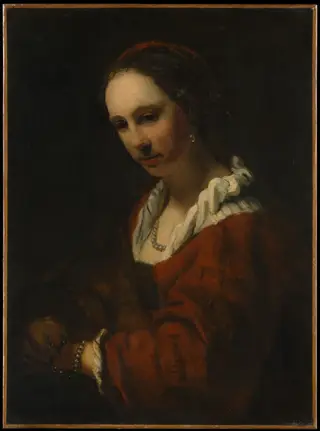 Young Woman with a Pearl Necklace
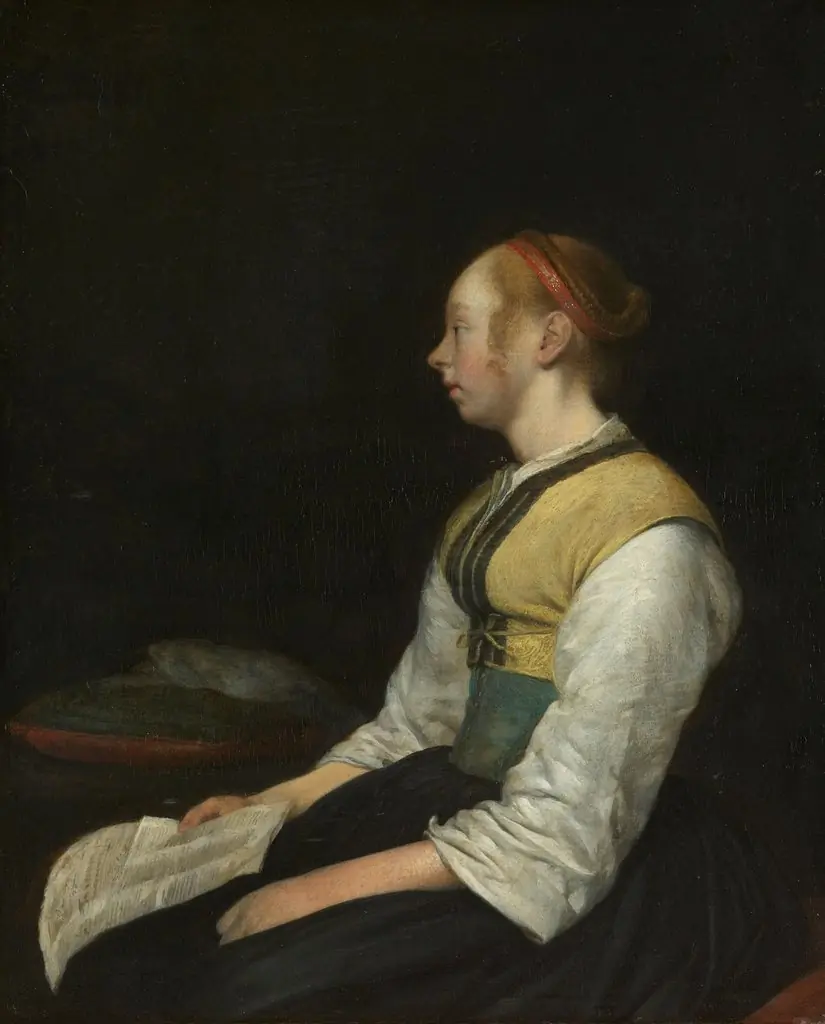 Seated Girl in Peasant Costume
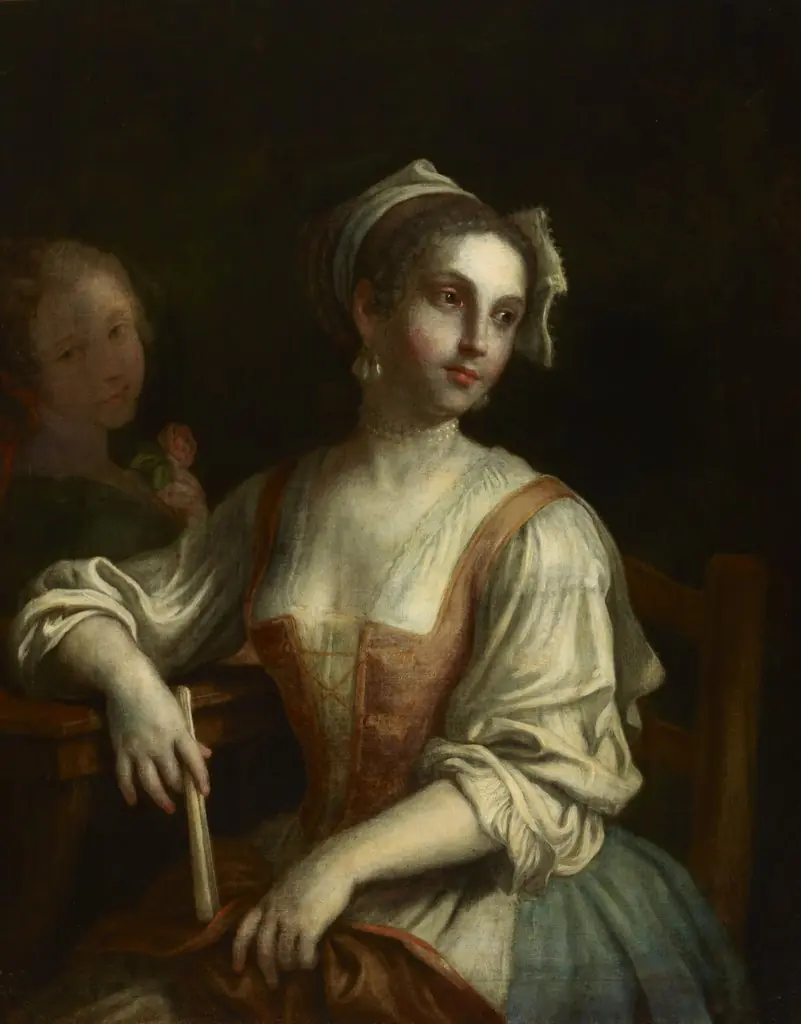 Woman with a Fan and a Woman with a Rose
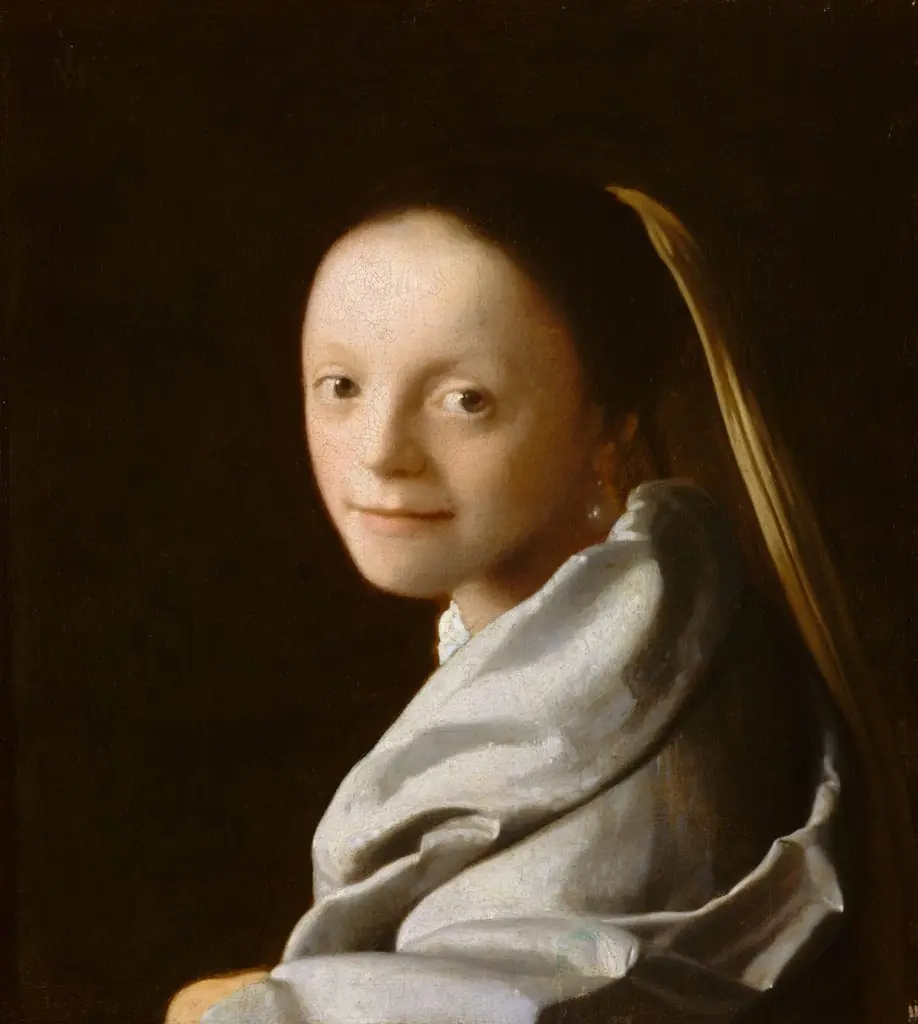 Portrait of a Young Woman
 Portrait of a Young Woman with a Fan
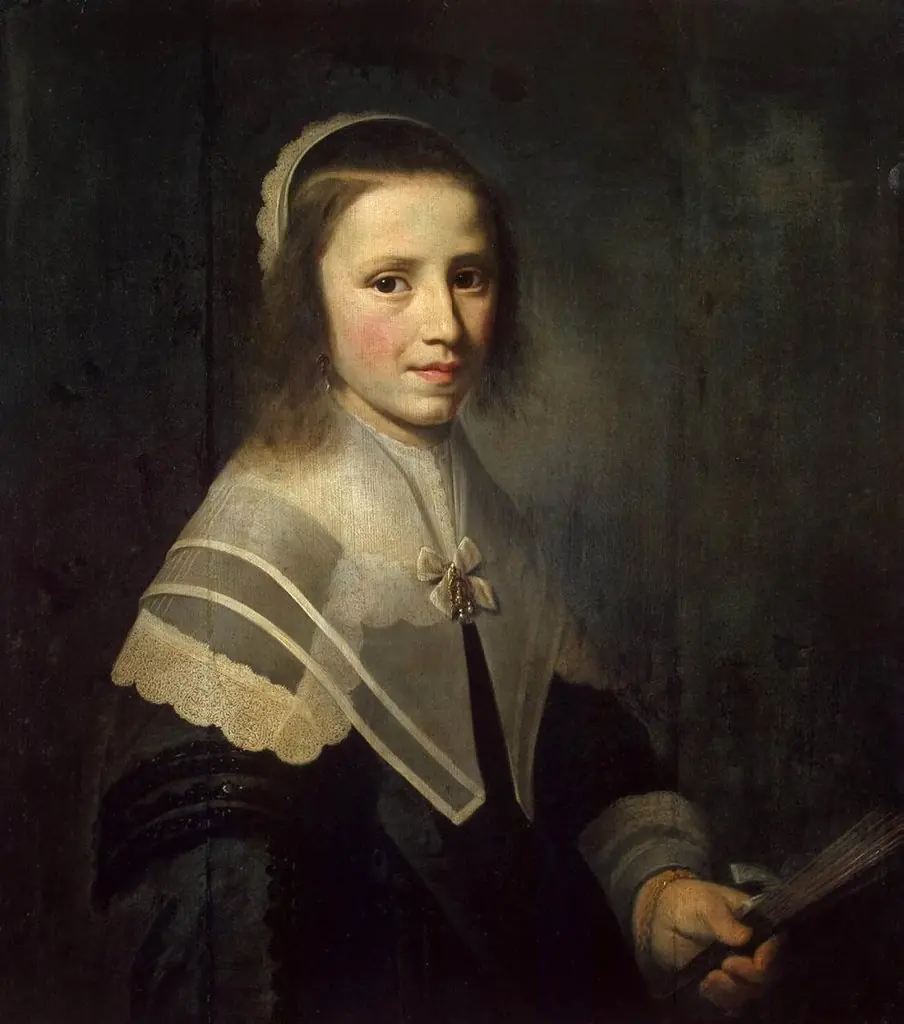 Girl Holding a Fan
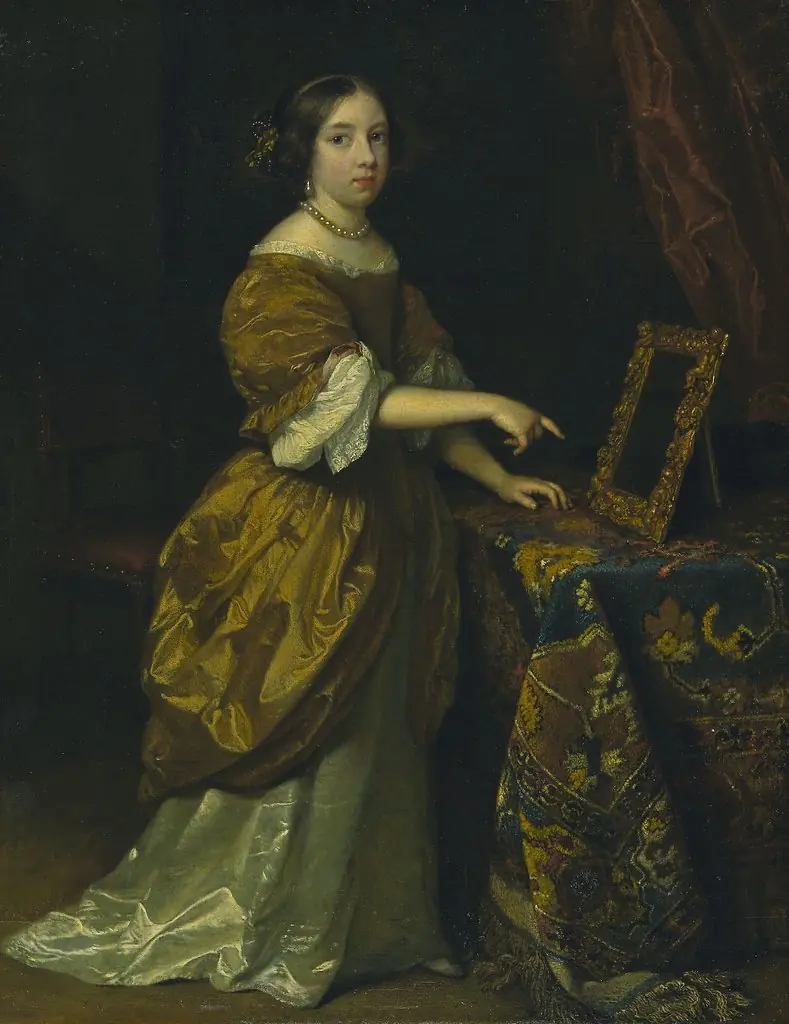 Girl Standing before a Mirror
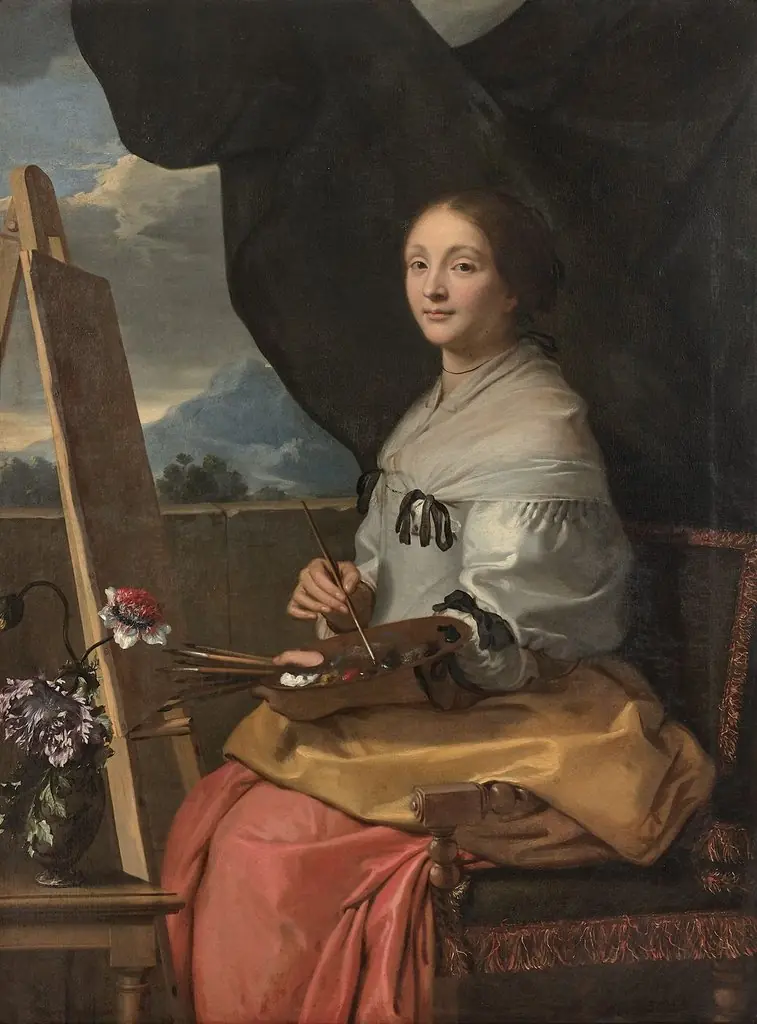 Portrait of Catherine Duchemin
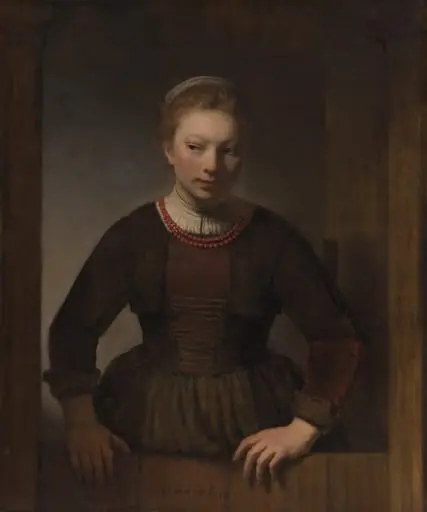 Young Woman at an Open Half-Door
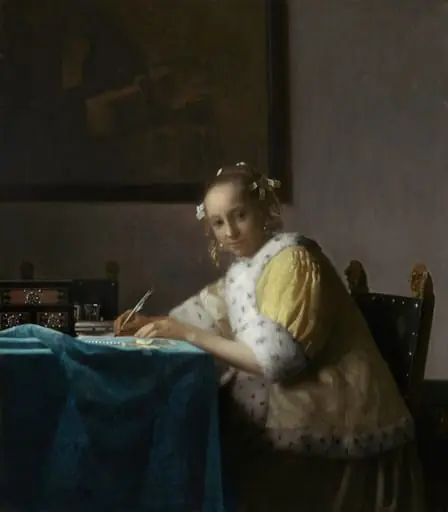 A Lady Writing
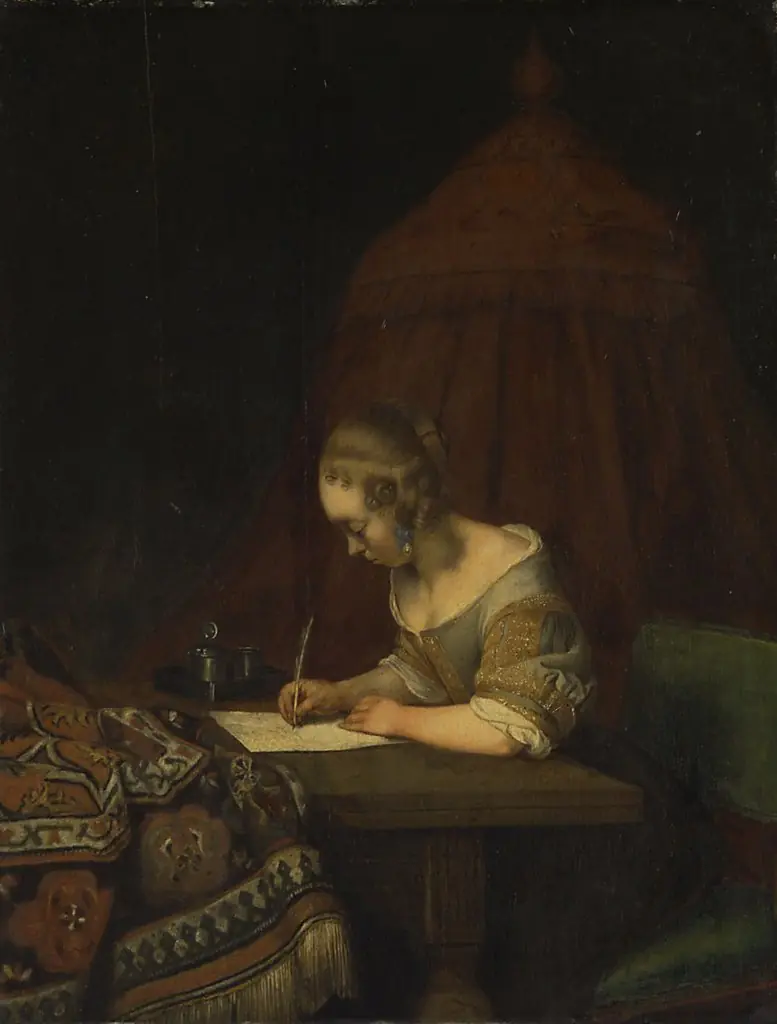 A woman writing a letter
- The Lacemaker